
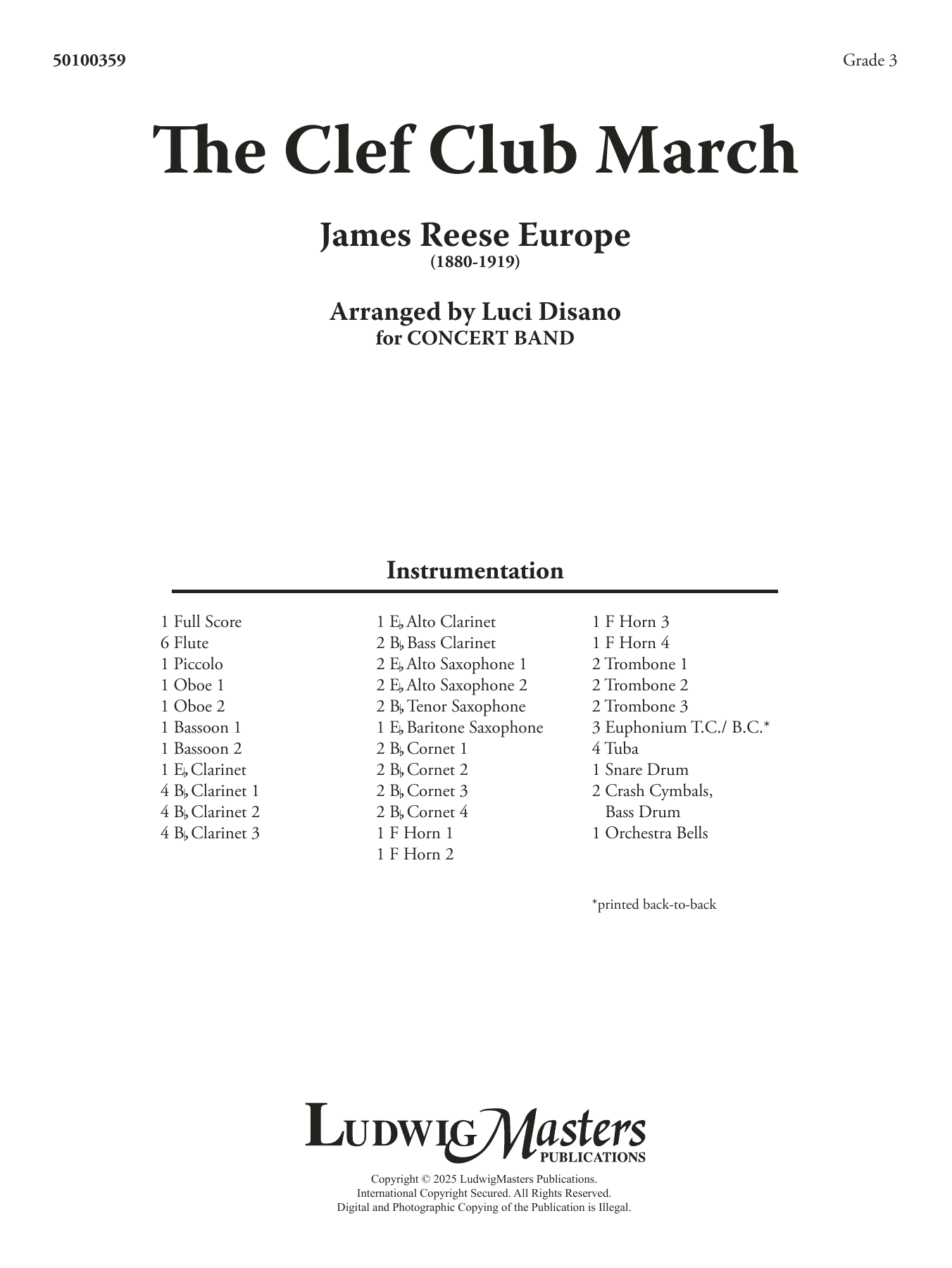

The Clef Club March (arr. Luci Disano): Concert Band Conductor Score & Parts
By James Reese Europe / Arranged by Luci Disano
Grade: 3
Item: 35-PK01712745
$70.00
Pickup currently not available
Buy Extra Parts (Digital PDF Download)
Parts Added to Cart!
Description
While CLEF CLUB MARCH was originally published in several different arrangements, all but a handful of orchestral parts have been lost to history. This transcription seeks to retain the unique character of James Reese Europe's music while making it accessible to the modern wind ensemble, imagining how his "regimental march" arrangement might have sounded.


Discover MakeMusic Cloud: thousands of interactive titles your students can play along with today.
Sample Audio
No sample audio found.
Sample Video
No sample videos found.
Additional Details
Publisher:
Hal Leonard
SKU:
35-PK01712745
More about this title
About the Composer: James Reese Europe
James Reese Europe (1881–1919) was a trailblazing bandleader, composer, and violinist who fundamentally shaped American popular music. As the leader of the 369th Regiment Infantry Band during World War I, Europe brought jazz and syncopated idioms to European audiences and helped establish African American musicians as central figures in the emerging jazz age. His compositions and arrangements bridged classical form with vernacular rhythms, creating a distinctive sound that influenced countless musicians and composers who followed.
Why we love this
Luci Disano's transcription honors Europe's compositional voice while solving a real historical problem: most of the original parts vanished decades ago. The arrangement captures the spirited, syncopated character that made Europe's music distinctive, giving your band access to a repertoire milestone that few ensembles encounter. This is American concert band history your students will actually play.
What to expect
Spirited and forward-driving, with the confident swagger of a regimental march filtered through syncopated rhythms that feel fresh even a century later. There's both military precision and improvisatory warmth here, creating a piece that marches without losing its swing.
Who it's for
Directors building programs around American composers and early jazz history will find this Grade 3 arrangement accessible without being simplistic. It works equally well for ensembles exploring syncopated repertoire or those seeking concert material that connects to the ragtime and early jazz traditions.
How to get the most out of it
- Anchor the syncopated rhythms in the bass line and low woodwinds; these passages drive the march's forward momentum and keep the ensemble locked when the upper voices get intricate.
- Balance the solo passages carefully. The concertmaster and principal chairs should voice their lines with the same confidence Europe's original soloists would have brought, avoiding timidity in the high register.
- Shape the march's sectional phrases with clear dynamic architecture. Europe's writing implies structural weight and release; honor those implied cadences even when the notation is spare.
How to use it
Pair this with other early 20th century American concert works to build a thematic program around jazz's emergence in classical forms. It also functions as an excellent opener: the energy and relatively straightforward technical demands let your ensemble settle in quickly before tackling more complex repertoire later in the concert.
Skills your students will build
- Playing syncopated rhythms with steady pulse and articulation
- Balancing solo melodic lines against supporting harmonies
- Understanding early American jazz idioms within concert band contexts
- Sectional independence in march form structures