The Chrysanthemum Sheet Music Preview

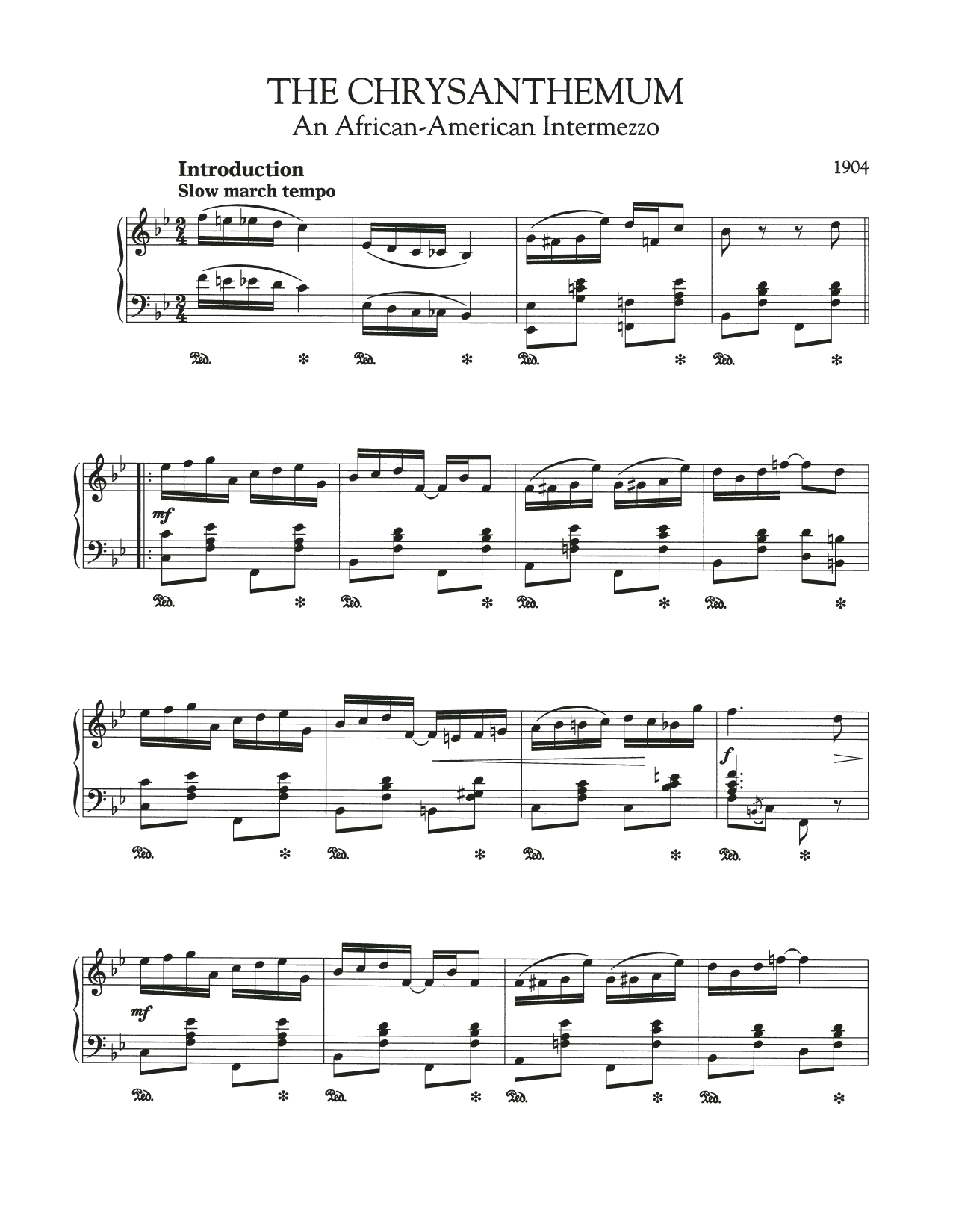
The Chrysanthemum: Piano Solo

By Scott Joplin

Item: 35-DS01095249

Digital Download
$5.99
Description

The Chrysanthemum: Piano Solo isn't in MakeMusic Cloud just yet...but it could be. Let us know you'd like to see it, and you'll help shape what comes next. In the meantime, start a free trial and dive into thousands of interactive titles your students can play along with today.

Sample Audio
No sample audio found.
Sample Video
Additional Details
Publisher: Hal Leonard
Page Count: 5
SKU: 35-DS01095249

More about this title

About the Composer: Scott Joplin

Scott Joplin (1868-1917) was an African American composer and pianist who fundamentally shaped American music by legitimizing ragtime as an art form worthy of serious study. His compositions, marked by syncopated melodies and stride piano techniques, bridged popular entertainment and classical ambition at a time when such crossings were rare. Joplin's work remains essential repertoire for pianists exploring the roots of jazz, modernism, and American musical identity.

As a pedagogue, Joplin taught music theory and piano while composing operettas and instrumental works that demanded technical sophistication from performers. His legacy extends far beyond "The Maple Leaf Rag"; pieces like "The Chrysanthemum" reveal a composer deeply invested in harmonic complexity and lyrical expression within the ragtime idiom.

Why we love this

Joplin's ragtime writing here avoids the predictable patterns many students associate with the genre, instead offering genuine harmonic surprises and a sophisticated melodic arc that rewards careful practice. The piece sits at that sweet spot where students encounter authentic stride piano techniques without feeling overwhelmed by virtuosic demands. Programming this alongside more familiar rags reveals the depth and diversity within Joplin's catalog.

What to expect

The piece captures ragtime's characteristic bounce without sacrificing harmonic sophistication; there's a brightness and forward momentum paired with unexpected chord movements that make each phrase feel fresh. The left hand maintains that infectious stride pattern while the right hand dances through syncopated figures, creating the illusion of organized spontaneity.

Who it's for

This works for intermediate pianists discovering ragtime as a serious compositional form and for students exploring how American composers navigated the boundary between concert music and popular idiom. It also suits teachers seeking authentic period repertoire for jazz history units or progressive classical curricula.

How to get the most out of it

  • Keep the left hand steady and rhythmically independent; the syncopated melody will feel rushed if the foundation wavers.
  • Shape the melodic phrases with dynamic inflection rather than rubato, letting the ragtime rhythm remain taut.
  • Practice hands separately until the stride pattern becomes automatic, then layer in the syncopated upper voice.
  • Distinguish between the chromatic passing tones and structural melodic notes to clarify harmonic direction.

How to use it

Feature this in a ragtime or American music concert to show students that the genre encompasses far more than the novelty pieces they may have encountered. It pairs well with classical contemporary works that also engaged with popular idioms, illustrating how early 20th century composers across styles were experimenting with vernacular materials.

Skills your students will build

  • Left hand stride technique and rhythmic independence
  • Syncopation reading and execution against a steady pulse
  • Harmonic analysis within chromatic voice leading
  • Stylistic interpretation of early 20th century American music
  • Finger independence and hand coordination across registers

You May Also Like