
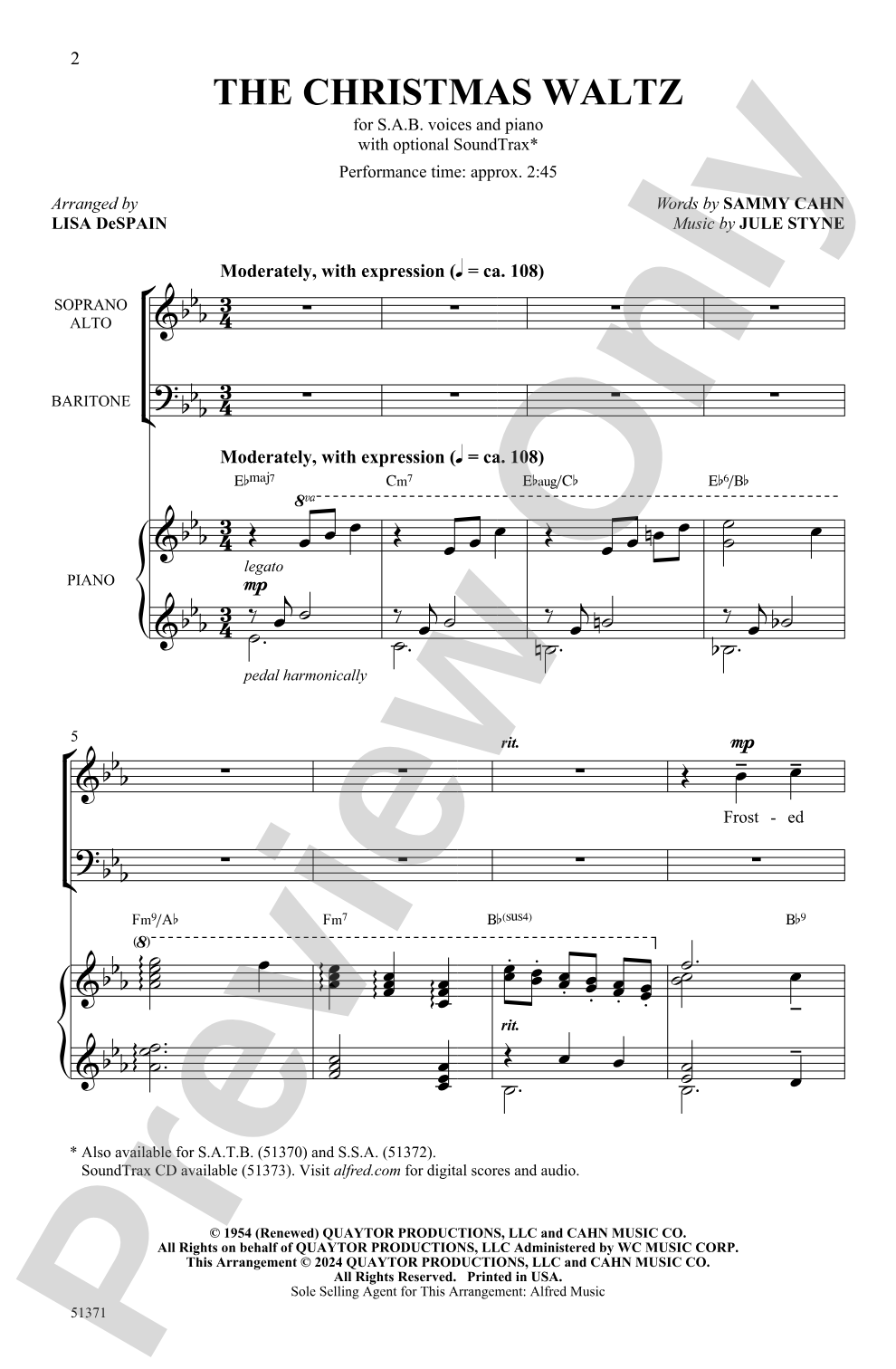
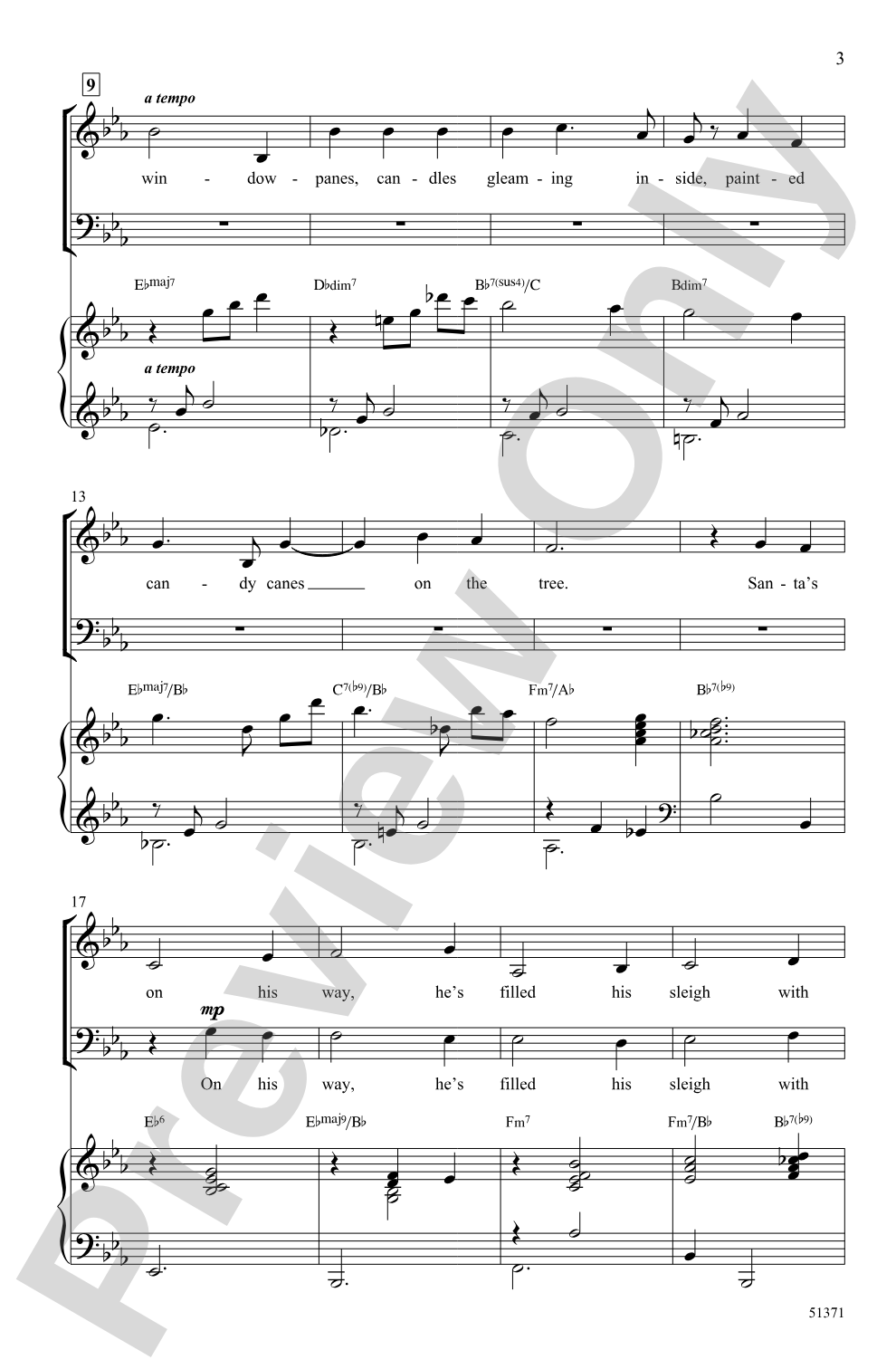

The Christmas Waltz: SAB Choral Octavo
Words by Sammy Cahn, music by Jule Styne / arr. Lisa DeSpain
Item: 00-PO-0007287
$2.35
Minimum order quantity: 20 copies
One moment…
Related Items
The Christmas Waltz: SATB Choral Octavo |
$2.35
|
View | |
The Christmas Waltz: SSA Choral Octavo |
$2.35
|
View | |
The Christmas Waltz: SoundTrax Digital Audio Download |
$29.99
|
View | |
The Christmas Waltz: SATB Choral Octavo |
$2.35
|
View | |
The Christmas Waltz: SSA Choral Octavo |
$2.35
|
View | |
The Christmas Waltz: Choral Octavo SoundTrax CD |
$29.99
|
View |
Description
Kristin Chenoweth's cover of the beloved "frosted windowpanes" waltz inspired this arrangement, which sparkles with holiday nostalgia. A music box-like accompaniment supports lyrical vocal lines and expressive tempo changes that make for an impressive concert performance. Originally written for Frank Sinatra, this is a Christmastime standard not to be missed!


The Christmas Waltz: SAB Choral Octavo isn't in MakeMusic Cloud just yet...but it could be. Let us know you'd like to see it, and you'll help shape what comes next. In the meantime, start a free trial and dive into thousands of interactive titles your students can play along with today.
Request This Title
Tell us you want it.
Start Your Free Trial
Explore everything that's ready to play right now.
Sample Audio
1
Audio File
--:--
0:00
0:00
Sample Video
Additional Details
Series:
Alfred Pop Choral Series
Publisher:
Alfred Music
Page Count:
12
SKU:
00-PO-0007287
More about this title
About the Composer: Sammy Cahn
Sammy Cahn (1913–1993) was a lyricist whose career spanned from Tin Pan Alley through the golden age of Hollywood songwriting. He collaborated with composer Jule Styne on numerous standards, including "The Christmas Waltz," and won four Academy Awards for Best Original Song. His wit, precision with language, and ability to match lyrics to melody made him one of the most recorded songwriters of the twentieth century.
Cahn's work remains central to music education because his songs teach singers how to shape phrasing around natural language rhythms and emotional peaks. "The Christmas Waltz" exemplifies his gift for setting poetic imagery to unforgettable melody, making it an ideal teaching piece for developing interpretive singing.
Why we love this
Lisa DeSpain's arrangement captures the wistful elegance of this Sinatra standard while keeping the vocal writing fresh and accessible for three-part choirs. The music box accompaniment creates immediate atmosphere, and the SAB voicing allows a full range of singers to carry the expressive melody without drowning in harmonic complexity. It's the kind of piece that feels polished enough for a formal concert yet relaxed enough to remind audiences why they love holiday music in the first place.
What to expect
Nostalgic and intimate, yet polished enough for a concert stage. The music box accompaniment evokes frost and winter imagery, while the vocal melody carries the warmth and slight melancholy that made Sinatra's version iconic. Each phrase feels like it's being shared across a quiet room rather than broadcast to a crowd.
Who it's for
Choirs with three-part mixed voicing (SAB) who want a sophisticated holiday selection that audiences genuinely recognize and love. It suits high school and community choirs, church holiday concerts, and any program seeking an elegantly arranged standard rather than novelty Christmas fare.
How to get the most out of it
- Shape the vocal line around the lyrical content; Cahn's words follow natural speech patterns, so let the phrasing breathe rather than forcing strict metric regularity.
- Use the recorded accompaniment as a reference for tempo and style, then build your own interpretation with the ensemble. The music box texture works best when players (or digital playback) maintain gentle consistency without rushing.
- Balance the three parts so the soprano melody remains audible but doesn't overshadow the warmth of the lower voices. This piece hinges on blend, not dominance.
- Invest time in the expressive tempo changes marked in the arrangement. They're not obstacles; they're the emotional core of how this waltz unfolds.
How to use it
Program this as an anchor piece in your holiday concert, perhaps following an upbeat, rhythmic selection to showcase range. It pairs well with other secular holiday standards or as a bridge between celebratory opening numbers and quieter, introspective winter fare. Consider it a centerpiece that gives audiences permission to sit back and simply listen.
Skills your students will build
- Phrasing around lyrical content and natural speech rhythm
- Balancing three-part harmony with clear melodic presence
- Responding to expressive tempo changes and ritardandi
- Sustaining warm tone quality in longer notes and held chords