The Chimes of Liberty: E-flat Baritone Saxophone Sheet Music Preview

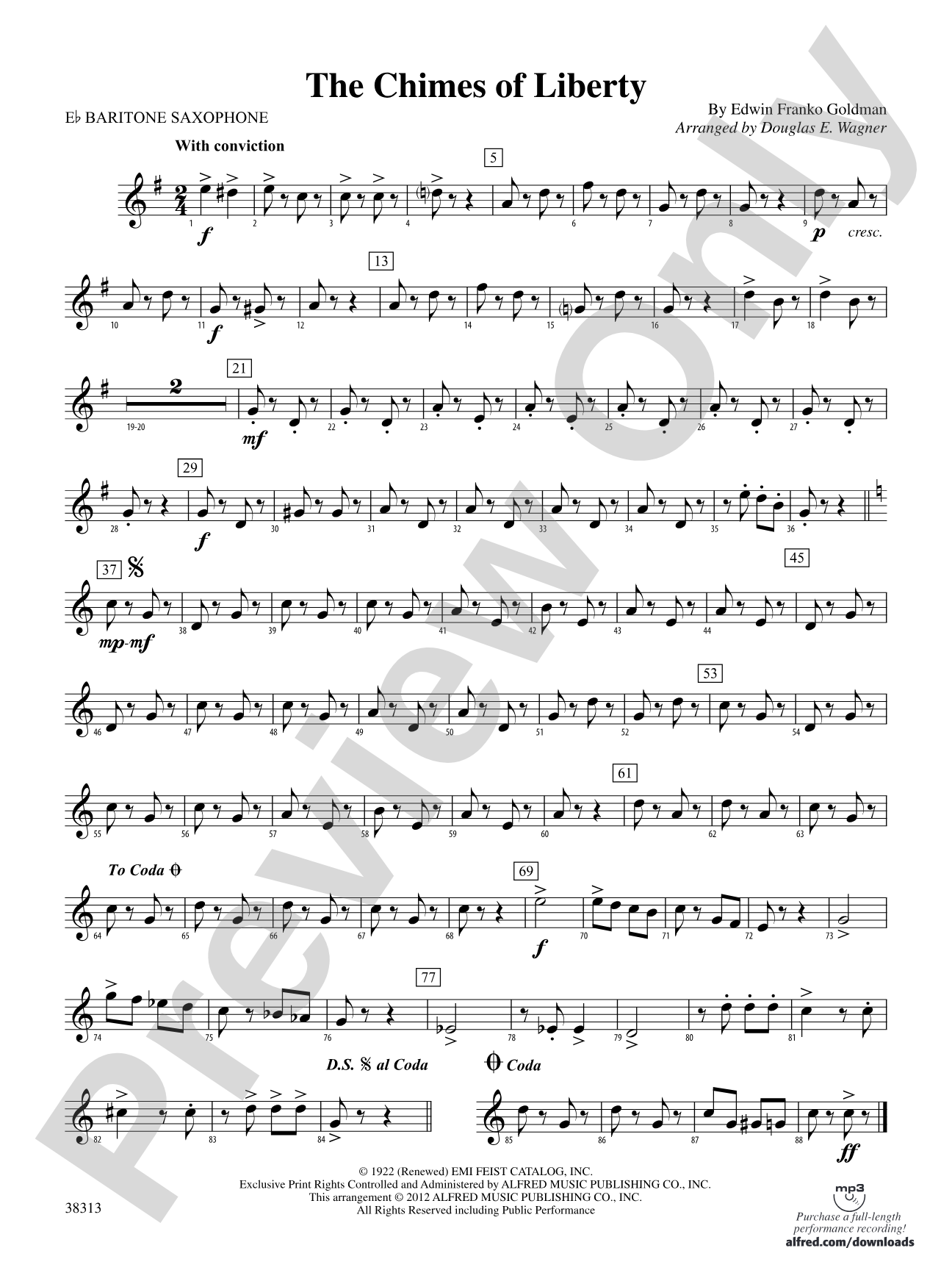
The Chimes of Liberty: E-flat Baritone Saxophone

By Edwin Franko Goldman / arr. Douglas E. Wagner

Grade: 1 (Very Easy)

Item: 00-PC-0015792_BTX

Digital Download
$3.00
Description
A true classic band march prepared for your beginners. Goldman is considered band music's other "March King." This endearing melody will be a welcomed addition to any program. Your audience is certain to approve! (2:00)

Don't just read it, hear it, play along with it, and watch your students grow with it. In MakeMusic Cloud, The Chimes of Liberty: E-flat Baritone Saxophone comes alive with professional accompaniment, adjustable tempo, and built-in practice tools that turn solo practice into real progress.

Sample Audio
0:00
0:00
Sample Video
Additional Details
Series: Pop Beginning Band
Publisher: Alfred Music
Page Count: 134
SKU: 00-PC-0015792_BTX

More about this title

About the Composer: Edwin Franko Goldman

Edwin Franko Goldman (1878-1956) founded the Goldman Band in 1911 and spent nearly five decades building it into one of America's most influential concert ensembles. Though often overshadowed by John Philip Sousa, Goldman earned his own place as a champion of American band music, commissioning works from major composers and establishing the Goldman Band as a vehicle for serious concert repertoire. His own marches and concert pieces reveal a gift for memorable melody and clear orchestration that made band music accessible without sacrificing musical substance.

Why we love this

This march hits the rare sweet spot of being genuinely musical and genuinely easy. Wagner's arrangement respects the original melody while keeping the parts independent enough that each section has something to play, so your beginning band sounds fuller and more rewarding than the technical demands would suggest. It's the kind of piece that gives new musicians a real win and gives audiences something they actually want to hear.

What to expect

The Chimes of Liberty unfolds with the straightforward optimism of American band tradition. The melody is singable and memorable, the harmonic language is bright and uncomplicated, and the overall character is celebratory without being bombastic. It feels like a march that trusts the listener to enjoy a good tune, simply stated.

Who it's for

Beginning concert band conductors looking for legitimate repertoire that won't overextend their musicians. The Grade 1 difficulty opens this to middle school programs or high school bands in their first year, while the patriotic context makes it natural for seasonal or summer concerts.

How to get the most out of it

  • Balance the melody between sections so the tune sings clearly. At Grade 1, it's tempting to let the strongest players carry everything; instead, ask each section holding the theme to phrase together as a unit.
  • Keep the march tempo steady and march-like without dragging. A light touch on the beat keeps the energy moving, which matters especially if your ensemble is still building endurance.
  • Lighten articulations on the rhythmic accompaniment figures so the melody can sit on top. Even simple parts sound better when they're not all pushed with the same weight.

How to use it

Program this for 4th of July concerts, summer pops events, or patriotic-themed programs where you want substantial repertoire that isn't a light transcription or novelty number. It pairs well with other American band standards and gives a beginning group a piece with real historical weight without requiring advanced technique.

Skills your students will build

  • Leading and following melodic lines within ensemble texture
  • Maintaining steady tempo in march rhythm
  • Balancing melody against rhythmic accompaniment
  • Counting rests and coordinating entrances across parts
  • Playing with stylistic awareness of the march genre

You May Also Like