

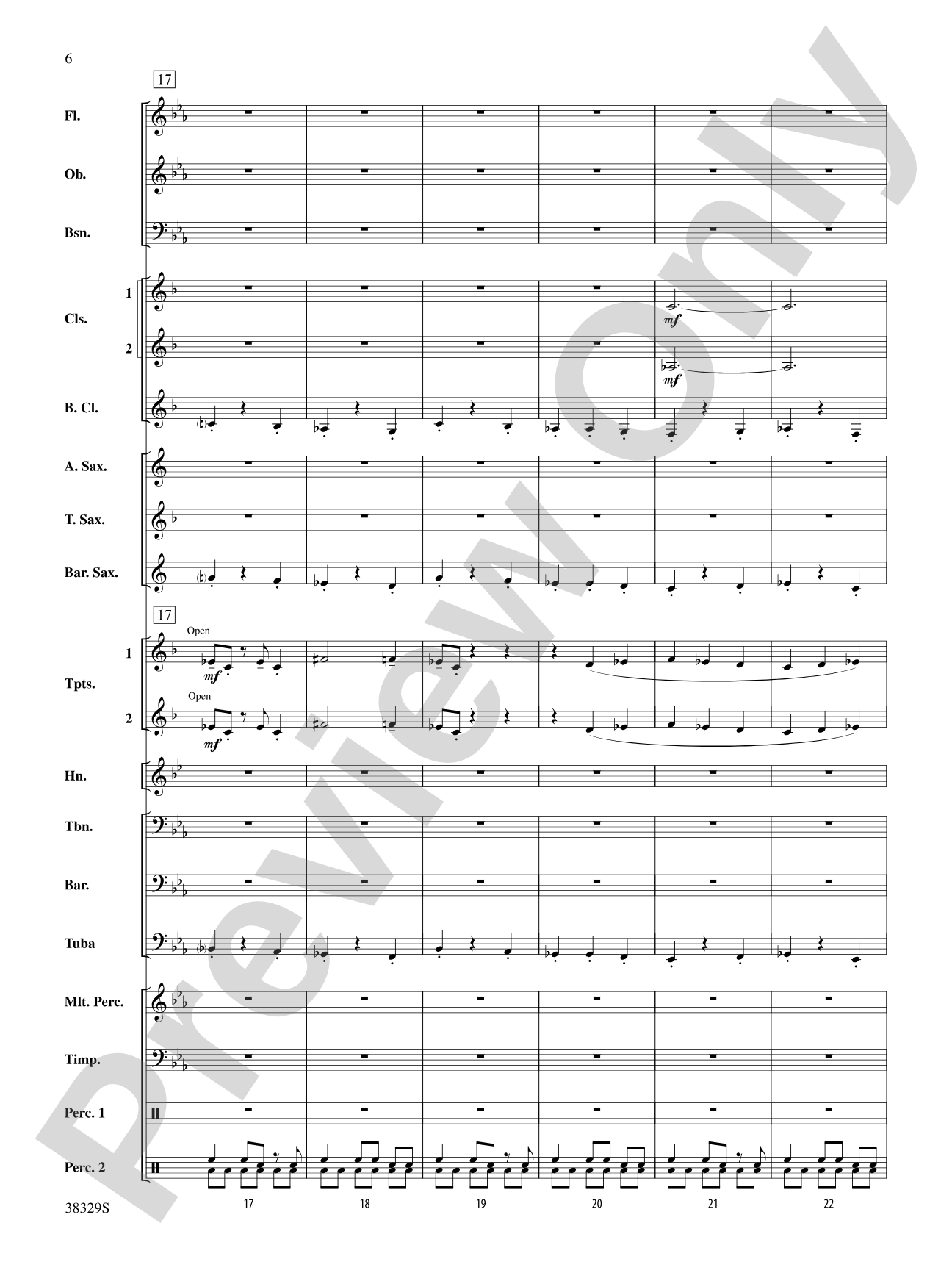
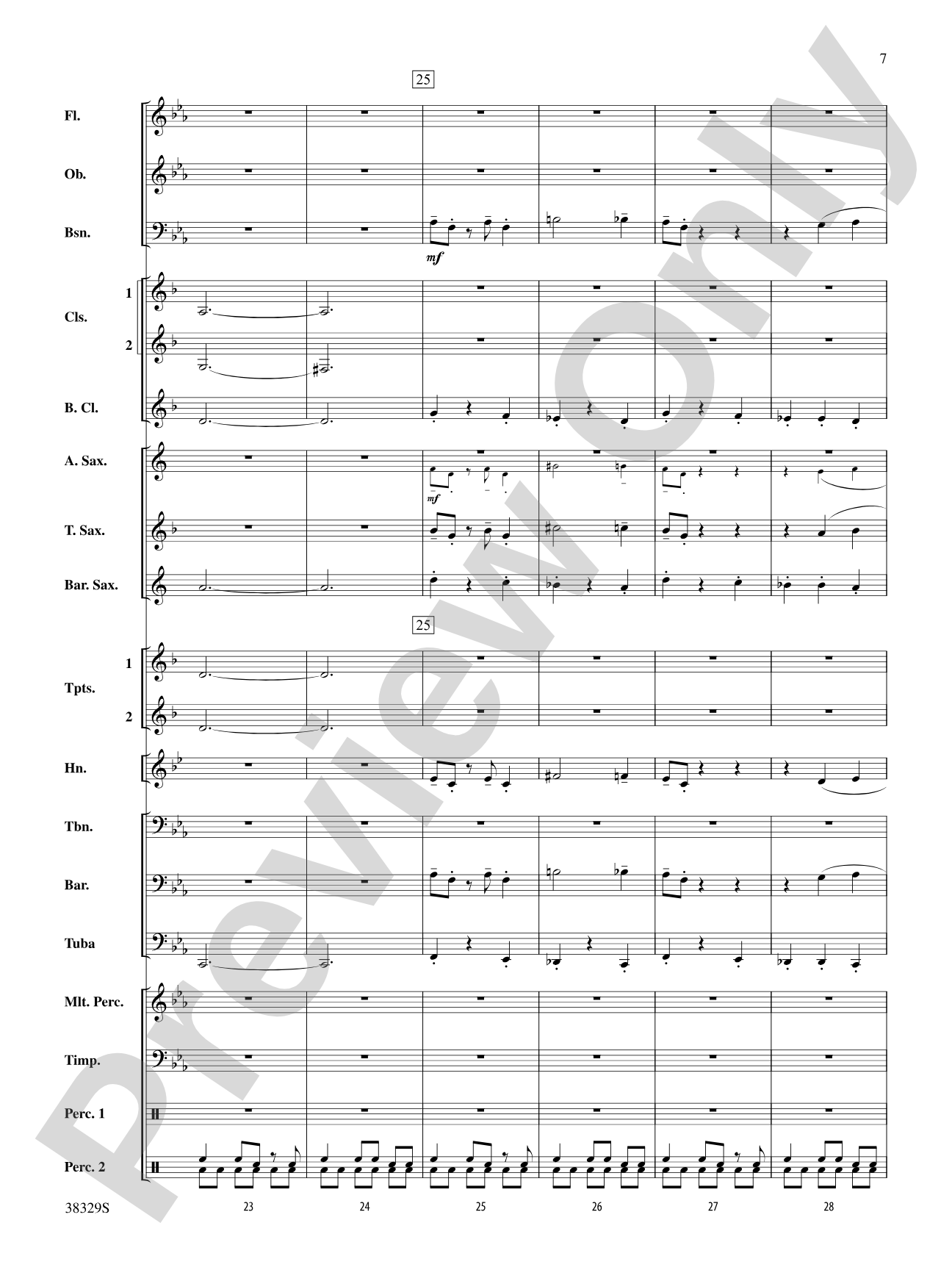
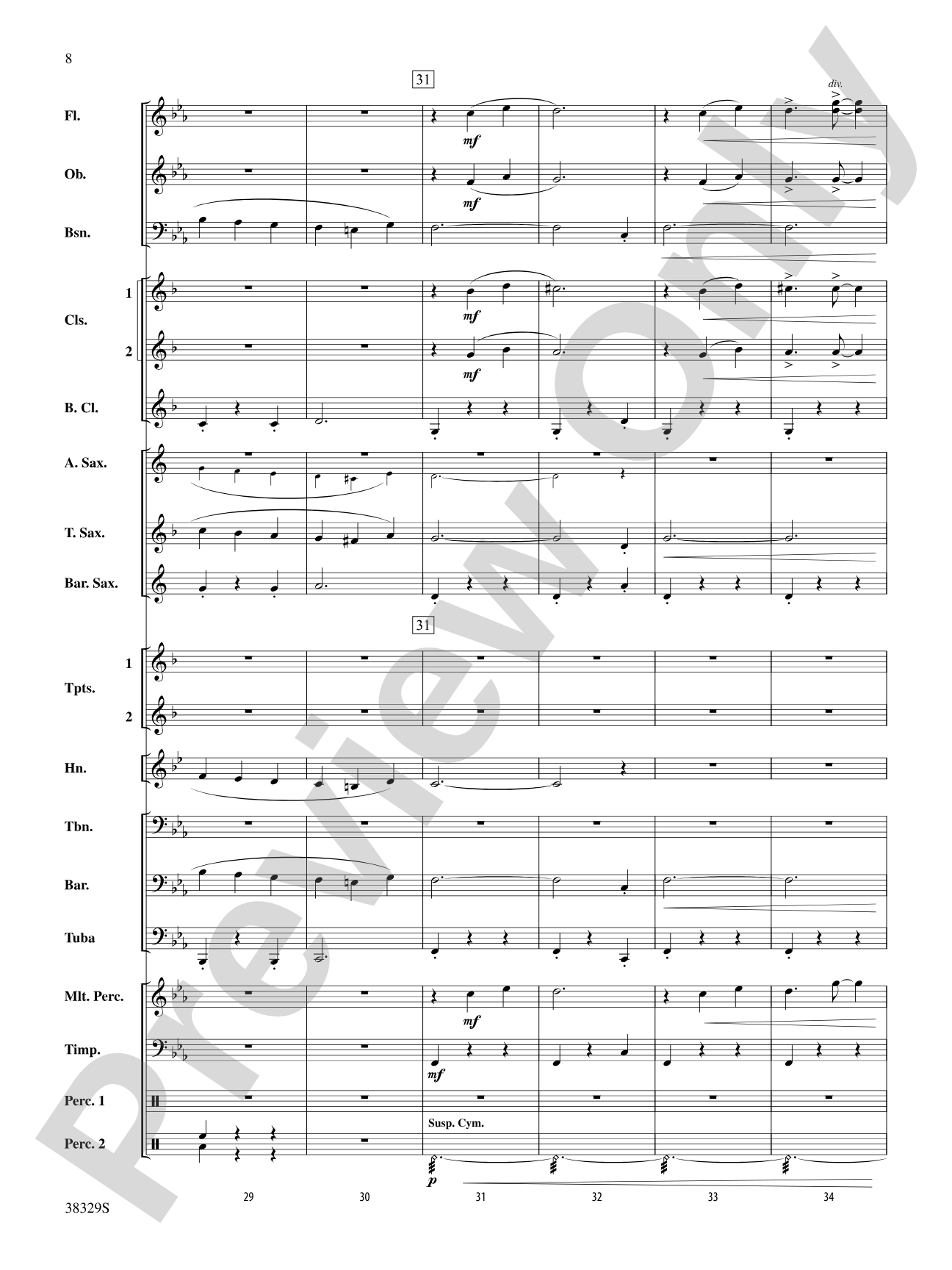
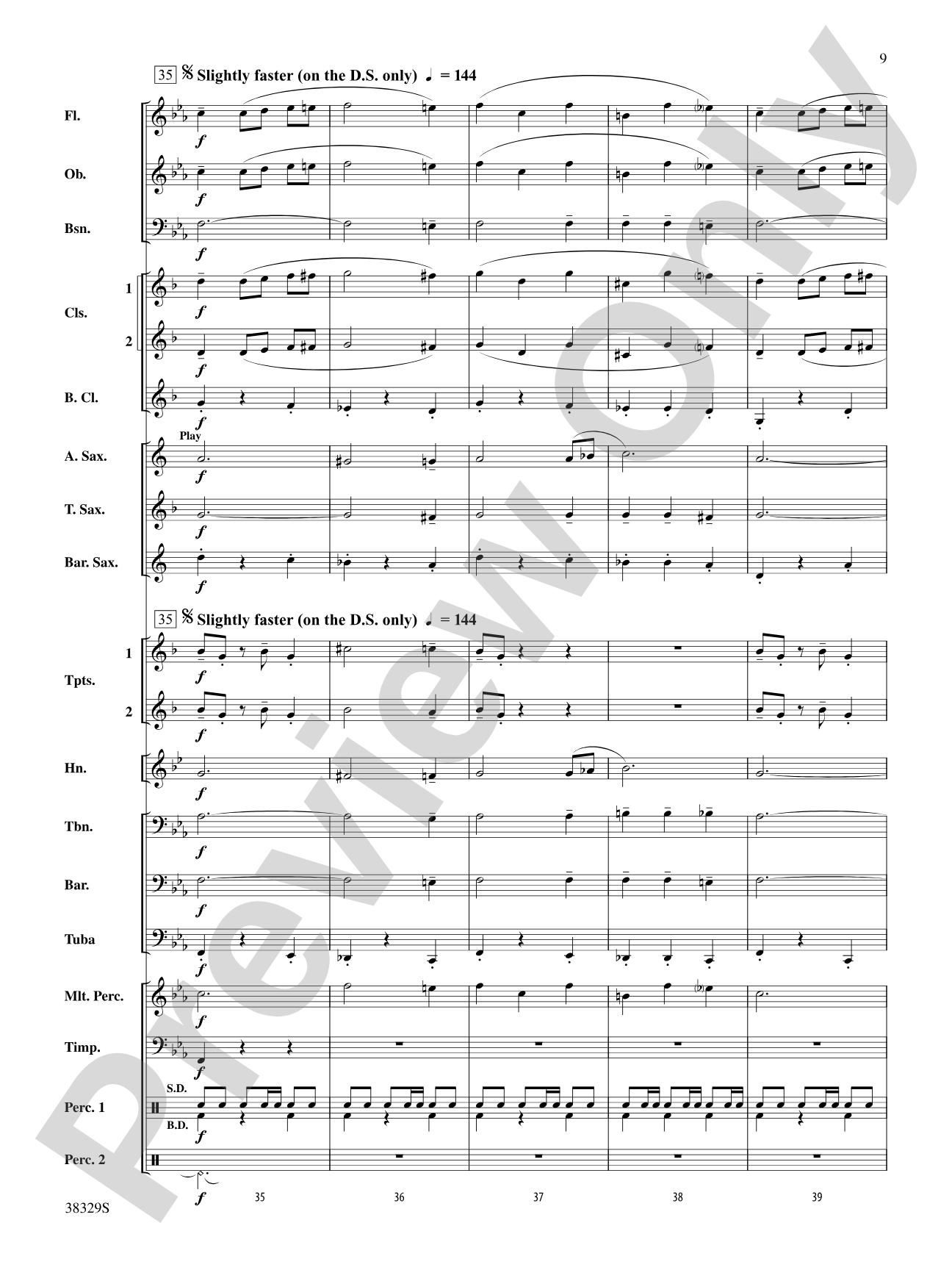
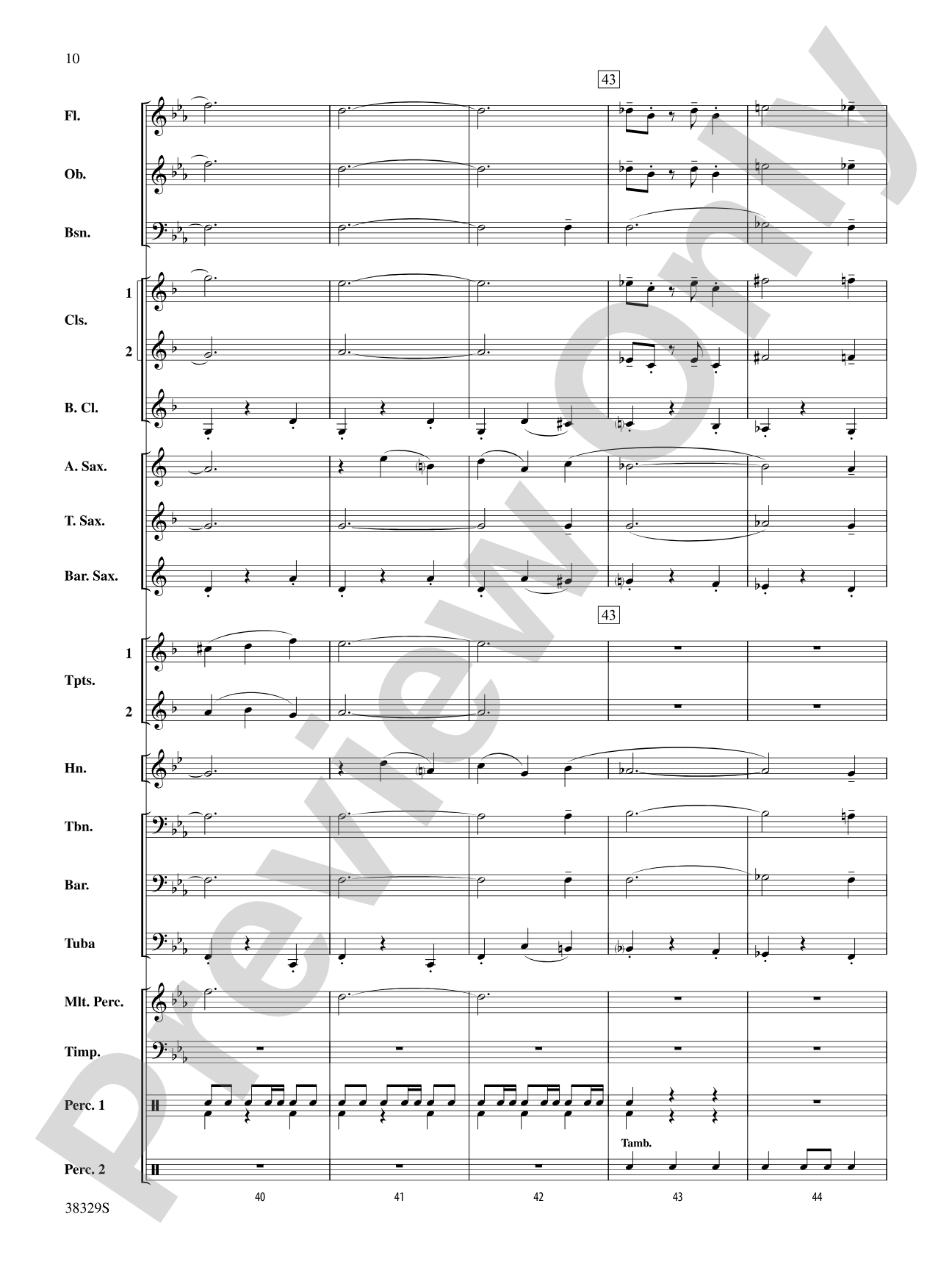
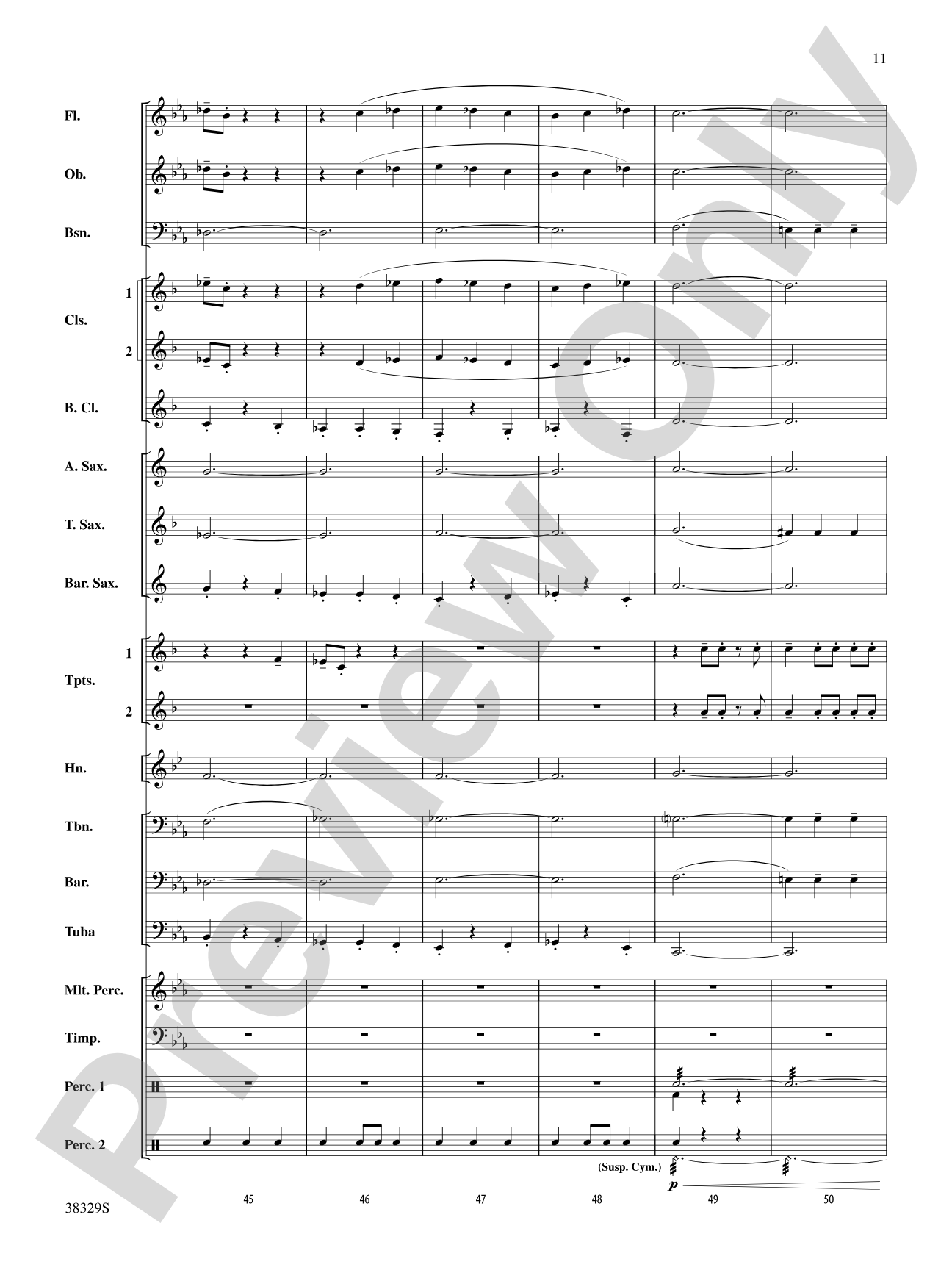
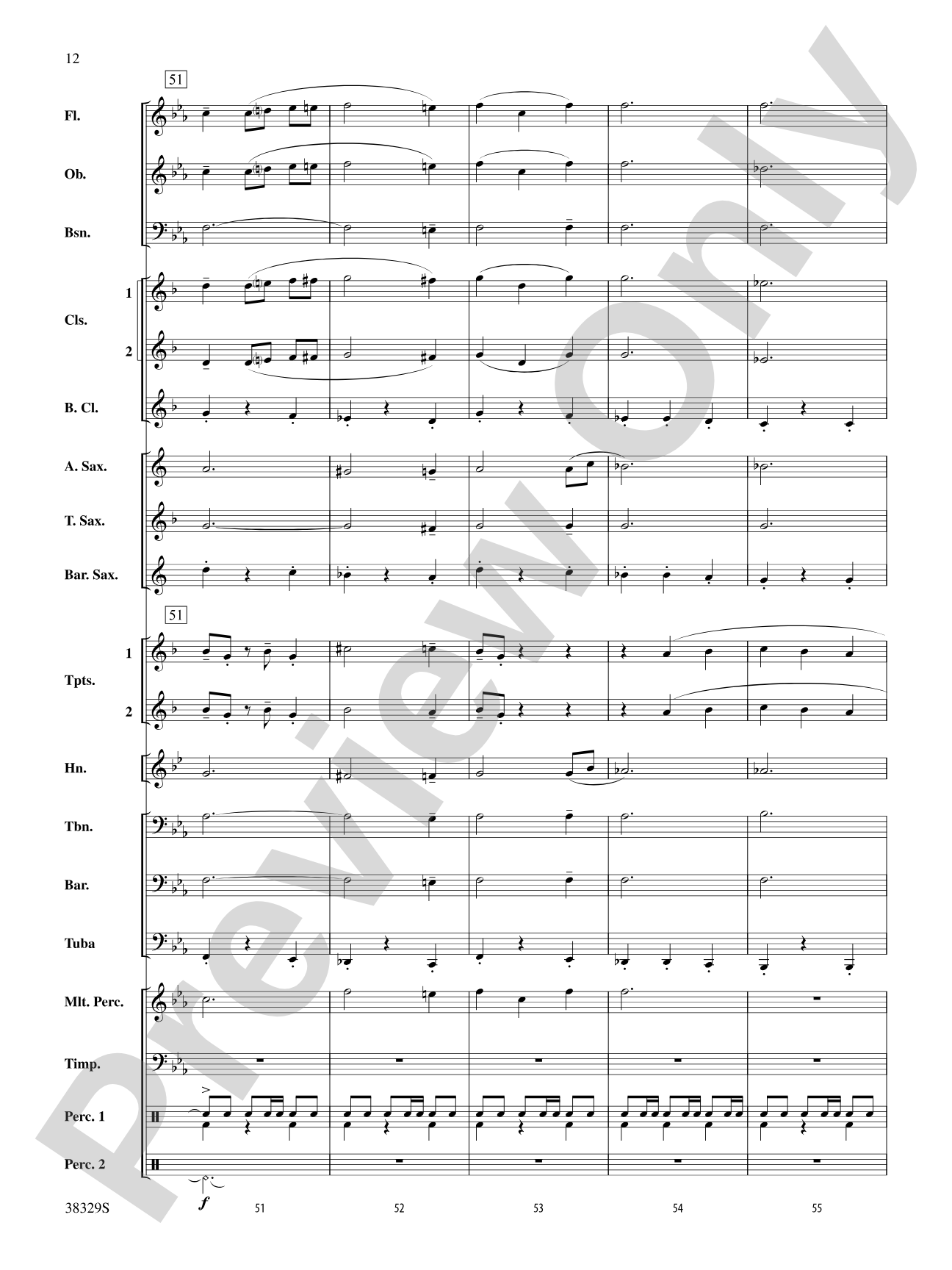
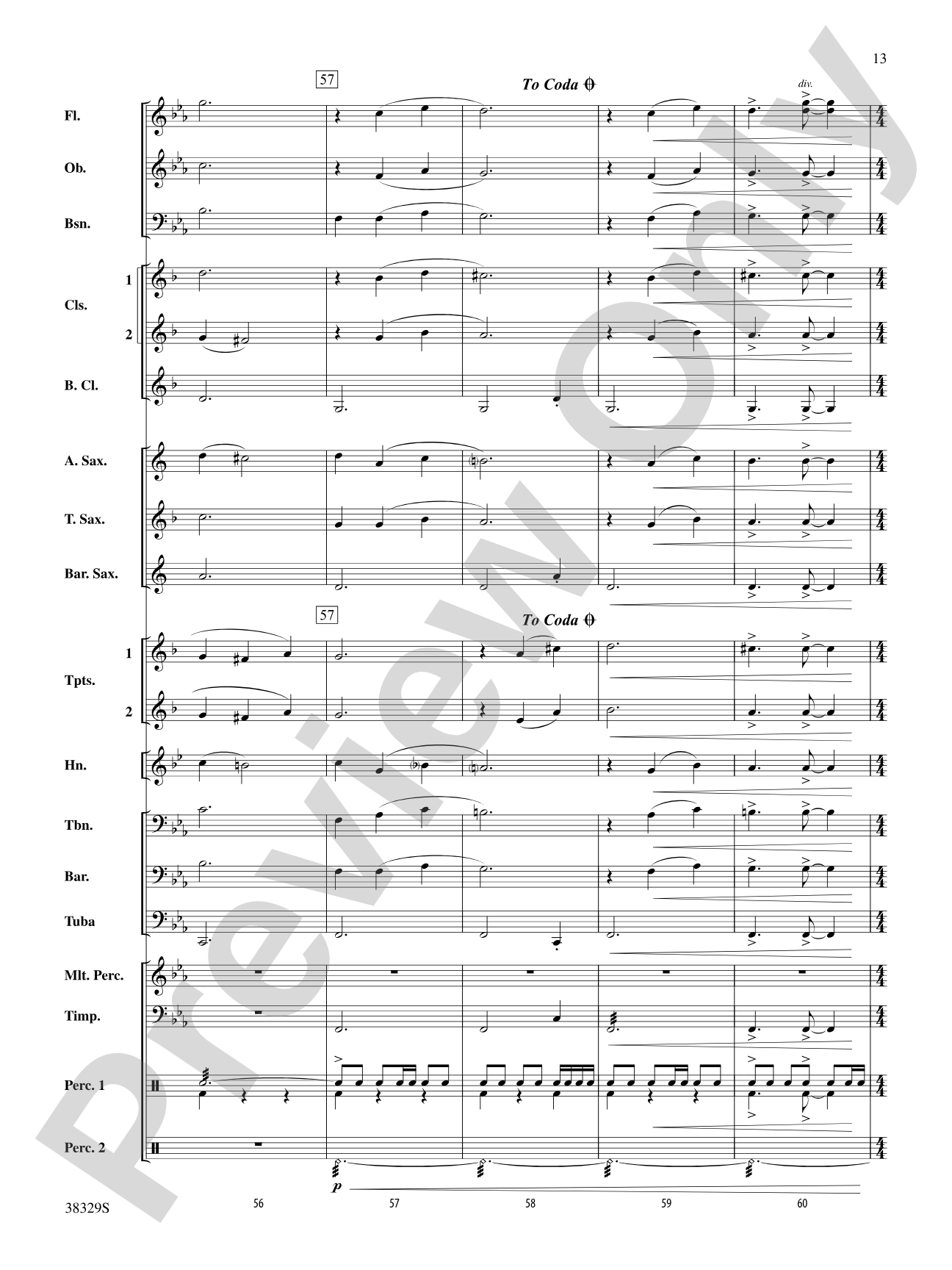
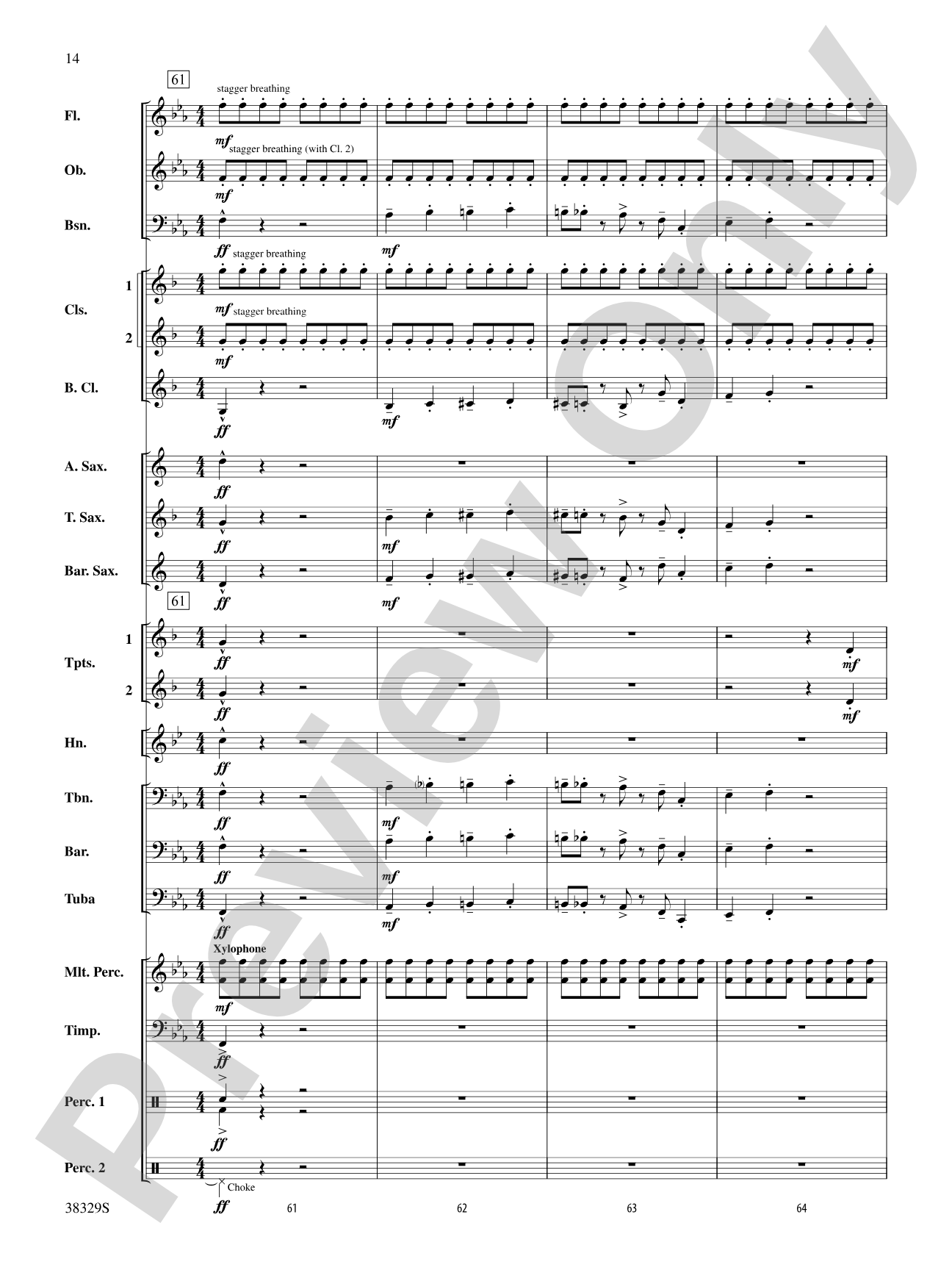
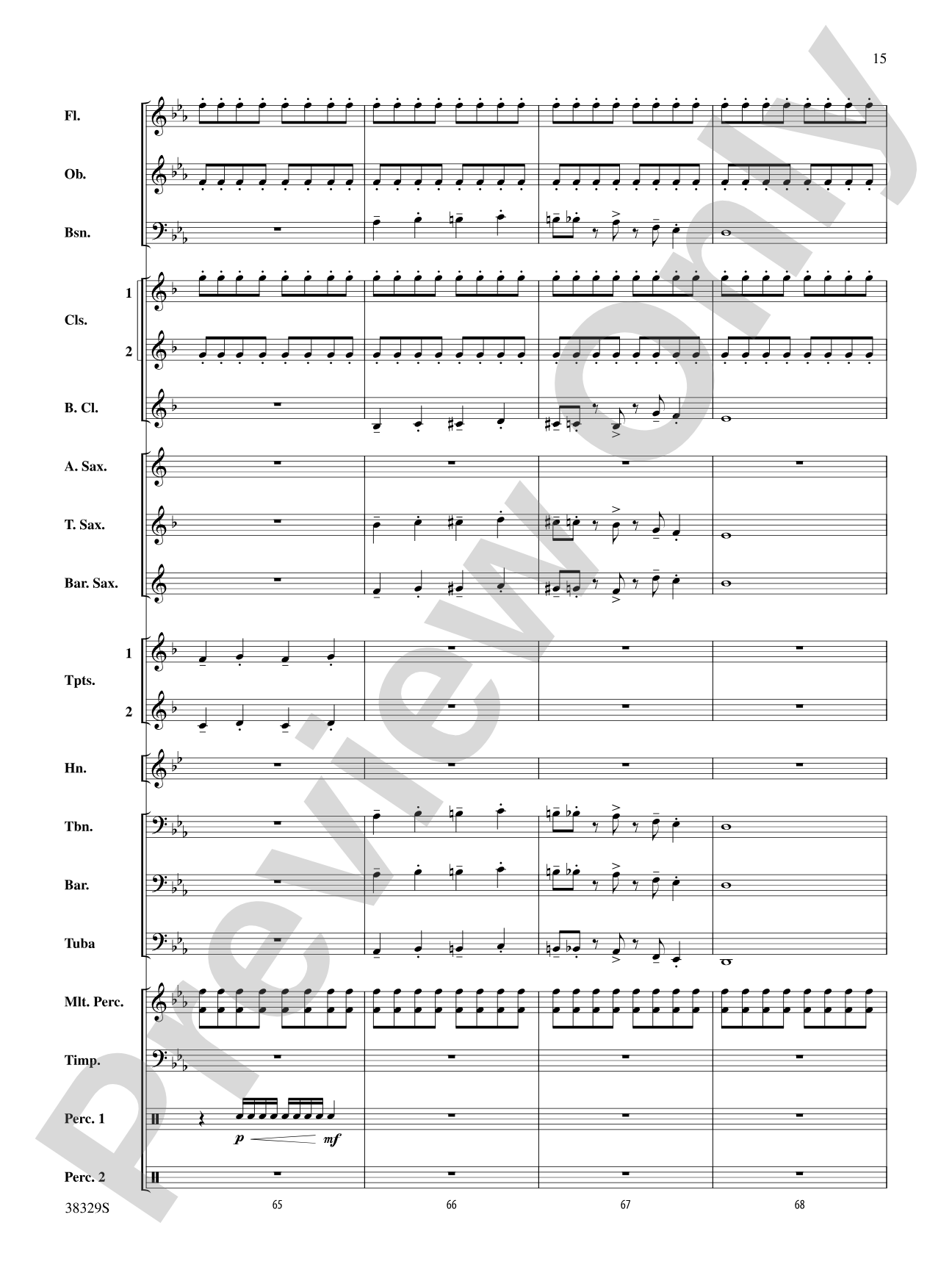
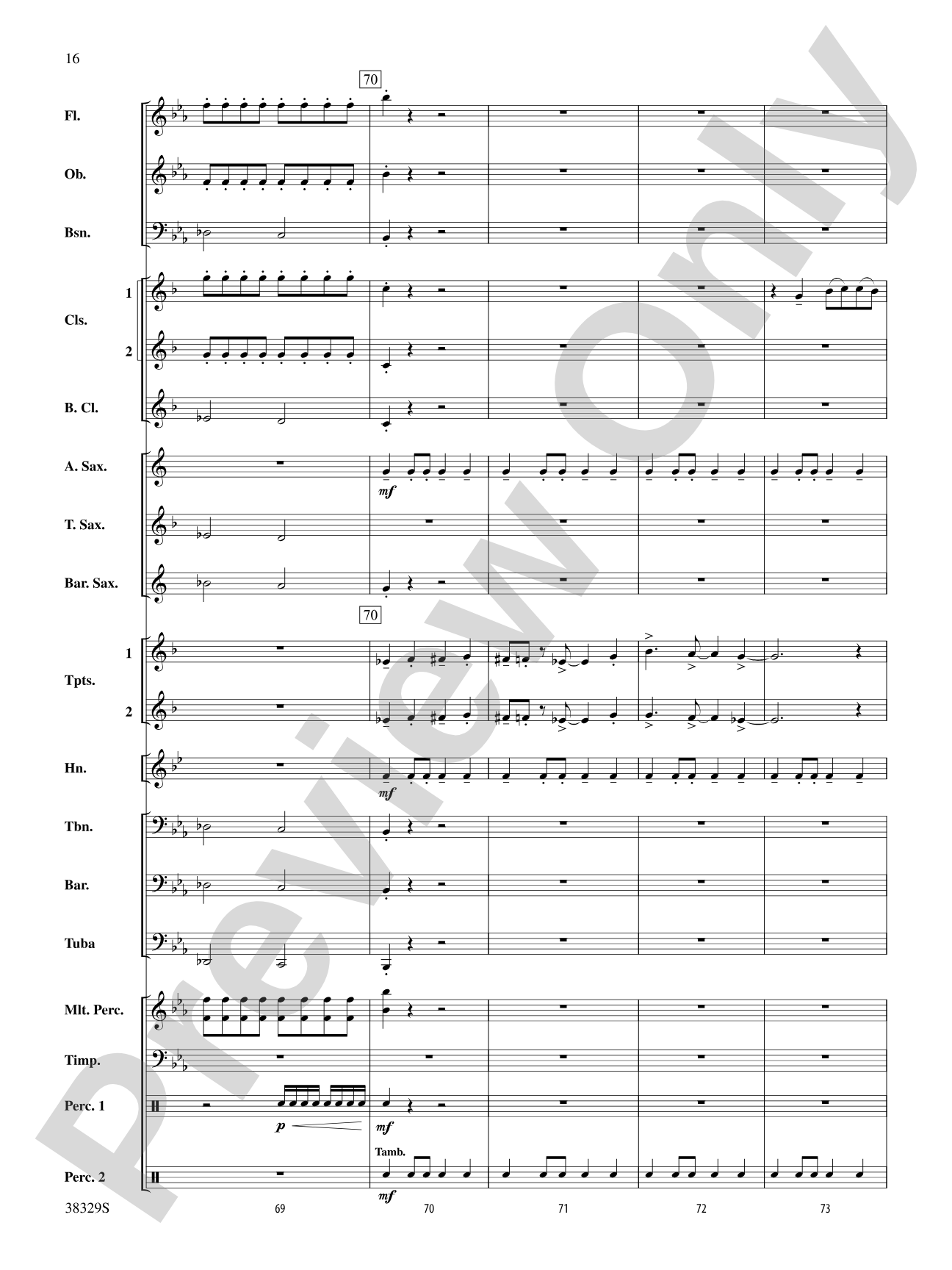
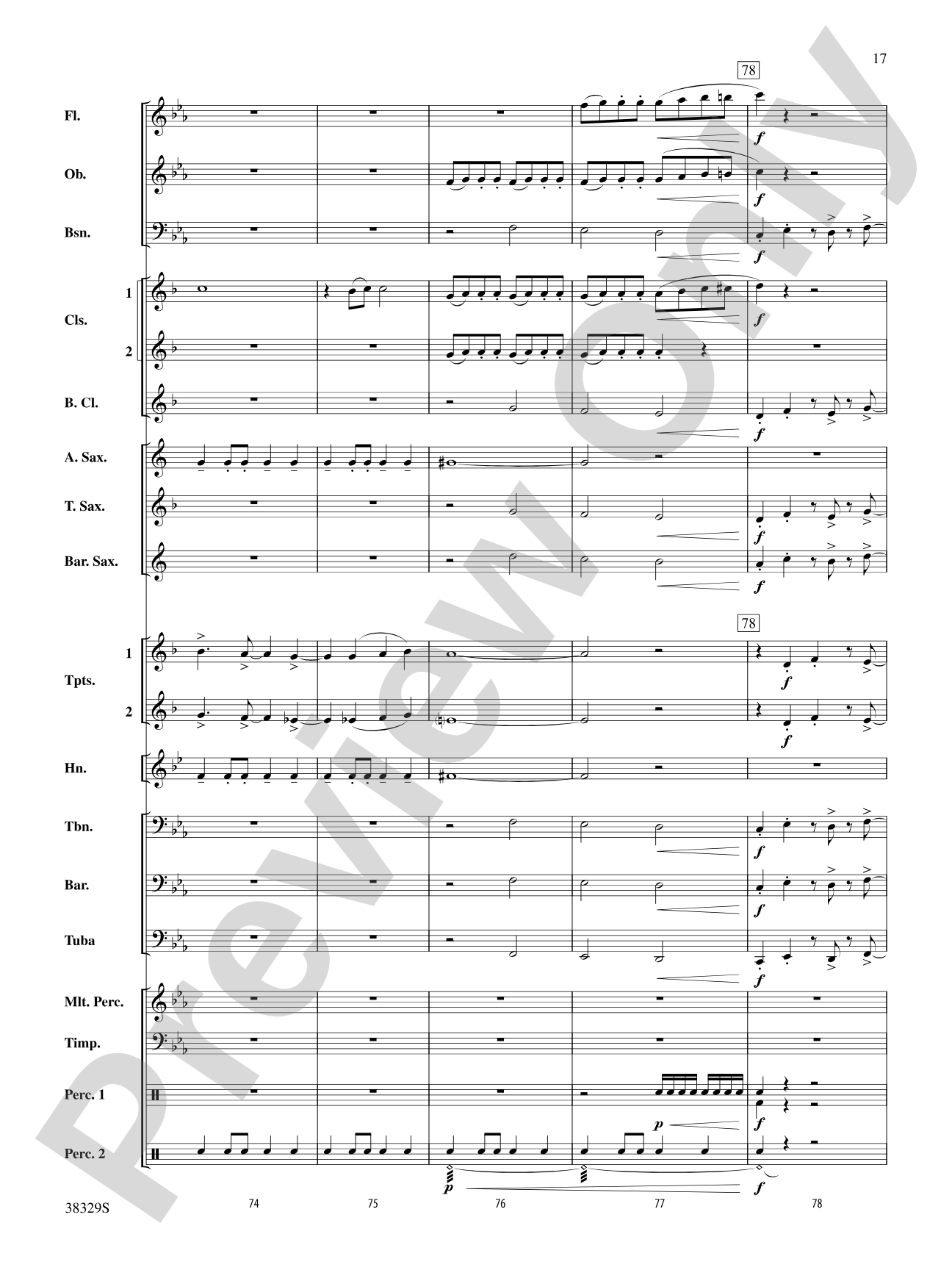
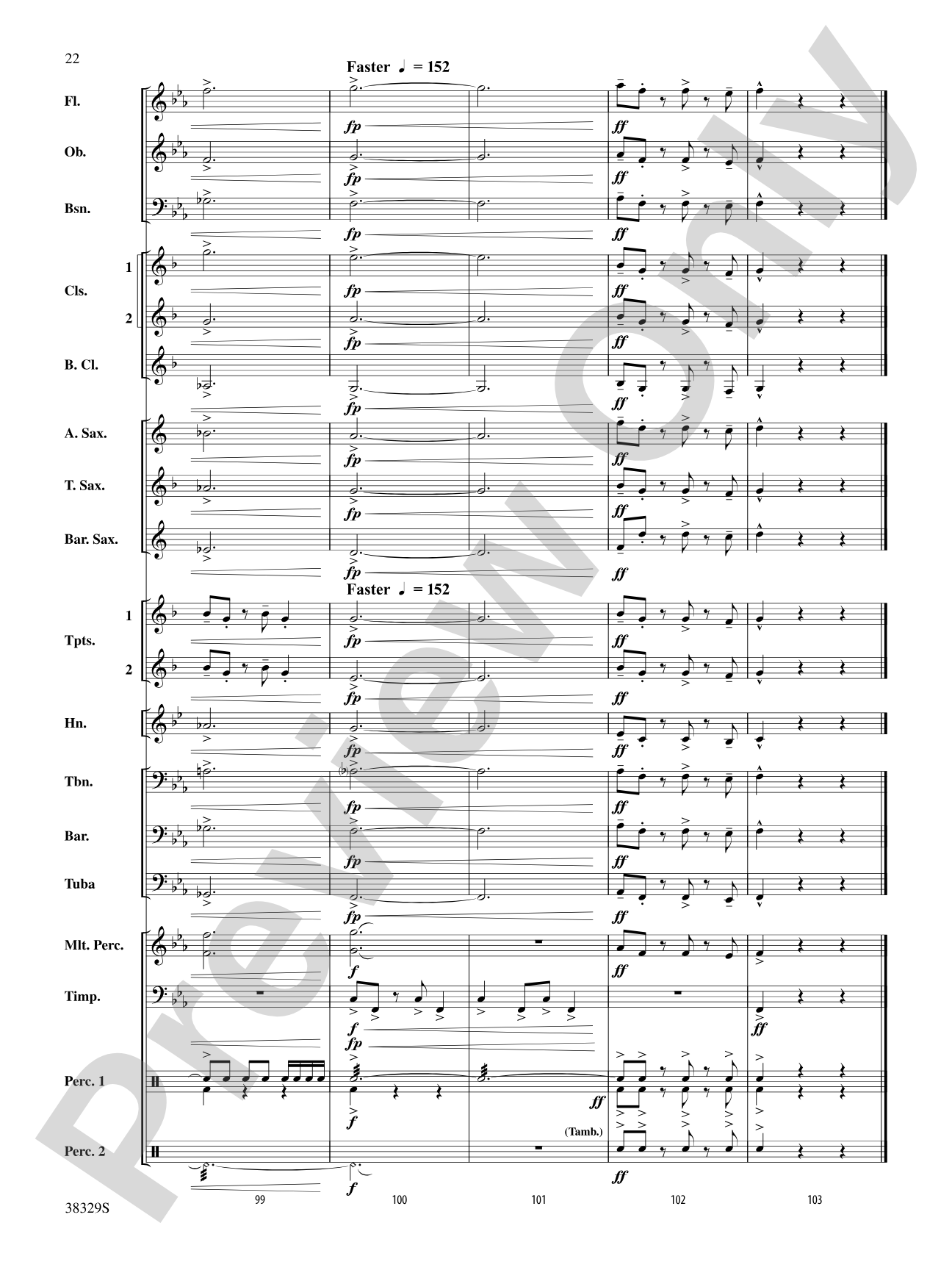



The Chase: Score
By Michael Story
Grade: 2 (Easy)
Item: 00-PR-0003737
$10.00
Pickup currently not available
Description
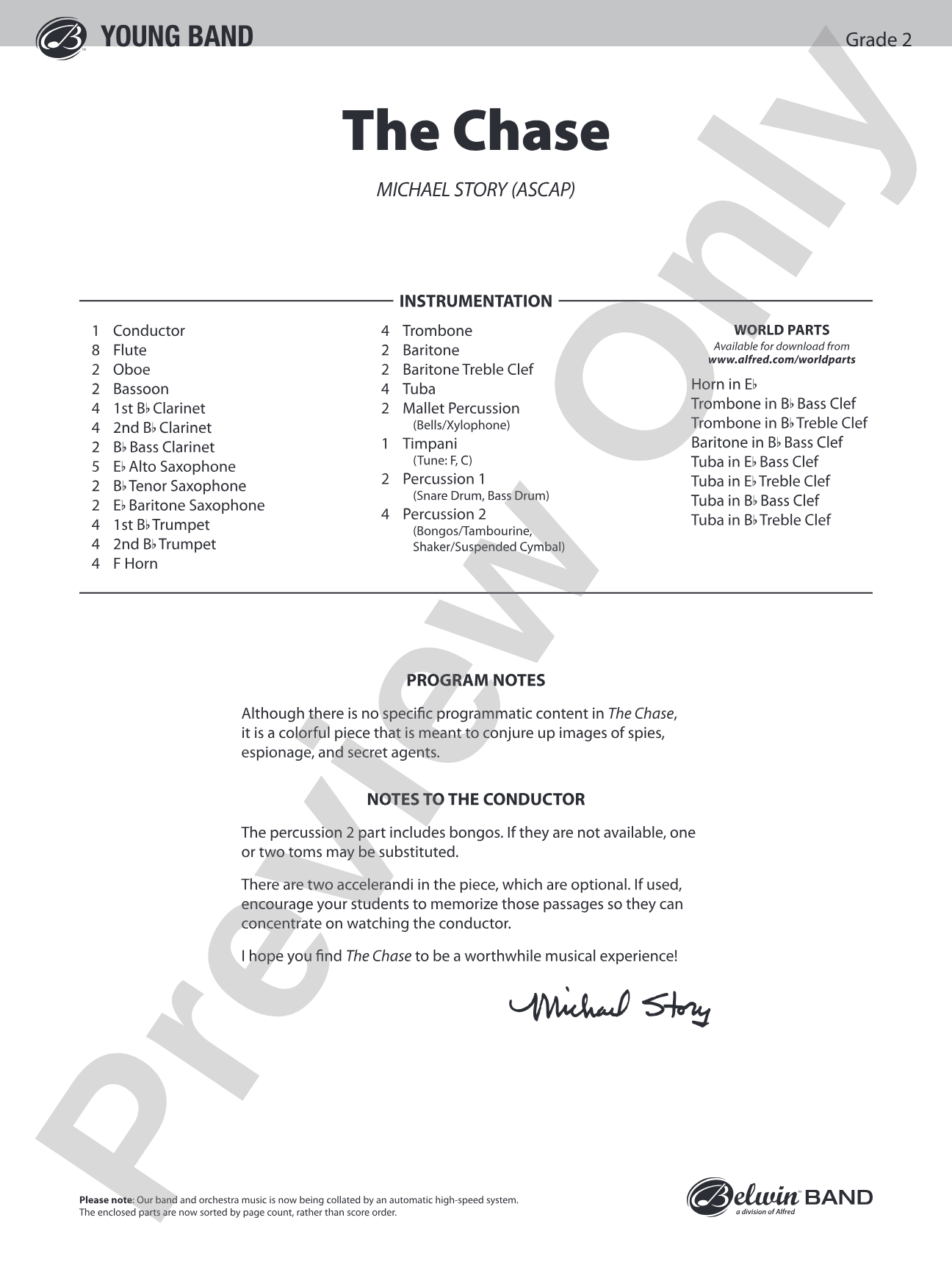
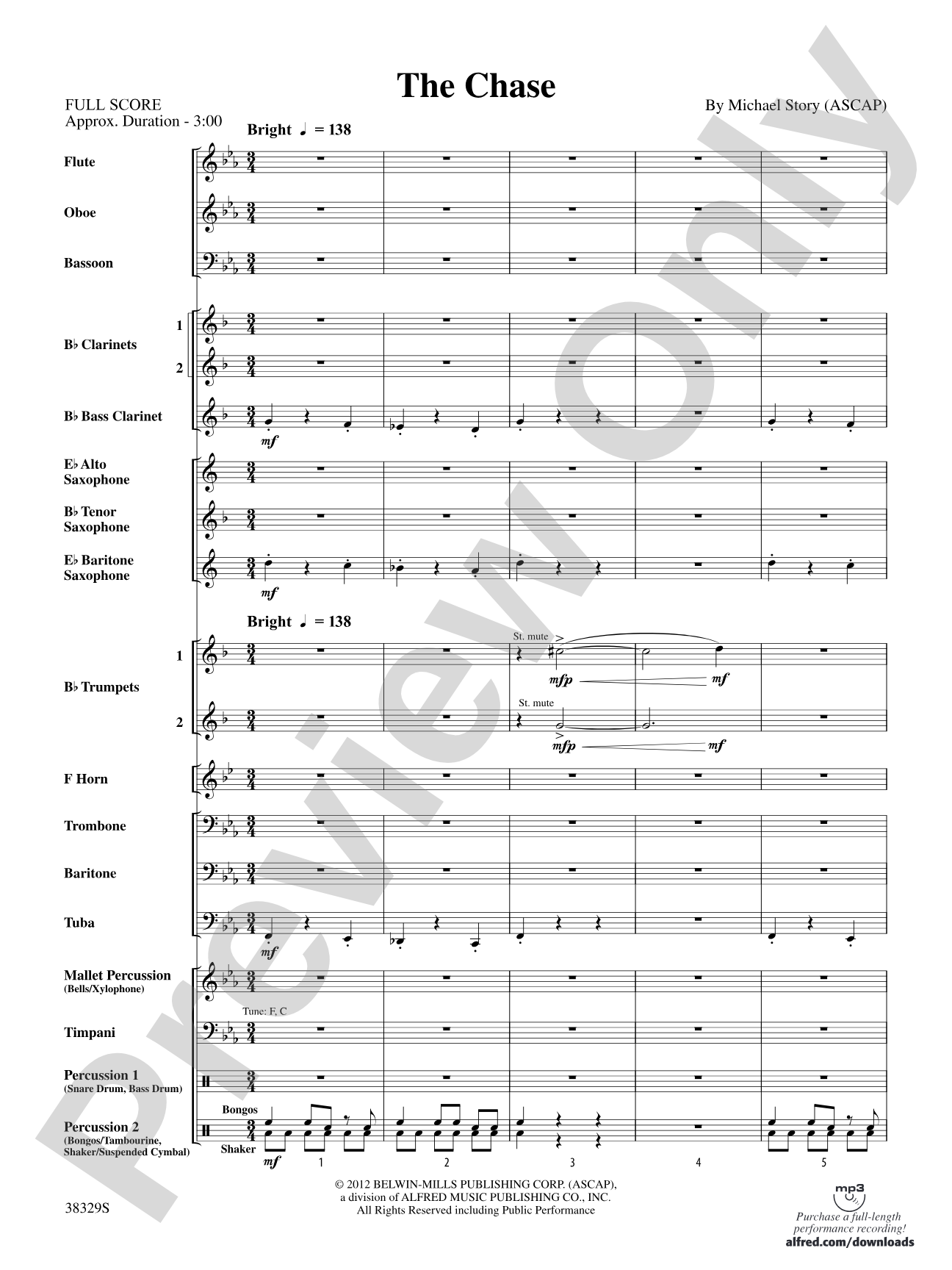
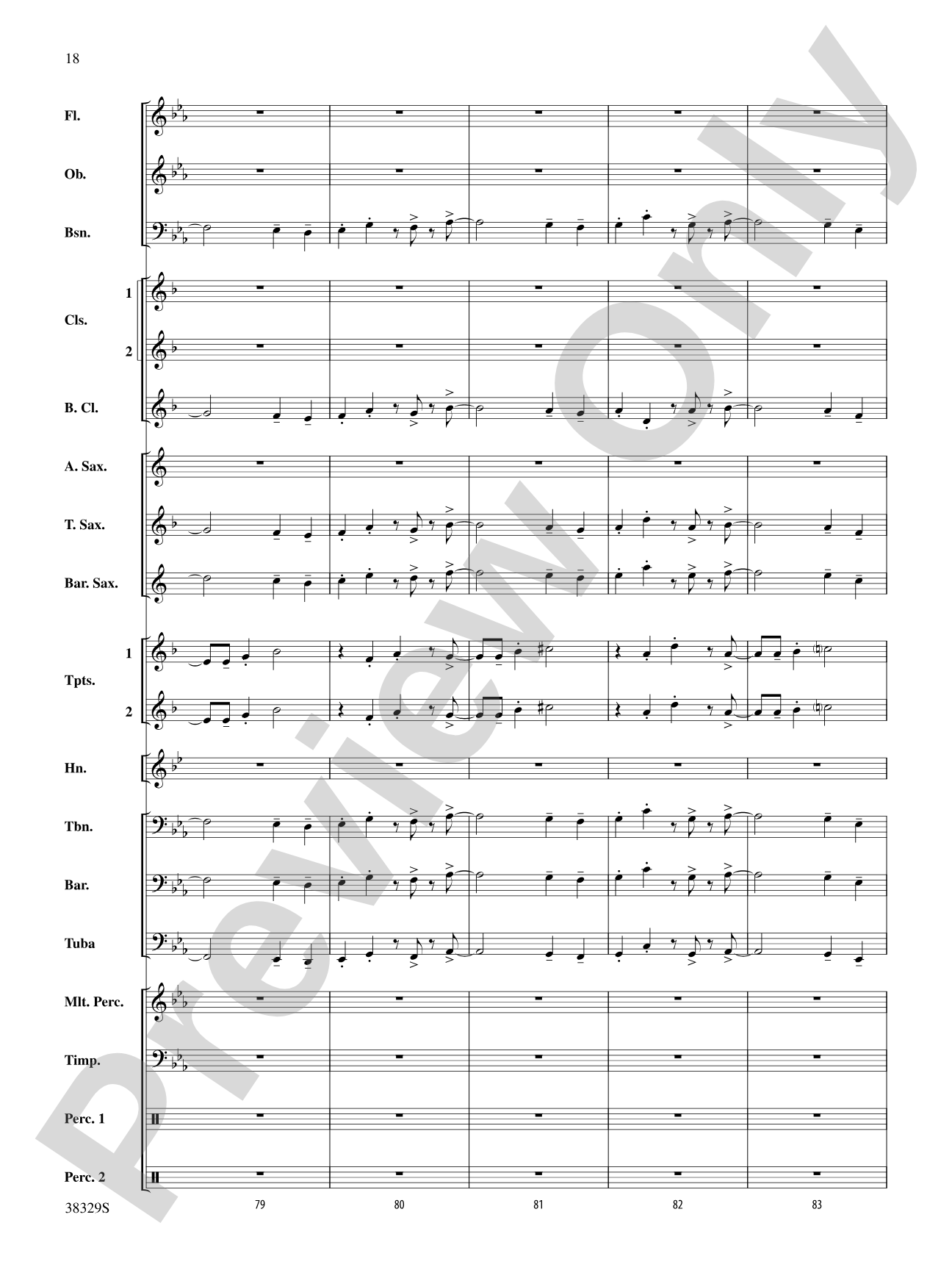
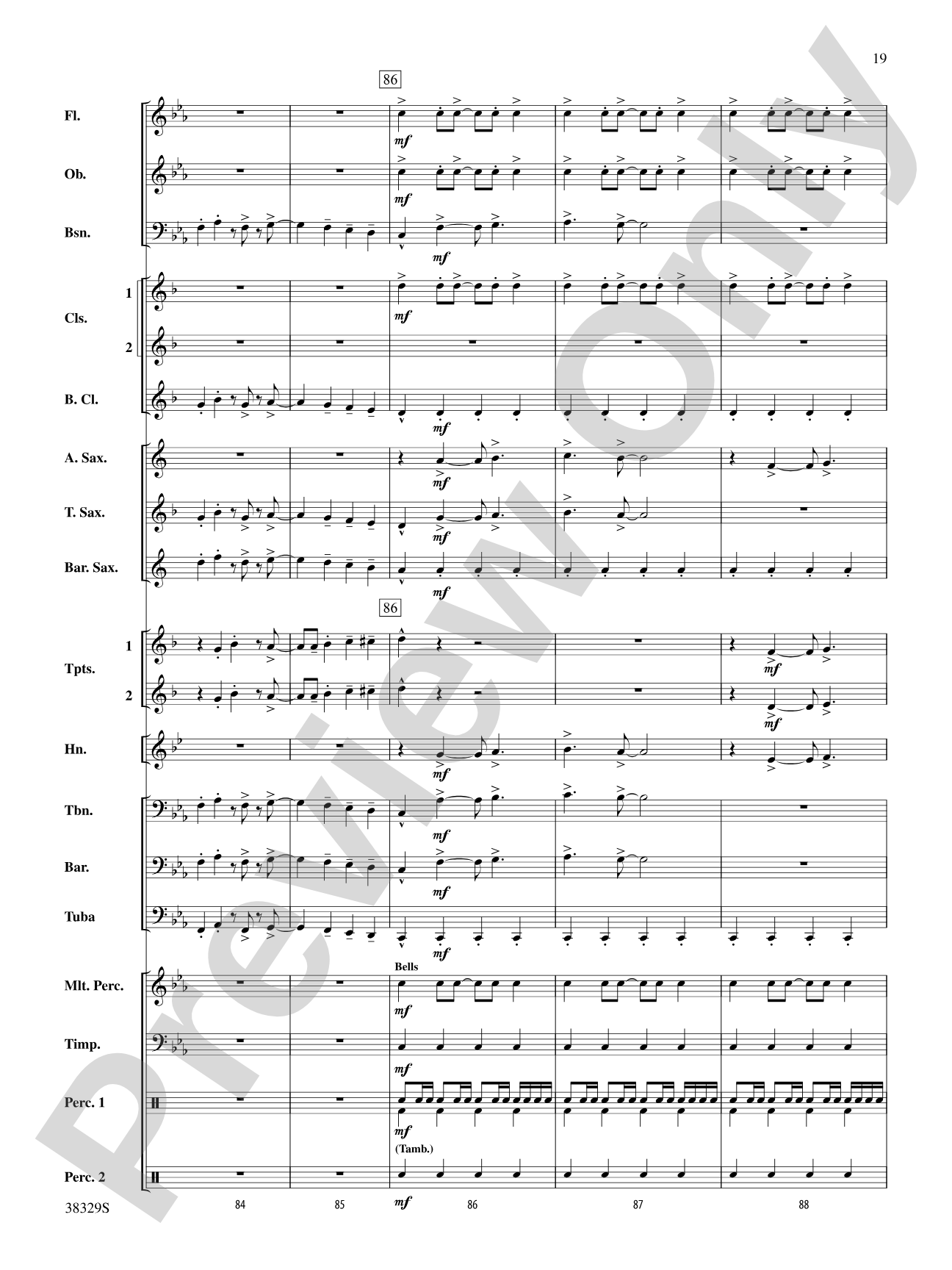
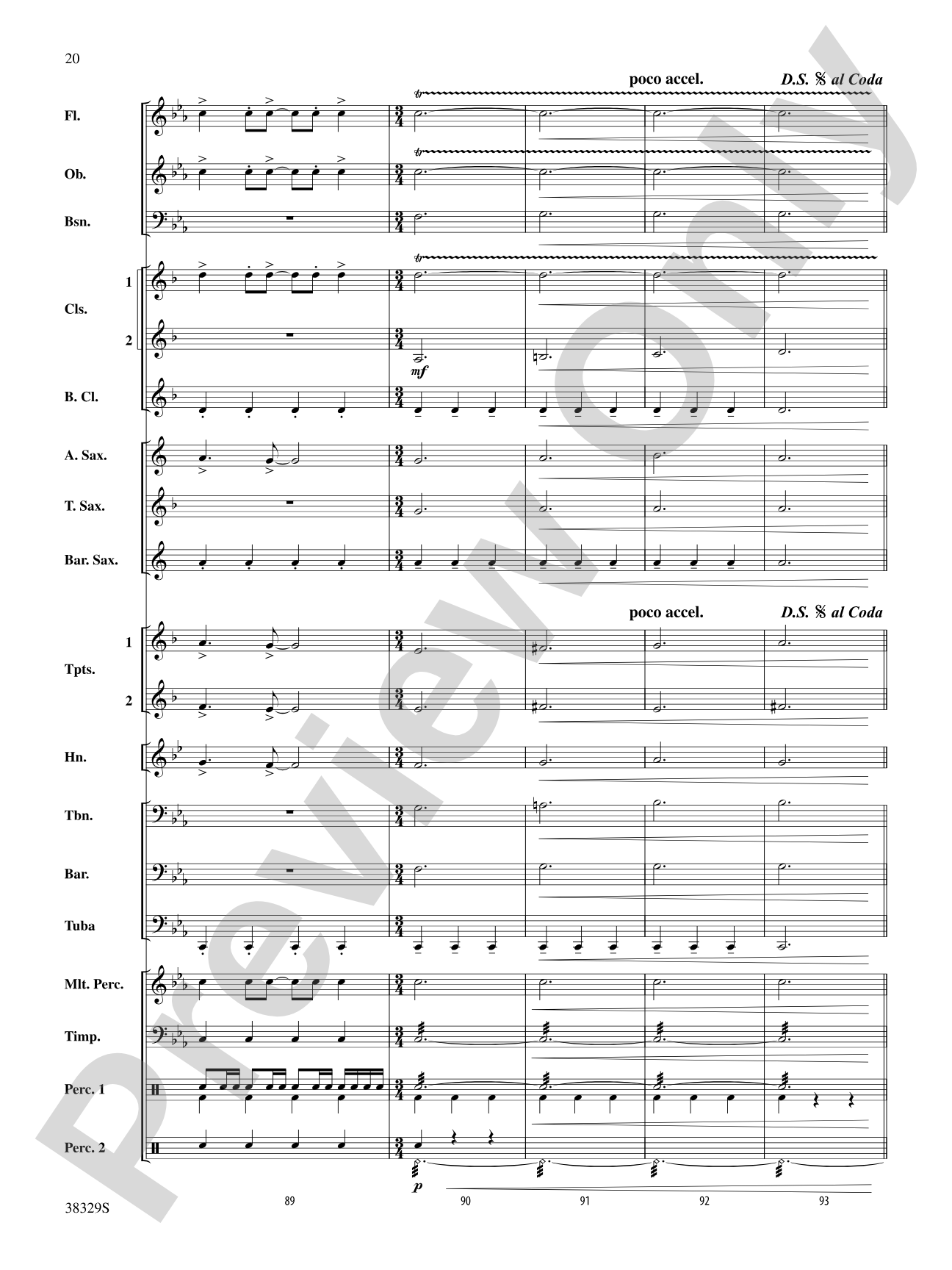
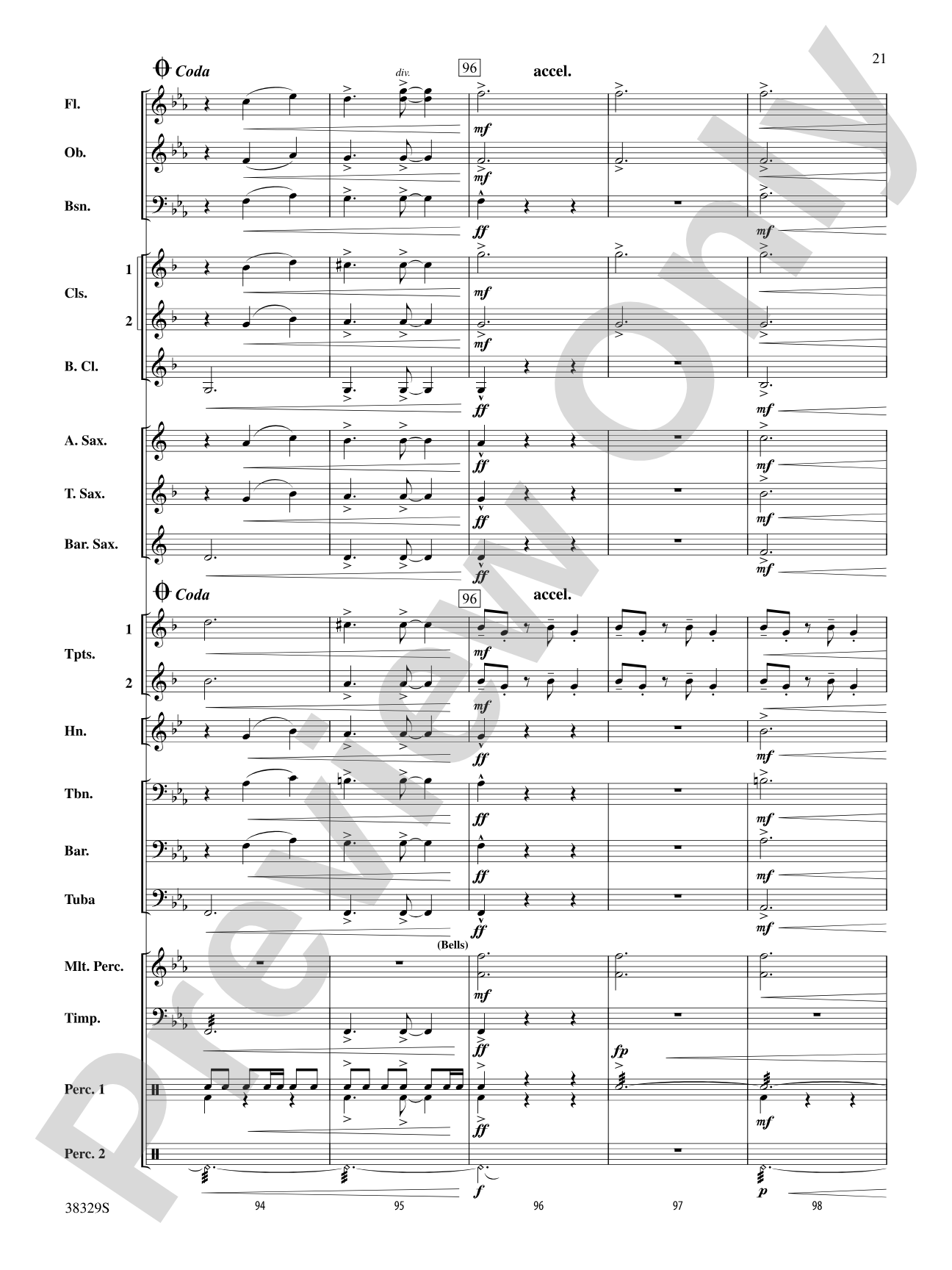
Think about spies . . . espionage . . . secret agents. Michael Story has conjured up this original work that will tickle those thoughts and images in your players and audiences alike. This fun work has two optional accelerandi that add to the excitement while reinforcing the concept of watching the conductor. Teaching, learning and fun . . . it's a great mission! (3:00)


Don't just read it, hear it, play along with it, and watch your students grow with it. In MakeMusic Cloud, The Chase: Score comes alive with professional accompaniment, adjustable tempo, and built-in practice tools that turn solo practice into real progress.
Open in the Player
Jump straight in and assign it today.
Start Your Free Trial
Open this title and explore the full library in minutes.
Sample Audio
1
Audio File
--:--
0:00
0:00
Sample Video
No sample videos found.
Additional Details
Series:
Belwin Young Band
Publisher:
Alfred Music
Page Count:
254
SKU:
00-PR-0003737
More about this title
About the Composer: Michael Story
Michael Story is a prolific composer and arranger whose works for young ensembles have become standard repertoire in school band programs across North America. His compositional voice balances accessibility with genuine musical substance, creating pieces that engage students while respecting their developing musicianship. Story's output spans concert works, contest pieces, and pedagogical compositions that consistently find their way into festival programs and classroom libraries.
Known for writing music that speaks to young musicians' interests and imaginations, Story crafts pieces with clear programmatic content and structural clarity. His contributions to the Belwin Young Band series reflect his deep understanding of what works in the rehearsal room: music that's technically manageable but musically rewarding, with enough character to hold performers' attention and audiences' ears.
Why we love this
Story captures the spy-thriller aesthetic without relying on pastiche or borrowed material; this is original writing that genuinely evokes tension and intrigue. The optional accelerandi aren't just thrills for thrills' sake—they're teaching tools disguised as fun, forcing your ensemble to lock in with the podium in real time.
What to expect
Pulse-quickening and playful. Story weaves intrigue through rhythmic drive and orchestral color rather than harmonic complexity, creating a cinematic feel that makes young players feel like they're performing at a real concert rather than in a school gym. The optional tempo accelerations inject genuine excitement without losing the ensemble's control.
Who it's for
Grade 2 bands with solid fundamentals and a conductor who enjoys working with engaged, imaginative students. This piece works for groups eager to tackle something beyond generic concert fare but not yet ready for the technical demands of Grade 3 literature.
How to get the most out of it
- Establish a clear conducting tempo in early rehearsals and hold it steady until you introduce the accelerandi. Your band needs to trust the pulse before they can follow the dramatic shifts.
- Exaggerate your conducting gesture during the optional accelerandi passages. The chart gives you permission to build excitement; make sure every player sees the moment the tempo kicks up.
- Balance the programmatic storytelling with rhythmic precision. The "spy" narrative lives in articulation choices and dynamic shaping, not in loose playing.
- Use sectional rehearsals to lock in the syncopated rhythmic figures that anchor the spy-movie vibe. Rhythm section particularly needs clarity here so winds can sit confidently.
How to use it
Ideal as a concert opener that grabs audience attention immediately or as a mid-program energy reset. The three-minute length fits cleanly into any format, and the programmatic hook makes it memorable for families attending school concerts. It also stands up well in festival or solo/ensemble contest settings where judges appreciate clear musical intention and original composition.
Skills your students will build
- Following conductor cues during tempo changes and optional accelerandi
- Sustaining rhythmic precision within an accelerating tempo framework
- Balancing articulation and dynamic control to support programmatic storytelling
- Sectional coordination in syncopated passages
- Responding to expressive conducting choices in real time