The Chain Sheet Music Preview

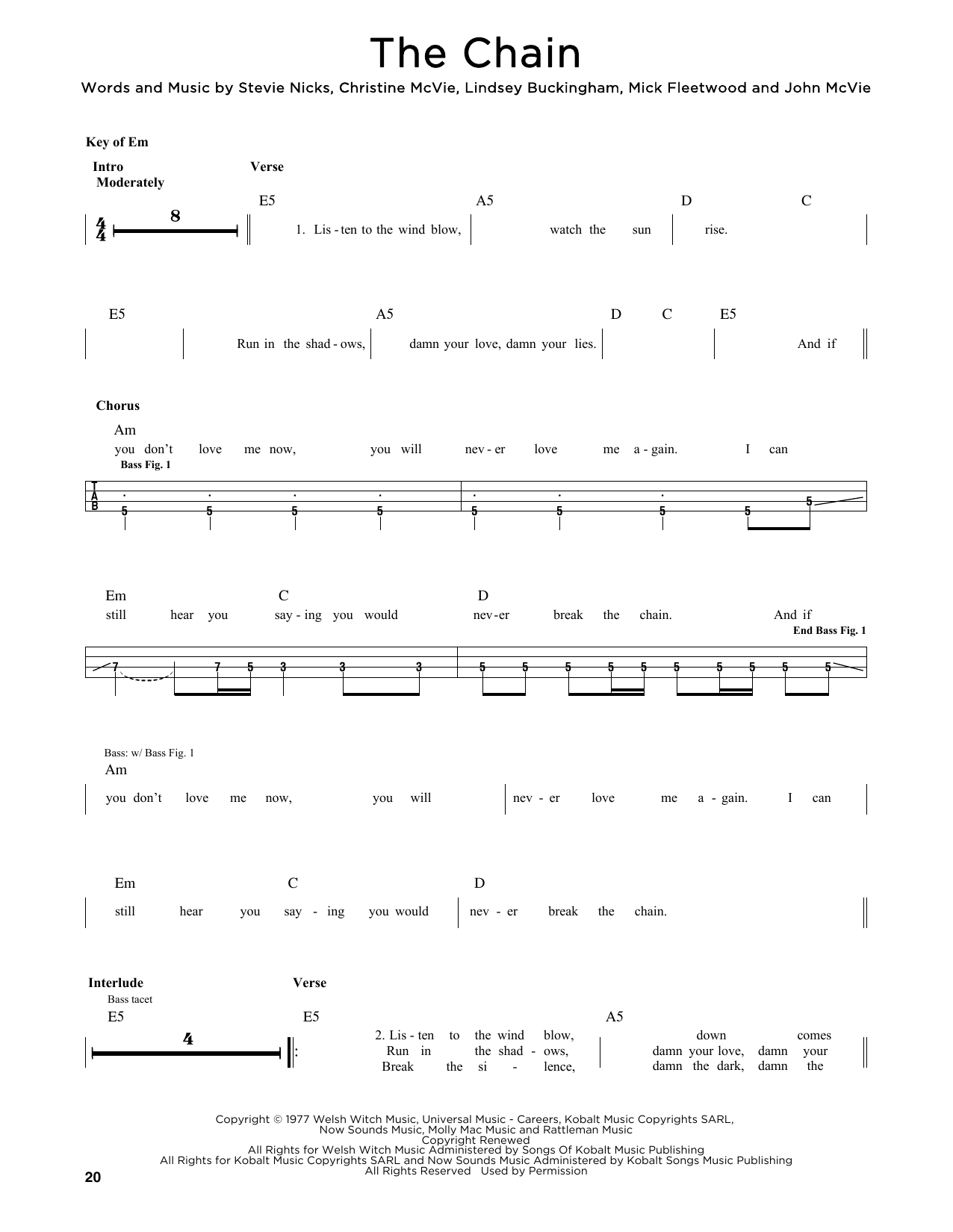
The Chain: Easy Bass Tab

As performed by Fleetwood Mac

Item: 35-DS00416347

Digital Download
$3.99
Description

Discover MakeMusic Cloud: thousands of interactive titles your students can play along with today.

Sample Audio
No sample audio found.
Sample Video
Additional Details
Publisher: Hal Leonard
Page Count: 2
SKU: 35-DS00416347

More about this title

About the Artist: Fleetwood Mac

Fleetwood Mac emerged from the British blues scene in 1967 before reinventing themselves as one of pop and rock's most successful acts. The band's 1977 album Rumours became a cultural phenomenon, driven by sophisticated songwriting, intricate arrangements, and the creative tensions between its members. Their influence on popular music production and band dynamics remains central to music education discussions about arrangement, harmony, and the role of bass in supporting both rhythm and melody.

Why we love this

The Chain offers bass players a chance to learn one of rock music's most iconic bass lines in an accessible format. John McVie's part is instantly recognizable yet achievable for developing players, making it both motivating and musically substantial. Students recognize the song immediately, which builds confidence while they're working through genuine rock bass vocabulary.

What to expect

Steady, confident, and hypnotic. The bass line moves with deliberate purpose, grounded in the pocket but always suggesting forward motion. There's an understated sophistication here; this is a bass part that serves the song rather than demanding attention, yet it's absolutely essential to why the arrangement works.

Who it's for

Bass guitarists building foundational rock repertoire who want to work with material that sounds professional while remaining within intermediate reach. This works well for students transitioning from beginner exercises to recognizable songs, or for anyone filling out a pop and rock bass portfolio.

How to get the most out of it

  • Focus on locking the pulse with the kick drum rather than chasing every melodic contour; McVie's approach is rhythmically grounded first
  • Pay attention to dynamics in the recorded version to understand when the bass line sits forward in the mix versus supporting the background
  • Practice the transitions between sections cleanly, since the song's structure shifts multiple times and you'll need solid timing between changes
  • Experiment with pickup timing on the main riff to find where it lands relative to the beat; slight variations in feel create that classic Rumours-era pocket

How to use it

Feature this during a pop and rock unit to show students how bass functions in mainstream production. It pairs naturally with other Rumours-era material or works as a standalone feature that demonstrates era-appropriate bass tone and phrasing. Consider pairing it with band or ensemble context if you have guitarists and drummers working through similar repertoire.

Skills your students will build

  • Locked pocket playing with steady quarter note and eighth note rhythms
  • Recognizing and executing riff-based bass lines within rock structures
  • Understanding how bass supports song form and creates cohesion across section changes
  • Developing consistent feel across repetitive patterns while maintaining precision

You May Also Like