The Cat And The Mouse Sheet Music Preview

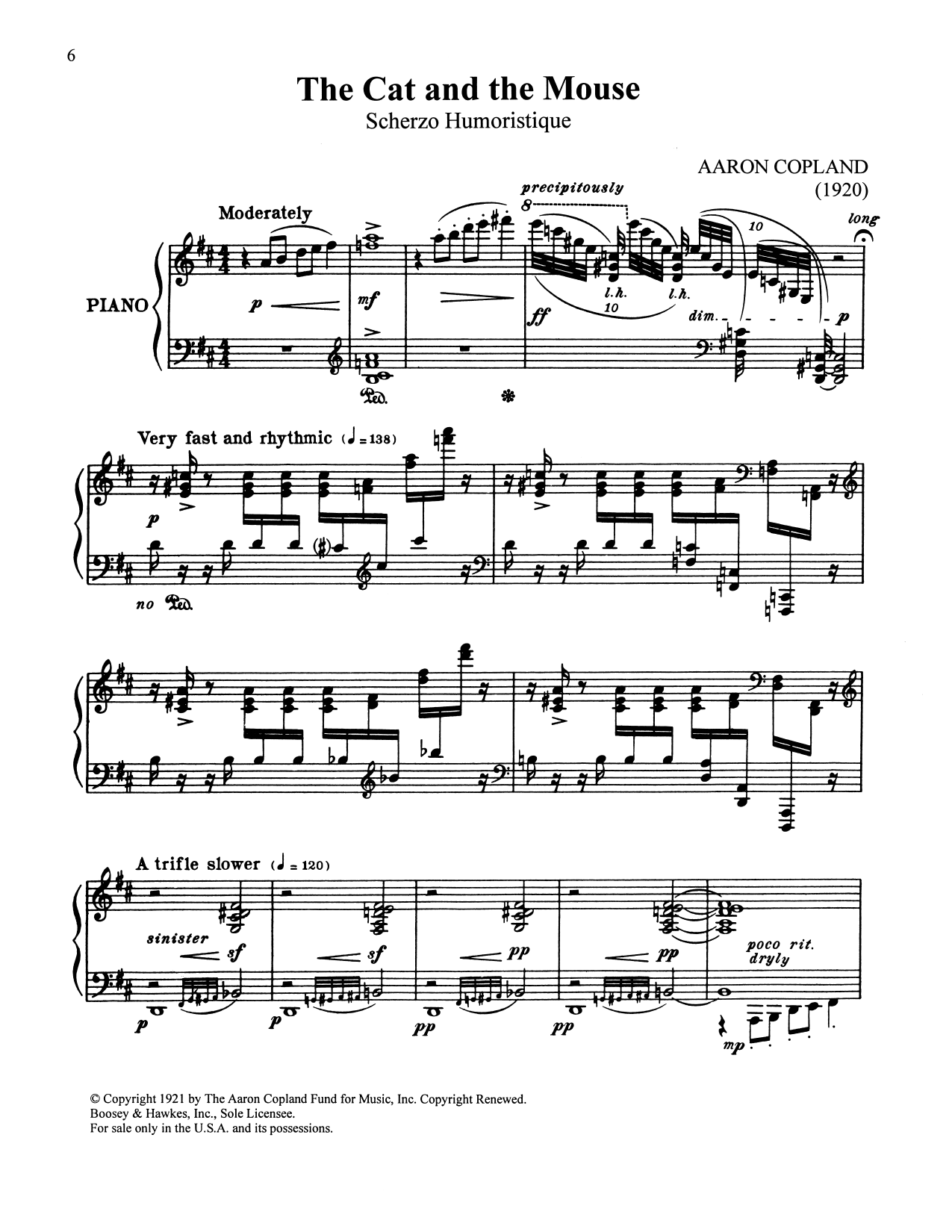
The Cat And The Mouse: Piano Solo

By Aaron Copland

Item: 35-DS01979715

Digital Download
$5.99
One moment…
Description

Discover MakeMusic Cloud: thousands of interactive titles your students can play along with today.

Sample Audio
No sample audio found.
Sample Video
Additional Details
Publisher: Hal Leonard
Page Count: 6
SKU: 35-DS01979715

More about this title

About the Composer: Aaron Copland

Aaron Copland shaped American classical music by rooting his compositional voice in the country's folk traditions, hymns, and open landscapes. His gift for melody and orchestration made him equally comfortable writing symphonies, film scores, and accessible works for amateurs, earning him a central place in twentieth-century concert music and music education.

Why we love this

Copland's piano writing here captures his signature warmth and clarity without sacrificing sophistication. The piece moves at a manageable tempo with charming character work that rewards both the player and listener, making it ideal for recitals or student showcases where you want something genuinely musical rather than technically showy.

What to expect

Playful and intentional, with musical material that clearly represents two distinct personalities. The cat prowls with confident, often angular phrasing while the mouse darts about with lighter, quicker gestures. The piece captures Copland's gift for making orchestral thinking work at the keyboard.

Who it's for

Intermediate to early advanced pianists who have solid technique but benefit from repertoire with strong narrative and character. Teachers looking for a Copland piece that sits comfortably between the very easy "Appalachian Spring" arrangements and his more demanding concert works.

How to get the most out of it

  • Shape the cat's musical material with precise articulation and rhythmic independence from the mouse's part; let each character maintain its own personality even when they play together.
  • Balance the dynamic contrast between the two voices. The cat's phrases often dominate, but allow the mouse passages to breathe with their own tonal color.
  • Observe the tempo markings carefully. Any rhythmic slippage between the characters breaks the compositional humor and narrative charm.

How to use it

Slot this into a recital as a novelty piece that actually holds up to serious musical scrutiny, or pair it with other Copland works to show students the range of his compositional voice. It also works well in a program that tells a story or theme, particularly one exploring character and narrative in music.

Skills your students will build

  • Voice independence and balance between two distinct melodic lines
  • Character portrayal through articulation, dynamics, and phrasing choices
  • Rhythmic precision and coordination of contrasting rhythmic ideas
  • Shaping shorter phrases to create narrative momentum and humor

You May Also Like