
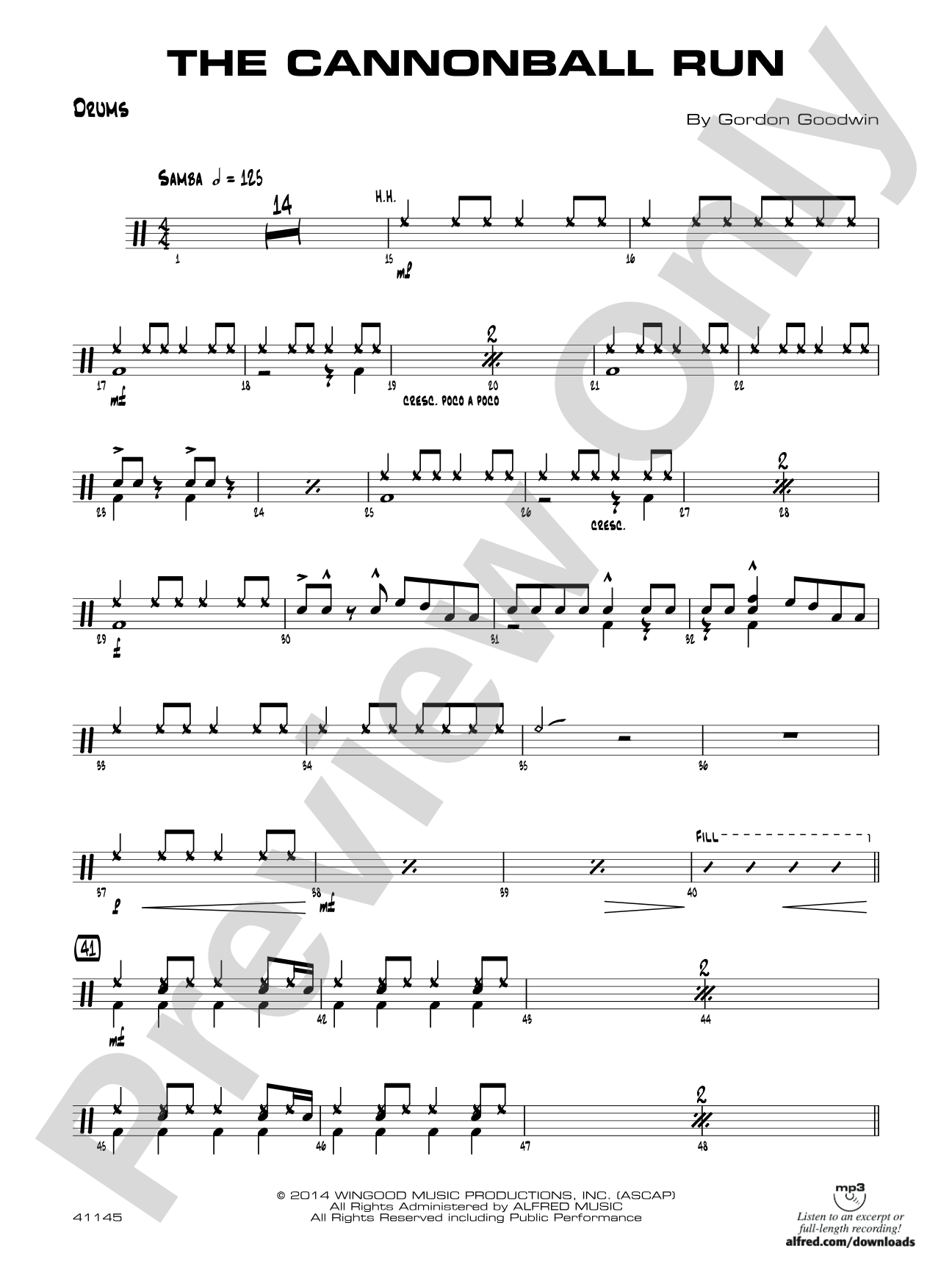
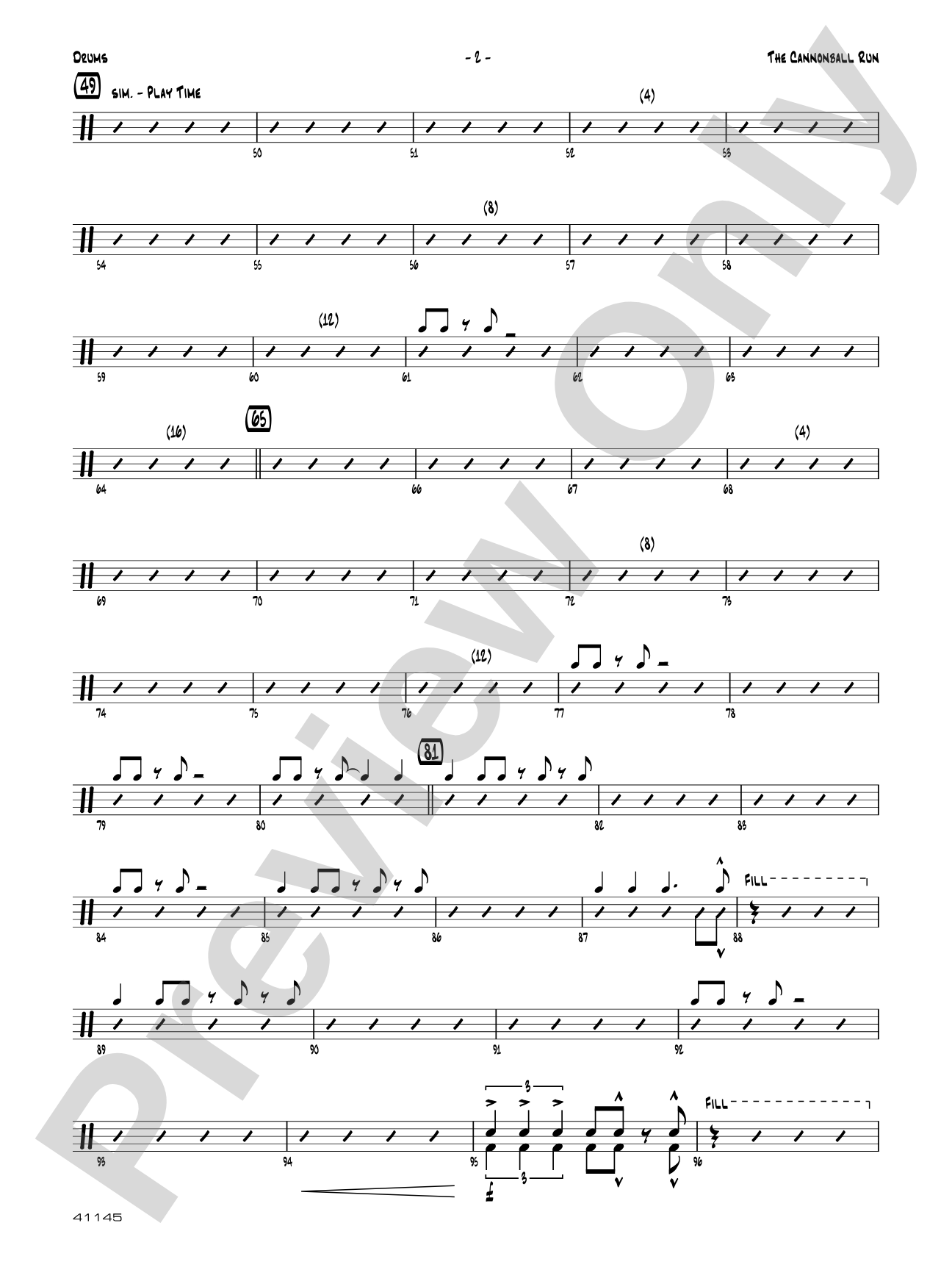

The Cannonball Run: Drums
By Gordon Goodwin
Grade: 5 (Advanced / Difficult)
Item: 00-PC-0016281_D
$3.00
Pickup currently not available
Description
A brilliant chart written for five saxes (SATTB), plus four rhythm instruments and percussion! This brisk samba at around 240 BPM has solo chord changes for everyone. Very exciting, very unique, and extremely hip! (5:55)


Don't just read it, hear it, play along with it, and watch your students grow with it. In MakeMusic Cloud, The Cannonball Run: Drums comes alive with professional accompaniment, adjustable tempo, and built-in practice tools that turn solo practice into real progress.
Open in the Player
Jump straight in and assign it today.
Start Your Free Trial
Open this title and explore the full library in minutes.
Sample Audio
1
Audio File
--:--
0:00
0:00
Sample Video
No sample videos found.
Additional Details
Series:
Gordon Goodwin Series
Publisher:
Alfred Music
Page Count:
94
SKU:
00-PC-0016281_D
More about this title
About the Composer: Gordon Goodwin

Gordon Goodwin has been composing since childhood, writing complete compositions rather than fragments from the moment he could notate music. His first big band arrangement, Hang Loose, arrived when he was just thirteen years old. This early mastery led to work scoring major films including Bad Boys II, Con Air, Gone in 60 Seconds, Star Trek: Nemesis, and Remember the Titans, earning him three Emmy Awards and multiple Grammy nominations along the way.
Goodwin's collaborative credits span decades of music history, from sessions and compositions with Ray Charles and Quincy Jones to contemporary artists like Christina Aguilera and Brian McKnight. Since founding Gordon Goodwin's Big Phat Band in 2000, he has continued to define contemporary big band jazz through recordings, live performances, and touring with orchestras across Atlanta, Dallas, Utah, Seattle, Toronto, and London. His dual mastery of composition and conducting translates directly into charts that are both musically sophisticated and deeply playable for advancing ensembles.
Why we love this
Goodwin writes for saxophones with complete respect for their range and voice independence. Each section and soloist gets genuinely idiomatic material rather than padding, and the samba groove at 240 BPM crackles with the kind of precision and style you hear in his Big Phat Band records. This is a chart that respects your students' musicianship while delivering undeniable fun.
What to expect
A high-octane samba that pulls energy from Brazilian rhythmic tradition and Hollywood scoring sophistication. The whole band charts snap with precision, the solo sections swing hard, and the overall feel is sleek, contemporary jazz ensemble writing at its most accomplished.
Who it's for
Advanced jazz ensembles with solid players across all five saxophone voices and experienced rhythm section musicians. This Grade 5 chart assumes your students read fluently, handle syncopated lines, and are ready for genuine improvisation on complex chord progressions.
How to get the most out of it
- Lock the samba rhythm as a section (saxes, drums, piano, bass) before adding the solo changes. The groove is the foundation everything else rests on.
- Record a scratch track of the rhythm section to give soloists a solid reference during rehearsals. At 240 BPM, the tempo can drift quickly if the pulse breaks.
- Balance the five-sax voicings carefully in tutti sections. The SATTB blend needs clear top and bottom voices, with the inner parts supporting rather than pushing forward.
- Give soloists time to absorb their chord changes in slow sections before running full tempo. Goodwin's changes are logical but move quickly enough that early familiarity prevents confidence issues.
How to use it
Pair this with other contemporary ensemble pieces for a concert that showcases current jazz composition. The five-minute duration and advanced difficulty make it an excellent second-half opener or closer depending on your concert arc. Schools with strong jazz programs often use charts of this caliber as repertoire that auditions and competitions actually recognize.
Skills your students will build
- Reading complex, syncopated rhythms in samba context at fast tempo
- Blending five independent saxophone voices within unified harmonic structures
- Improvising on jazz chord progressions with strong harmonic movement
- Articulating fast passages with precision while maintaining groove integrity
- Understanding Brazilian rhythmic vocabulary and its application in contemporary jazz composition