

The Candle Is a Symbol: SATB Choral Octavo
Words and music by Andy Beck
Item: 00-PO-0006376
$2.05
Minimum order quantity: 20 copies
Pickup currently not available
Related Items
The Candle Is a Symbol: SoundTrax Digital Audio Download |
$29.99
|
View | |
The Candle Is a Symbol: 3-Part Mixed Choral Octavo |
$2.05
|
View | |
The Candle Is a Symbol: 2-Part Choral Octavo |
$2.05
|
View | |
The Candle Is a Symbol: SATB Choral Octavo |
$2.05
|
View | |
The Candle Is a Symbol: 3-Part Mixed Choral Octavo |
$2.05
|
View | |
The Candle Is a Symbol: 2-Part Choral Octavo |
$2.05
|
View | |
The Candle Is a Symbol: Choral SoundTrax CD |
$29.99
|
View |
Description
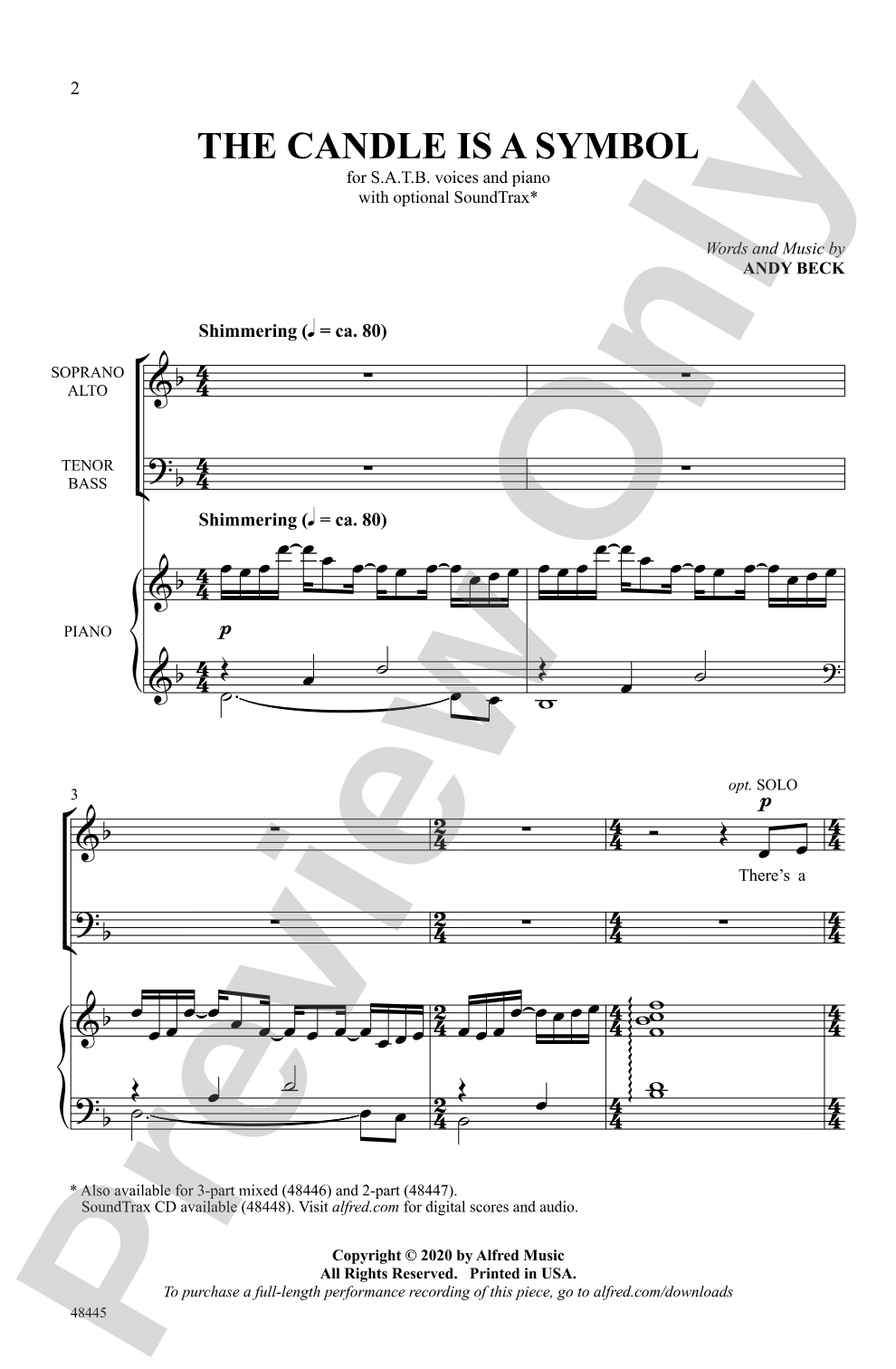
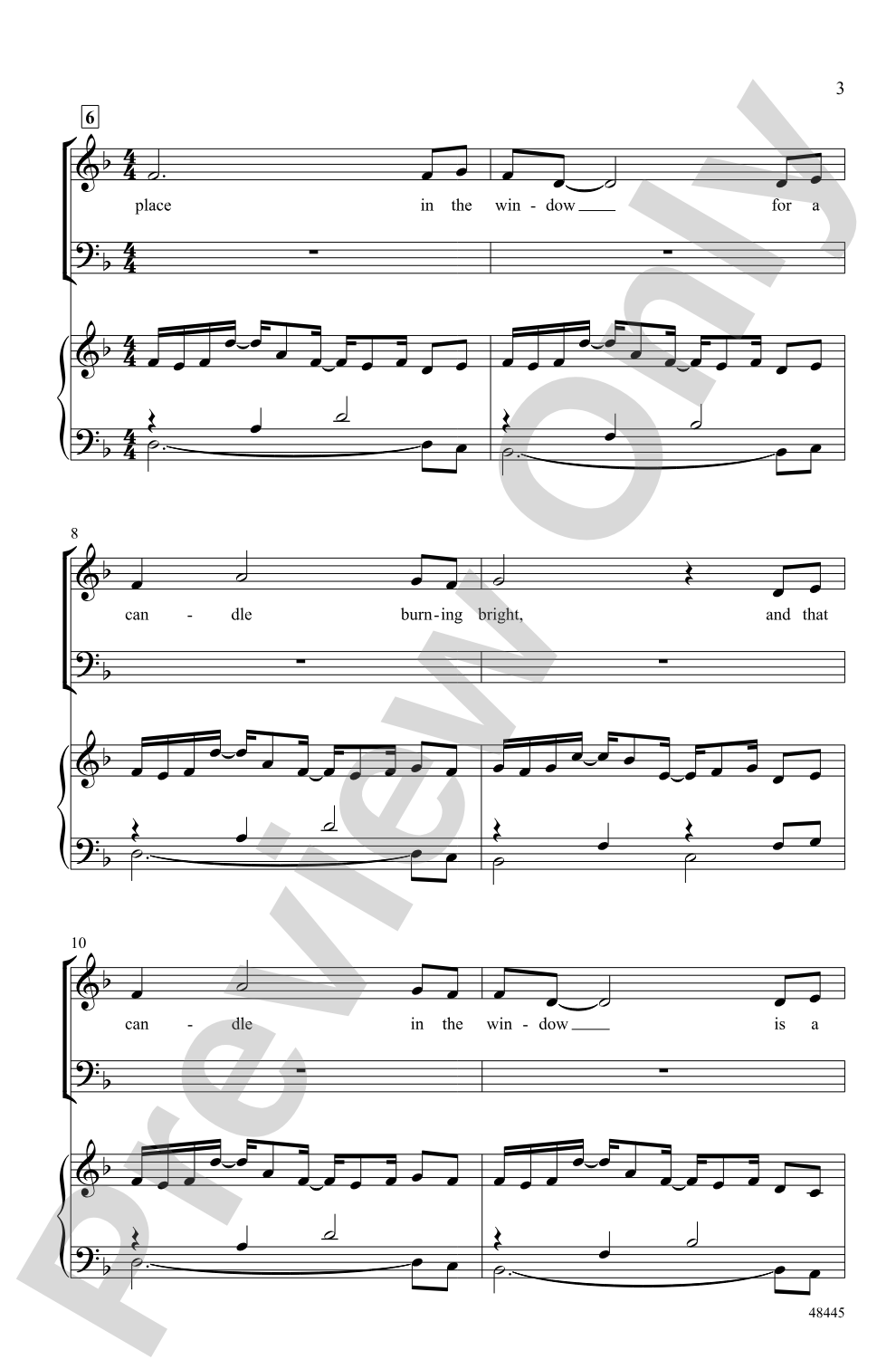
An emblem that transcends cultures, religions, and time periods, the flickering candle offers a message of joy, hope, and peace that can reach every human heart. Start with the spark of a single voice on the opening solo, and then light your choir's inner flame when the entire group joins. Simple, with a folk-like quality; artful, as the composer explores dark versus light, major versus minor.


The Candle Is a Symbol: SATB Choral Octavo isn't in MakeMusic Cloud just yet...but it could be. Let us know you'd like to see it, and you'll help shape what comes next. In the meantime, start a free trial and dive into thousands of interactive titles your students can play along with today.
Request This Title
Tell us you want it.
Start Your Free Trial
Explore everything that's ready to play right now.
Sample Audio
1
Audio File
--:--
0:00
0:00
Sample Video
Additional Details
Series:
Alfred Choral Designs
Publisher:
Alfred Music
Page Count:
12
SKU:
00-PO-0006376
More about this title
About the Composer: Andy Beck

Andy Beck leads the choral publications department at Alfred Music, where he has shaped the catalog for decades. With over 450 choral works and vocal resources published, along with widely adopted sight-singing resources like Sing at First Sight and Vocalize! 45 Vocal Warm-Ups That Teach Technique, Beck's output reaches singers in schools and concert halls worldwide. His compositions appear regularly on YouTube, performed by ensembles across the globe.
Beyond the page, Beck maintains an active life in music performance and education. He serves as a sought-after guest conductor, adjudicator, and clinician for honor choirs and all-state groups, particularly throughout the Southeast. As a tenor, he performs with the North Carolina Master Chorale Chamber Choir and has contributed his voice to Alfred Music recordings since 1992. His dual Master's degrees in Music Education from Northwest Missouri State University and Bachelor's degree from Ithaca College underscore his commitment to both artistry and pedagogy.
Why we love this
Beck understands what makes a choral moment resonate. The opening solo passage draws singers and listeners into an intimate space before the full SATB texture blooms, creating a musical arc that feels earned rather than formulaic. The interplay between major and minor tonalities gives you textural contrast without requiring advanced harmonic reading, making this piece as rewarding to teach as it is to perform.
What to expect
The music unfolds like a quiet moment becoming radiant. Beck's folk-like melodic gestures feel accessible and warm, while his harmonic choices between major and minor create an emotional depth that lingers. The piece carries the contemplative quality of a winter evening lit by a single light, gradually brightened as more voices join.
Who it's for
This octavo works for choirs of intermediate skill level and above. Whether you're programming a winter concert with both sacred and secular repertoire, or seeking a piece that speaks to universal themes, this arrangement gives singers a vocal moment that connects to the text without overwhelming them technically.
How to get the most out of it
- Shape the opening solo with clear diction and a sense of vulnerability; this voice carries the emotional weight before the choir enters.
- Balance the transition from solo to tutti carefully so the full choir feels like a natural lighting of the flame, not an interruption.
- Explore the major-minor shifts as opportunities for expressive contrast; let your singers feel the emotional difference in sonority rather than treating the changes as purely technical.
How to use it
Pair this with other peace-themed repertoire in a winter or holiday program, or stand it alone as a secular counterpart to sacred selections. Its brevity and emotional accessibility make it ideal for opening a set or creating a transitional moment between higher-energy pieces. The recorded accompaniment allows flexibility in rehearsal scheduling.
Skills your students will build
- Singing expressive solos within a choral context
- Blending major and minor tonalities by ear
- Sustaining ensemble balance when a single voice or small group leads
- Responding to dynamic and textural transitions