The Calls (for 16 Solo Voices) Sheet Music Preview

The Calls (for 16 Solo Voices): SATB Choral Octavo

By Niels Rosing-Schow

Item: 35-DS01977962

Digital Download
$29.99

Minimum order quantity: 10 copies

Description

Discover MakeMusic Cloud: thousands of interactive titles your students can play along with today.

Sample Audio
No sample audio found.
Sample Video
Additional Details
Publisher: Hal Leonard
Page Count: 67
SKU: 35-DS01977962

More about this title

About the Composer: Niels Rosing-Schow

Niels Rosing-Schow is a Danish composer whose choral works reflect a deep engagement with texture, sonority, and the expressive possibilities of the human voice. His compositional language draws on both contemporary techniques and a sensitivity to text, making his pieces particularly rewarding for ensembles committed to nuanced, thoughtful interpretation.

Rosing-Schow's output spans orchestral, chamber, and vocal genres, but his choral writing consistently demonstrates a fascination with how voices can create atmosphere and meaning through layered, often intricate writing. His work appeals to directors seeking contemporary music that challenges singers while remaining rooted in musicality.

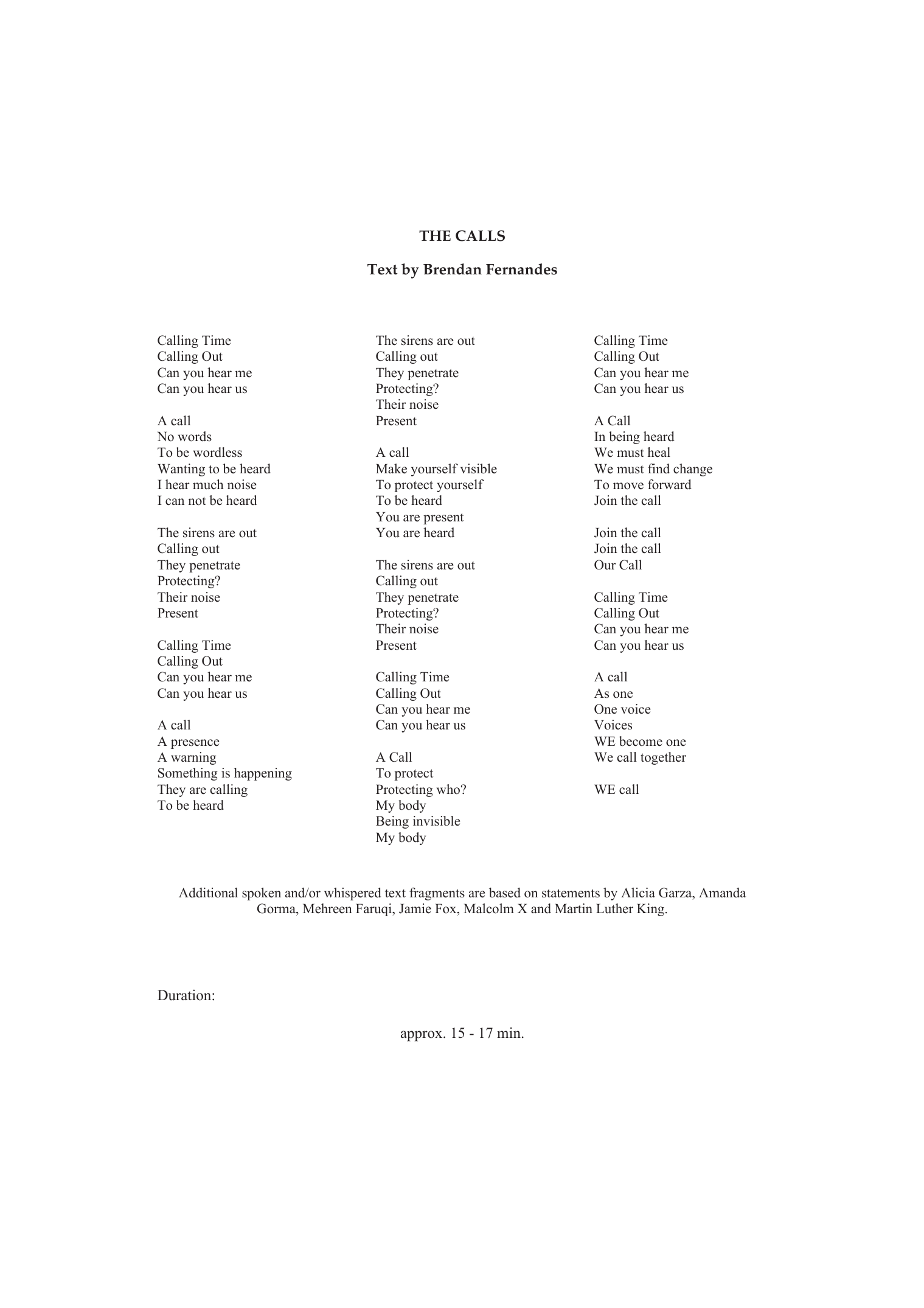
Why we love this

The scale of this piece—sixteen solo voices within the SATB framework—creates an unusual and compelling compositional challenge that rewards careful preparation and singers willing to inhabit individual lines. Rosing-Schow writes with textural sophistication that doesn't rely on bombast; the complexity lives in the interplay of voices, making this an excellent choice for ensembles wanting to develop ensemble maturity and independence.

What to expect

The Calls unfolds with deliberate attention to how voices can call to, answer, and weave around one another. The texture is contemplative rather than decorative, with moments of striking clarity and passages where the density of voices creates something almost architectural in its precision.

Who it's for

This work is designed for choirs with solid sight-reading skills and the maturity to balance individual responsibility with ensemble listening. It suits programs seeking ambitious contemporary repertoire that showcases vocal independence and interpretive depth.

How to get the most out of it

  • Rehearse the piece in sections by vocal line rather than by traditional voice parts early on; this clarifies the independence each singer needs and prevents blending from obscuring Rosing-Schow's textural intentions.
  • Mark clear entry points and phrase boundaries during early rehearsals so singers understand where their lines sit within the larger sonic landscape.
  • Pay close attention to dynamic gradations, as they often define the relationships between overlapping vocal lines and create the piece's architectural shape.

How to use it

This substantial work functions well as a centerpiece for a contemporary music concert or as part of a program exploring how composers think about vocal texture. Its 67 pages suggest a performance that warrants its own programming space rather than a shorter set.

Skills your students will build

  • Reading and maintaining independent vocal lines within dense, layered textures
  • Sustaining focused tone and phrasing while listening to multiple simultaneous voices
  • Balancing part independence with ensemble cohesion
  • Interpreting contemporary compositional techniques and their expressive function
  • Responding to subtle dynamic and textural shifts that shape musical architecture

You May Also Like