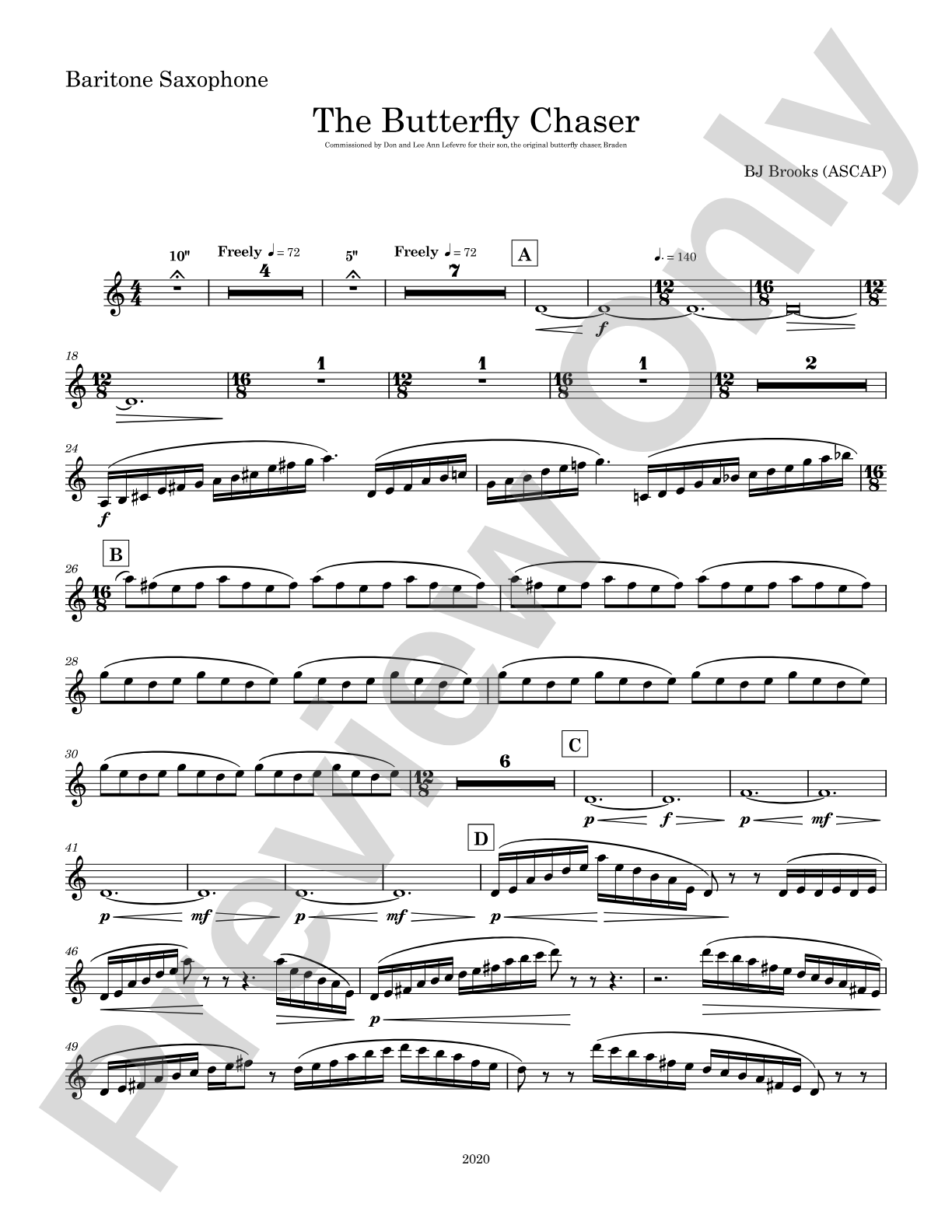
The Butterfly Chaser: E-flat Baritone Saxophone Sheet Music Preview

The Butterfly Chaser: E-flat Baritone Saxophone

By B. J. Brooks

Grade: 6 (Difficult)

Item: 00-PC-0018611_BTX

Digital Download
$3.00
Description
This remarkable piece is inspired by the lightness of butterflies, with notation reflecting their colors and markings, and rhythms drawn from recorded analysis of flapping wing sounds. Viewing the YouTube presentation "Butterfly Chaser - With Annotation" is highly recommended!

The Butterfly Chaser: E-flat Baritone Saxophone isn't in MakeMusic Cloud just yet...but it could be. Let us know you'd like to see it, and you'll help shape what comes next. In the meantime, start a free trial and dive into thousands of interactive titles your students can play along with today.

Sample Audio
0:00
0:00
Sample Video
Additional Details
Series: Alfred Digital Concert Band
SKU: 00-PC-0018611_BTX

More about this title

Why we love this

Brooks anchors this piece in genuine natural observation rather than generic nature writing. The rhythmic foundation derived from actual wing-beat analysis gives the band genuine material to work with, not atmospheric filler. The color-coded notation transforms a technical score into something visually engaging for players who need that extra layer of engagement at this level.

What to expect

Light, darting, and organic. The piece captures the energy and unpredictability of butterfly movement without resorting to twee orchestration. Colors shift and cluster; moments of lyric suspension balance rapid fluttering passages. The overall arc feels observant rather than sentimental.

Who it's for

Advanced sixth-grade bands and strong middle school ensembles ready for contest or concert programming that demands ensemble maturity without requiring extensive orchestration skills. Directors looking for Grade 6 repertoire with genuine artistic substance will find this more rewarding than typical mid-level concert pieces.

How to get the most out of it

  • Watch the YouTube presentation with your full ensemble before rehearsal begins. The annotation clarifies Brooks's intent and helps players understand why specific gestures matter, which reduces the time spent explaining intent in sectionals.
  • Balance the band so that sustained harmonic layers don't overwhelm the melodic voices that suggest flight and movement. Test your voicing in the upper register where butterflies live musically.
  • Attend to articulation contrasts between fluttering passages and grounded supporting parts. The rhythmic analysis Brooks used creates specific attack patterns that become muddy without precision.
  • Shape the phrasing as if following a flight path rather than conducting square phrases. Butterflies move in arcs and hesitations, not metrical predictability.

How to use it

This works as a concert centerpiece that showcases your band's rhythmic precision and ability to manage transparency. It pairs well alongside traditional march or hymn-tune arrangements, offering musical contrast while staying within Grade 6 technical demands. Consider programming it where audience members expect lighter fare but you want to challenge your ensemble musically.

Skills your students will build

  • Reading color-coded notation and translating visual cues to articulation and phrasing
  • Balancing sustained harmonic texture with foreground melodic material
  • Executing precise rhythmic figures derived from natural observation
  • Shaping non-symmetrical phrases and flight-based phrasing rather than square 4 and 8-bar phrases
  • Ensemble transparency in Grade 6+ orchestration

You May Also Like