
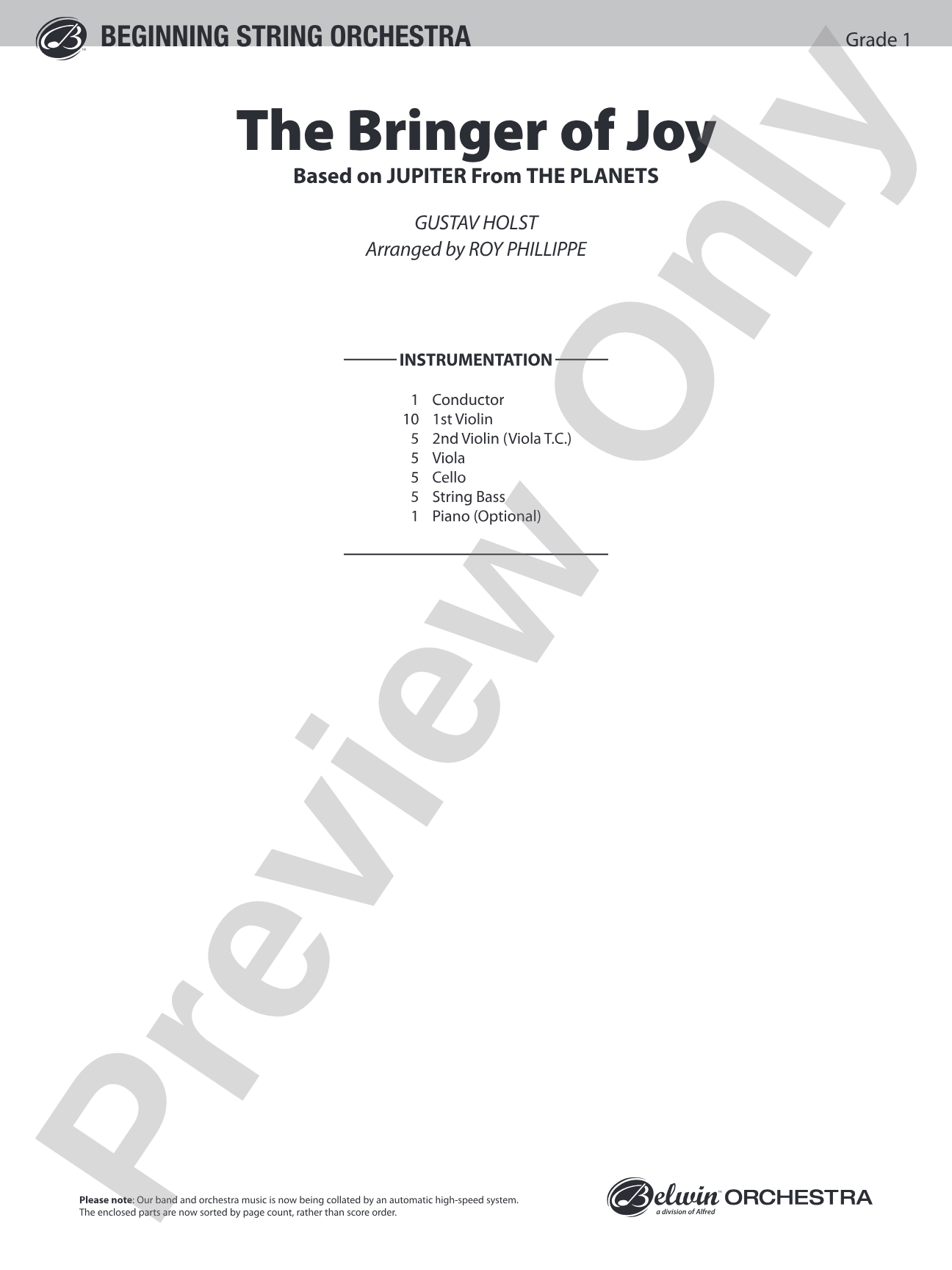

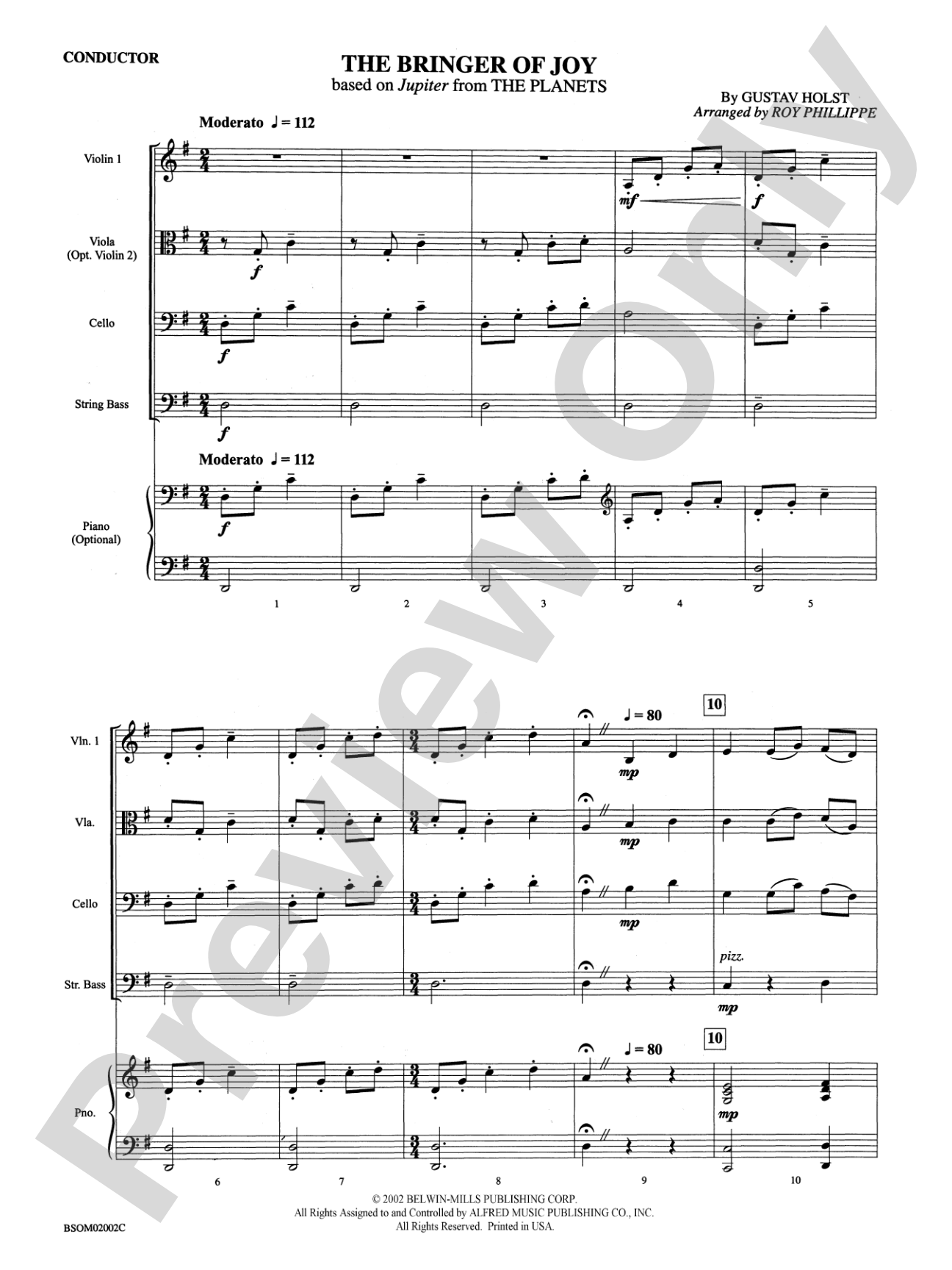
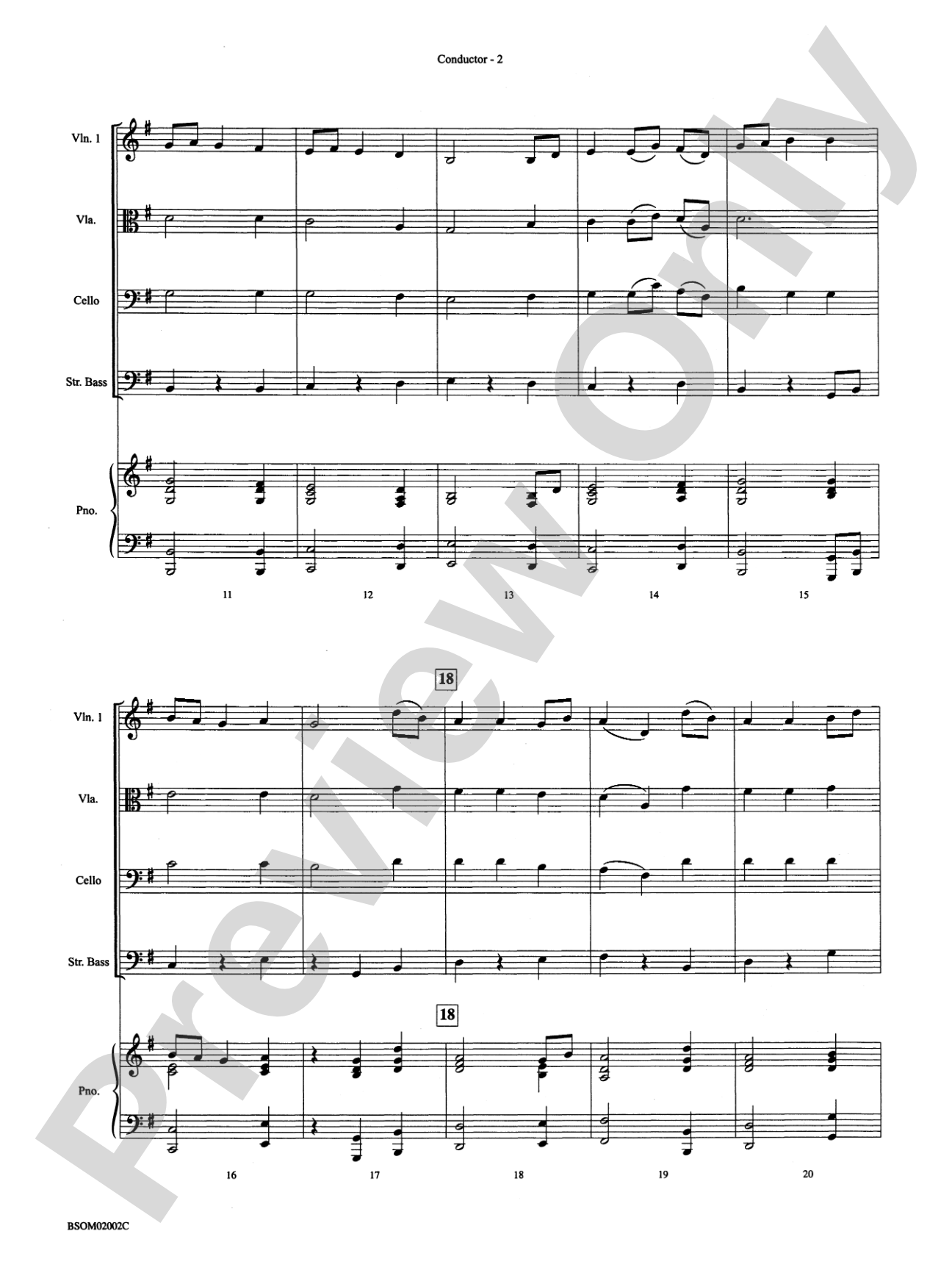
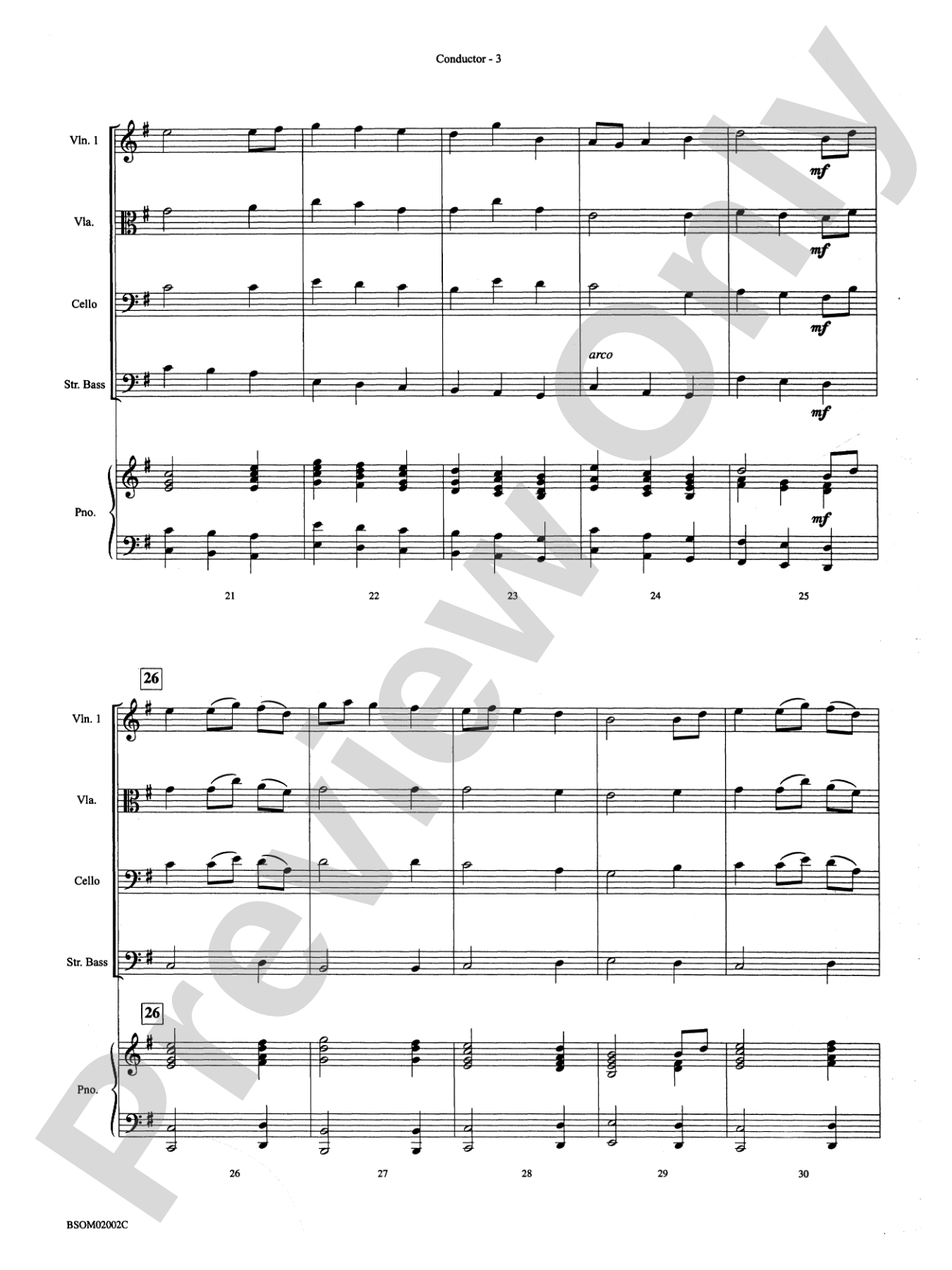


The Bringer of Joy (based on "Jupiter" from The Planets): String Orchestra Conductor Score & Parts
By Gustav Holst / arr. Roy Phillippe
Grade: 1
Item: 00-PK-0004399

$46.00
Pickup currently not available
Buy Extra Parts (Digital PDF Download)
Parts Added to Cart!
Related Items
The Bringer of Joy (based on "Jupiter" from The Planets): String Orchestra Conductor Score & Parts |
$46.00
|
The Planets): String Orchestra Conductor Score & Parts" > View | |
The Bringer of Joy (based on "Jupiter" from The Planets): String Orchestra Conductor Score |
$8.00
|
The Planets): String Orchestra Conductor Score" > View |
Description
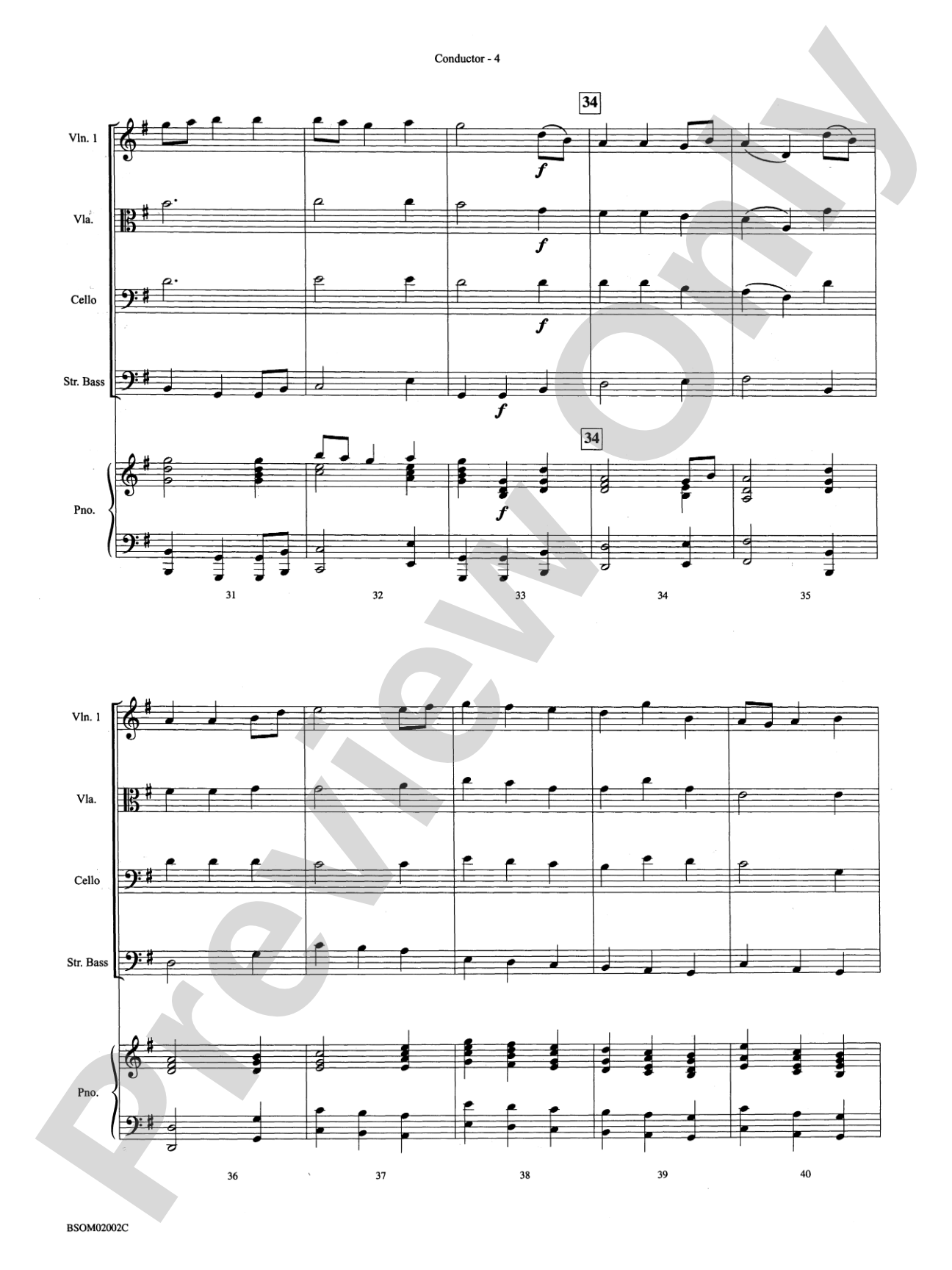
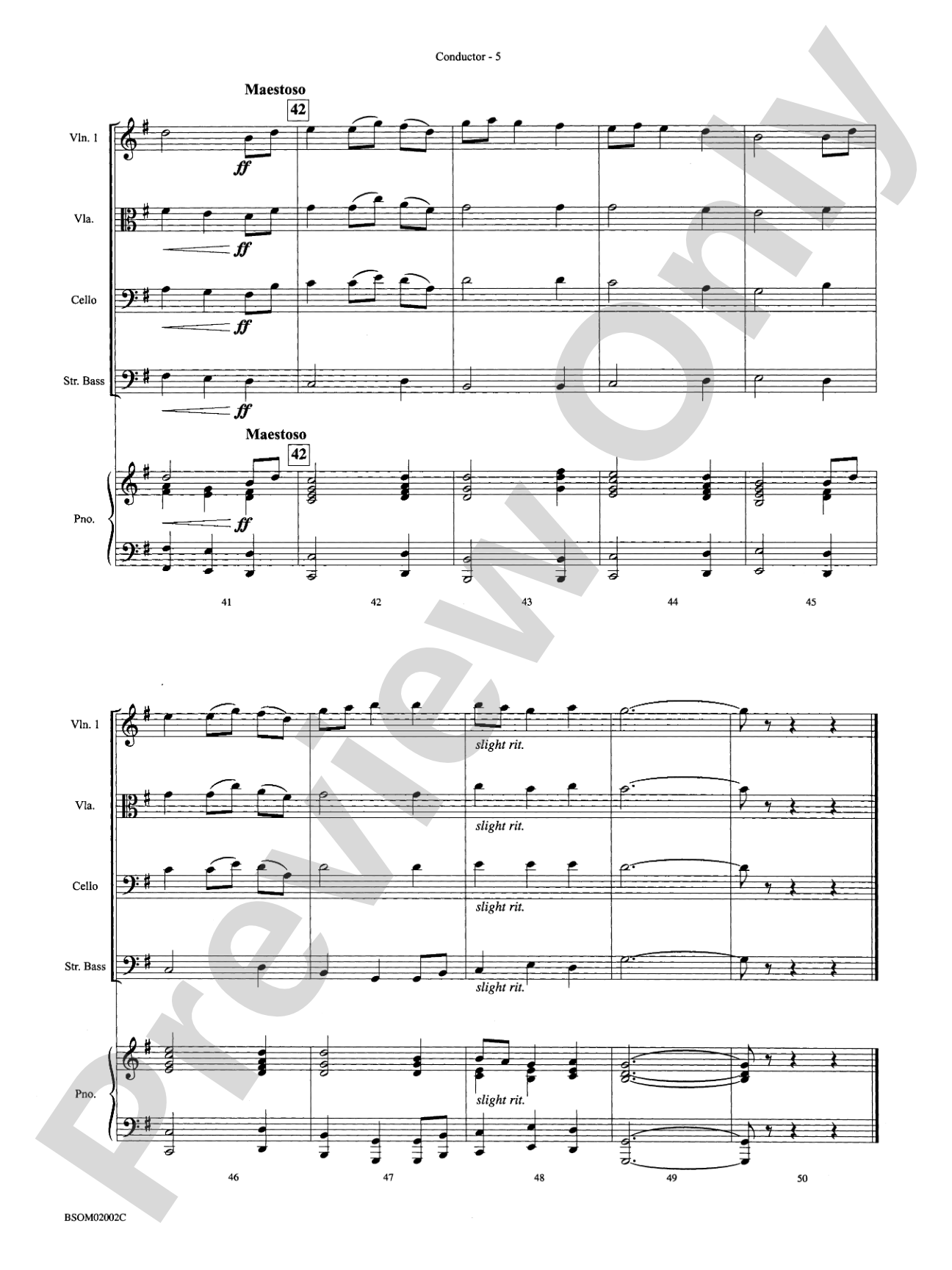
A cherished Gustav Holst melody for your beginning strings begins with the traditional flourish from The Planets. The warm melody is thickly scored for the entire ensemble. A solid choice for your beginners. A classic theme great for all occasions. (1:46)


Don't just read it, hear it, play along with it, and watch your students grow with it. In MakeMusic Cloud, The Bringer of Joy (based on "Jupiter" from The Planets): String Orchestra Conductor Score & Parts comes alive with professional accompaniment, adjustable tempo, and built-in practice tools that turn solo practice into real progress.
Open in the Player
Jump straight in and assign it today.
Start Your Free Trial
Open this title and explore the full library in minutes.
Sample Audio
No sample audio found.
Sample Video
No sample videos found.
Additional Details
Series:
Belwin Beginning String Orchestra
Publisher:
Alfred Music
Page Count:
64
SKU:
00-PK-0004399
More about this title
About the Composer: Gustav Holst
Gustav Holst (1874-1934) was an English composer and educator whose orchestral works remain cornerstones of the concert repertoire. Though trained in the late Romantic tradition, Holst developed a distinctive voice marked by modal harmonies, bold orchestration, and a gift for memorable melody. His legacy extends far beyond concert halls: he was a passionate advocate for music education and composed extensively for students and amateur musicians, believing that accessible music could be both artistically honest and deeply moving.
Why we love this
This arrangement captures the emotional generosity of Holst's most beloved theme while respecting the technical limits of beginning players. The thick scoring means every section contributes substantively to the sound, building confidence and ensemble cohesion without requiring advanced technique. It's a piece that sounds far more impressive than it reads, making it ideal for building morale and demonstrating the power of orchestral color even in early-level groups.
What to expect
Stately and gracious, like walking through a sunlit room. The familiar melody unfolds with quiet confidence, supported by the full ensemble in a way that feels substantial rather than sparse. There's a sense of warmth and occasion throughout, suitable for concert halls and community celebrations alike.
Who it's for
String orchestra directors introducing students to thematic development and ensemble balance. Beginning violinists, violists, cellists, and bass players gain experience with a recognizable masterwork melody while developing tone and phrasing in a collaborative setting.
How to get the most out of it
- Shape the opening flourish with clarity and slight weight on the first note to establish the classical elegance of Holst's original; avoid rushing into the melody.
- Keep the warm main theme singing and connected across all sections; balance is crucial since everyone has substantial material, so use rehearsal time to ensure no part drowns out the others.
- Maintain consistent vibrato and bow control during the sustained passages to sustain the lyrical quality without wavering in tone.
- Use the full 1:46 duration to let the melody breathe; resist the urge to drive the tempo, which will diffuse the warmth of the scoring.
How to use it
This works beautifully as an opener or closing piece for a concert, signaling quality and tradition while remaining accessible to your audience. It also fits naturally into a program celebrating Holst or early 20th-century British composers, or as a standalone selection for a chamber strings performance at festivals and competitions.
Skills your students will build
- Sustaining long melodic lines with consistent tone and phrasing
- Reading unison and divisi parts within a full orchestral score
- Balancing ensemble sonority when all sections carry substantial material
- Responding to conducting nuance and shaping musical phrasing collectively
- Performing with stylistic sensitivity to a classical-era melody