The Boy From New York City Sheet Music Preview

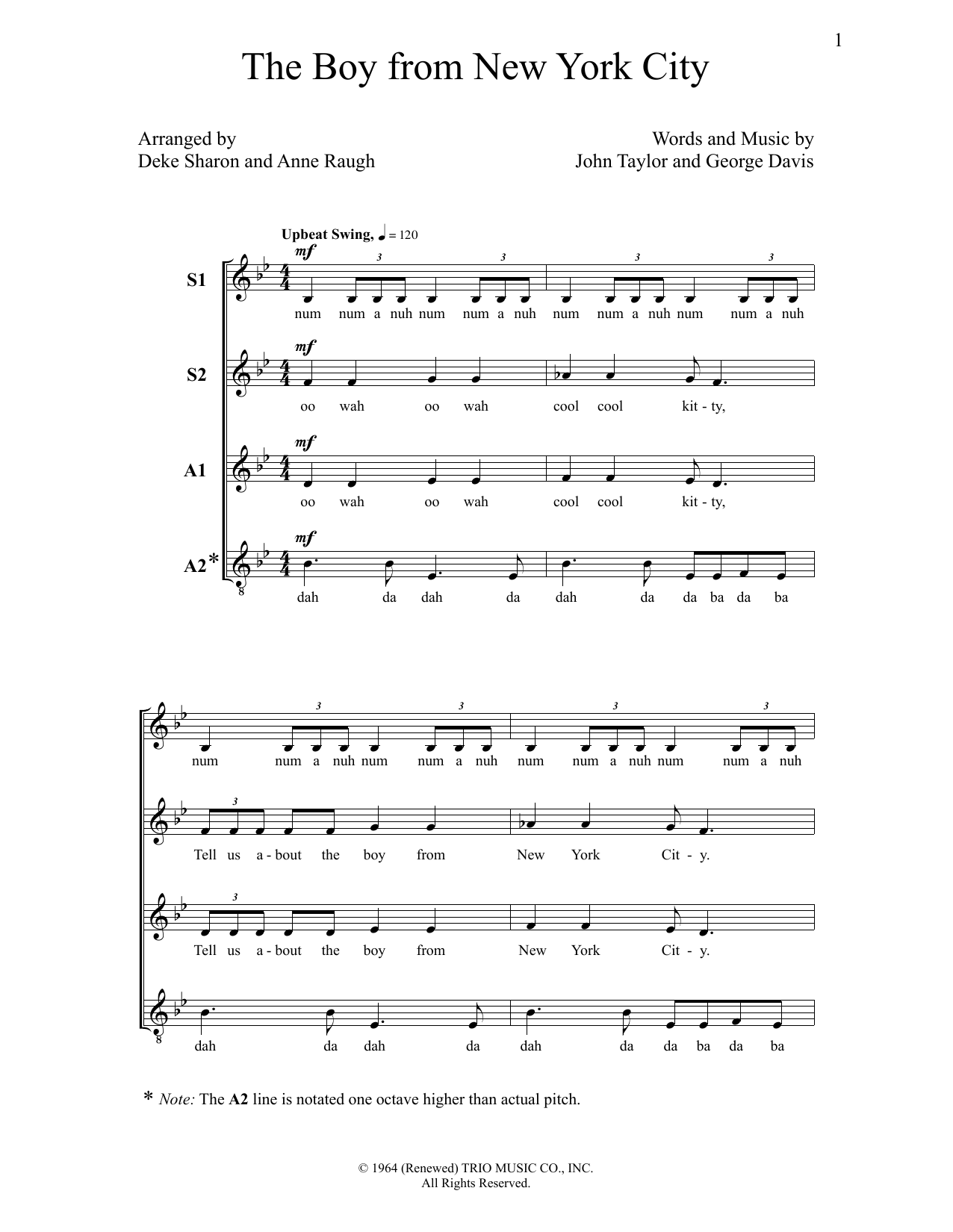
The Boy From New York City: SSAA Choral Octavo

As performed by John Taylor / As performed by George Davis / As performed by Anne Raugh / Arranged by Deke Sharon

Item: 35-DS00308559

Digital Download
$2.99

One moment…

Description

The Boy From New York City: SSAA Choral Octavo isn't in MakeMusic Cloud just yet...but it could be. Let us know you'd like to see it, and you'll help shape what comes next. In the meantime, start a free trial and dive into thousands of interactive titles your students can play along with today.

Sample Audio
No sample audio found.
Sample Video
Additional Details
Publisher: Hal Leonard
Page Count: 11
SKU: 35-DS00308559

More about this title

About the Artist: John Taylor

John Taylor was a founding member of the Manhattan Transfer, the legendary vocal group that revolutionized contemporary a cappella and pop vocal arranging in the 1970s. His work with the group helped establish what modern vocal jazz and a cappella could achieve, blending sophisticated harmony with infectious groove.

Why we love this

Deke Sharon's arrangement captures the infectious charm of this 1960s hit while giving it genuine vocal depth. The SSAA voicing sits beautifully for women's choirs, and the arrangement balances accessibility with enough harmonic interest to keep singers engaged through rehearsal and performance.

What to expect

Upbeat and charming, with the narrative warmth of a song that's been loved for generations. The a cappella texture adds intimacy while the rhythmic energy keeps everything moving forward, creating a performance that feels both polished and playful.

Who it's for

Women's choirs looking for repertoire with personality and swing. This works equally well for high school groups seeking accessible but sophisticated pop material and for community or college ensembles wanting something fun without sacrificing musicality.

How to get the most out of it

  • Keep the energy consistent from the first phrase. This song thrives on forward motion, so resist the urge to slow down on repeated sections.
  • Lock the syllabic attacks together, especially during the rhythmic spoken passages. Clean articulation makes the storytelling land harder.
  • Balance the melody line with supporting voices so the narrative comes through clearly. Soloists and section should feel like conversation partners, not separate layers.
  • Let the arrangement breathe in moments of silence. These pauses give the listener time to absorb the lyrics and build anticipation for what's next.

How to use it

This pairs beautifully on a concert that explores vocal storytelling across genres. It works as a standalone showstopper or as part of a set of pop classics that span different eras. Late in the concert, it lifts the energy when audiences need a lift.

Skills your students will build

  • Rhythmic precision in syllabic text-setting
  • Harmonic blending within SSAA voicing
  • Maintaining groove and forward momentum in a cappella
  • Vocal balance between melody and supporting parts
  • Interpretive phrasing in pop-style repertoire

You May Also Like