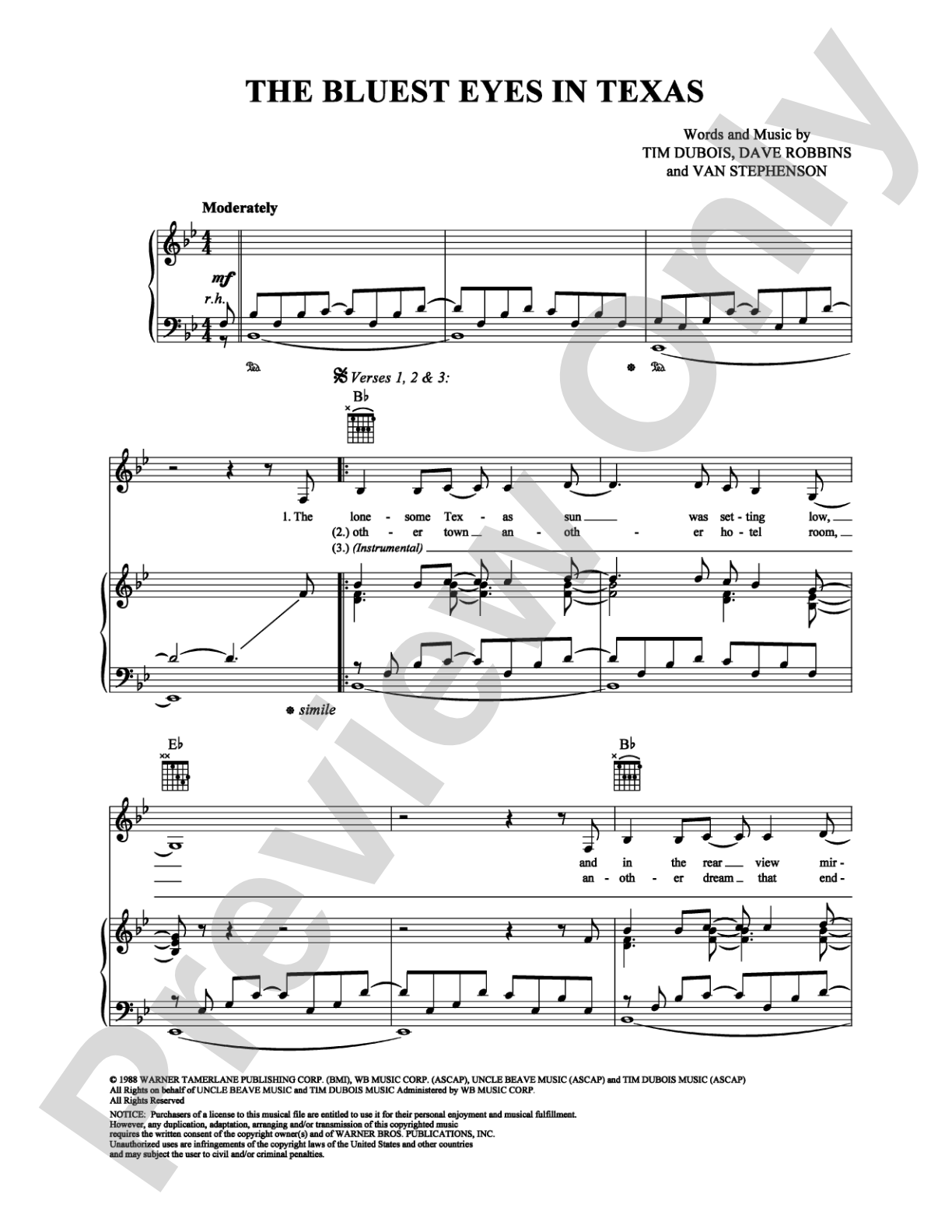
The Bluest Eyes in Texas: Piano/Vocal/Chords Digital Sheet Music

The Bluest Eyes in Texas: Piano/Vocal/Chords Digital Sheet Music

Tim Dubois, Dave Robbins, Van Stephenson

Item: 00-PS-0005759

Digital Download
$3.99
Description

The Bluest Eyes in Texas: Piano/Vocal/Chords Digital Sheet Music isn't in MakeMusic Cloud just yet...but it could be. Let us know you'd like to see it, and you'll help shape what comes next. In the meantime, start a free trial and dive into thousands of interactive titles your students can play along with today.

Sample Audio
No sample audio found.
Sample Video
Additional Details
SKU: 00-PS-0005759

More about this title

Why we love this

Country repertoire that works equally well in a recital setting or as a teaching piece for singers learning to navigate chord symbols and vocal phrasing in a contemporary idiom. The piano/vocal/chords format gives students room to shape their own accompaniment choices, which is essential training for anyone planning to perform or teach country music.

What to expect

Honest and intimate, with the kind of emotional directness country songwriting does best. The piano supports without overwhelm, letting the voice carry the narrative weight of the song while maintaining the accessibility and groove that makes country music immediately engaging.

Who it's for

Vocalists comfortable reading chord symbols and looking for contemporary repertoire that sits outside the classical or musical theatre norm. Piano students who want to develop accompaniment skills and learn idiomatic country comping patterns. Recital pianists seeking duet material that appeals to audiences.

How to get the most out of it

  • Treat the chord symbols as a roadmap, not a prescription. Experiment with different voicings and rhythmic figures to find what sits comfortably under your voice and matches the energy you want in the room.
  • Let the story live in your phrasing. Country music thrives on conversational delivery, so use the lyrics to guide your breath placement and dynamic shape rather than forcing a classical legit approach.
  • Balance your vocal presence against the piano. If you're accompanying yourself, record a simple chord progression first and sing over it to hear how much space you actually need.

How to use it

Pair this with other contemporary vocal literature to show students the breadth of what recital singing can include. It works especially well in a mixed-genre recital that moves between classical, pop, and country styles, or as a feature in a singer-songwriter or cabaret-style concert.

Skills your students will build

  • Reading and interpreting chord symbols in a vocal context
  • Accompanying oneself or a partner using lead sheet notation
  • Shaping vocal phrasing in country idiom
  • Navigating piano voicings that complement rather than duplicate vocal melody
  • Understanding lyric-driven interpretation in contemporary music

You May Also Like