
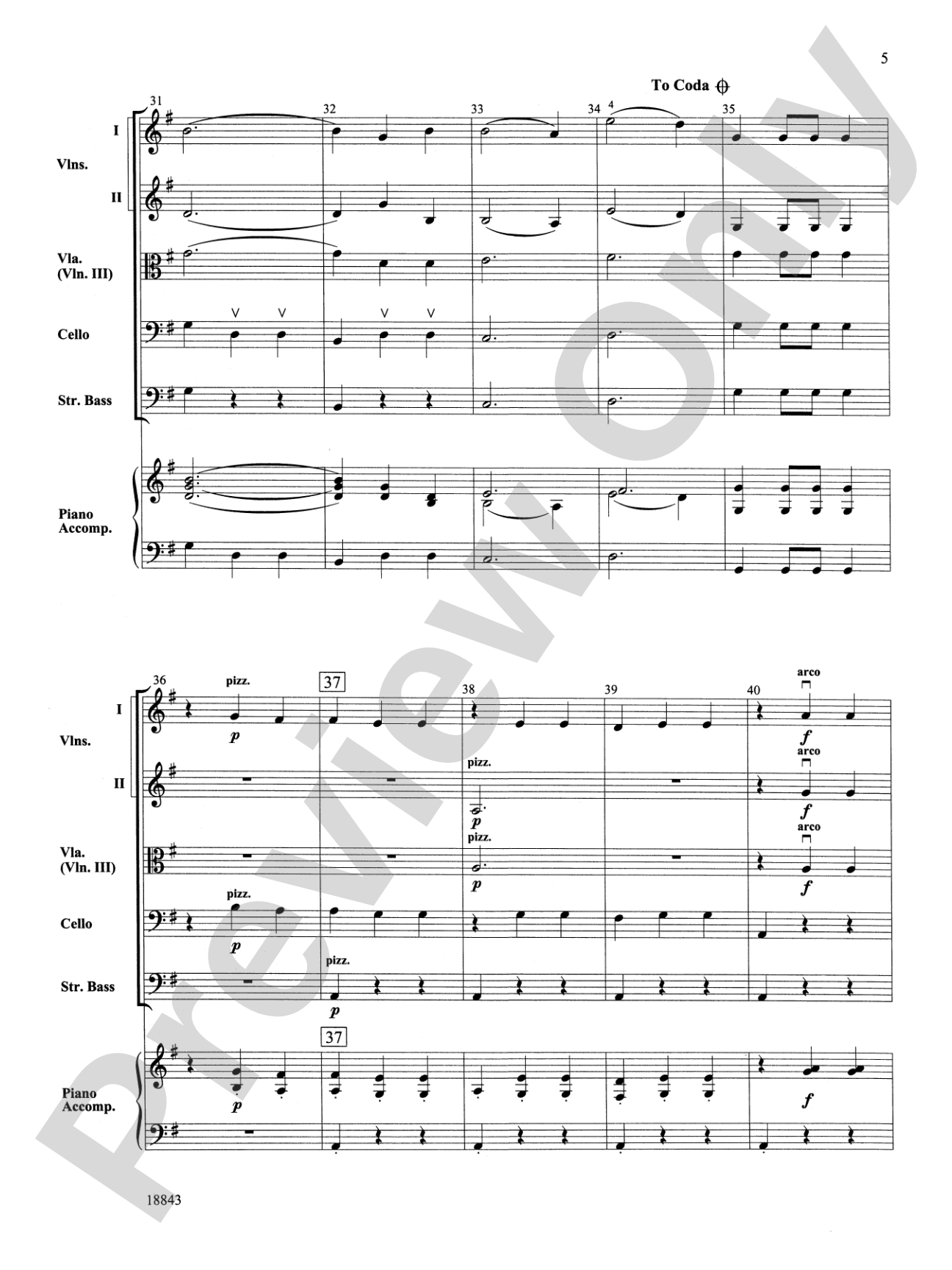
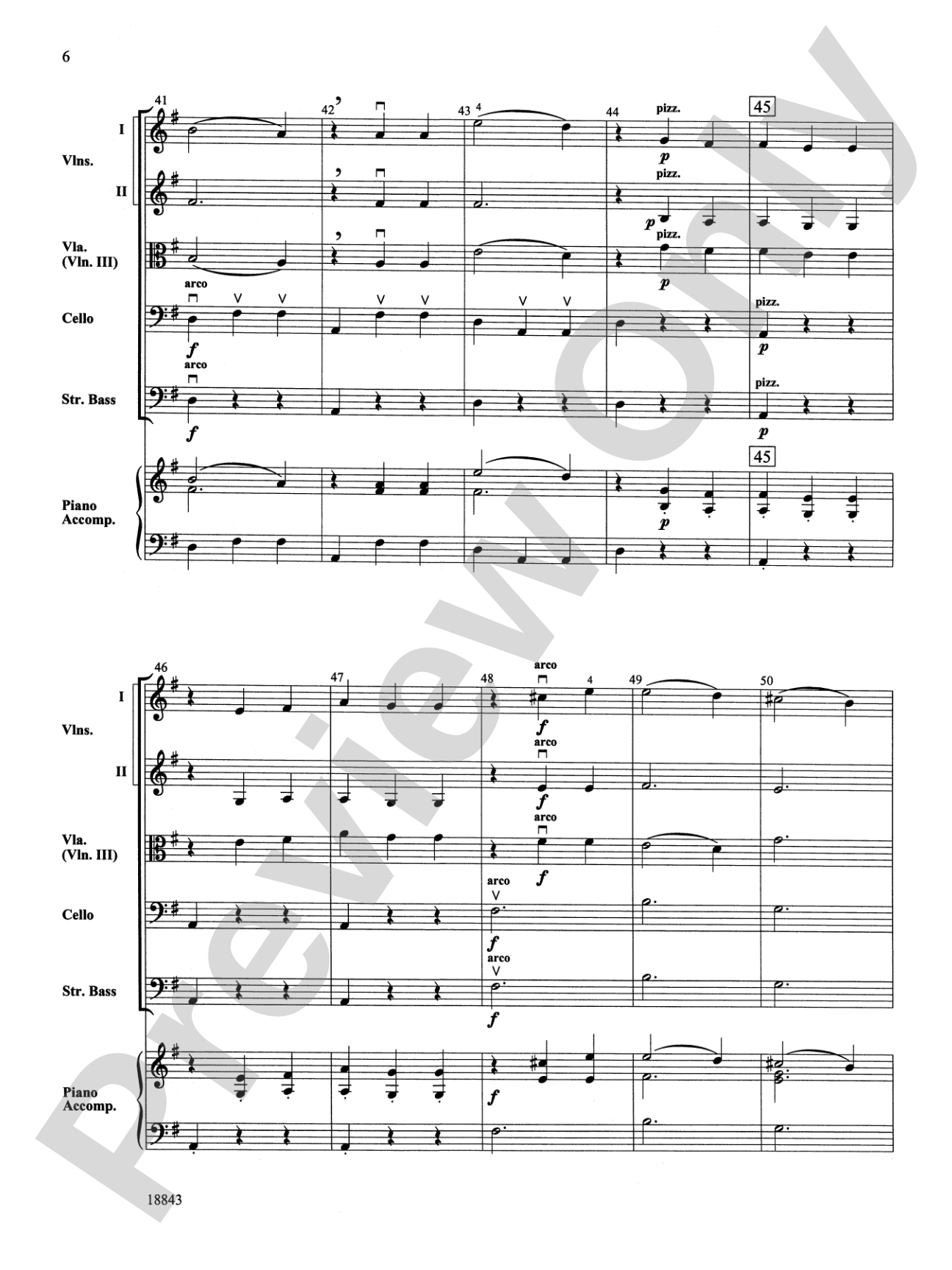
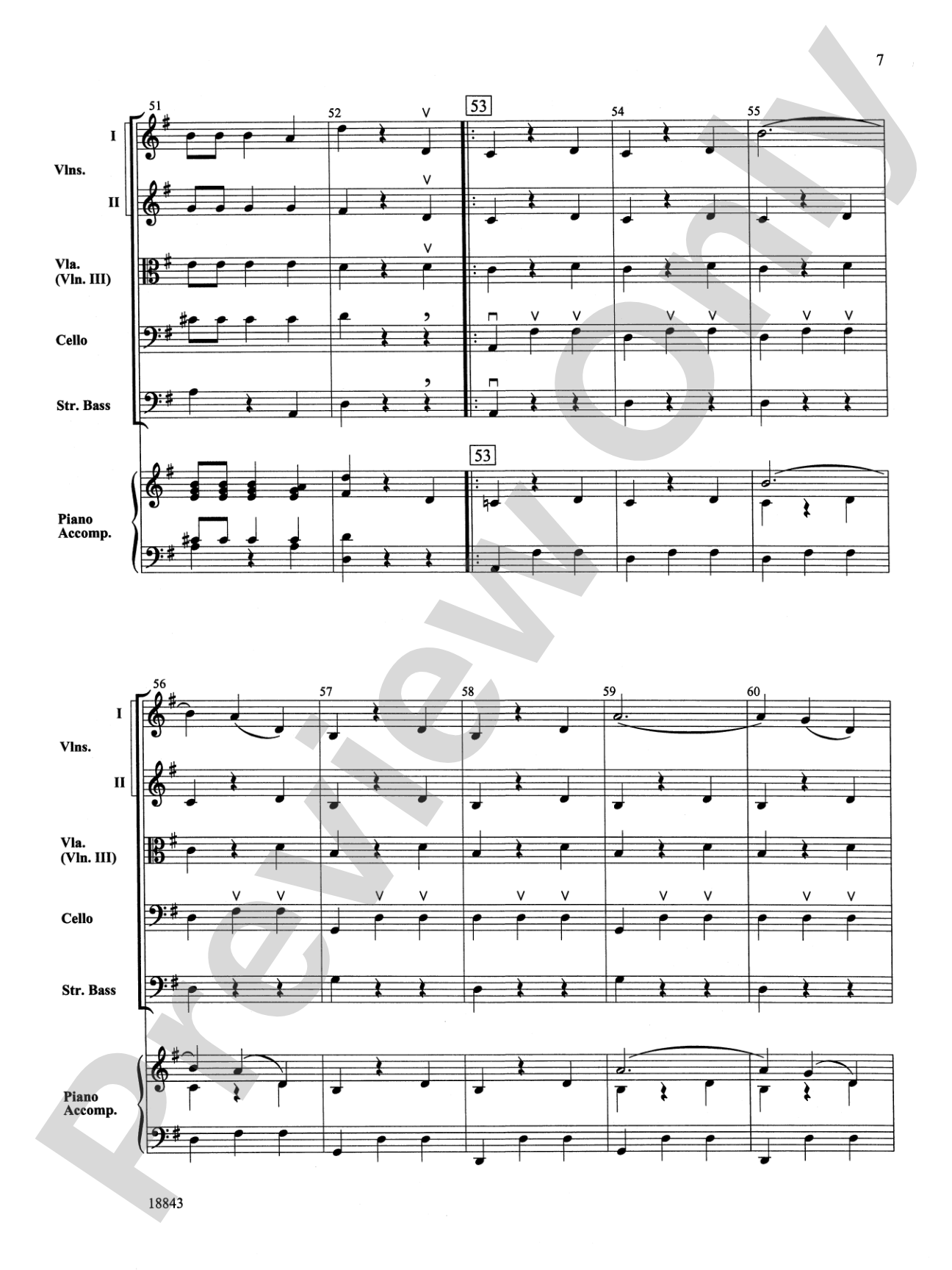
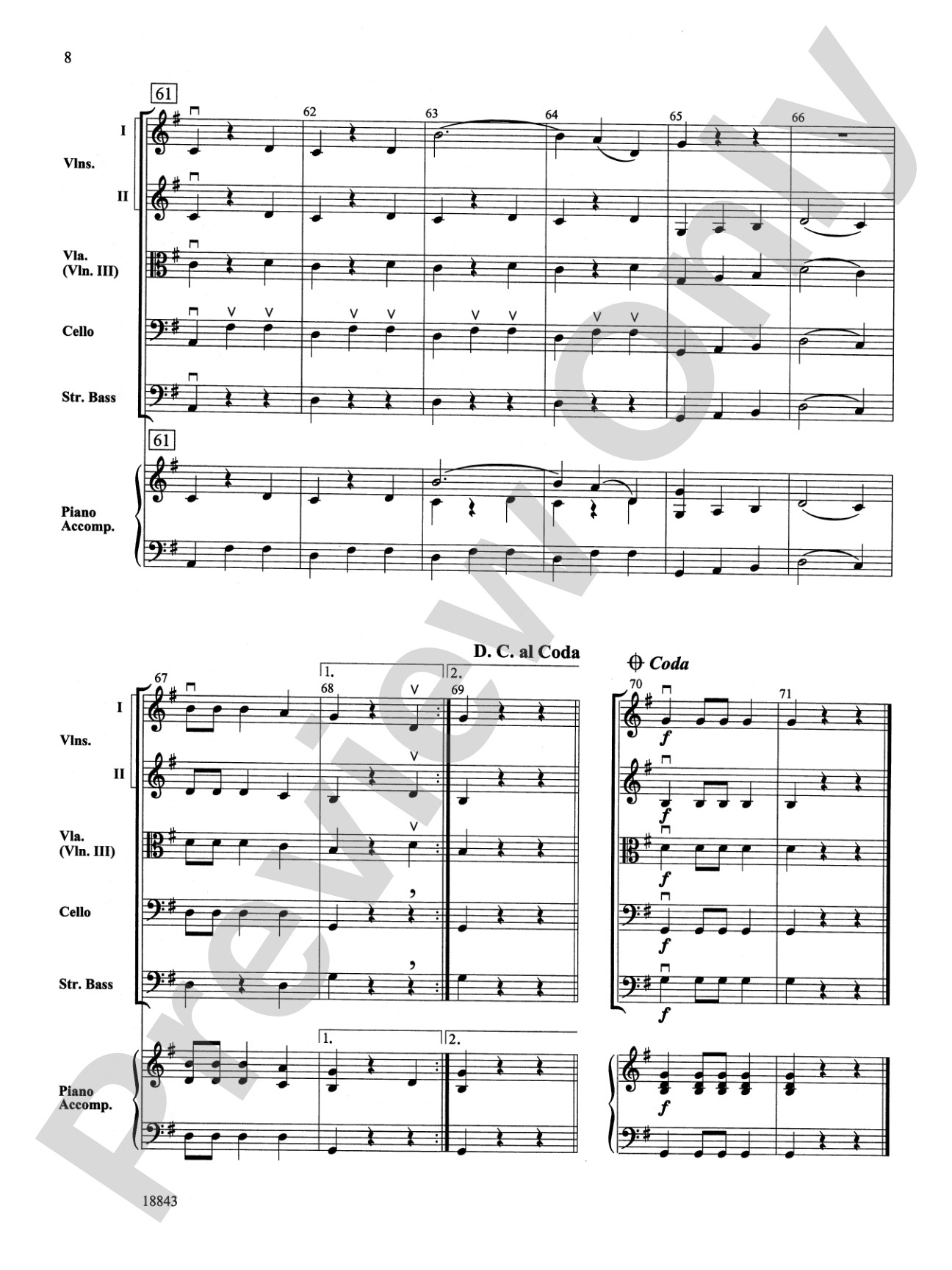

The Blue Danube Waltz: String Orchestra Conductor Score & Parts
By Johann Strauss, Jr. / arr. Mark Williams
Grade: 1
Item: 00-PK-0000299

$46.00
Pickup currently not available
Buy Extra Parts (Digital PDF Download)
| Product | Price | Quantity |
|---|---|---|
| The Blue Danube Waltz: Score | $8.00 | |
| The Blue Danube Waltz: 1st Violin | $5.99 | |
| The Blue Danube Waltz: 2nd Violin | $5.99 | |
| The Blue Danube Waltz: 3rd Violin (Viola [TC]) | $5.99 | |
| The Blue Danube Waltz: Viola | $5.99 | |
| The Blue Danube Waltz: Cello | $5.99 | |
| The Blue Danube Waltz: String Bass | $5.99 | |
| The Blue Danube Waltz: Piano Accompaniment | $5.99 |
Parts Added to Cart!
Description
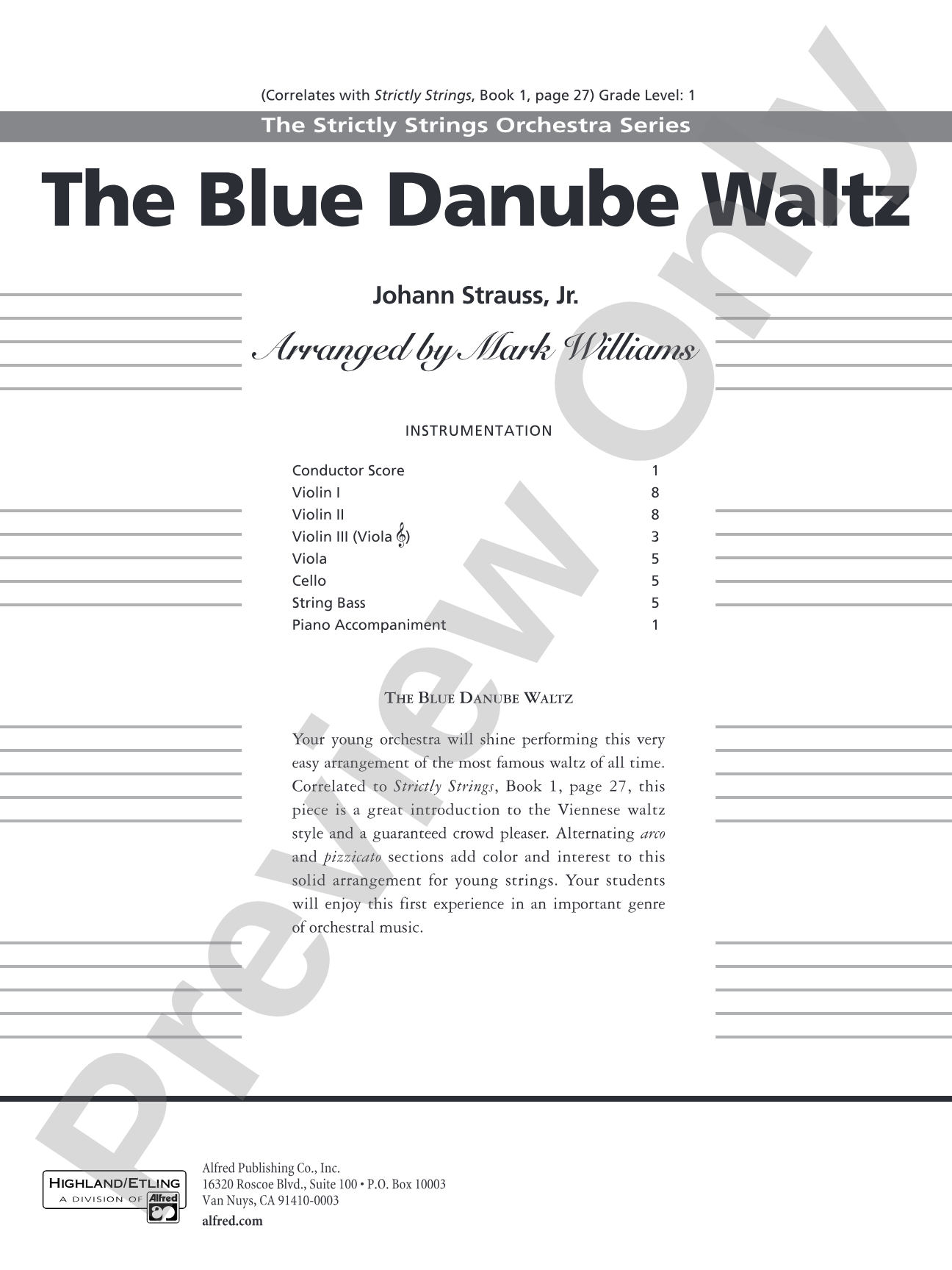
Your young orchestra will shine performing this very easy arrangement of the most famous waltz of all time. This piece is a great introduction to the Viennese waltz style, and a guaranteed crowd pleaser. Alternating arco and pizzicato sections add color and interest to this solid arrangement for young strings. Your students will enjoy this first experience in an important genre of orchestral music.


Don't just read it, hear it, play along with it, and watch your students grow with it. In MakeMusic Cloud, The Blue Danube Waltz: String Orchestra Conductor Score & Parts comes alive with professional accompaniment, adjustable tempo, and built-in practice tools that turn solo practice into real progress.
Open in the Player
Jump straight in and assign it today.
Start Your Free Trial
Open this title and explore the full library in minutes.
Sample Audio
1
Audio File
--:--
0:00
0:00
Sample Video
No sample videos found.
Additional Details
Series:
Highland/Etling Strictly Strings
Publisher:
Alfred Music
Page Count:
72
SKU:
00-PK-0000299
More about this title
About the Composer: Johann Strauss
Johann Strauss II (1825-1899) earned his reputation as the 'Waltz King' by composing over 150 waltzes that defined the sound of Vienna during the Romantic era. His gift for melody and understanding of orchestral color made him a master of the genre, and his works remain central to the string orchestra repertoire.
Strauss came from a musical family and quickly surpassed his father's fame through prolific composition and innovative orchestrations. The Blue Danube exemplifies his ability to craft memorable themes that engage audiences while remaining accessible to performers at all levels.
Why we love this
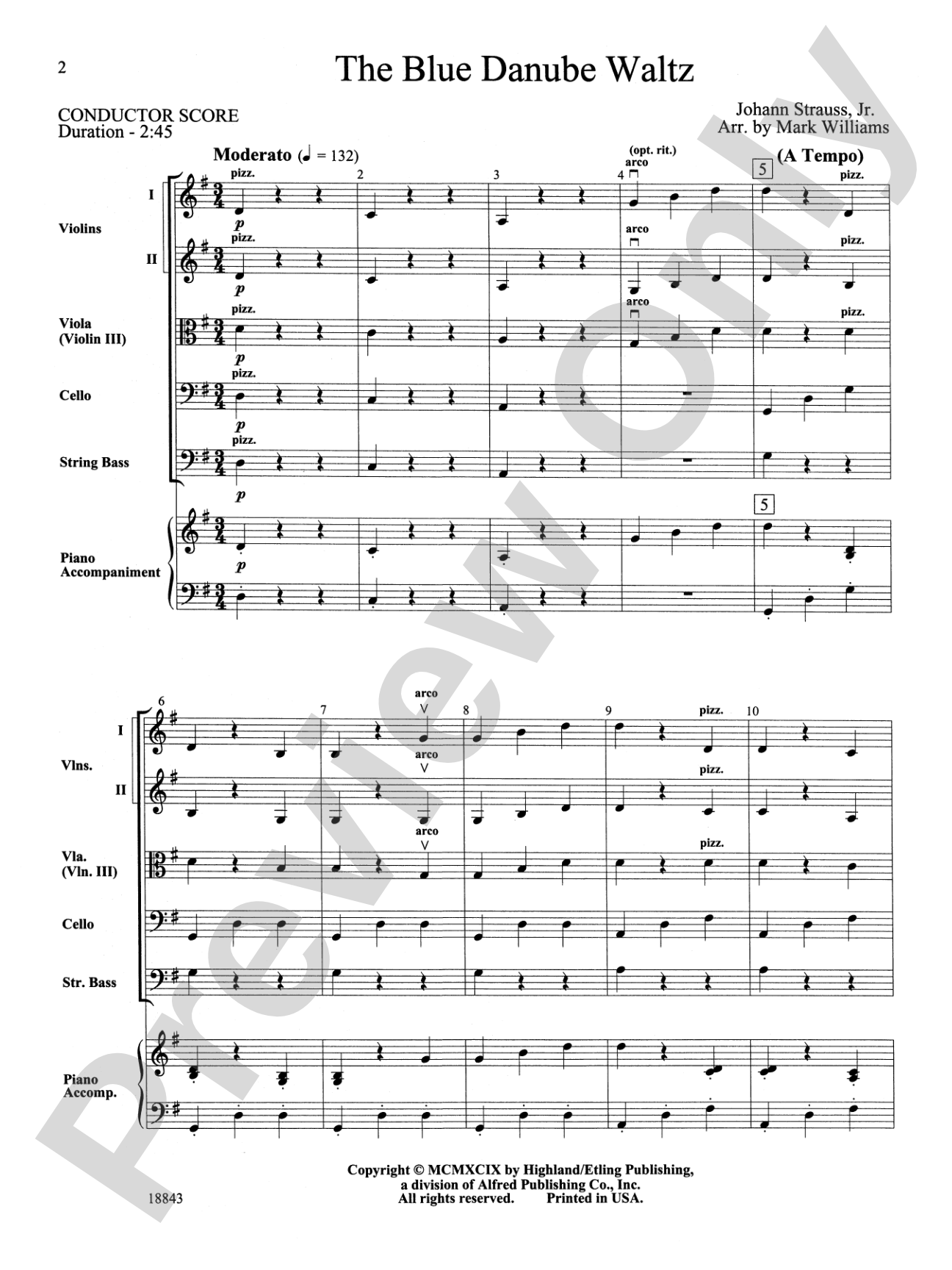
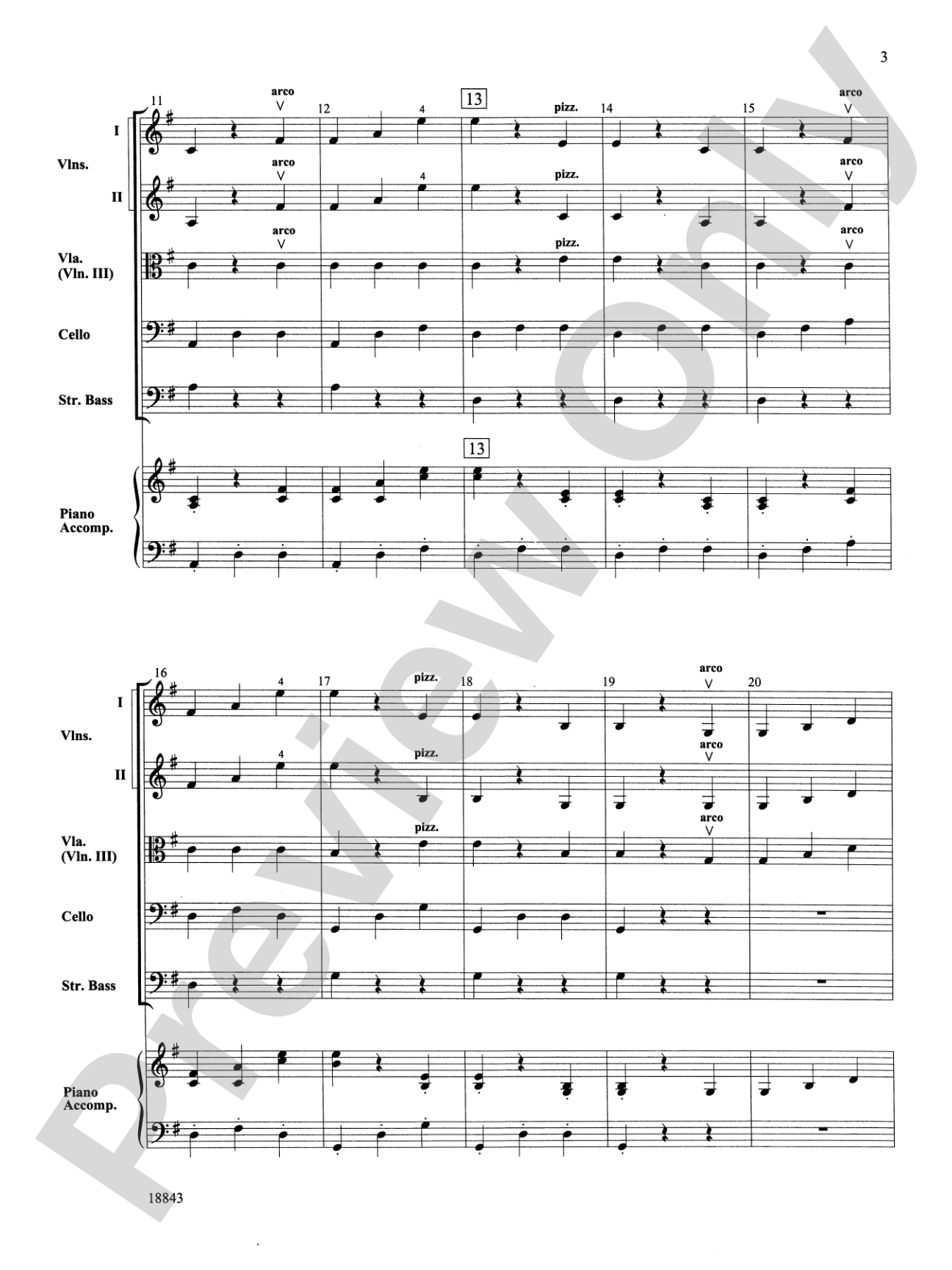
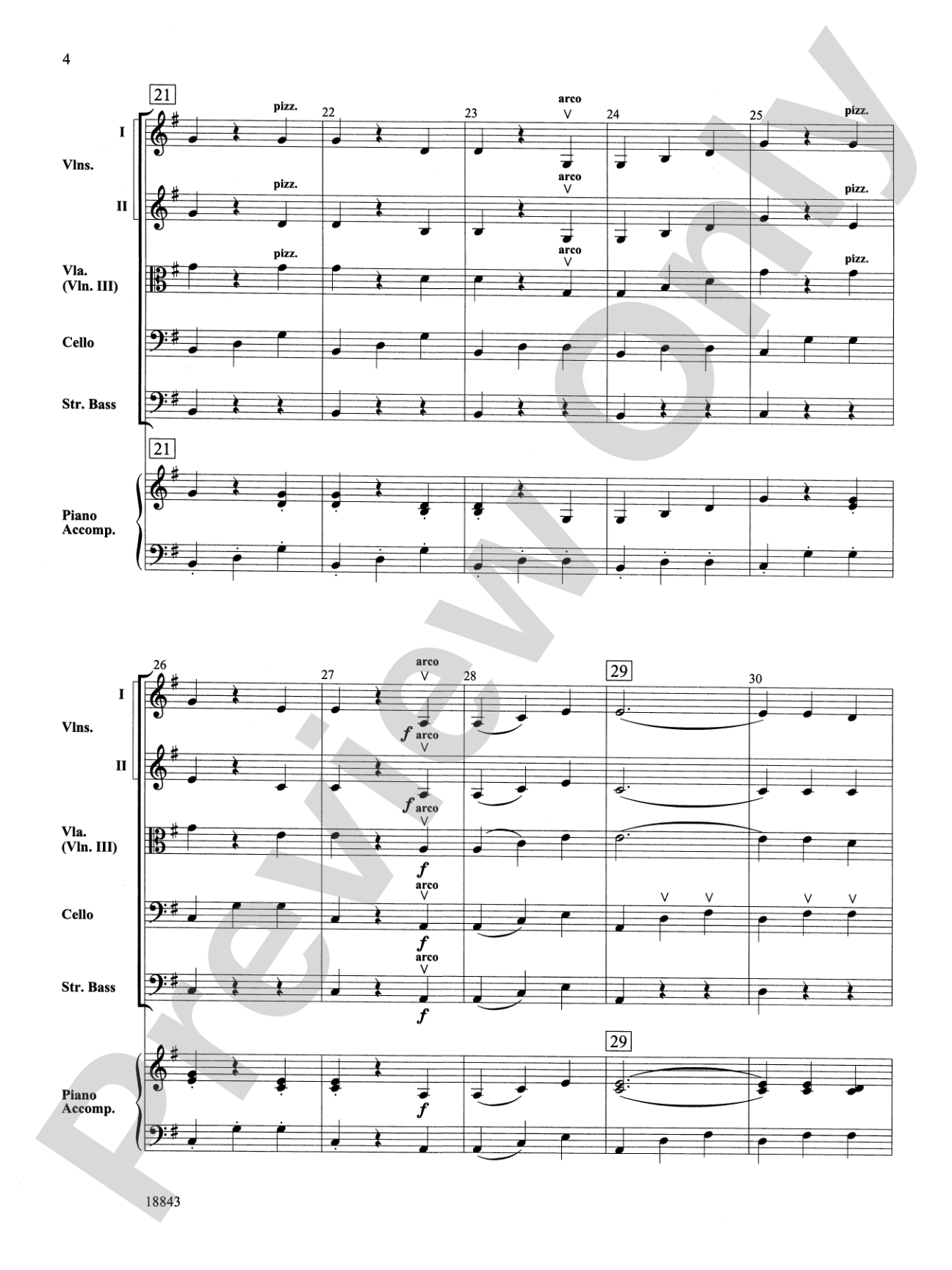
This arrangement captures everything that makes the Viennese waltz compelling without overwhelming young players. Mark Williams' orchestration balances the iconic melody with transparent textures, alternating arco and pizzicato sections to maintain interest across all four pages of music. Young orchestras consistently respond to this piece with enthusiasm, making it an ideal choice for building confidence and introducing students to a cornerstone of orchestral literature.
What to expect
This arrangement captures the elegance and swagger of a Viennese ballroom, with luminous moments where the melody soars over a swaying accompaniment. The alternating arco and pizzicato colors add sparkle without complexity, creating a performance that sounds polished and charming from the first rehearsal.
Who it's for
Young string orchestras encountering the waltz genre for the first time will find this arrangement immediately rewarding. The Grade 1 difficulty makes it accessible for ensembles with limited experience while offering enough textural variety to engage developing musicians.
How to get the most out of it
- Shape the main melody with gentle dynamic swells to bring out Strauss's phrasing; avoid playing it straight and metronomic.
- Coordinate the pizzicato passages with precision, ensuring players release notes cleanly so the articulation sits in the groove rather than disrupting it.
- Keep the tempo steady and dance-like throughout; the waltz rhythm should feel natural and lilting, never rushed or heavy.
- Balance the inner voices so the accompaniment figures support the melody without overwhelming it, even when doubled across sections.
How to use it
Program this as a spring concert opener or a lighter offering in a competition festival set; audiences recognize and love this melody instantly. It also pairs beautifully with other Romantic-era repertoire, giving you a stylistic bridge between heavier contemporary works and more lyrical pieces.
Skills your students will build
- Playing in 3/4 waltz meter with appropriate rhythmic feel
- Managing contrasting articulation styles (arco and pizzicato) within a single piece
- Balancing melody and accompaniment across a full ensemble
- Sustaining and shaping phrased lines in Romantic-era style