
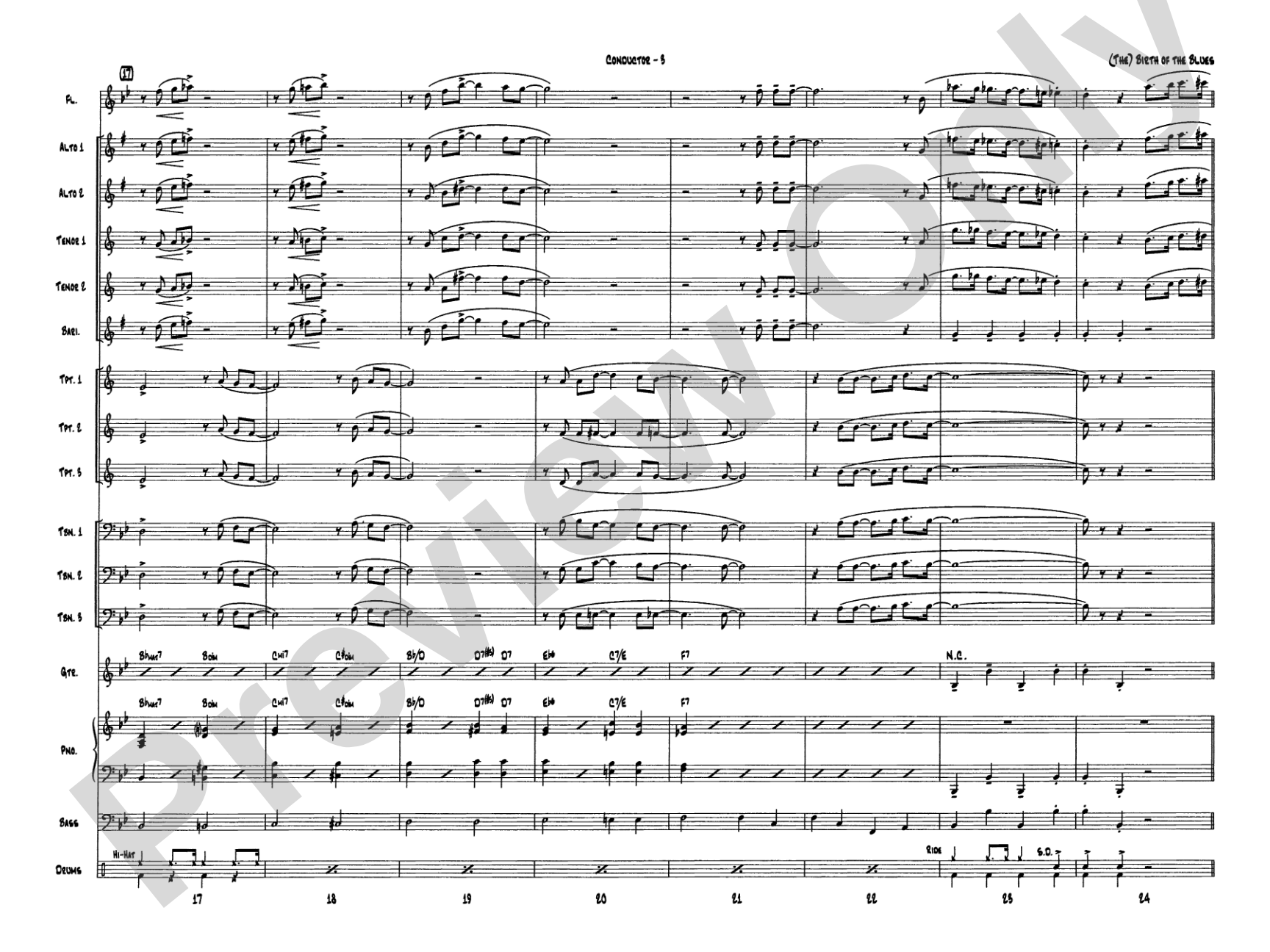
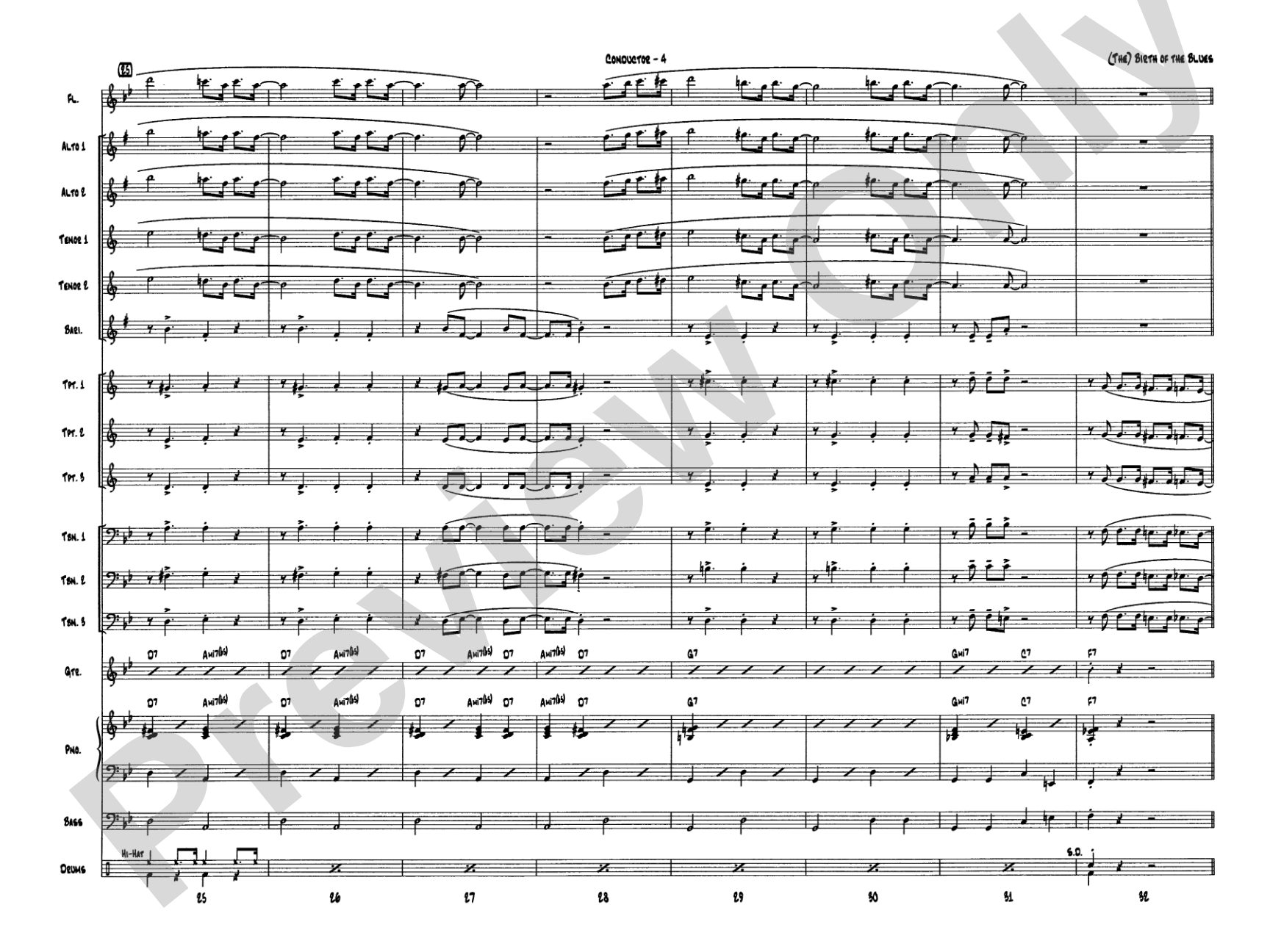
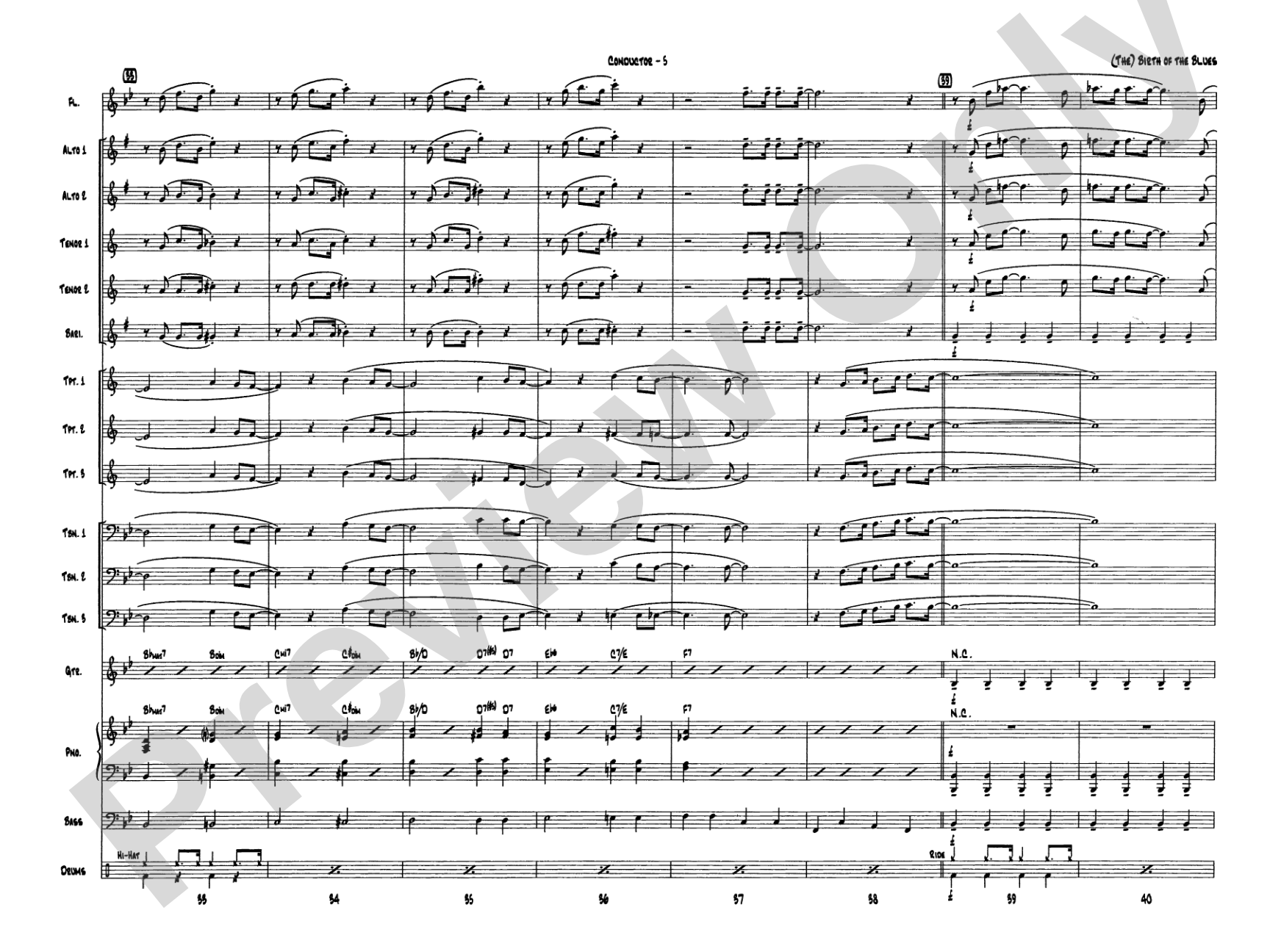
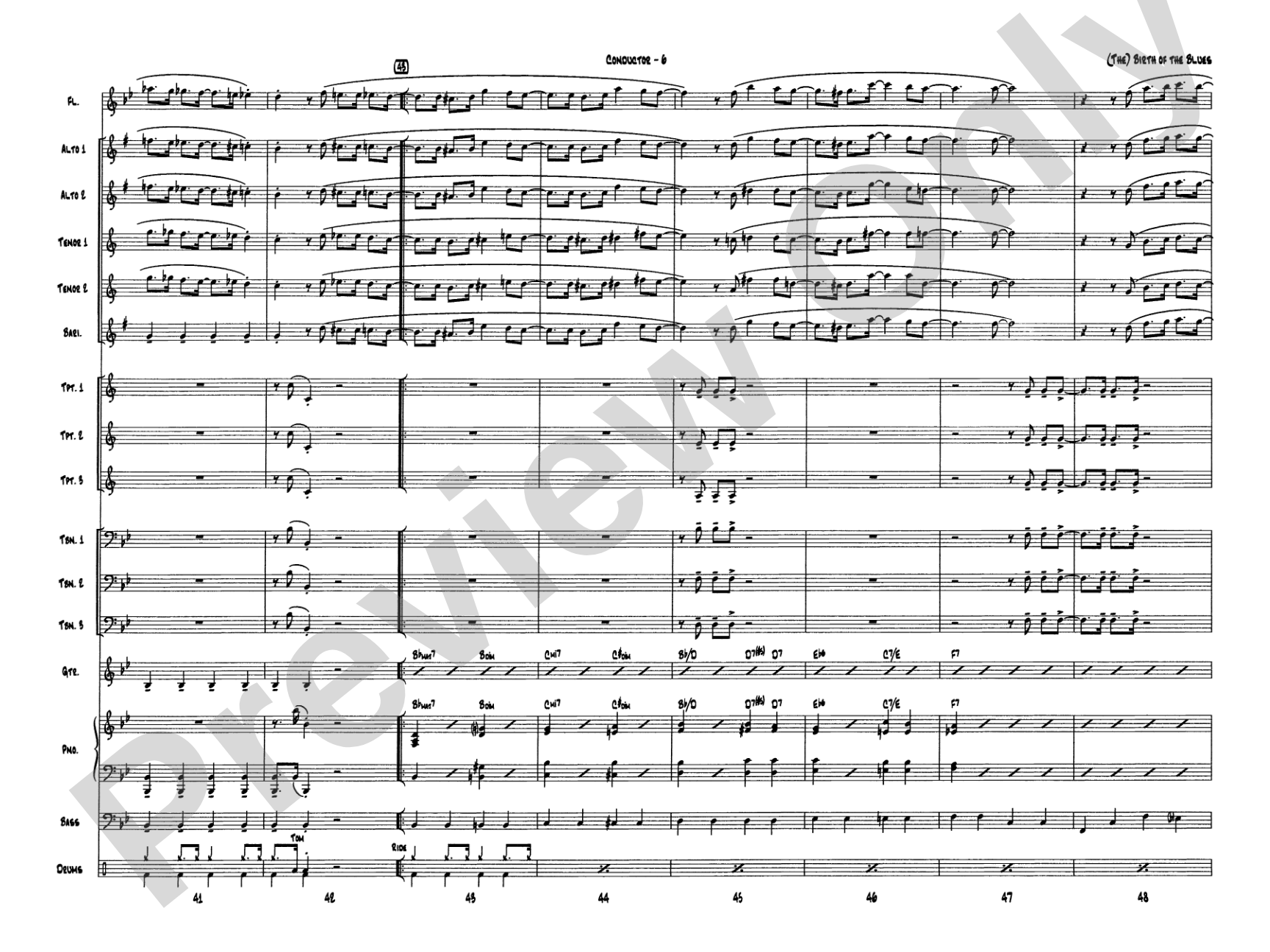
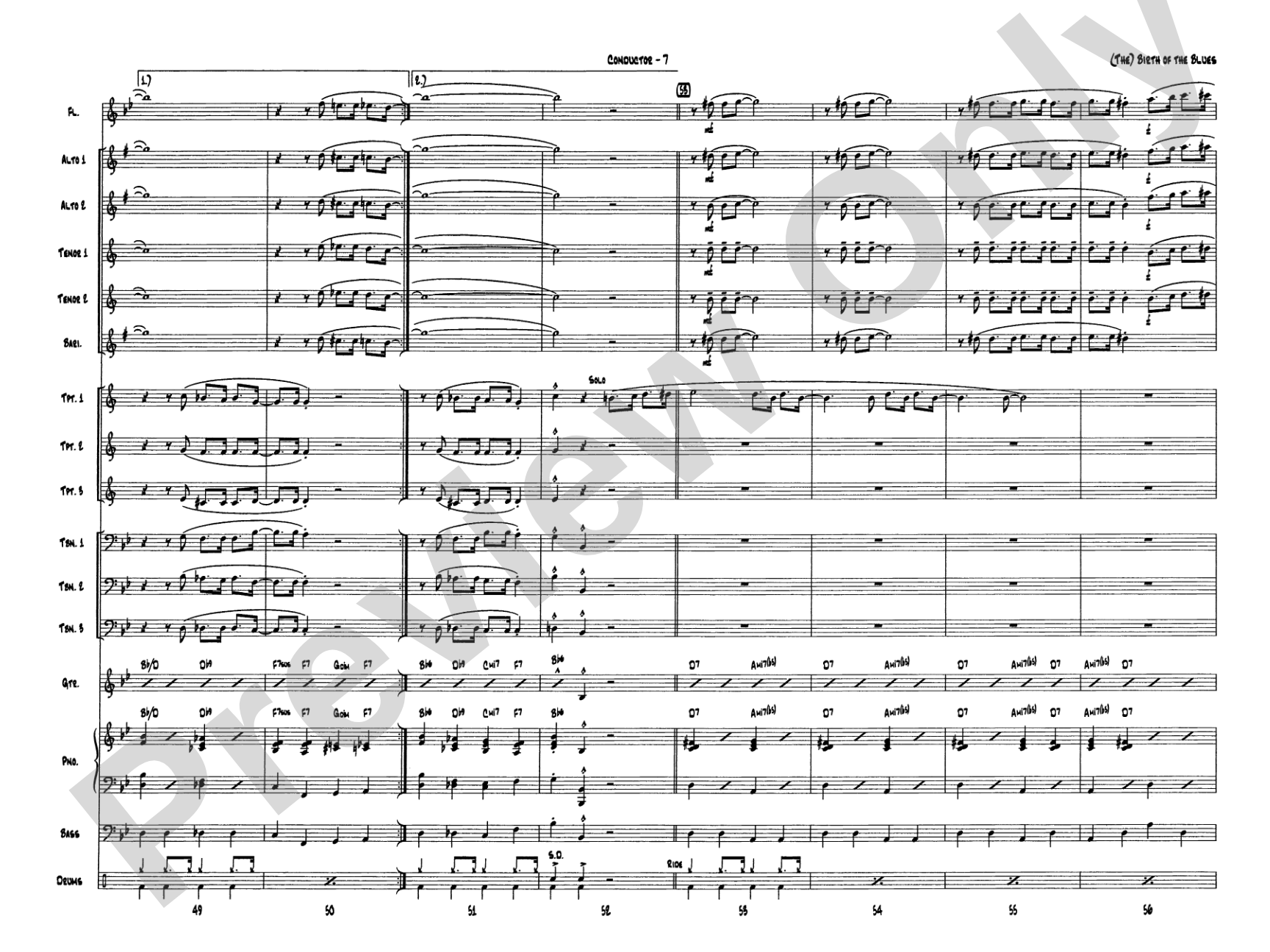
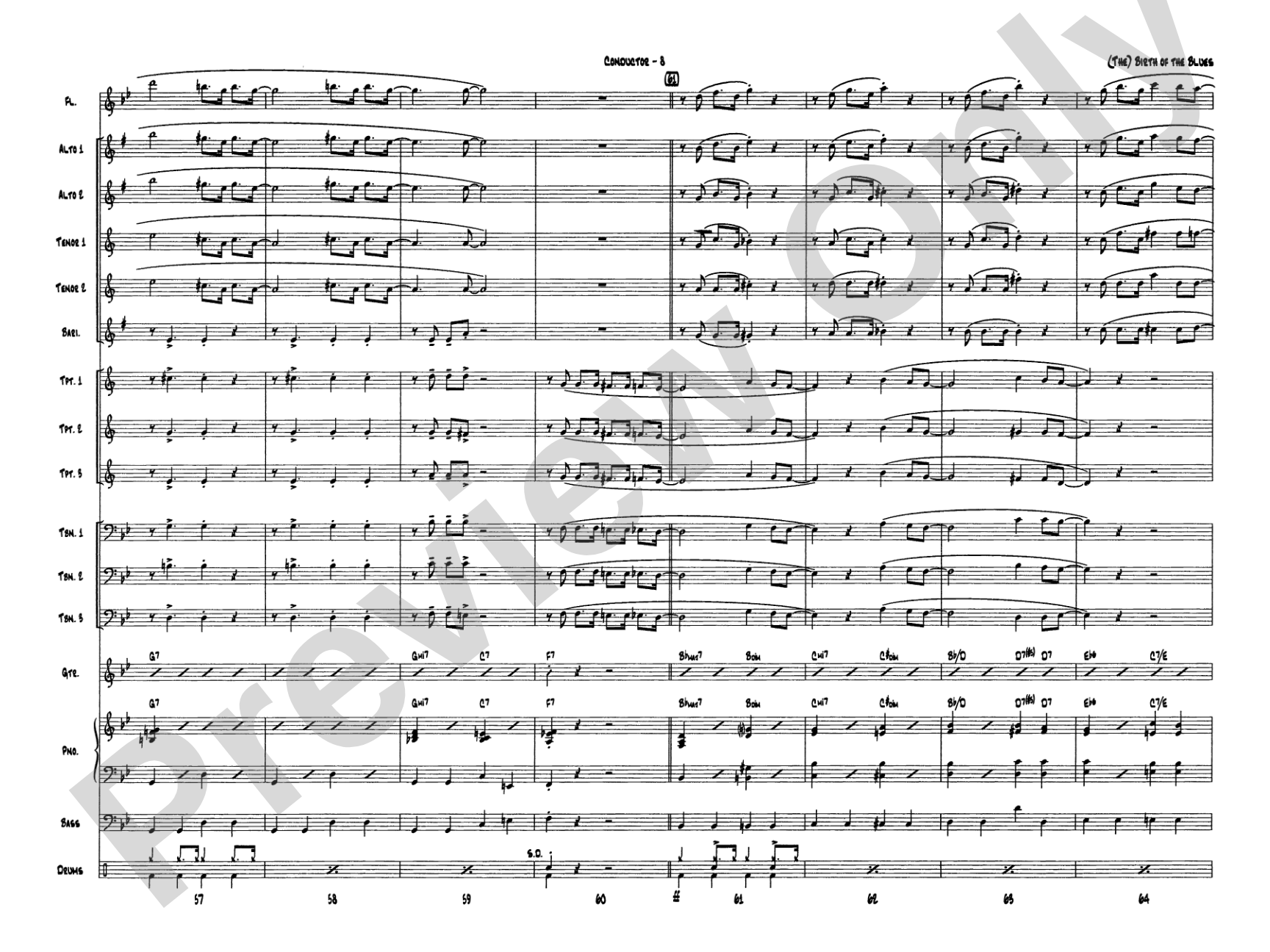
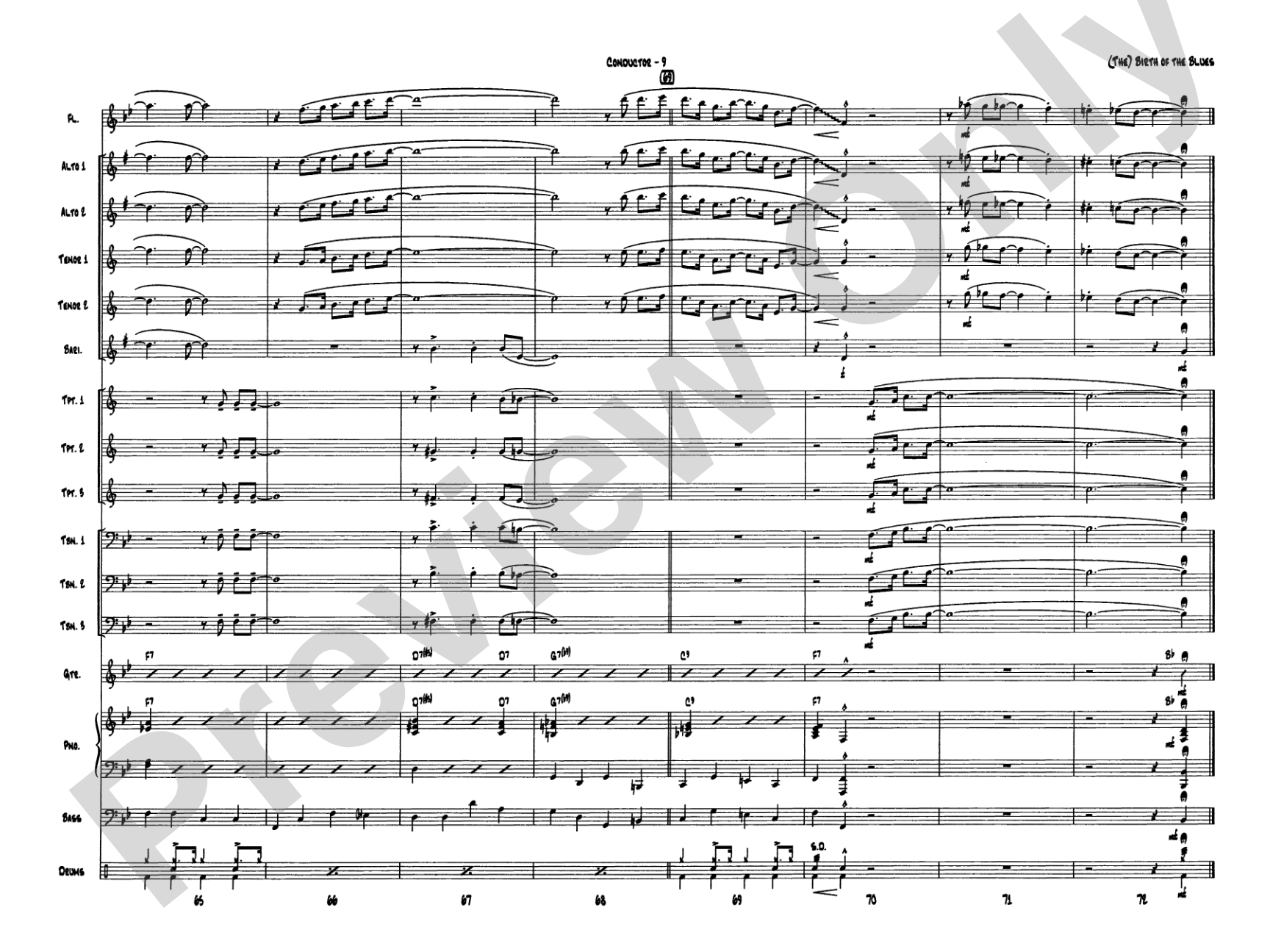


(The) Birth of the Blues: Jazz Ensemble Conductor Score & Parts
By B. G. DeSylva and Lew Brown, music by Ray Henderson / arr. Mike Lewis
Grade: 1 (Easy)
Item: 00-PK-0002494

$35.00
One moment…
Description
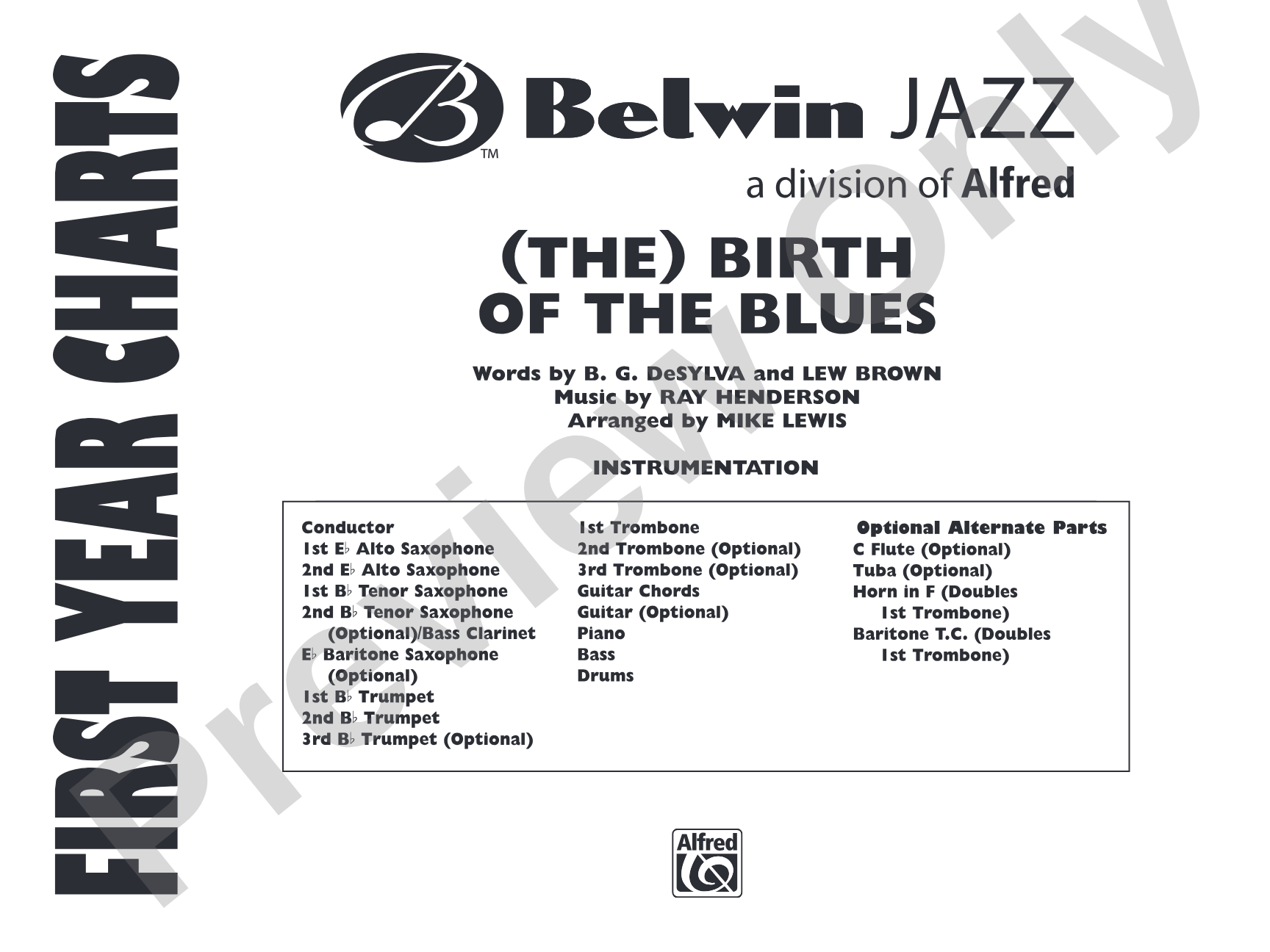
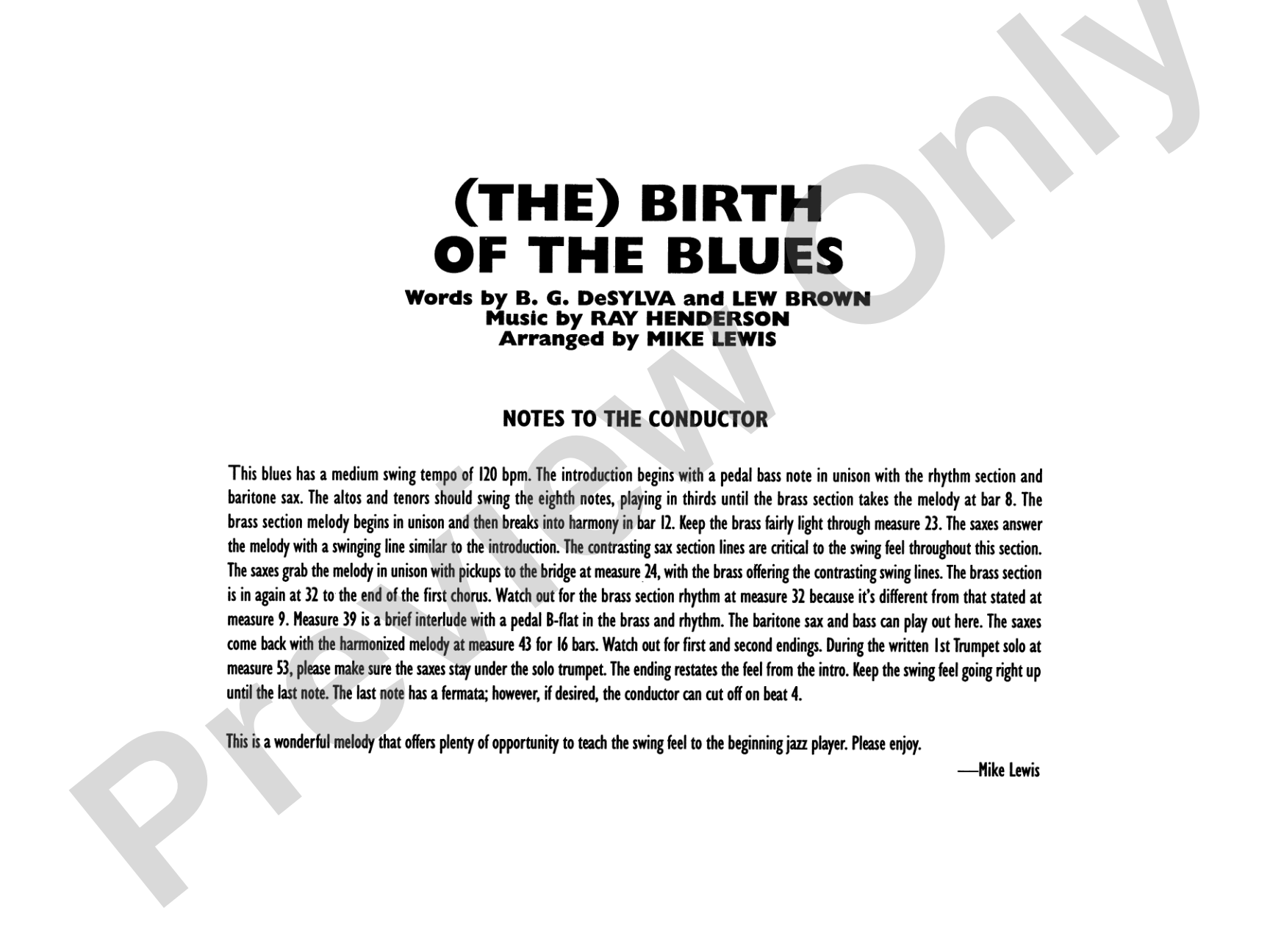
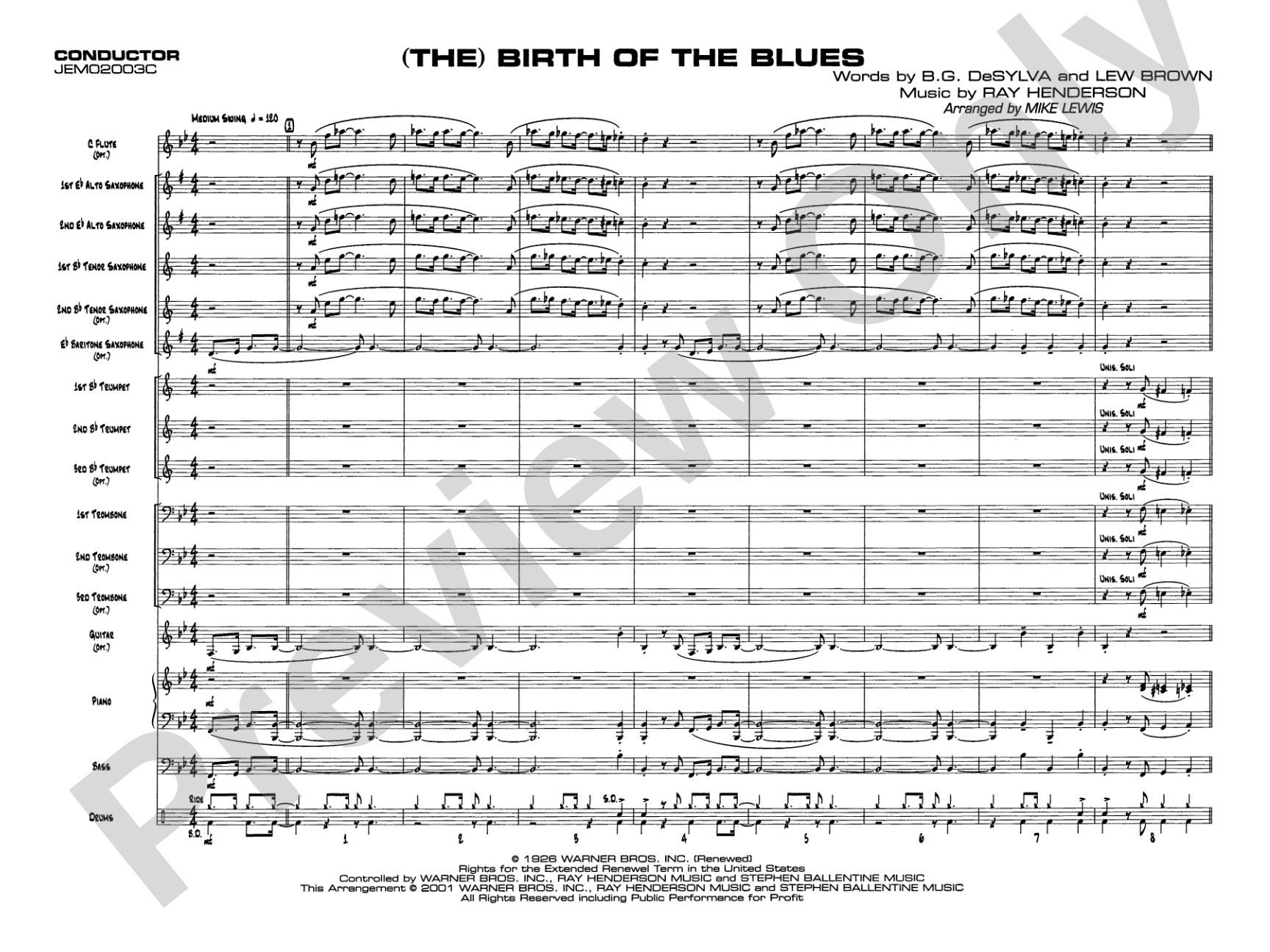
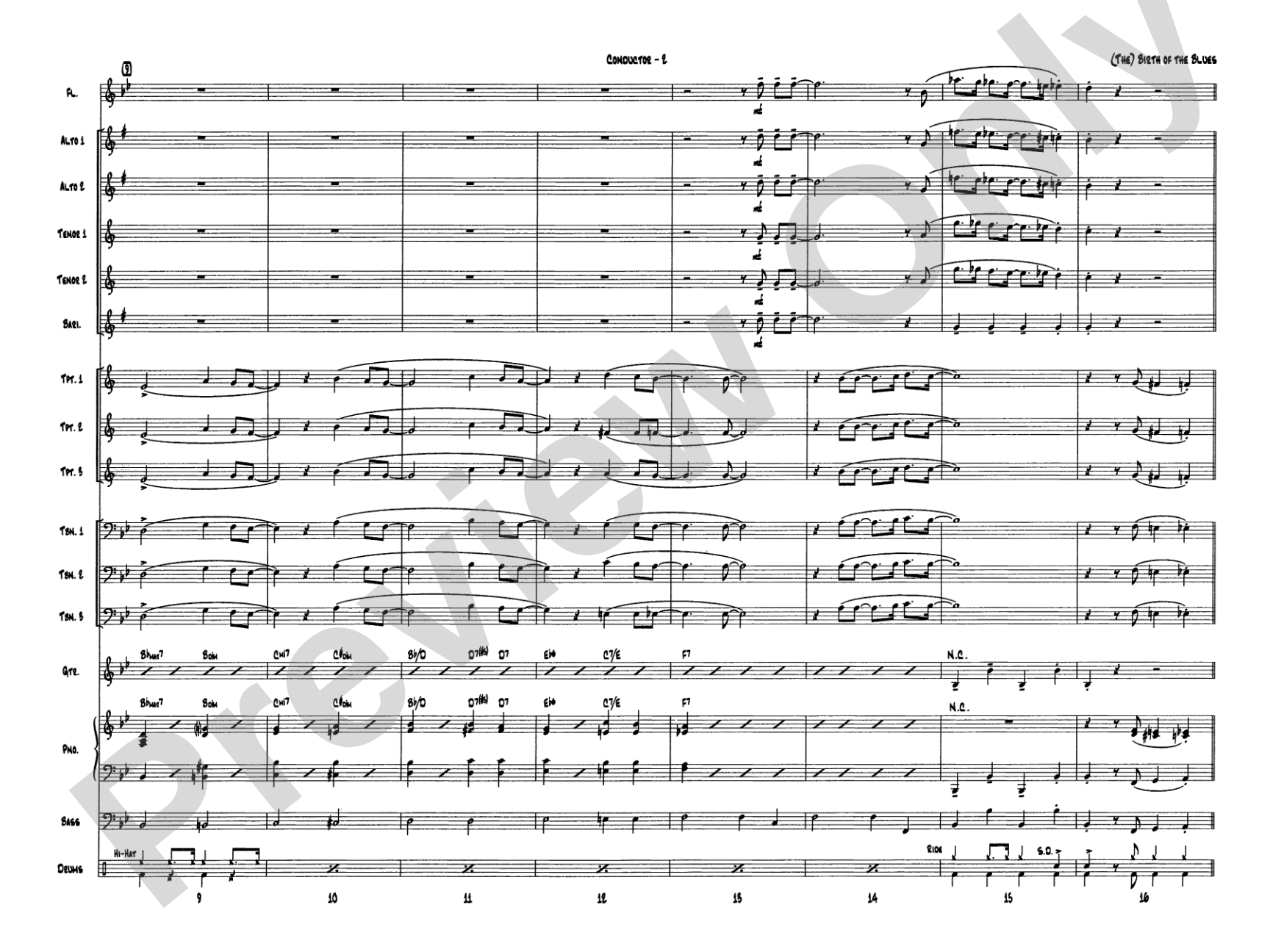
A nice easy-goin' swing chart for the first year jazz group. Master arranger Mike Lewis scored this jazz classic to feature plenty of ensemble with a brief written trumpet solo (the trumpet range in only to fourth space E.) Requiring minimal rehearsal time, this chart will sound great even with reduced instrumentation. Teach easy swing figures, have fun and play jazz! This title is available in MakeMusic Cloud. (2:46)


Don't just read it, hear it, play along with it, and watch your students grow with it. In MakeMusic Cloud, (The) Birth of the Blues: Jazz Ensemble Conductor Score & Parts comes alive with professional accompaniment, adjustable tempo, and built-in practice tools that turn solo practice into real progress.
Open in the Player
Jump straight in and assign it today.
Start Your Free Trial
Open this title and explore the full library in minutes.
Sample Audio
1
Audio File
--:--
0:00
0:00
Sample Video
No sample videos found.
Additional Details
Series:
First Year Charts for Jazz Ensemble
Publisher:
Alfred Music
Page Count:
92
SKU:
00-PK-0002494
More about this title
About the Composer: B. G. DeSylva
B. G. DeSylva was a songwriter and lyricist whose work defined the sound of 1920s American popular music. Collaborating frequently with composers Lew Brown and Ray Henderson, DeSylva helped establish the sophisticated songwriting standards of the Jazz Age, writing for Broadway shows and early film musicals. His melodies combined accessibility with harmonic sophistication, making his songs enduring favorites for jazz musicians and arrangers.
Why we love this
Mike Lewis has stripped this standard down to its essentials without sacrificing its character, giving first-year jazz ensembles an immediate win. The written trumpet solo tops out at fourth space E, removing a technical barrier while keeping the solo melodically engaging and authentic to the tune's original spirit. You'll spend rehearsal time on swing feel and section balance instead of wrestling with range issues.
What to expect
Warm and inviting, with the unhurried ease of a classic blues number. The arrangement lets the charm of the original melody shine through without overcomplication, creating space for students to settle into their first real jazz ensemble experience and discover what swing feels like.
Who it's for
First-year jazz ensemble students who need an accessible, rewarding introduction to swing repertoire. Ensembles with limited instrumentation will find this chart works well with typical beginning instrumentation while still sounding complete and professional.
How to get the most out of it
- Establish the swing feel early by having the rhythm section lock in on the backbeat before the full ensemble enters. Let them internalize the shuffle eighth-note feel without rushing.
- Balance the ensemble sections during the main melody so the tune stays clear and conversational rather than dense. Jazz is about listening to what the other section is doing.
- Shape the trumpet solo with space around it. The simplicity of the range actually allows the soloist to focus on tone quality and phrasing rather than survival.
- Keep the tempo relaxed and easy-going. This is a blues, not a burner, and the arrangement assumes plenty of air and groove.
How to use it
Program this early in the jazz ensemble season when your group is still building confidence and rhythm section chemistry. It works beautifully as a first full-ensemble chart in a concert or as the foundation of a blues-focused rehearsal unit introducing swing vocabulary and jazz phrasing.
Skills your students will build
- Reading and executing swing eighth-note subdivision and feel
- Ensemble balance and listening in a jazz context
- Solo accompaniment and responding as a section to a featured soloist
- Understanding blues form and harmonic movement
- Jazz articulation and phrasing distinct from classical approaches