The Bird: Piano Sheet Music Preview

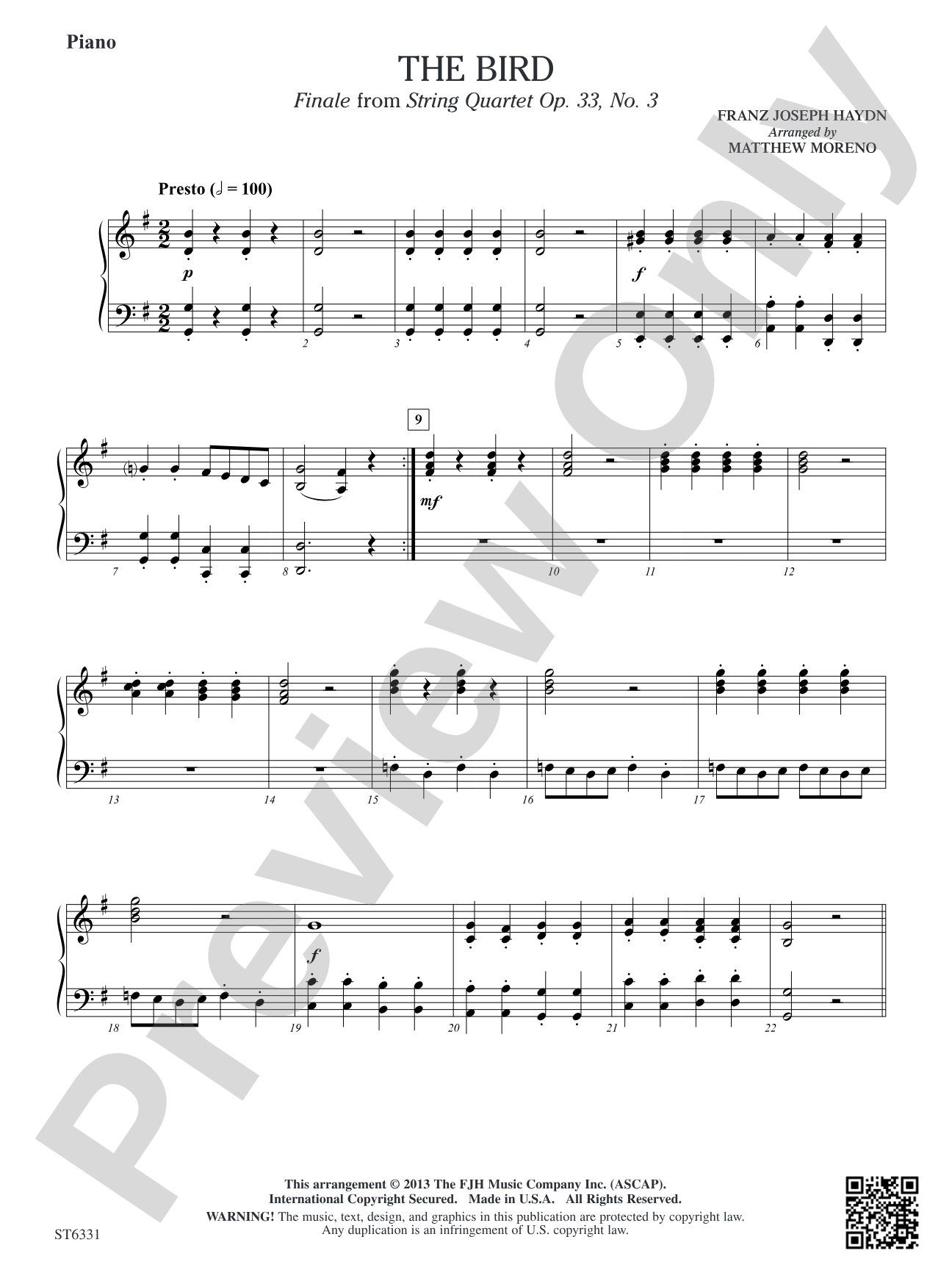
The Bird: Piano

By Franz Joseph Haydn / arr. Matt Moreno

Grade: 2.5

Item: 98-PC-DST6331_K

Digital Download
$7.00
Description
A classic Haydn string quartet for developing string orchestras! This fun arrangement of the Finale from The Bird string quartet stays true to the elements of the original work, yet is quite accessible to younger students. Orchestras aiming to achieve a classical and more refined tone will find great success while enjoying the lighthearted nature of this popular work.

Don't just read it, hear it, play along with it, and watch your students grow with it. In MakeMusic Cloud, The Bird: Piano comes alive with professional accompaniment, adjustable tempo, and built-in practice tools that turn solo practice into real progress.

Sample Audio
0:00
0:00
Sample Video
Additional Details
Series: FJH Developing Strings
Publisher: The FJH Music Company, Inc.
SKU: 98-PC-DST6331_K

More about this title

About the Composer: Franz Joseph Haydn

Franz Joseph Haydn (1732-1809) spent most of his career in the service of the Esterházy family, where he composed prolifically across every musical genre. His string quartets represent some of the finest chamber music ever written, demonstrating his gift for elegant counterpoint, witty orchestration, and memorable melody.

Haydn's influence on music education is profound. His works remain essential in the string curriculum because they balance technical clarity with genuine musical substance. The "Surprise" and "Bird" quartets have become beloved teaching pieces precisely because their accessibility never compromises their sophistication.

Why we love this

This arrangement captures everything that makes Haydn's original quartet delightful while keeping the technical demands manageable for developing orchestras. Matt Moreno has preserved the charming character and classical elegance of the finale, making it possible for younger players to experience authentic masterwork repertoire without unnecessary complexity. The straightforward yet refined musical language gives students something genuinely musical to perform, not a simplified approximation.

What to expect

Witty and spirited, with a gentle sophistication that comes from Haydn's mastery of form. The music bounces along with charm and clarity, full of the kind of understated humor and elegant phrasing that makes classical music feel alive rather than dusty.

Who it's for

String orchestras at the Grade 2-2.5 level will find this piece immediately accessible while still offering genuine musical satisfaction. It works well for orchestras looking to build their classical music vocabulary and for ensembles preparing contest or festival repertoire that showcases refined tone and style.

How to get the most out of it

  • Attend to the articulation carefully. Haydn's style depends on precise, clean attacks and releases; this clarity is what gives the music its lightness and wit.
  • Shape the phrasing with small dynamic shifts rather than broad swells. Let the natural contours of the melody guide your expression.
  • Balance the parts so that the first violins carry the primary voice without overwhelming the inner strings. The accompaniment figures matter musically and deserve audibility.
  • Keep the tempo steady and energetic without rushing. A brisk but comfortable pace allows the rhythmic momentum to shine through.

How to use it

Program this as a bridge piece in a concert that might include both contemporary works and more substantial classical fare. Its accessible charm and familiar appeal make it an excellent choice for opening a concert or placing between heavier repertoire. It also shines in competition settings where orchestras want to demonstrate their command of classical style and refined ensemble sound.

Skills your students will build

  • Playing with clarity and articulation in classical style
  • Balancing independent string parts within a homophonic texture
  • Sustaining steady tempo while maintaining phrase direction
  • Interpreting dynamic shaping appropriate to Haydn's compositional language
  • Developing sensitivity to ensemble blend and intonation in sustained passages

You May Also Like