
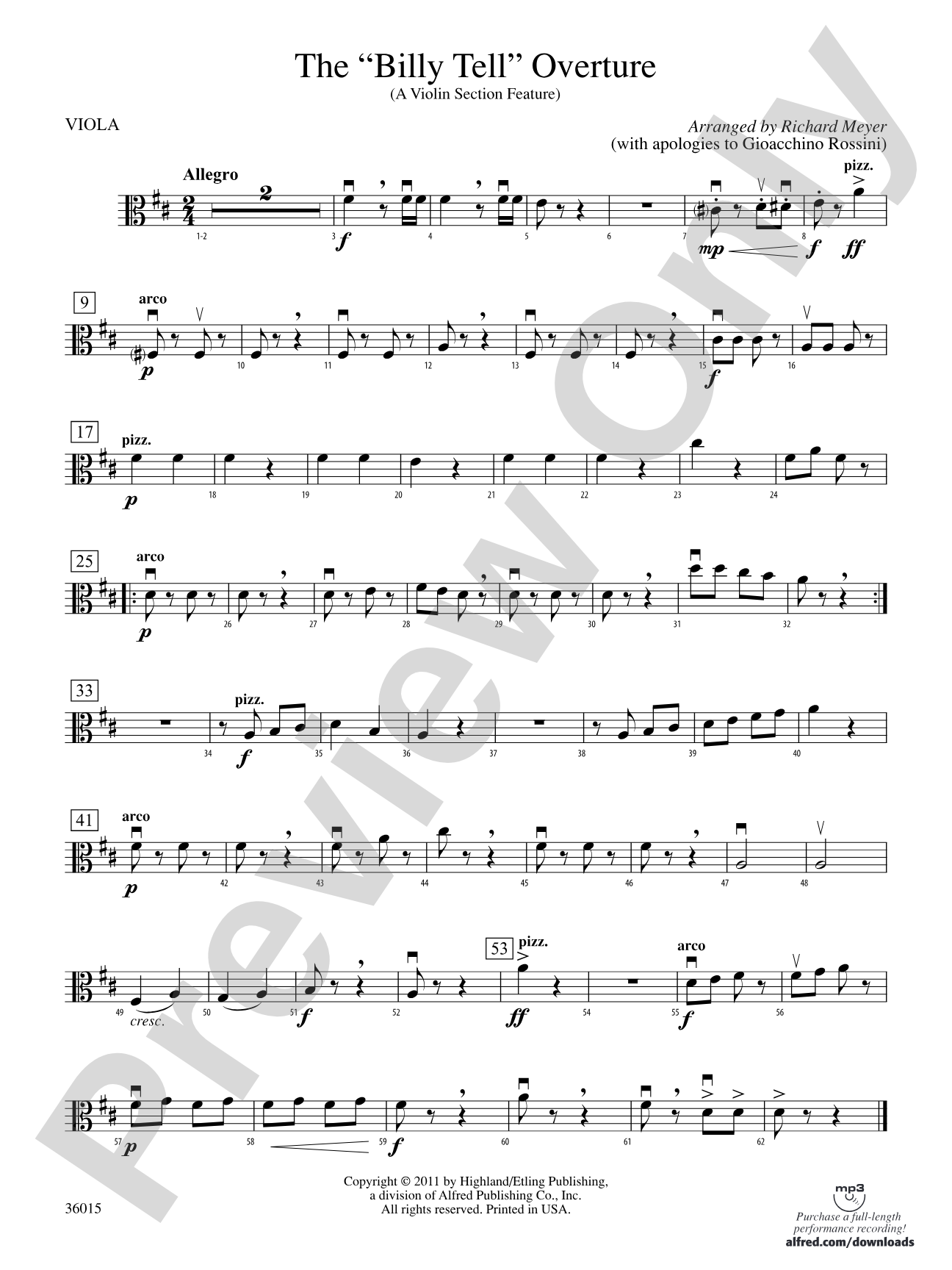

The "Billy Tell" Overture: Viola
A Violin Section Feature
By Gioacchino Rossini / arr. Richard Meyer
Grade: 2
Item: 00-PC-0015088_VA1
$5.99
Pickup currently not available
Description
This bluegrass "fiddle" version of Rossini's famous overture will get your audiences' toes tappin' and your violinists' fingers flyin'. The entire violin section is featured in this fun, virtuosic-sounding rendition that is perfect for recruiting concerts, encores, or just plain showing off! Loaded with string crossings and "doubled" notes, this piece will give your violins a workout. Included is an alternate violin part for those violinists not yet ready to solo.


Don't just read it, hear it, play along with it, and watch your students grow with it. In MakeMusic Cloud, The "Billy Tell" Overture: Viola comes alive with professional accompaniment, adjustable tempo, and built-in practice tools that turn solo practice into real progress.
Open in the Player
Jump straight in and assign it today.
Start Your Free Trial
Open this title and explore the full library in minutes.
Sample Audio
1
Audio File
--:--
0:00
0:00
Sample Video
No sample videos found.
Additional Details
Series:
Highland/Etling String Orchestra
Publisher:
Alfred Music
Page Count:
62
SKU:
00-PC-0015088_VA1
Instrumentation:
string w/ alt vln
More about this title
About the Composer: Gioacchino Rossini
Gioacchino Rossini (1792-1868) was an Italian composer whose gift for melody and comic timing made him one of the most performed composers of the 19th century. His overtures, written to introduce his operas, became concert staples in their own right; the "William Tell" Overture ranks among the most recognizable pieces in classical music. Rossini composed prolifically until his early 30s, then spent the second half of his life as a celebrated figure in Paris, composing sparingly but with meticulous care.
For music educators, Rossini's work offers immediate appeal: his melodies are memorable, his orchestrations are transparent and teachable, and his structural clarity makes his music an excellent vehicle for understanding classical form. His overtures demonstrate how a composer can build excitement through rhythm, orchestration, and harmonic motion rather than complexity.
Why we love this
Richard Meyer's bluegrass treatment transforms a warhorse into something that feels fresh and genuinely fun to play. The writing showcases your entire violin section without requiring soloists to read beyond their level, and the included alternate violin part ensures no one sits out. Directors consistently find this arrangement pulls strong applause at recruiting concerts and spring pops programs alike.
What to expect
The fiddle-style energy and rapid string crossings create a spirited, almost reckless urgency that echoes the original overture's famous galloping final section. The writing feels approachable and playful despite its technical demands, inviting orchestras to celebrate their violins' agility and find joy in the sheer physicality of string playing.
Who it's for
This arrangement serves string orchestras at the intermediate level (Grade 2) where you want to showcase violin talent without programming a piece that requires advanced reading or technical polish. It works equally well for recruiting concerts where you want to demonstrate that orchestra is exciting and fun, and for directors seeking a lighter moment in a concert program without sacrificing musicality.
How to get the most out of it
- Balance the fiddle-style articulations in the violin parts so the characteristic snap of the bluegrass idiom comes through without sounding rushed or ragged. The rhythmic precision matters as much as the energy.
- Lock the string crossings in your first violin section during sectionals before full rehearsal. Meyer's writing demands clean execution on rapid position changes; mark the crossings in your parts if they aren't already highlighted.
- Use the alternate violin part strategically. Assign it not just to younger players but to anyone who needs confidence-building in this idiom, then rotate who plays the featured part across rehearsals to keep engagement high.
- Shape the dynamic contrasts generously. The Grade 2 accessibility shouldn't mask Rossini's original architecture; let the quiet passages breathe before the big moments land.
How to use it
Pair this with a heavier romantic work or a contemporary piece to create genuine contrast in a concert flow. The arrangement's obvious crowd-appeal makes it an ideal closer for a recruiting concert or a finale for a spring pops program. It also works well as an encore or standalone feature that lets your orchestral family celebrate together without the stakes of a full-length contemporary work.
Skills your students will build
- String crossings in fast passages
- Rhythmic precision in folk-style idioms
- Sustained intonation under virtuosic technical demands
- Balance and blend within a featured section
- Confidence reading and executing at performance tempo in an accessible but musically satisfying context