The Big Three: B-flat Tenor Saxophone Sheet Music Preview

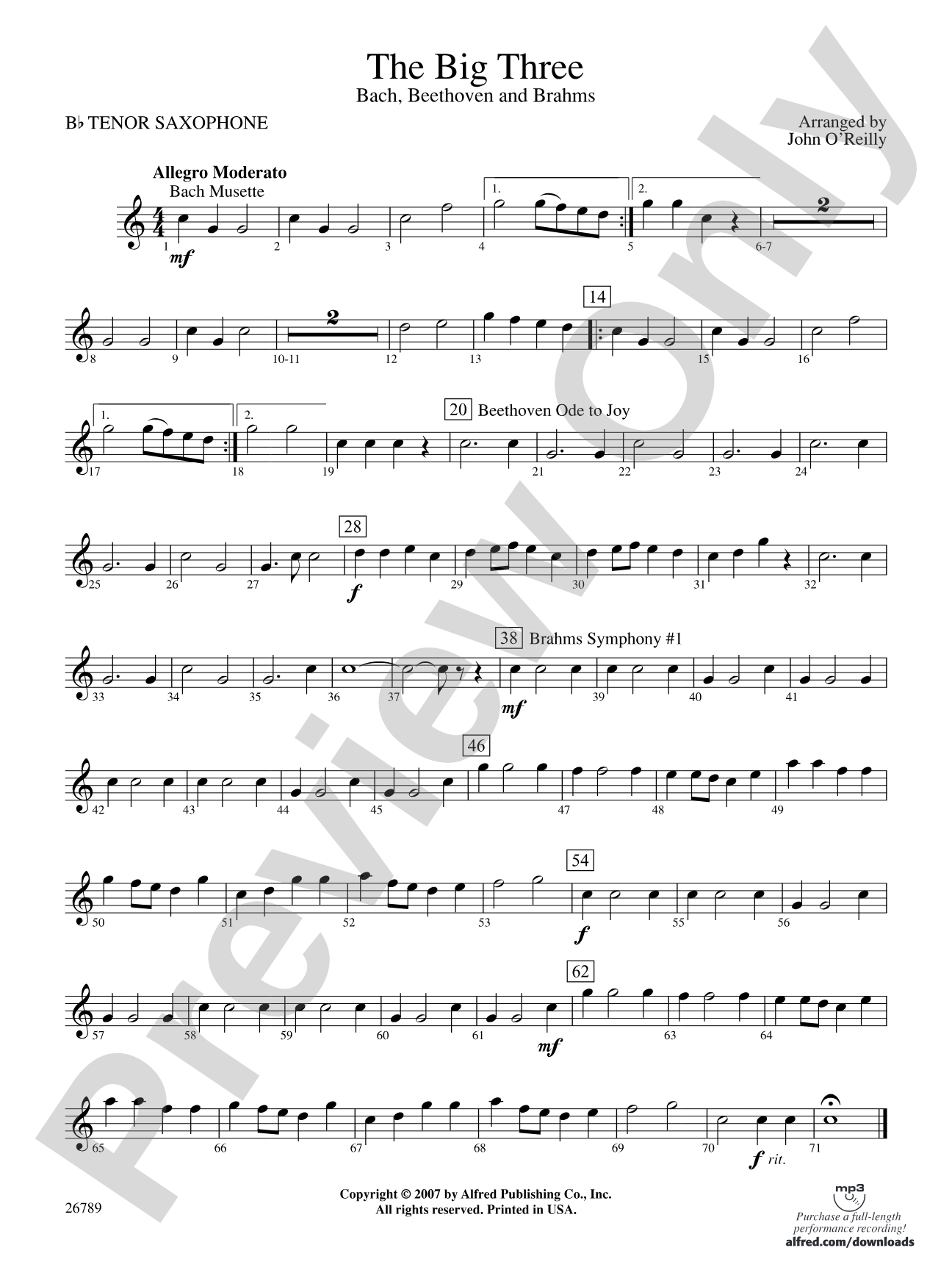
The Big Three: B-flat Tenor Saxophone

Arr. John O'Reilly

Grade: 1 (Very Easy)

Item: 00-PC-0001227_TX1

Digital Download
$3.00
Description
The "Big Three" are of course Bach, Beethoven and Brahms. John O'Reilly has chosen these composers biggest "hits" to craft this delightful young band arrangement.

Correlates with Accent on Achievement Book 1, page 25. This title is available in MakeMusic Cloud.

Don't just read it, hear it, play along with it, and watch your students grow with it. In MakeMusic Cloud, The Big Three: B-flat Tenor Saxophone comes alive with professional accompaniment, adjustable tempo, and built-in practice tools that turn solo practice into real progress.

Sample Audio
0:00
0:00
Sample Video
Additional Details
Series: Accent on Achievement
Publisher: Alfred Music
Page Count: 62
SKU: 00-PC-0001227_TX1

More about this title

About the Composer: John O'Reilly

John O'Reilly is a prolific composer and arranger whose work has shaped instrumental music education for decades. His arrangements for young ensembles balance accessibility with musical integrity, making canonical works available to students at foundational levels without sacrificing the character of the originals.

Why we love this

O'Reilly's arrangement solves a real scheduling problem: you can program genuine masterworks at Grade 1 and have your ensemble sound musically sophisticated without overextending them technically. The three movements give you concert flexibility, whether you want a full arc or individual pieces for different events.

What to expect

Hearing Bach's architectural clarity, Beethoven's heroic drive, and Brahms's warmth emerge from a young ensemble is genuinely moving. The arrangement preserves each composer's voice while keeping the technical demands manageable, so students get to focus on musicality rather than just execution.

Who it's for

This is ideal for first-year band students and newer ensembles building confidence with recognizable, musically rewarding repertoire. Directors seeking Grade 1 concert programming that doesn't feel dumbed down will find this especially useful for contests, festivals, and community performances.

How to get the most out of it

  • Balance the melodies across your sections carefully, since these familiar tunes will suffer from any single voice overpowering the texture. Listen for inner lines rather than just the top voice.
  • The Grade 1 scoring doesn't mean the conductor can disappear; keep clear gesture work and shape each theme with intention, especially in transitions between Bach's counterpoint and Brahms's lyrical writing.
  • Let students hear recordings of the original works before rehearsals begin. Knowing what they're playing makes the arrangement click into place much faster and builds ownership of the performance.

How to use it

Program this as a concert opener to establish that your ensemble respects the classics, or use individual movements to anchor different events throughout the year. The Accent on Achievement correlation makes it a natural curriculum fit for Band 1 students around page 25, when they've built enough fundamental skills to tackle real music.

Skills your students will build

  • Playing with awareness of inner harmonic lines
  • Maintaining consistent tone across changing dynamics
  • Reading and executing baroque phrasing (Bach movement)
  • Responding to clear conducting gesture and shape
  • Recognizing and executing stylistic differences across periods

You May Also Like