
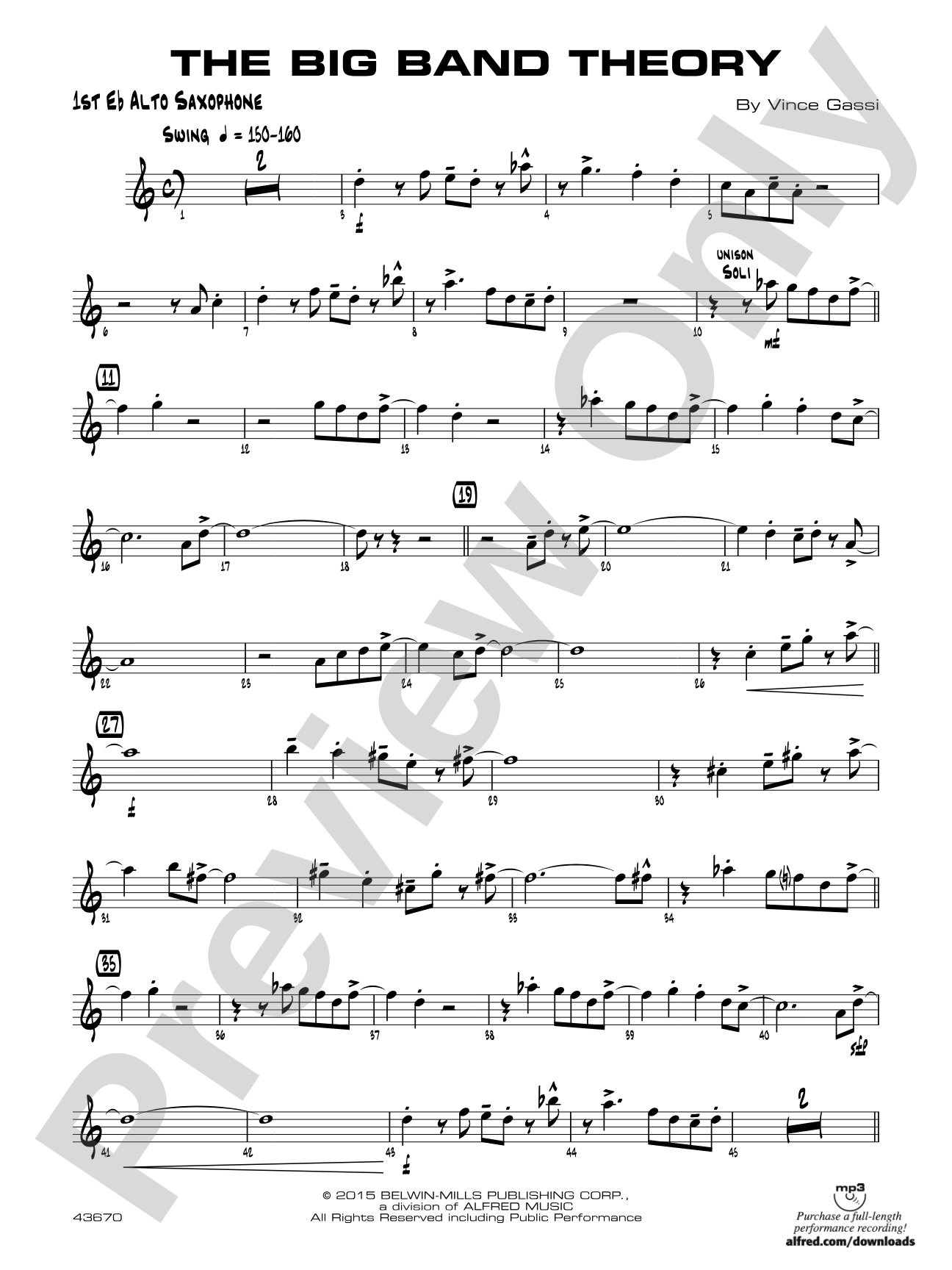

The Big Band Theory: E-flat Alto Saxophone
By Vince Gassi
Grade: 1 (Easy)
Item: 00-PC-0016811_AX1
$3.00
Pickup currently not available
Description
This fun swing chart, "Big Band Theory," is played around 150 BPM with written solos for tenor 1 and trombone 1. Vince Gassi included easy brass ranges, an interlude, unison section solis, and optional parts to include vibes. It's all here! (3:15) This title is available in MakeMusic Cloud.


Don't just read it, hear it, play along with it, and watch your students grow with it. In MakeMusic Cloud, The Big Band Theory: E-flat Alto Saxophone comes alive with professional accompaniment, adjustable tempo, and built-in practice tools that turn solo practice into real progress.
Open in the Player
Jump straight in and assign it today.
Start Your Free Trial
Open this title and explore the full library in minutes.
Sample Audio
1
Audio File
--:--
0:00
0:00
Sample Video
Additional Details
Series:
First Year Charts for Jazz Ensemble
Publisher:
Alfred Music
Page Count:
86
SKU:
00-PC-0016811_AX1
More about this title
About the Composer: Vince Gassi
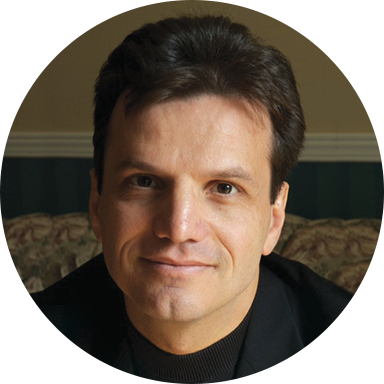
Vince Gassi has spent twenty-five years teaching instrumental music at the elementary and secondary levels while building a prolific composing career. He holds a Bachelor of Music from the University of Western Ontario and studied composition and arranging at the Dick Grove School of Music in Los Angeles; he later completed a Ph.D. at York University in Toronto.
Since 2006, Gassi has published over 100 titles that balance accessibility with musical substance. His energetic compositional voice and practical understanding of what works in rehearsal have made his pieces fixtures at international concert and contest venues. He regularly serves as a guest conductor, adjudicator, and clinician across the United States and Canada, and his workshops on creative engagement and digital workflows for music directors reflect his commitment to teacher development.
Why we love this
Gassi writes with first-year jazz ensembles in mind, which means the solos are actual solos (not ornamental figures hidden in the texture) and the ranges keep students safe without sacrificing swing. The optional vibes part and unison section solis give you multiple ways to feature different players, while the interlude provides a natural breathing moment that doesn't derail momentum.
What to expect
This is a straightforward, energetic swing tune that feels contemporary without requiring the ensemble to fake anything. The written solos and sectional moments give the piece character and individuality, while the overall three-minute-fifteen-second runtime keeps the energy focused.
Who it's for
This is built for jazz ensemble directors working with students encountering written jazz charts for the first time. The Grade 1 difficulty, secure ranges, and multiple feature opportunities make it ideal for establishing ensemble confidence and demonstrating that jazz charts can be learned and performed well by young players.
How to get the most out of it
- Mark the 150 BPM tempo clearly in rehearsal and use the recorded accompaniment to lock the ensemble's feel before adding written material. This chart swings hardest when the rhythm section commits to the groove early.
- Feature your strongest tenor 1 reader on the written solo; this is an opportunity to highlight soloists without requiring them to improvise, so preparation time is efficient.
- Balance the unison section solis carefully between the parts they're scored in. These moments read more impactfully when every voice hits the articulations together.
- If you're using vibes, introduce that part in separate rehearsals first so the brass and reeds lock the foundation before adding the harmonic color.
How to use it
Open a concert with this piece to set an upbeat tone and immediately show that your jazz ensemble can deliver professional-sounding swing. It also works well in the middle of a program as a palate cleanser between more serious offerings, or submit it to a festival where Grade 1 difficulty charts are expected to actually sound polished.
Skills your students will build
- Reading and executing swing eighth notes and jazz articulation
- Playing written solos with style and accuracy (tenor 1 and trombone 1)
- Balancing sectional unison lines with precise rhythmic precision
- Understanding ensemble groove and locked rhythm section playing at 150 BPM
- Responding to interlude sections and navigating structural landmarks