The Best Things in Life Are Free Sheet Music Preview

The Best Things in Life Are Free: SATB a cappella Choral Octavo

Words by Buddy DeSylva and Lew Brown, music by Ray Henderson / arr. Michele Weir

Item: 00-PO-0007241

Digital Download
$2.25

Minimum order quantity: 20 copies

One moment…

Description
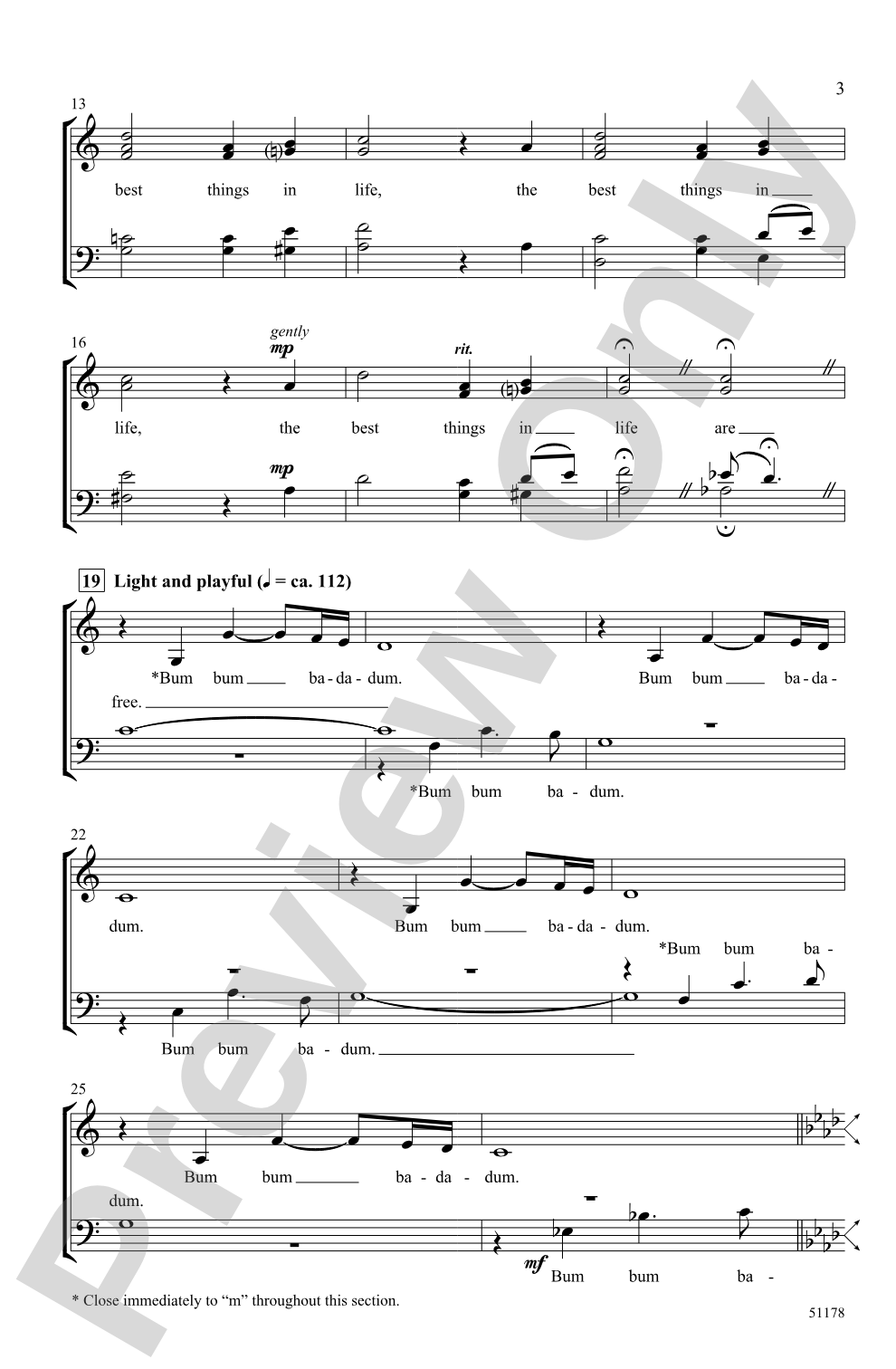
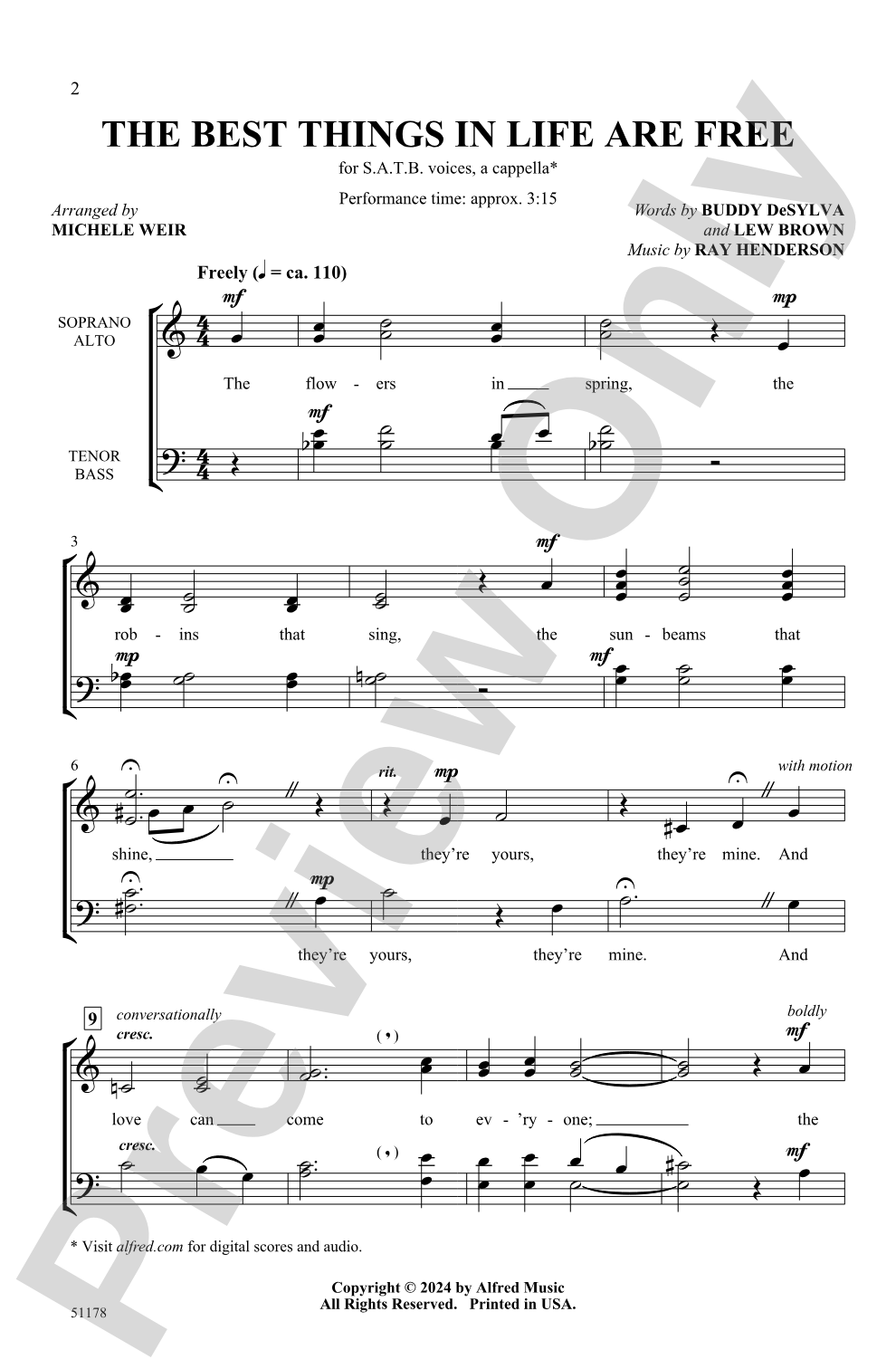
Real-deal vocal jazz writing for serious a cappella singers. This enduring standard has been performed by the likes of Sam Cooke and Bing Crosby and plays a pivotal role in the HBO series White Lotus. Michele Weir's reflective setting is full of heart and employs a variety of textures, expressive rubato, and a newly composed contrapuntal interlude that leads to a sentimental solo.

The Best Things in Life Are Free: SATB a cappella Choral Octavo isn't in MakeMusic Cloud just yet...but it could be. Let us know you'd like to see it, and you'll help shape what comes next. In the meantime, start a free trial and dive into thousands of interactive titles your students can play along with today.

Sample Audio
0:00
0:00
Sample Video
Additional Details
Series: Alfred Pop Choral Series
Publisher: Alfred Music
Page Count: 8
SKU: 00-PO-0007241

More about this title

About the Composer: Ray Henderson

Ray Henderson (1896-1970) was a prolific composer of popular music during the Jazz Age and Golden Age of Broadway. He collaborated with lyricists Buddy DeSylva and Lew Brown to create some of the most enduring standards of the 1920s and 1930s, including "The Best Things in Life Are Free," "Black Bottom," and "Button Up Your Overcoat." Henderson's melodies balanced sophistication with accessibility, making his work equally at home in concert halls and on the radio.

Henderson's contributions to American songwriting helped define the Great American Songbook. His gift for crafting memorable, singable lines combined with harmonically interesting progressions has made his compositions perennial favorites for jazz musicians and vocal ensembles.

Why we love this

Michele Weir's treatment honors the song's jazz heritage while creating something fresh for contemporary a cappella singers. The contrapuntal interlude and sentimental solo passage give your ensemble space to showcase real musicianship beyond the melody, and the variety of textures across these eight pages keeps the arrangement engaging from start to finish.

What to expect

Warm and reflective, with genuine heart. The piece unfolds like a conversation among friends, moving from straightforward statements of the melody through intimate harmonic textures and into a moment of vulnerable solo singing. There's both nostalgia for the song's classic pedigree and freshness in how Weir reimagines it.

Who it's for

Serious a cappella choirs with solid sight-reading skills and the vocal blend needed for jazz harmony. This arrangement asks singers to navigate jazz voicings and rhythmic sophistication while balancing eight pages of thoughtful, contrapuntal writing.

How to get the most out of it

  • Shape the dynamic arc carefully through the rubato sections. Rather than holding back, lean into the expressive freedom and let the melody breathe naturally, especially leading into the newly composed interlude.
  • Balance the contrapuntal writing in the interlude by rehearsing each voice line independently first. Once secure, blend the lines so listeners can follow the harmonic conversation without any one part dominating.
  • Prepare your solo vocalist well in advance. The sentimental passage demands confident intonation and expressive phrasing; isolate this section for focused coaching.

How to use it

Program this as a centerpiece in a set devoted to Great American Songbook standards, or use it to open a concert that balances classic jazz with newer repertoire. The eight-page length and reflective character make it ideal for mid-program positioning, where it can settle an audience into deeper listening.

Skills your students will build

  • Reading jazz voicings and extended harmonies (sevenths, ninths, alterations)
  • Balancing independent melodic lines in contrapuntal writing
  • Interpreting expressive rubato and phrasing in a non-metered style
  • Singing with stylistic authenticity in the jazz idiom
  • Ensemble blend in complex harmonic textures

You May Also Like