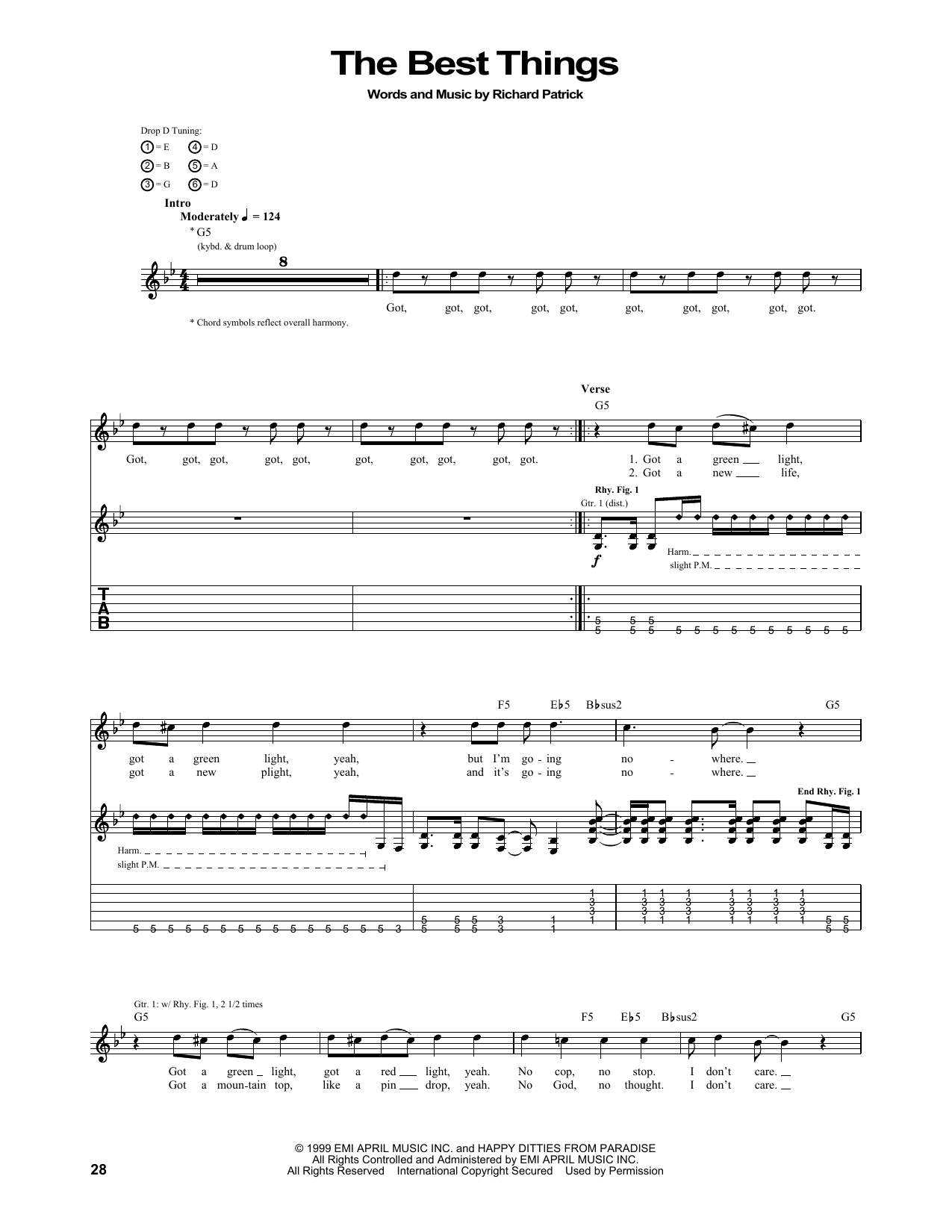
Filter emerged from the industrial rock scene of the 1990s, blending heavy guitar work with electronic elements and introspective lyrics. Led by Richard Patrick, the band became known for crafting radio-friendly yet sonically adventurous rock songs that appealed to both mainstream and alternative audiences.
Why we love this
This track sits in a sweet spot for guitarists who want to play something recognizable and rewarding without overcomplicating the arrangement. The tab gives students access to '90s alt rock sonics that still feel current, making it a natural bridge between classic rock and modern repertoire.
What to expect
Propulsive and moody, with an edge that keeps listeners engaged. The song builds tension through repetition and texture rather than complexity, creating a hypnotic quality that draws the player deeper into the performance.
Who it's for
Guitar students at the intermediate level who crave material beyond standard teaching repertoire. This tab works well for players interested in rock and contemporary styles, or for ensemble programs looking to include recognizable popular music alongside traditional material.
How to get the most out of it
Pay attention to the rhythmic pocket; the song's groove depends on locked timing rather than flashy technique, so lock in with a metronome early.
Nail the dynamics between verse and chorus. The contrast makes the payoff work, so don't rush to full intensity until the chorus hits.
Use the recorded version as a reference for tone; understanding the effects and amp settings will help your interpretation feel authentic rather than sterile.
How to use it
Slot this into a contemporary rock unit or guitar showcase concert where variety of style matters. It also works as a standalone assignment for students exploring 1990s alternative rock influences or studying how contemporary songwriting differs from classical approaches.
Skills your students will build
Reading and interpreting guitar tab notation
Maintaining steady rhythmic pulse in syncopated patterns
Understanding power chord voicings and transitions
Translating recorded audio into tactile technique
Balancing dynamics across repetitive structures
You May Also Like
Scan to Complete Your Purchase
Use your phone's camera to scan the code below
You'll log in on your phone and the order will be added to your account