The Best of the Ballet: Violoncello Sheet Music Preview

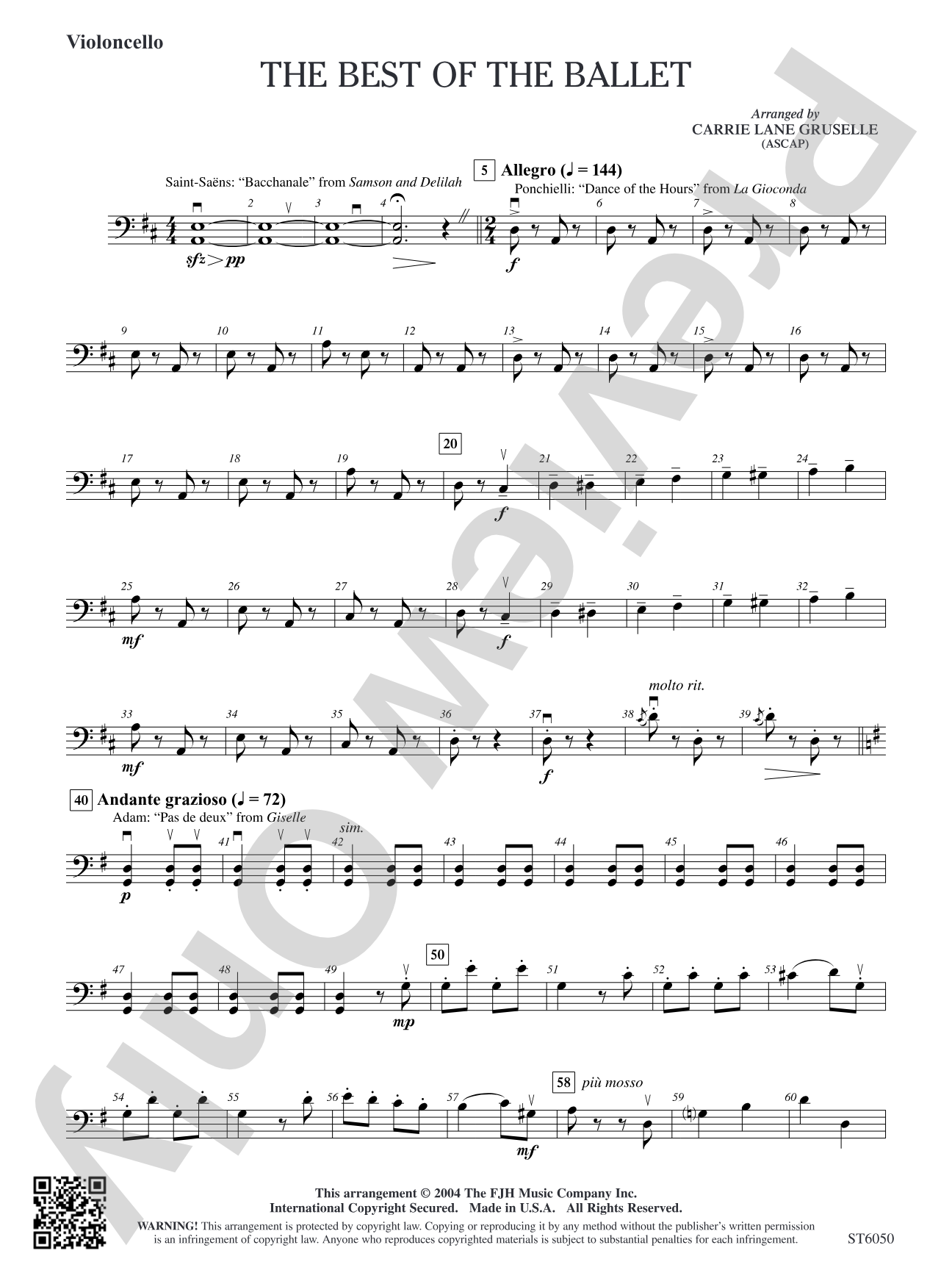
The Best of the Ballet: Violoncello

Arranged by Carrie Lane Gruselle

Grade: 4

Item: 98-PC-DST6050_VC1

Digital Download
$7.00
Description
This musical potpourri includes famous melodies from ballet scenes that span about 75 years. This is an ideal way to include lessons on music history and appreciation while exposing your students to some of the most beloved themes in classical music.

The Best of the Ballet: Violoncello isn't in MakeMusic Cloud just yet...but it could be. Let us know you'd like to see it, and you'll help shape what comes next. In the meantime, start a free trial and dive into thousands of interactive titles your students can play along with today.

Sample Audio
0:00
0:00
Sample Video
Additional Details
Series: FJH String Orchestra
Publisher: The FJH Music Company, Inc.
SKU: 98-PC-DST6050_VC1

More about this title

About the Arranger: Carrie Lane Gruselle

Carrie Lane Gruselle

Carrie Lane Gruselle earned her Bachelor of Music Education from the University of Wisconsin–Eau Claire and her Master of Music Education from the University of Wisconsin–Stevens Point, where she specialized in Suzuki pedagogy. She brings this dual expertise to her work as a string instructor for the Appleton Area School District, teaching elementary and middle school orchestras, while also serving as cello instructor for the Lawrence University Arts Academy in Appleton, Wisconsin.

Why we love this

Gruselle's arrangement makes classical ballet music accessible to younger orchestras without sacrificing the elegance of these iconic themes. The collection spans multiple ballet traditions, giving your students breadth and context while keeping individual pieces manageable at the Grade 4 level. The potpourri format holds attention and works beautifully in festival settings where variety and recognizable melodies land well with adjudicators and audiences alike.

What to expect

Moving between beloved ballet scenes feels like a backstage tour through a century of classical theater. Each melody carries the elegance and storytelling of its original context, yet the arrangement respects the technical limits of younger players, letting them experience the grace and lyricism of this music without strain.

Who it's for

String orchestras at the Grade 4 level seeking standard-repertoire material that combines musical substance with students' desire to play recognizable music. This arrangement suits ensembles preparing for festival competition or winter/spring concerts where you want to balance serious musicianship with audience engagement and music history content.

How to get the most out of it

  • Establish clear leadership in your first violins on the melodies; these themes are strongest when shaped with expressive vibrato and confident phrasing, even in a full section sound.
  • Balance your divisi writing carefully so inner voices don't disappear. Rehearse second violins, violas, and cellos as independent lines before bringing the full texture together.
  • Attend to articulation markings across all parts. Consistency in bow strokes (whether separate, slurred, or marcato) unifies the ensemble and brings out the character of each ballet excerpt.
  • Use transitions between movements to highlight the sectional nature of the work. A brief breath between contrasting themes reminds listeners they are hearing a curated collection, not a single continuous narrative.

How to use it

Open a concert with this piece to set an artful, accessible tone, or program it in the second half where fresh energy is welcome. Pair it with a lecture or listening guide about the ballets represented to deepen your students' music history learning. The festival-friendly energy also makes it an excellent choice for spring competitions or collaborative concerts with arts departments exploring dance and music together.

Skills your students will build

  • Phrasing and expression within lyrical melodic passages
  • Balance between melody and accompaniment in divisi textures
  • Stylistic consistency in articulation across multiple sections
  • Reading and executing transitions between contrasting sections
  • Historical context and recognition of major ballet works from the 19th and 20th centuries

You May Also Like