The Best Is Yet to Come: Vocal Solo Sheet Music Preview

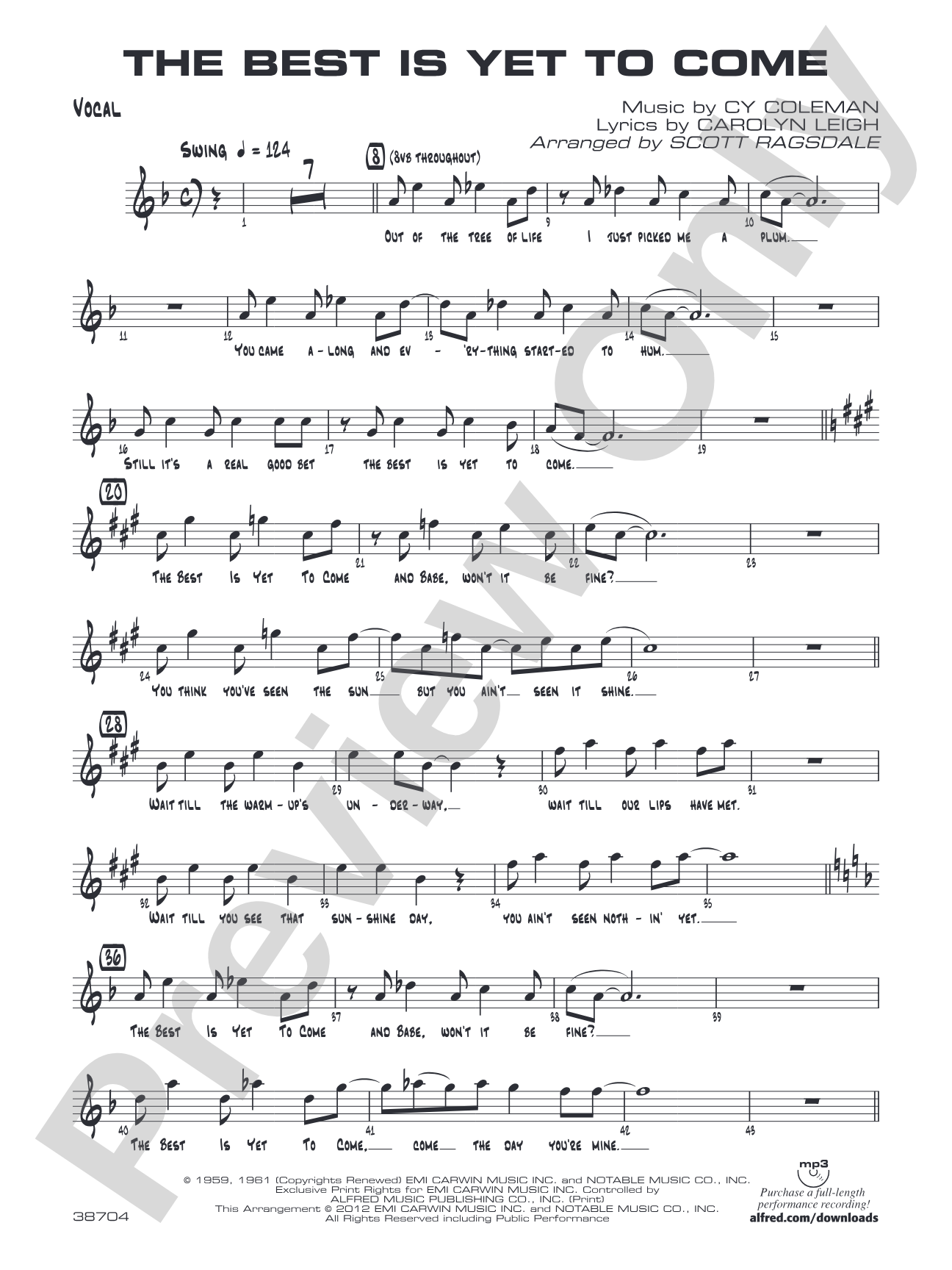
The Best Is Yet to Come: Vocal Solo

Music by Cy Coleman, lyrics by Carolyn Leigh / arr. Scott Ragsdale

Grade: 3 (Medium)

Item: 00-PC-0017232_VS

Digital Download
$3.00
Description
Sung recently by Michael Bublé and many others, this chart is a swinger. In the key of F, the vocal range is from A below middle C to middle line B. Lead trumpet range is to written A above the staff. A great standard from the American Songbook.

Don't just read it, hear it, play along with it, and watch your students grow with it. In MakeMusic Cloud, The Best Is Yet to Come: Vocal Solo comes alive with professional accompaniment, adjustable tempo, and built-in practice tools that turn solo practice into real progress.

Sample Audio
0:00
0:00
Sample Video
Additional Details
Series: Jazz Vocal Series
Publisher: Alfred Music
Page Count: 102
SKU: 00-PC-0017232_VS

More about this title

About the Composer: Cy Coleman

Cy Coleman (1929-2004) composed some of the most performed standards in American popular music, with a gift for memorable melodies and sophisticated harmonies that work equally well in jazz and theatrical contexts. His catalog includes "Witchcraft," "The Best Is Yet to Come," and numerous Broadway scores, establishing him as a bridge between the Great American Songbook and contemporary musical theater.

Why we love this

Scott Ragsdale's arrangement captures the swagger of this Coleman classic while keeping the ensemble parts accessible for Grade 3 players. The vocal line sits comfortably in the middle of the range, giving singers room to phrase expressively without strain, and the chart swings naturally without requiring virtuosic rhythm section work.

What to expect

Optimistic and forward-looking, with the kind of smooth sophistication that defines the best of the American Songbook. The chart has warmth and elegance without pretense, capturing why this song has remained a concert staple from Frank Sinatra through contemporary artists.

Who it's for

Jazz ensemble directors seeking a sophisticated vocal showcase that works for confident young singers and solid jazz bands at the intermediate level. This arrangement suits both concert performances and jazz festival settings where a standard's commercial appeal enhances programming.

How to get the most out of it

  • Let the vocalist lead the ensemble's phrasing rather than locking rigidly to the click. Coleman's melodies breathe best when the singer shapes the line and the band responds.
  • Balance the lead trumpet carefully; it should support the vocal line without competing for attention, especially in upper passages where both voice and trumpet occupy similar space.
  • The rhythm section should sit slightly behind the beat to create that classic swing feel. Rehearse the groove before adding the full ensemble so the pocket is secure.
  • Mark any rubato sections clearly in rehearsal. Even small tempo fluctuations need ensemble agreement so the vocalist doesn't feel pulled.

How to use it

Feature this as a spring concert highlight or jazz festival performance, pairing it with other Standards era charts to build a full jazz vocal program. The medium difficulty level makes it realistic for ensemble turnover while the professional sound justifies programming at formal concert events.

Skills your students will build

  • Swinging rhythm section playing (walking bass, comping piano/guitar, ride cymbal patterns)
  • Balancing solo voice against ensemble accompaniment
  • Reading and executing jazz articulation (legit phrasing versus rhythmic punch)
  • Managing upper register ensemble lines without losing blend
  • Responding to a vocalist's phrasing and tempo nuance as an ensemble

You May Also Like