

The Best Is Yet to Come - Piano Duo (2 Pianos, 4 Hands): Piano Duets & Four Hands
By Randall Hartsell
Level: Late Intermediate
Item: 00-PB-0000650
$6.99
Pickup currently not available
Related Items
The Best Is Yet to Come: Piano Duo (2 Pianos, 4 Hands) Sheet (2 copies included) |
$6.99
|
View |
Description
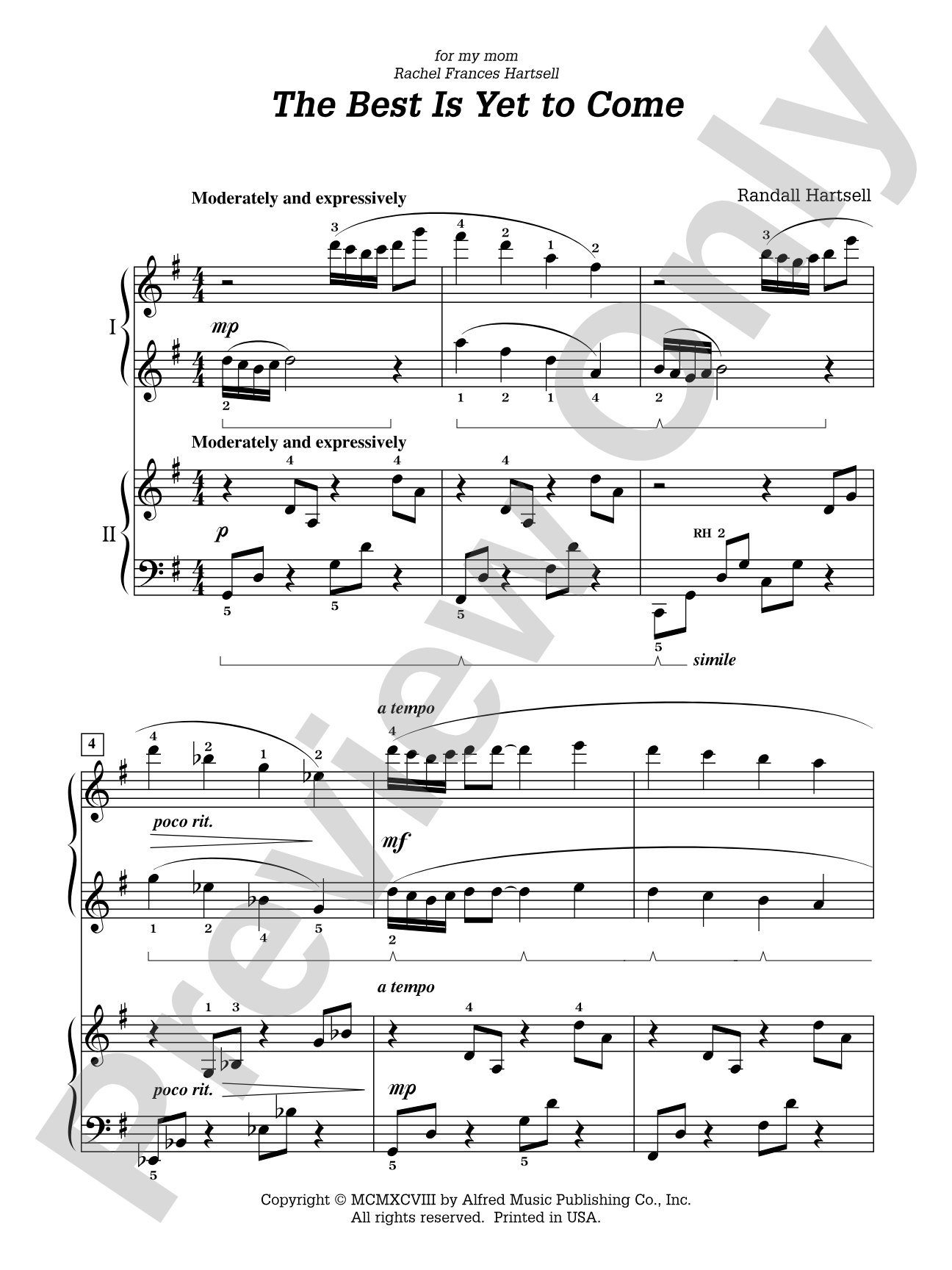
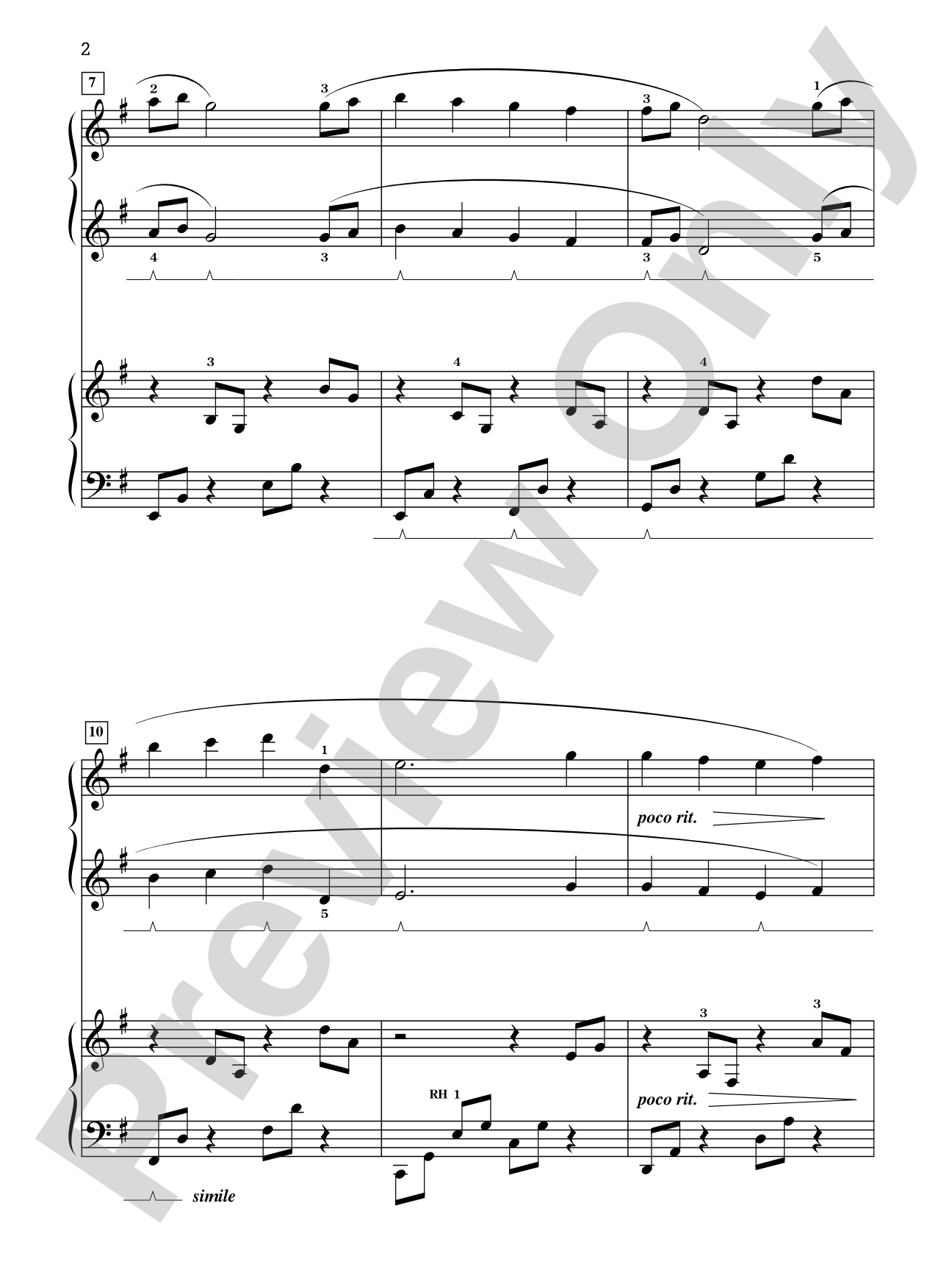
Randall Hartsell dedicated this composition to his mother, and wrote it in a positive, expressive, flowing style that is very full and rich due to the combination of two pianos that spin alternately the melody and the accompaniment patterns. The full range of the keyboard is used in both parts. Two scores are included. A Federation Festivals 2024-2028 selection.


The Best Is Yet to Come - Piano Duo (2 Pianos, 4 Hands): Piano Duets & Four Hands isn't in MakeMusic Cloud just yet...but it could be. Let us know you'd like to see it, and you'll help shape what comes next. In the meantime, start a free trial and dive into thousands of interactive titles your students can play along with today.
Request This Title
Tell us you want it.
Start Your Free Trial
Explore everything that's ready to play right now.
Sample Audio
No sample audio found.
Sample Video
No sample videos found.
Additional Details
Publisher:
Alfred Music
Page Count:
16
SKU:
00-PB-0000650
More about this title
About the Composer: Randall Hartsell

Randall Hartsell grew up in North Carolina with a hunger for music that outpaced his family's resources. At age 12, he began piano lessons but had nowhere to practice at home, so he made the daily pilgrimage to his aunt and uncle's house for an hour of focused work. After his parents eventually bought him a piano, he channeled that same discipline into composing, starting in high school with pieces inspired by his English literature assignments and accompaniment work for the choir's radio broadcasts.
Hartsell studied music in college before formally pursuing composition in his senior year at East Carolina University. A pivotal meeting with publisher Lynn Freeman Olson in the early 1980s convinced him to submit his work for publication, launching a career that has now produced more than 60 collections and solos with major publishers. Today he remains active in Charlotte as a teacher, clinician, and church musician, and his compositions are known for their ability to reach students across all ages and ability levels with genuine musicality and accessible lyricism.
Why we love this
Hartsell writes for two pianos with real textural sophistication. Rather than doubling parts, he gives each piano distinct melodic and accompaniment material that trade off and interact, demanding that students listen actively to one another. The piece sits comfortably in a festival program and offers the rare gift of a substantial two-piano work that doesn't feel overly technical or emotionally heavy.
What to expect
Warm and affirmative, with a flowing melodic quality that feels generous rather than showy. The two pianos create a full, resonant sound that lifts the spirit, reflecting Hartsell's dedication to his mother and his belief in music as something that motivates and inspires.
Who it's for
Late intermediate pianists ready to explore ensemble playing beyond traditional four-hands on one piano. This work suits festival seasons, studio recitals, and programs where you want to showcase student collaboration and demonstrate textural writing without requiring orchestral resources.
How to get the most out of it
- Balance the melodic hand between pianos by having the accompanying pianist support rather than lead, especially when the melody sits in a lower register.
- Map out where the texture shifts between pianos before rehearsal so students understand the architecture of the piece and can enter secure in what they're hearing.
- Bring out the richness Hartsell creates across the full keyboard range by allowing both pianos time in rehearsal to find their own voice and timbre quality.
- Record a practice run early and listen back together; duet playing improves dramatically when students hear themselves as one ensemble rather than two separate parts.
How to use it
Slot this into a recital or festival performance as a mid-program piece that gives the audience a breather while maintaining forward momentum. It works equally well as a season opener for an advanced piano studio looking to build camaraderie among intermediate students, or as a special dedication piece for a meaningful concert occasion.
Skills your students will build
- Ensemble balance and listening between two independent instrumental lines
- Leadership and support roles within a duet context
- Navigating the full range of the keyboard with facility in both high and low registers
- Stylistic control in lyrical, expressive music
- Collaboration and verbal communication about musical interpretation