The Best Is Yet To Come Sheet Music Preview

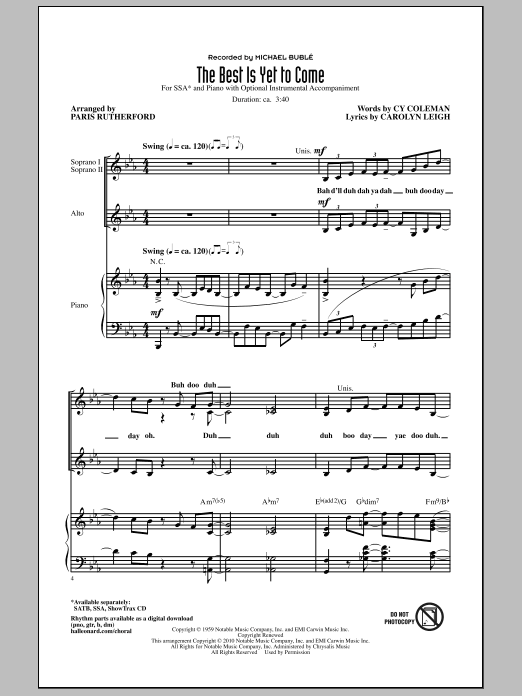
The Best Is Yet To Come: SSA Choral Octavo

By Cy Coleman / By Carolyn Leigh / As performed by Michael Buble / Arranged by Paris Rutherford

Item: 35-DS00151508

Digital Download
$2.99
Description

The Best Is Yet To Come: SSA Choral Octavo isn't in MakeMusic Cloud just yet...but it could be. Let us know you'd like to see it, and you'll help shape what comes next. In the meantime, start a free trial and dive into thousands of interactive titles your students can play along with today.

Sample Audio
No sample audio found.
Sample Video
Additional Details
Publisher: Hal Leonard
Page Count: 15
SKU: 35-DS00151508

More about this title

About the Composer: Cy Coleman

Cy Coleman (1929-2004) composed some of the most enduring jazz standards and musical theater scores of the twentieth century. Beyond his work as a pianist and conductor, Coleman crafted melodies that bridge classical sophistication with popular accessibility, making him essential study for musicians interested in American songwriting.

Why we love this

Paris Rutherford's arrangement captures the optimistic swagger of Coleman's melody while keeping the vocal writing singable and joyful for SSA ensembles. The Michael Bublé connection brings contemporary relevance to a standard that students recognize and enjoy, which means they'll invest in nailing the phrasing and style.

What to expect

Optimistic and forward-looking, with the kind of effortless sophistication that makes singers feel grown up. The melody soars naturally while the harmony underneath glows with warmth, creating an arrangement that feels both polished and genuine.

Who it's for

Directors seeking accessible jazz repertoire for developing SSA and SSAA choirs. Singers who respond to contemporary arrangements of familiar standards and want to explore jazz style without excessive technical complexity.

How to get the most out of it

  • Let the syncopation breathe. Resist rushing the syncopated figures; they land with more impact when given space rather than pushed forward.
  • Balance the harmony so the alto line doesn't disappear. The color of the arrangement depends on all three voices being present.
  • Approach the jazz articulation with specificity. Mark whether passages should be connected or clipped, and rehearse that distinction so the ensemble moves together.
  • Use the recorded accompaniment to lock in the groove early. This standard swings differently than classical repertoire, and the track grounds your singers in the right feel.

How to use it

Program this as a feel-good concert opener or closing number. It works equally well as a spring pop concert feature or woven into a standards-focused program that celebrates American songwriting alongside classical works.

Skills your students will build

  • Reading and performing jazz articulation and syncopation
  • Blending three-part harmony with clear voice independence
  • Interpreting swing rhythm and jazz phrasing
  • Listening to and matching a recorded accompaniment

You May Also Like