
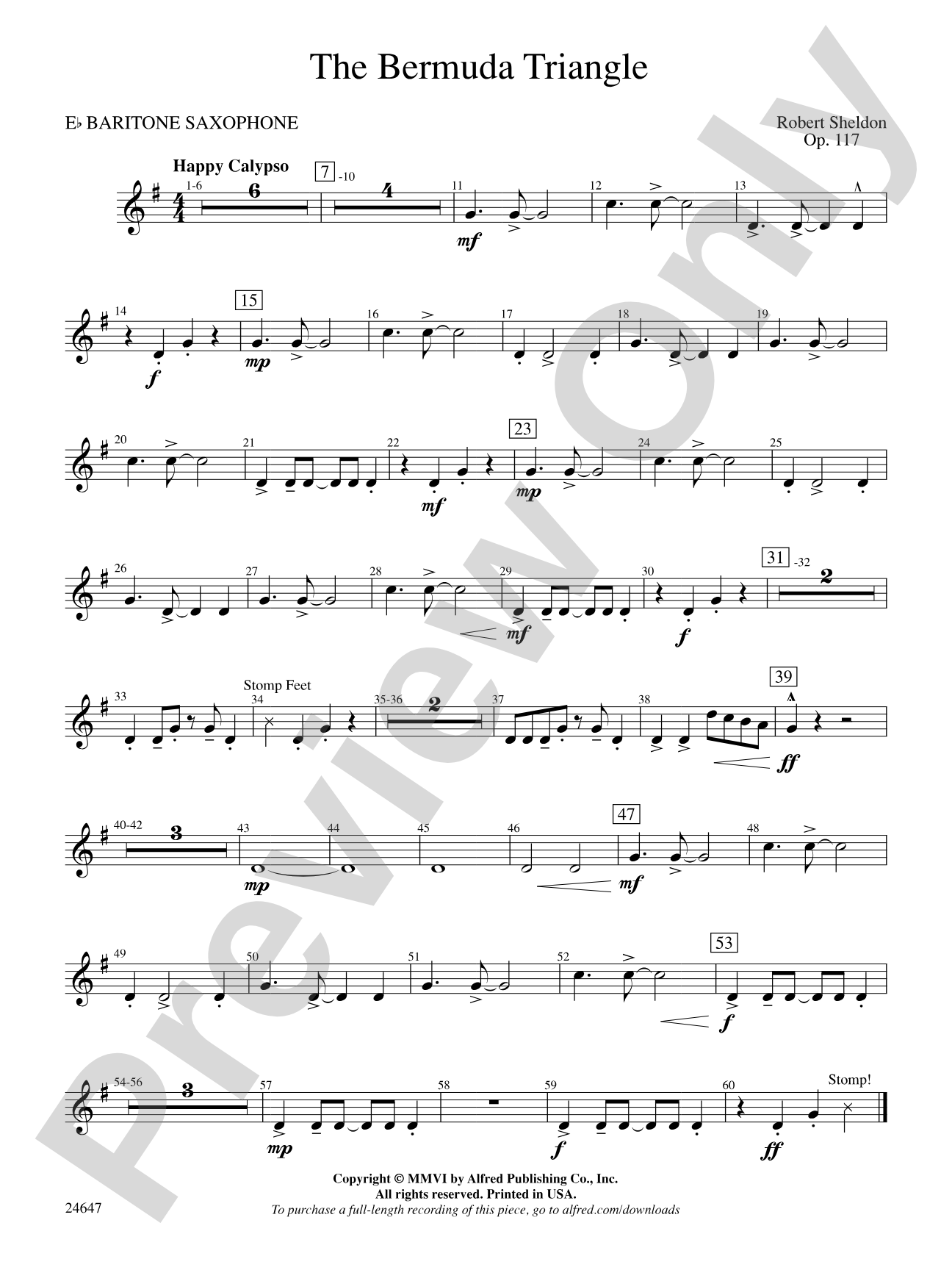

The Bermuda Triangle: E-flat Baritone Saxophone
By Robert Sheldon
Grade: 1.5 (Easy)
Item: 00-PC-0000815_BTX
$3.00
Pickup currently not available
Description
This happy calypso has a catchy tune, infectious beat, and a great triangle part! The spirit of the islands comes shining through providing a charming escape for your audience, complete with hand clapping and foot stomping parts for the wind players. A sure favorite on your next concert!


Don't just read it, hear it, play along with it, and watch your students grow with it. In MakeMusic Cloud, The Bermuda Triangle: E-flat Baritone Saxophone comes alive with professional accompaniment, adjustable tempo, and built-in practice tools that turn solo practice into real progress.
Open in the Player
Jump straight in and assign it today.
Start Your Free Trial
Open this title and explore the full library in minutes.
Sample Audio
1
Audio File
--:--
0:00
0:00
Sample Video
No sample videos found.
Additional Details
Series:
Challenger Band Series
Publisher:
Alfred Music
Page Count:
120
SKU:
00-PC-0000815_BTX
More about this title
About the Composer: Robert Sheldon

Robert Sheldon stands among the most frequently performed composers of wind band repertoire in the world. His works are staples on concert and festival schedules across the globe, and he has conducted his own compositions in some of music's most prestigious halls, from Carnegie Hall to the Kennedy Center. Sheldon is also the lead author of Sound Innovations for Concert Band and has been recognized with numerous awards from the American School Band Director's Association, Phi Beta Mu, and ASCAP.
Beyond composition, Sheldon serves the profession through conducting and teaching. He appears regularly as guest conductor for All-State and Regional Honor Bands, leads clinics at universities and state music education conferences, and has worked with ensembles across North America, Europe, Asia, and Australia. VanderCook College of Music honored him with a doctorate in 2020 in recognition of his sustained impact on wind music education.
Why we love this
Sheldon crafts concert band music that balances accessibility with genuine musicality, and this piece exemplifies that gift. The Grade 1.5 difficulty never feels simplistic; instead, the clever orchestration and rhythmic vitality keep players engaged while remaining solidly within the technical reach of younger bands. The hand clapping and foot stomping parts transform a concert into a participatory moment rather than passive listening, which younger audiences remember long after the final note.
What to expect
You step into warm island breezes and the unhurried pulse of Caribbean rhythms. The melody is instantly memorable and genuinely joyful, carried along by hand claps and foot stomps that turn the band into something closer to a village celebration than a formal ensemble. That shimmering triangle catches the sunlight in every phrase, making the whole thing feel alive and present.
Who it's for
Beginning and developing concert bands looking for programmatic music that engages both performer and audience. This piece works equally well for groups in their first or second year of literature and for established ensembles seeking a guaranteed crowd-pleaser that doesn't sacrifice musicianship.
How to get the most out of it
- Establish the calypso groove firmly in rehearsal before layering parts. The infectious quality depends on rhythmic precision and a relaxed, swaying feel, not rushing.
- Give the hand clapping and foot stomping parts serious attention during sectional rehearsals. These parts are not decoration; they anchor the ensemble's sense of place and energy.
- Balance the triangle with care. Its brightness and shimmer should accent the texture without overwhelming the primary melody line or the band's overall sonority.
- Encourage the band to listen for the melodic interactions beneath the rhythmic activity. The tune should sing through all the rhythmic vitality.
How to use it
Open a spring or end-of-year concert with this piece to establish an uplifted mood and signal that the audience is in for an entertaining evening. It pairs beautifully with more contemplative works in the same program, providing a tonal and emotional contrast. Consider programming it before a brief speaking segment about multicultural music traditions, or use it as your finale if you want the audience leaving with the melody stuck in their heads.
Skills your students will build
- Maintaining steady calypso rhythms while playing pitched material
- Balancing independent rhythmic parts (hand claps and foot stomps) with ensemble melody
- Controlling dynamic and tonal clarity at Grade 1.5 difficulty
- Listening for and responding to percussive texture and color within a concert band setting
- Performing with rhythmic independence and confidence in an unfamiliar style