
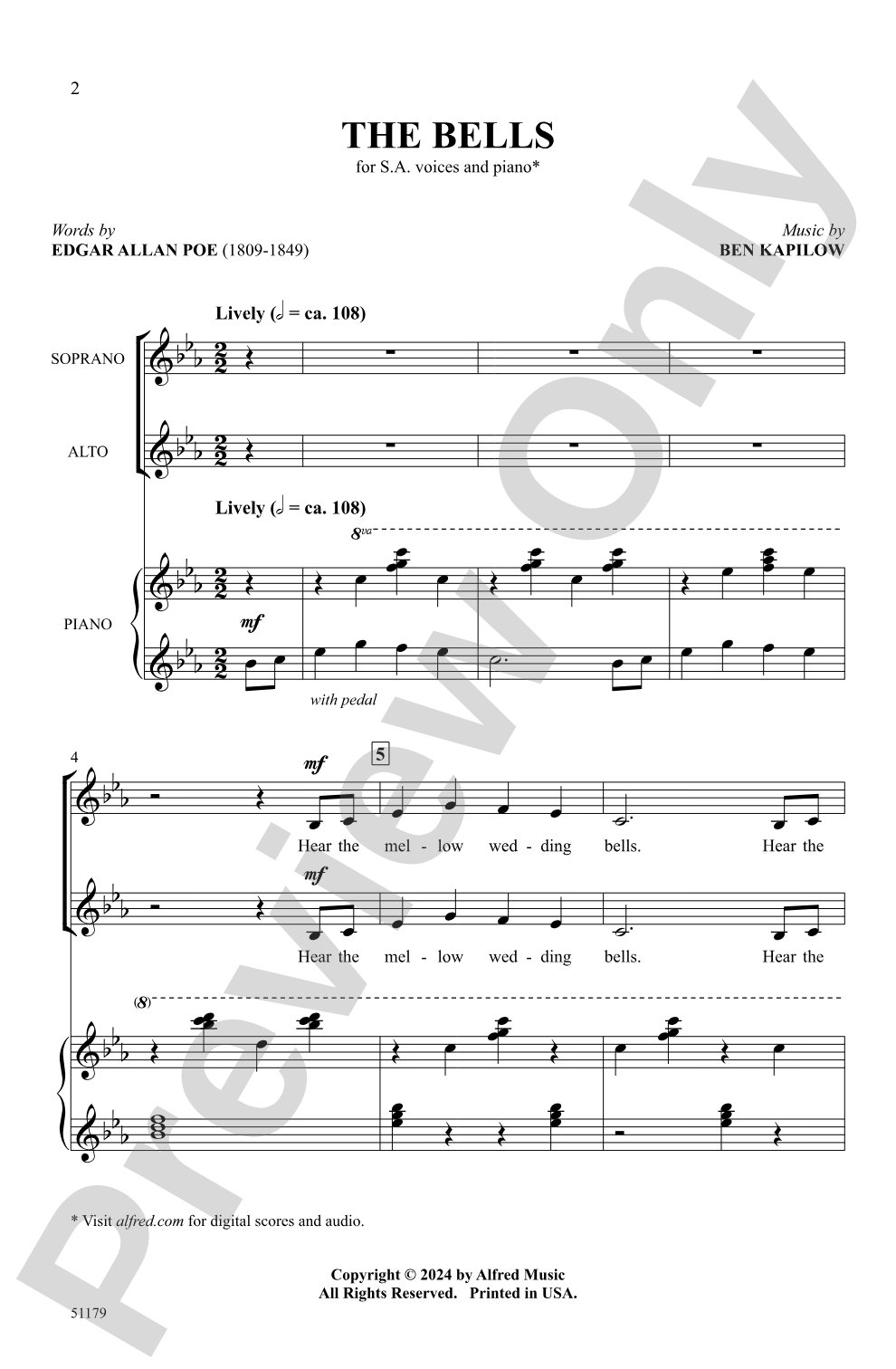
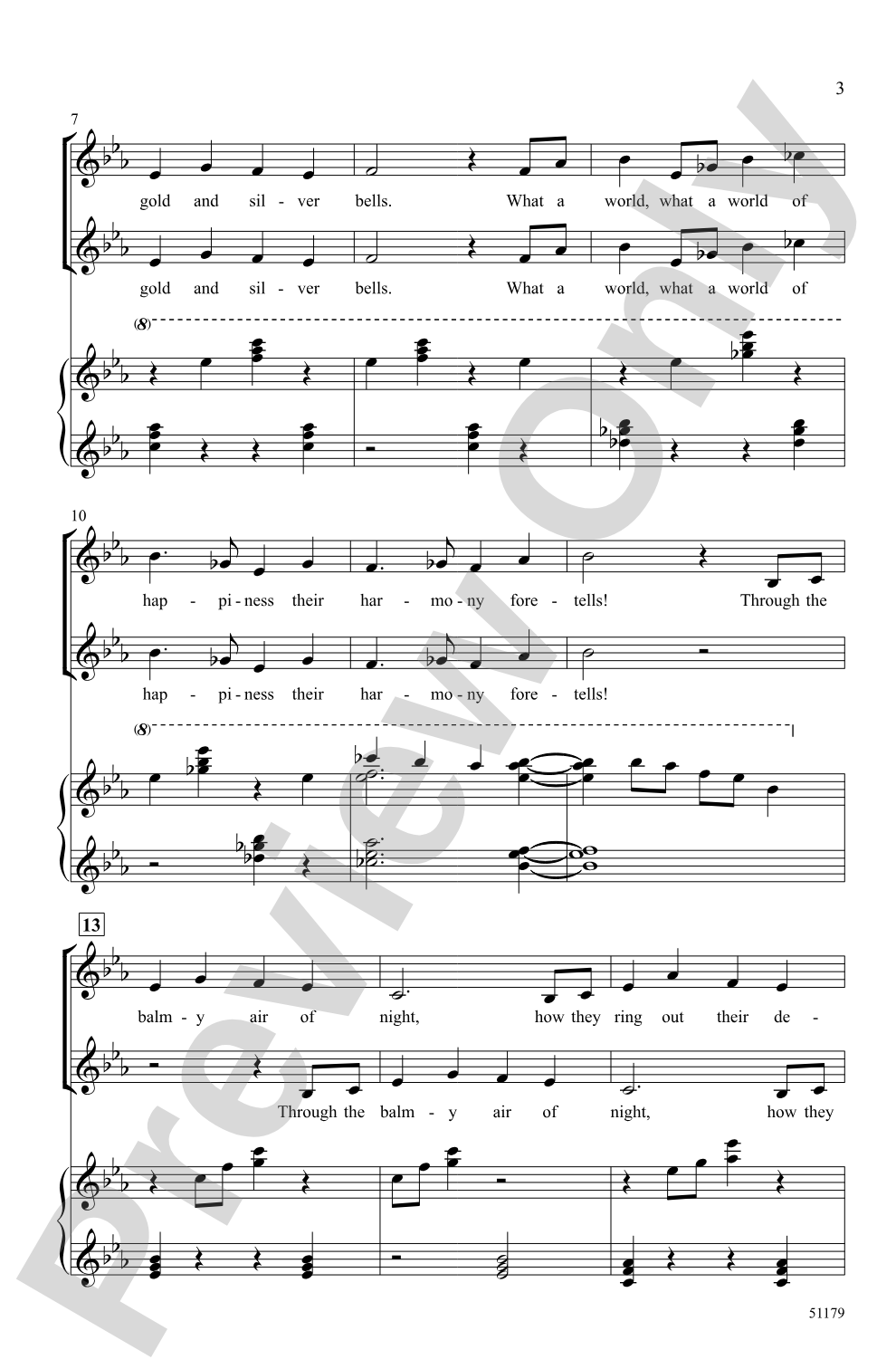

The Bells: SA/2-Part Choral Octavo
Words by Edgar Allan Poe, music by Ben Kapilow
Item: 00-PO-0007242
$2.40
Minimum order quantity: 20 copies
Pickup currently not available
Description
Edgar Allan Poe's fast-flying words are brought to life in a vibrant, high-energy piece for treble choirs. Employing echo-singing, chromaticism, and back-and-forth meter changes, this setting is one and a half minutes of pure excitement! The composer uses only the non-seasonal text, so it can be programmed year-round. An ideal feature for your collaborative pianist and advancing SA singers.


The Bells: SA/2-Part Choral Octavo isn't in MakeMusic Cloud just yet...but it could be. Let us know you'd like to see it, and you'll help shape what comes next. In the meantime, start a free trial and dive into thousands of interactive titles your students can play along with today.
Request This Title
Tell us you want it.
Start Your Free Trial
Explore everything that's ready to play right now.
Sample Audio
1
Audio File
--:--
0:00
0:00
Sample Video
Additional Details
Series:
Lawson-Gould
Publisher:
Alfred Music
Page Count:
12
SKU:
00-PO-0007242
More about this title
About the Composer: Ben Kapilow
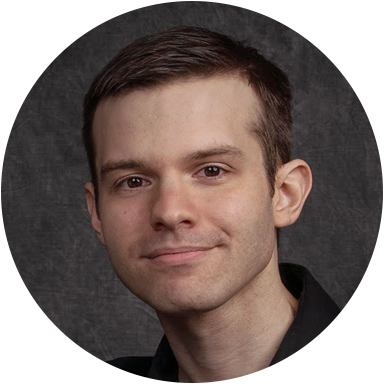
Ben Kapilow combines deep expertise in music direction with a commitment to strengthening music education through mentorship and public conversation. His experience spans professional theatre (Media Theatre, Walnut Street Theatre) and school music programs, giving him insight into what works for both developing singers and demanding performance contexts. He hosted the popular podcast "All Keyed Up" for over a decade, building a community of music educators eager to learn from working professionals.
Kapilow's voice in the field extends through speaking engagements at major pedagogy conferences, published articles on teaching in Piano Magazine and other platforms, and guest appearances on numerous music education podcasts. He holds an M.M. in Music Composition from the Peabody Conservatory and a B.A. in Music and Psychology from Swarthmore College, training that informs both his compositional voice and his understanding of how students learn.
Why we love this
Kapilow captures Poe's relentless energy without resorting to exhaustion or gimmickry. The strategic use of echo-singing and meter shifts creates genuine musical conversation rather than surface-level effects, and his decision to use only non-seasonal text gives you a piece that earns its place in your repertoire year-round rather than sitting in a seasonal file.
What to expect
Urgency and playfulness run through every measure. The fast-moving text and shifting harmonic ground create momentum that pulls listeners forward, while the echo effects and meter play introduce moments of surprise. It's energized rather than frantic, controlled excitement that performers feel as much as audiences hear.
Who it's for
SA choirs moving beyond unison into genuine two-part writing will find material that challenges without overwhelming. Your advancing singers get rhythmic complexity and harmonic color; your accompanist gets a feature-worthy part that's neither boring nor gratuitously difficult.
How to get the most out of it
- Treat the meter changes not as obstacles but as rhythmic punctuation. They're written to feel inevitable once your singers understand the text stress, so drill those transitions at tempo rather than slowly.
- Let the echo passages breathe slightly between calls and responses. This isn't call-and-response in the pop sense; there's architectural space between them that sharpens the energy.
- Work with your pianist on the chromaticism early. Those shifts can blur if the keyboard doesn't track them clearly, and a crisp accompaniment will anchor your singers' intonation through the harmonic movement.
- Highlight the text clarity. At 1.5 minutes of high energy, every syllable needs to land. Your singers will naturally rush if they're focused on the vocal excitement rather than diction, so isolate the text runs separately first.
How to use it
This works beautifully as an opener or a pre-intermission closer; its brevity and high energy make it ideal for resetting audience attention or building momentum into a major work. Pair it with slower, lyrical pieces to showcase your SA voices' versatility, or use it to anchor a concert section exploring text-driven choral writing.
Skills your students will build
- Reading and executing meter changes within a fast tempo
- Echo-singing with rhythmic precision and independence
- Navigating chromatic harmony with secure intonation
- Sustaining clear diction at high energy and quick tempo
- Two-part blend and balance while maintaining text clarity