
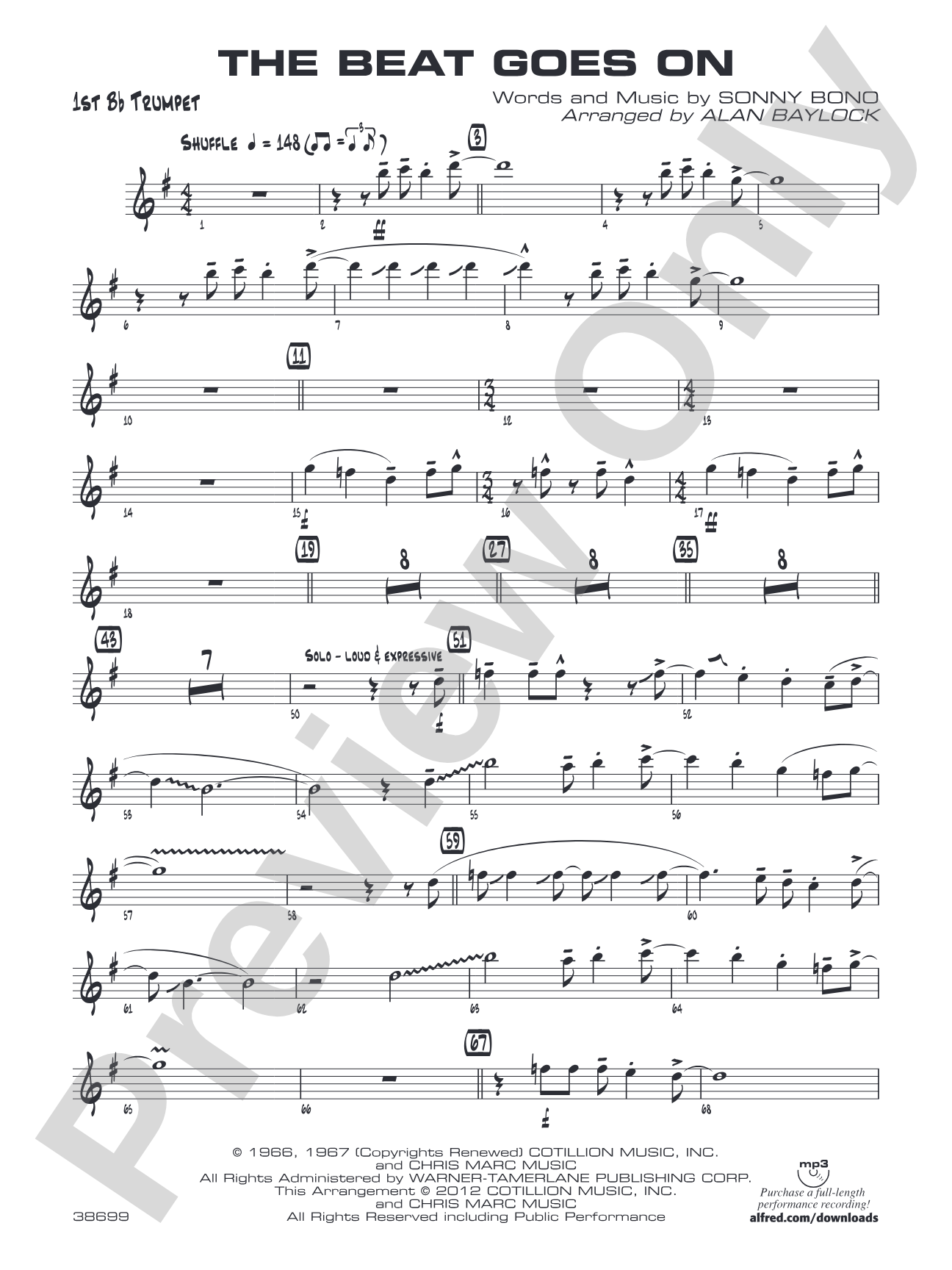

The Beat Goes On: 1st B-flat Trumpet
By Sonny Bono / arr. Alan Baylock
Grade: 5 (Advanced / Difficult)
Item: 00-PC-0017229_T1
$3.00
Pickup currently not available
Description
Yep, it's the tune by Sonny Bono, from Sonny and Cher fame! With a driving shuffle feel, this contemporary and hip treatment of this classic pop-rock tune let's you know you are in for a treat from the first note. This is a powerful and fun-to-play chart with solo space provided for tenor, trumpet 2, and guitar if desired. The lead trumpet range is to written high D. This title is available in MakeMusic Cloud.


Don't just read it, hear it, play along with it, and watch your students grow with it. In MakeMusic Cloud, The Beat Goes On: 1st B-flat Trumpet comes alive with professional accompaniment, adjustable tempo, and built-in practice tools that turn solo practice into real progress.
Open in the Player
Jump straight in and assign it today.
Start Your Free Trial
Open this title and explore the full library in minutes.
Sample Audio
1
Audio File
--:--
0:00
0:00
Sample Video
No sample videos found.
Additional Details
Series:
Premier Jazz Series
Publisher:
Alfred Music
Page Count:
76
SKU:
00-PC-0017229_T1
More about this title
About the Composer: Sonny Bono
Sonny Bono (1935–1998) was a singer, songwriter, and entertainer who rose to fame in the 1960s as one half of the folk-rock duo Sonny and Cher. Beyond his recording career, Bono wrote and produced music that blended pop sensibility with accessible songwriting, creating works designed to reach broad audiences. His compositions remain teaching tools in contemporary music education, valued for their straightforward harmonic structures and memorable melodic lines.
Why we love this
Alan Baylock's arrangement captures the infectious groove of the original while crafting an engaging vehicle for an advanced jazz ensemble. The chart honors the pop-rock foundation while adding authentic jazz vocabulary, and the solo opportunities for tenor, trumpet 2, and guitar give multiple performers a chance to step into the spotlight without demanding virtuosic facility. It's the kind of tune that generates genuine enthusiasm from players the moment they hear it.
What to expect
Propulsive and immediately recognizable. The shuffle groove creates forward motion from the opening, and the arrangement trades between crisp unison figures and voiced passages that sit comfortably in the jazz vernacular. There's an infectious confidence in this tune; it swings hard without pretension.
Who it's for
This chart works for advanced high school jazz ensembles, college jazz labs, and serious community jazz groups ready to tackle a full-length arrangement with solo exposure. It suits programs seeking contemporary repertoire that bridges the gap between popular recognition and genuine jazz musicianship, without requiring bebop facility from every section member.
How to get the most out of it
- Lock the shuffle feel early in rehearsal by isolating the rhythm section and establishing the pocket before layering the horns; the groove carries the entire arrangement, so rhythm precision matters more than perfect note accuracy in early run-throughs.
- Balance the solo section between support and space. The comping instruments should sit behind whoever is soloing, allowing their voice to emerge clearly without drowning them out in the ensemble sound.
- Shape the lead trumpet part with awareness of the written high D passages; plan breathing strategically and consider dynamic shaping to avoid fatigue across the range of the chart.
- Use the provided MakeMusic Cloud access to distribute parts efficiently and allow players to hear reference recordings or backing tracks as study aids between rehearsals.
How to use it
Program this as a concert anchor or festival showcase piece for an advanced ensemble; the tune's mainstream familiarity paired with legitimate jazz arranging makes it accessible to audiences while showcasing your group's ability to execute sophisticated voicings and maintain groove. It's equally effective as a centerpiece of a jazz-focused concert or as the high-energy closer in a mixed repertoire program.
Skills your students will build
- Executing shuffle feel with precision and consistency across ensemble sections
- Comping and solo accompaniment in jazz contexts
- Reading and performing jazz voicings and sectional articulation
- Managing dynamic balance between solo and ensemble voices
- Interpreting swing style phrasing and rhythmic interpretation
- Extended range trumpet playing (written to high D)