
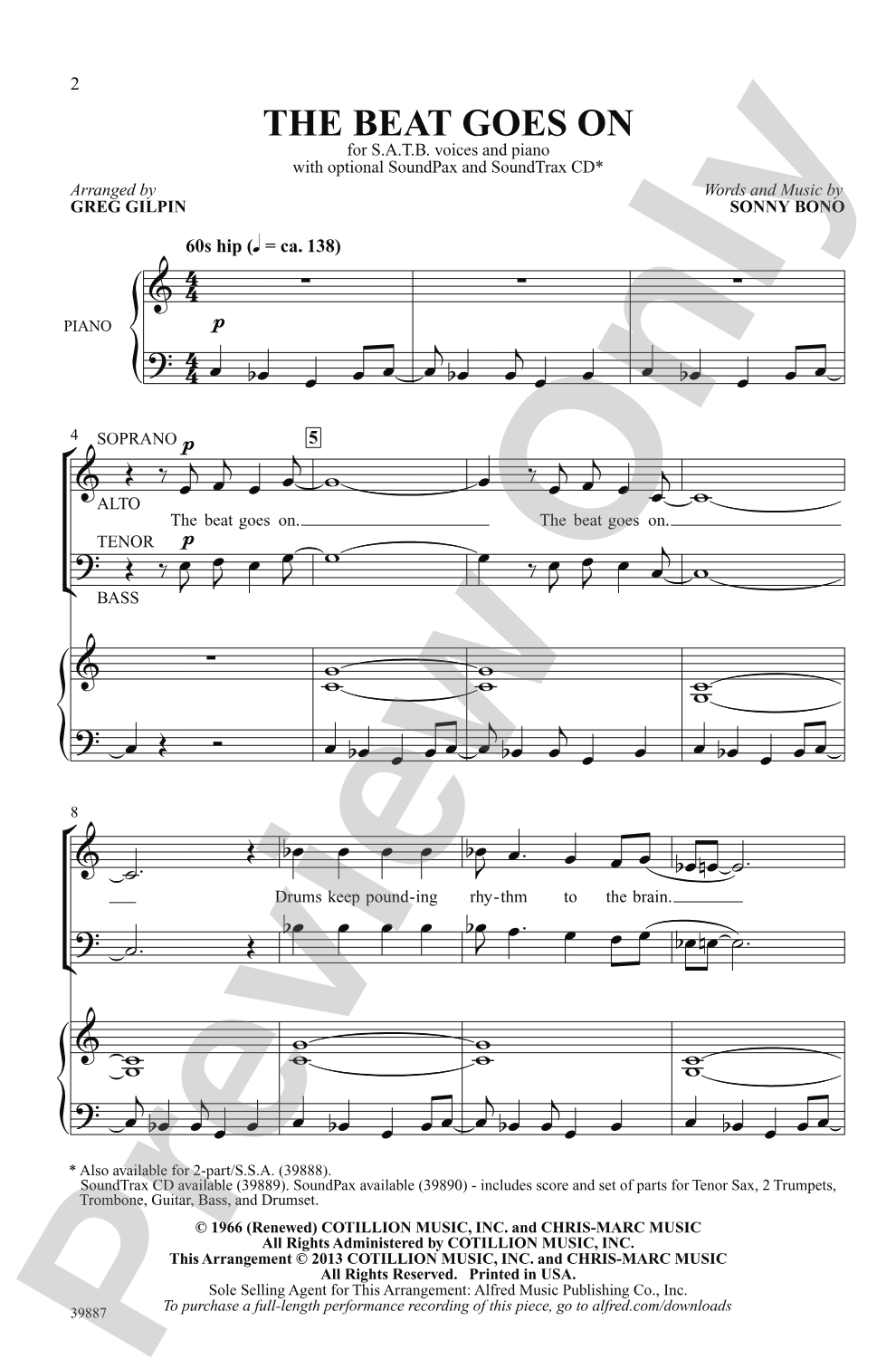
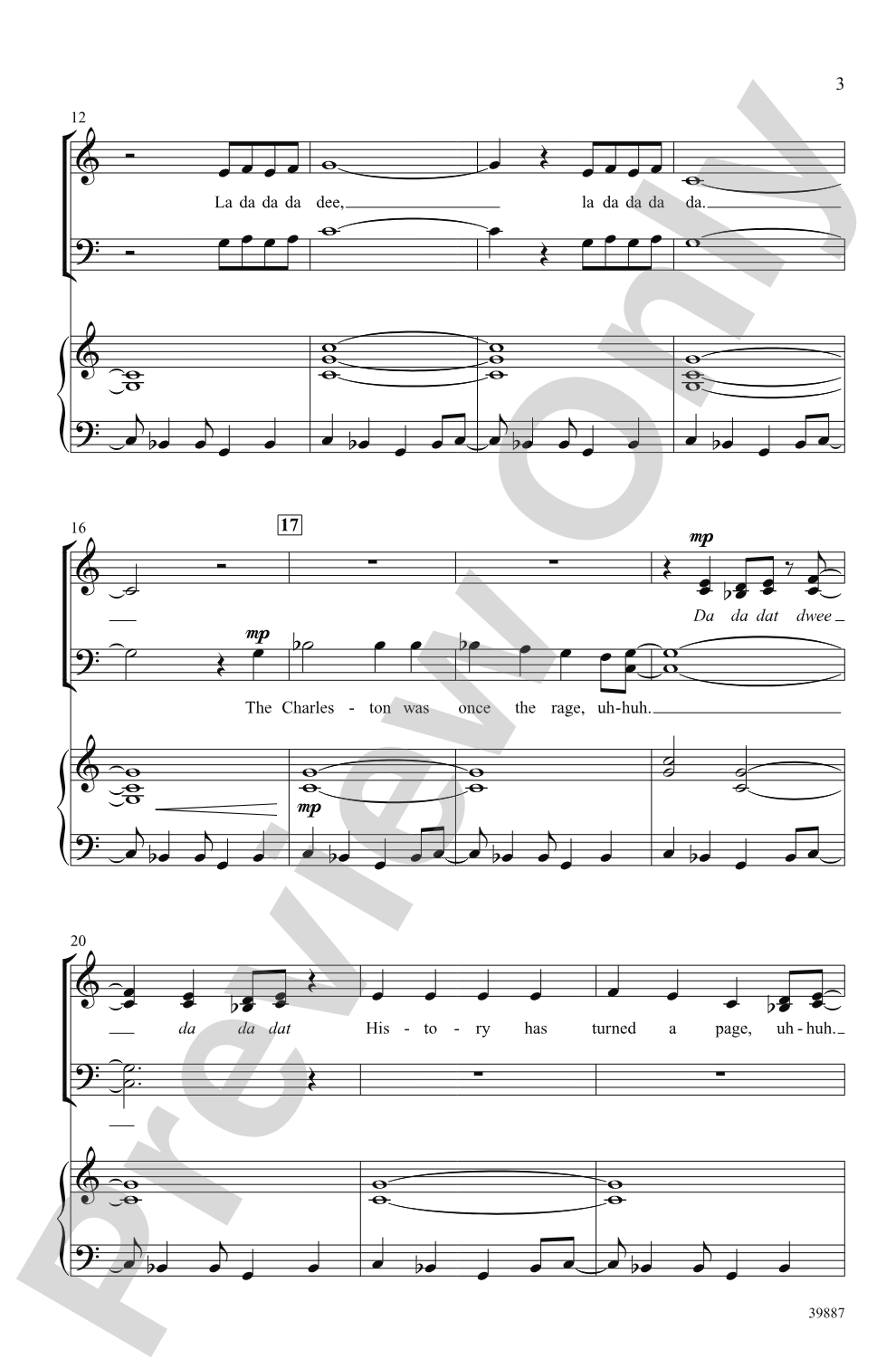
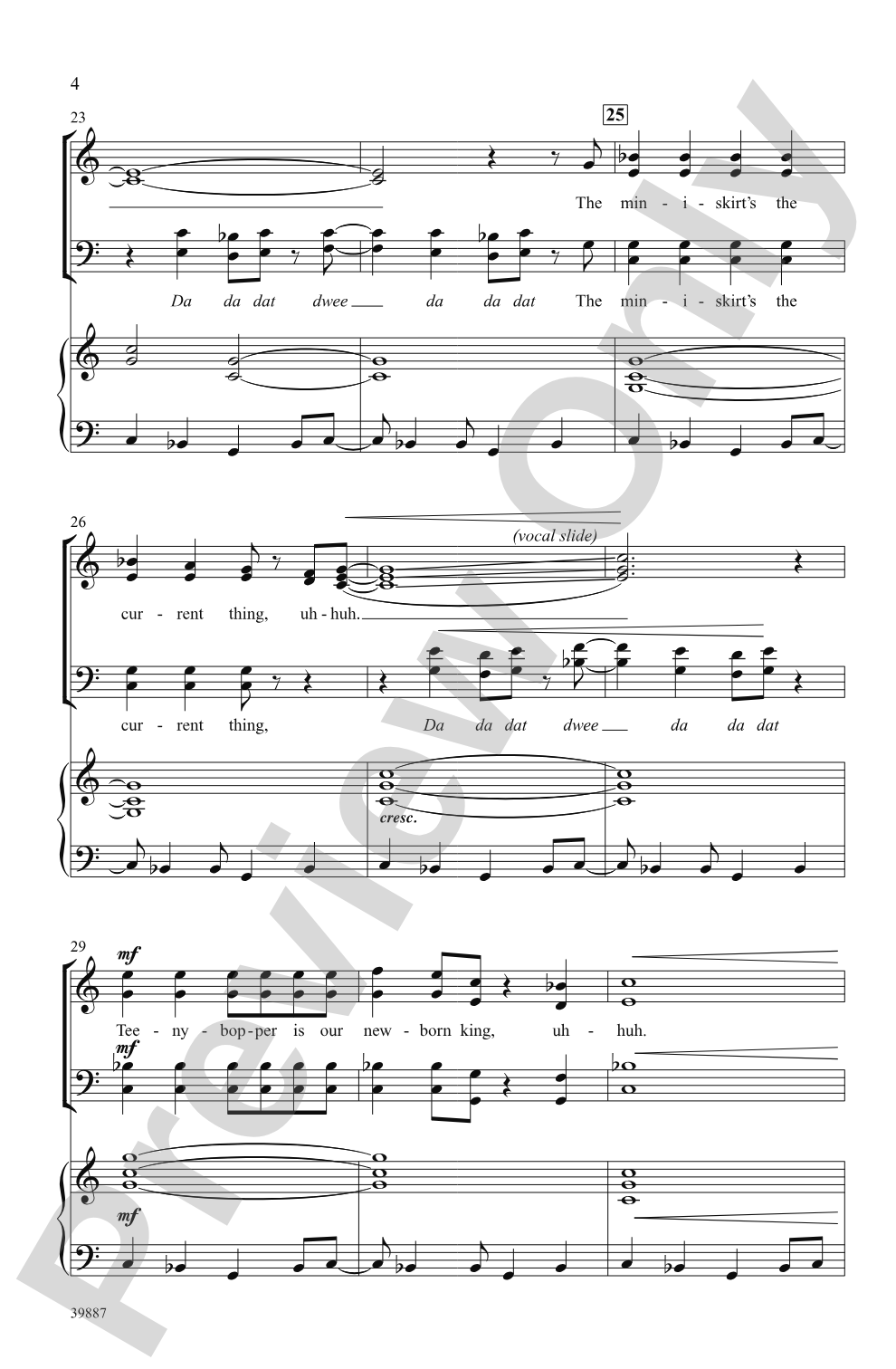

The Beat Goes On: SATB Choral Octavo
Words and music by Sonny Bono [Sonny & Cher] / arr. Greg Gilpin
Item: 00-PO-0001681
$1.90
Minimum order quantity: 20 copies
One moment…
Related Items
The Beat Goes On: SoundTrax Digital Audio Download |
$27.99
|
View | |
The Beat Goes On: SATB Choral Octavo |
$2.25
|
View | |
The Beat Goes On: 2-Part / SSA Choral Octavo |
$1.90
|
View | |
The Beat Goes On: Choral SoundPax |
$35.00
|
View | |
The Beat Goes On: SATB Choral Octavo |
$2.25
|
View | |
The Beat Goes On: SATB Choral Octavo |
$1.90
|
View | |
The Beat Goes On: 2-Part / SSA Choral Octavo |
$1.90
|
View | |
The Beat Goes On: Choral Octavo SoundTrax CD |
$27.99
|
View |
Description
Sonny & Cher hit the Billboard Hot 100 in 1967 with this groovy song and its easily recognizable bass line. A terrific choice for a concert theme, it's sure to leave your audience wanting more (or singing along)! "La, dee, da, dee, da . . . "


The Beat Goes On: SATB Choral Octavo isn't in MakeMusic Cloud just yet...but it could be. Let us know you'd like to see it, and you'll help shape what comes next. In the meantime, start a free trial and dive into thousands of interactive titles your students can play along with today.
Request This Title
Tell us you want it.
Start Your Free Trial
Explore everything that's ready to play right now.
Sample Audio
1
Audio File
--:--
0:00
0:00
Sample Video
No sample videos found.
Additional Details
Series:
Alfred Pop Choral Series
Publisher:
Alfred Music
Page Count:
12
SKU:
00-PO-0001681
More about this title
About the Composer: Sonny Bono
Sonny Bono (1935-1998) was a singer, songwriter, and entertainer who became a cultural icon of the 1960s. Working with his then-wife Cher, he crafted some of the era's most infectious pop songs, blending accessible melodies with clever production that defined the sound of mid-century pop music. Beyond his recording career, Bono was known for his ear for arrangement and his ability to write hooks that stayed with listeners long after they heard them.
As a composer, Bono understood how to build a song around a memorable moment, whether a bass line or a lyrical phrase. His work remains a staple of music education because it combines genuine songwriting craft with the kind of immediate appeal that motivates student singers.
Why we love this
This arrangement delivers genuine fun without sacrificing musicality. Greg Gilpin has preserved the signature bass line that makes the tune instantly recognizable while shaping the SATB voicing to let every section contribute to the groove. Programming this gives your choir a moment of pure joy on concert, and the audience recognition is automatic.
What to expect
Infectious and irresistible. The piece radiates 1960s optimism and groove, built on a bass line so compelling it seems to pull the entire arrangement forward. Singing it feels like being part of something celebratory and communal, with enough harmonic color to keep the parts interesting across the full range.
Who it's for
Choirs of all levels will have immediate success with this piece. The straightforward harmonic language and rhythmic clarity make it accessible for developing singers, while the authentic pop arrangement and cultural recognition keep it engaging for experienced ensembles looking for a concert crowd-pleaser.
How to get the most out of it
- Lock in the rhythm section (lower voices and bass line) first. The bass line drives everything; once basses and tenors nail the pulse, sopranos and altos lock in naturally.
- Shape the iconic "La, dee, da, dee, da" section with consistent articulation across all four parts. Slight emphasis on the downbeat helps the phrase snap without sounding stiff.
- Maintain a buoyant, lifted tone throughout. This song lives on forward motion and energy, so avoid letting dynamics sag between phrases.
- Use the recorded accompaniment in rehearsal to anchor the groove, especially in early run-throughs. The choral parts sit best when singers hear the harmonic and rhythmic context.
How to use it
This works beautifully as a closer or an opener, depending on the energy you want to build. Pair it with other pop-era classics to create a themed concert section, or use it as a palate cleanser between heavier classical or contemporary works. Its instant recognizability makes it ideal for community concerts where you want the audience engaged from the first phrase.
Skills your students will build
- Maintaining rhythmic precision in pop idioms with syncopation
- Balancing SATB blend while keeping a melodic line clear
- Articulation consistency across four parts in rhythmic material
- Responding to groove and forward motion rather than relying on sustained tones