The Beast: B-flat Bass Clarinet Sheet Music Preview

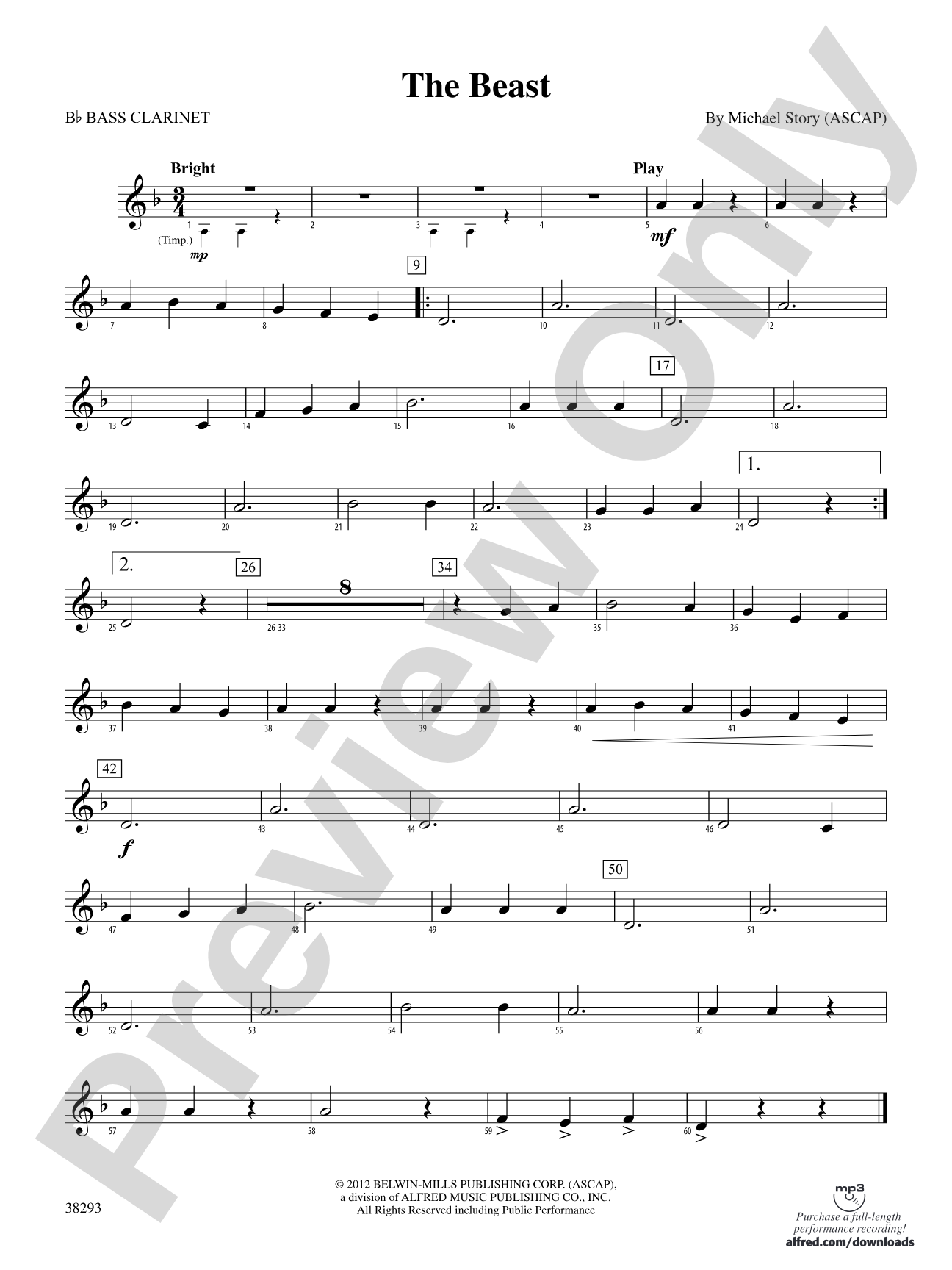
The Beast: B-flat Bass Clarinet

By Michael Story

Grade: 0.5 (Very Easy)

Item: 00-PC-0015398_BC

Digital Download
$3.00
Description
Designed to musically depict a large, four-hoofed animal as it wanders about, this original work will capture the imagination of your first-year students. Scored to be accessible for students in the second half of their first year of instruction, this Michael Story creation will make them sound like pros. Genius! (1:45) This title is available in MakeMusic Cloud.

Don't just read it, hear it, play along with it, and watch your students grow with it. In MakeMusic Cloud, The Beast: B-flat Bass Clarinet comes alive with professional accompaniment, adjustable tempo, and built-in practice tools that turn solo practice into real progress.

Sample Audio
0:00
0:00
Sample Video
Additional Details
Series: Belwin Very Beginning Band
Publisher: Alfred Music
Page Count: 132
SKU: 00-PC-0015398_BC

More about this title

About the Composer: Michael Story

Michael Story is a prolific composer whose band and orchestra works dominate elementary and middle school music programs across North America. His gift for writing idiomatically for young ensembles—combining accessible ranges, logical part writing, and genuine musical substance—has made him foundational to countless first-year band curricula. Story understands that young musicians need music that sounds finished and professional from day one, which is why his pieces remain standards in beginning band literature.

Beyond composing, Story has shaped music education through his work with educational publishers and his deep commitment to creating repertoire that builds student confidence and musicianship simultaneously. His output spans concert band, orchestra, jazz ensemble, and choral settings, but his concert band works remain his most widely taught legacy.

Why we love this

The Beast combines vivid storytelling with genuinely playable writing for second-semester students. Rather than oversimplify, Story layers instrumental colors and compositional details that reward careful listening and encourage pride in performance. Your band will sound polished and intentional because the music is structured to let young musicians succeed without feeling patronized.

What to expect

The music moves with a gentle, purposeful gait, occasionally shifting in character as the creature explores its surroundings. There's both humor and dignity in the portrayal; students will recognize the musical imagery immediately and feel invested in bringing the story to life.

Who it's for

This work is designed for beginning concert bands in their second half of first year of study. Ranges, rhythms, and part independence match students who have solid fundamentals but are still building consistency. Directors seeking a memorable program piece that doesn't demand advanced technique will find this particularly valuable.

How to get the most out of it

  • Balance the low brass and woodwind lines that suggest the animal's heavy, deliberate movement; avoid letting the melody swamp the foundation.
  • Shape phrases around the character's journey rather than playing note-to-note; this programmatic approach helps younger students understand musical architecture.
  • Attend to dynamic contrast and tone color changes, which Story uses to depict different moods or moments in the creature's wandering.
  • Keep tempo steady and confident; rushing undermines the piece's deliberate, grounded character.

How to use it

Program this early in the year as a confidence-builder during a concert or assembly. Its brief length (1:45) pairs well with other accessible Story selections or as the centerpiece of a beginner showcase. The programmatic nature also makes it engaging for audiences unfamiliar with school band concert conventions.

Skills your students will build

  • Sustaining controlled long tones across changing harmonic contexts
  • Tracking independent melodic lines within an ensemble texture
  • Responding to dynamic and tonal shifts that convey musical character
  • Maintaining ensemble balance when melody and accompaniment are distributed across sections
  • Reading score order and part coordination in a full concert band arrangement

You May Also Like