
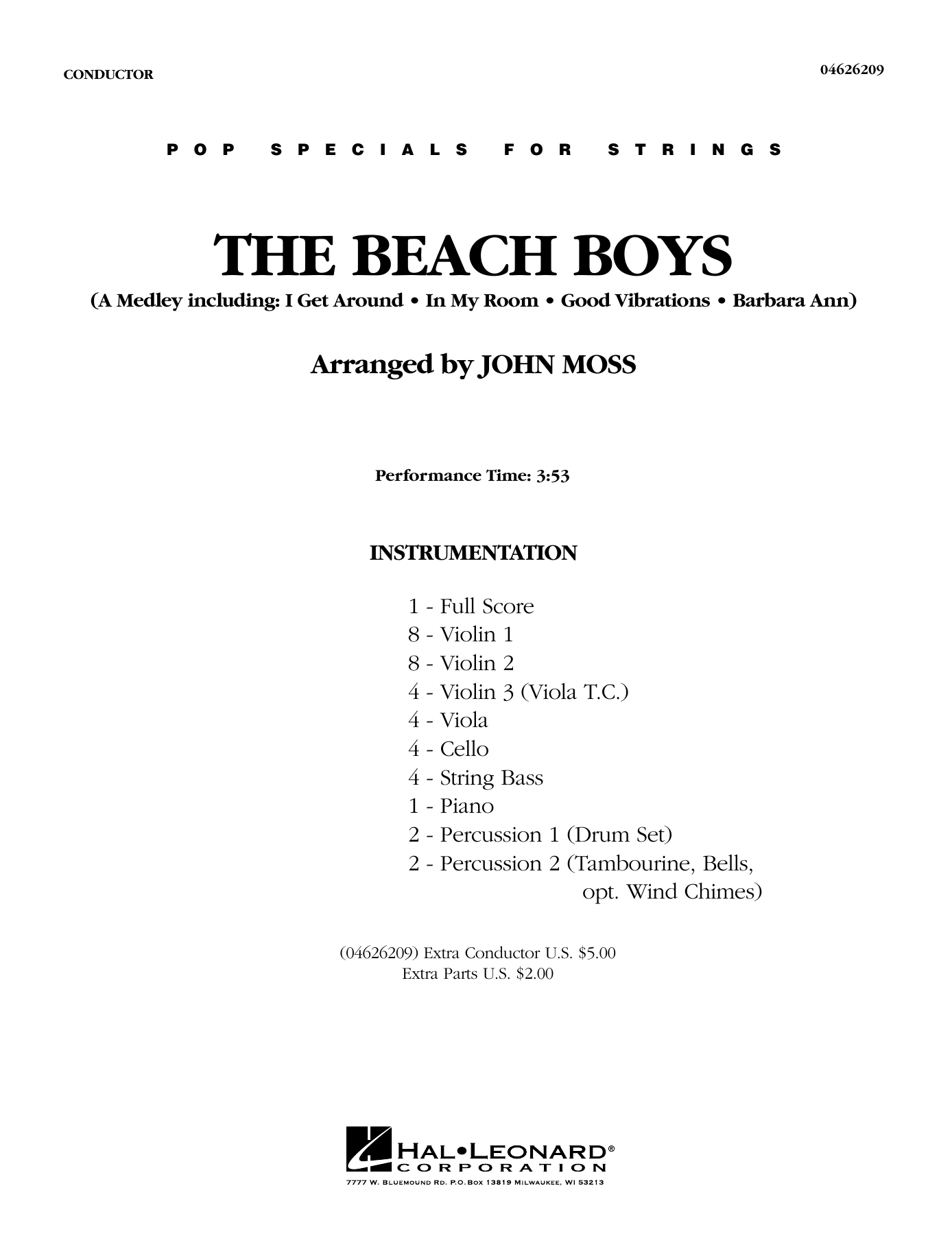

The Beach Boys (arr. John Moss): String Orchestra Conductor Score & Parts
As performed by The Beach Boys / Arranged by John Moss
Grade: 2-3
Item: 35-PK01413452
$50.00
Pickup currently not available
Buy Extra Parts (Digital PDF Download)
Parts Added to Cart!
Description
John Moss' superb writing brings us four of the best Beach Boy songs ever to hit the airwaves. With "I Get Around, In My Room, Good Vibrations," and "Barbara Ann," your students will love to play these infectious, feel-good songs from the '60s.


The Beach Boys (arr. John Moss): String Orchestra Conductor Score & Parts isn't in MakeMusic Cloud just yet...but it could be. Let us know you'd like to see it, and you'll help shape what comes next. In the meantime, start a free trial and dive into thousands of interactive titles your students can play along with today.
Request This Title
Tell us you want it.
Start Your Free Trial
Explore everything that's ready to play right now.
Sample Audio
No sample audio found.
Sample Video
No sample videos found.
Additional Details
Publisher:
Hal Leonard
SKU:
35-PK01413452
More about this title
About the Artist: The Beach Boys
The Beach Boys emerged from Southern California in the early 1960s and fundamentally reshaped pop music through their sophisticated vocal harmonies and innovative studio production. Their catalog spans from surf rock simplicity to complex arrangements like "Good Vibrations," making them enduring subjects of study in music history and pedagogy. Their influence extends far beyond rock music into film, advertising, and contemporary composition.
For music educators, The Beach Boys represent a goldmine of accessible yet musically substantive material. Their songs reward close listening to harmony, form, and melodic craftsmanship, while their cultural footprint makes them instantly recognizable and engaging to student musicians across multiple generations.
Why we love this
Moss's orchestrations capture the melodic brilliance and harmonic richness of these classics without sacrificing the infectious energy that made them radio staples. The Grade 2-3 scoring opens these songs to intermediate ensembles that might otherwise never access material this stylistically sophisticated. Your students will feel immediately invested in playing songs they actually know and enjoy.
What to expect
Sunshine and optimism anchored in real harmonic sophistication. These songs shimmer with the confidence of the original recordings but settle into string textures that feel fresh and specific. You get the contagious energy of classic pop wrapped in the warmth of acoustic strings.
Who it's for
Intermediate string orchestras looking for repertoire that bridges classical technique and popular music engagement. Directors seeking to program something that connects with student musicians and audiences alike without sacrificing musical substance.
How to get the most out of it
- Balance the inner voices carefully, especially in "Good Vibrations" where rhythmic independence matters. String arrangements at this grade level often bury the middle parts, so isolate violas and second violins during sectionals.
- Treat these as vocal arrangements translated to strings. Think about phrasing as if someone is singing the line; where would a singer breathe? Let that guide your approach to phrase length and articulation.
- Lock the rhythm section early by rehearsing cellos and basses together in isolation. These songs sit on memorable bass lines that ground the entire texture.
- Lean into the rhythmic vitality of the '60s pop grooves. Avoid playing these too carefully or formally; they need bounce and forward motion to sound like themselves.
How to use it
Consider this package as a complete pop music unit within a concert, or program one or two selections alongside your classical or contemporary work to showcase genre range. The recognizable melodies make these excellent community concert choices, especially in casual or outdoor performance settings where immediate audience connection matters.
Skills your students will build
- Translating vocal phrasing and melodic idiom to instrumental voicing
- Harmonic analysis of functional tonal progressions in pop music
- Rhythmic precision in syncopated, groove-based accompaniment patterns
- Balance between independent inner voices and supporting harmonic texture
- Stylistic interpretation of 1960s popular music conventions