The Bard Of Armagh Sheet Music Preview

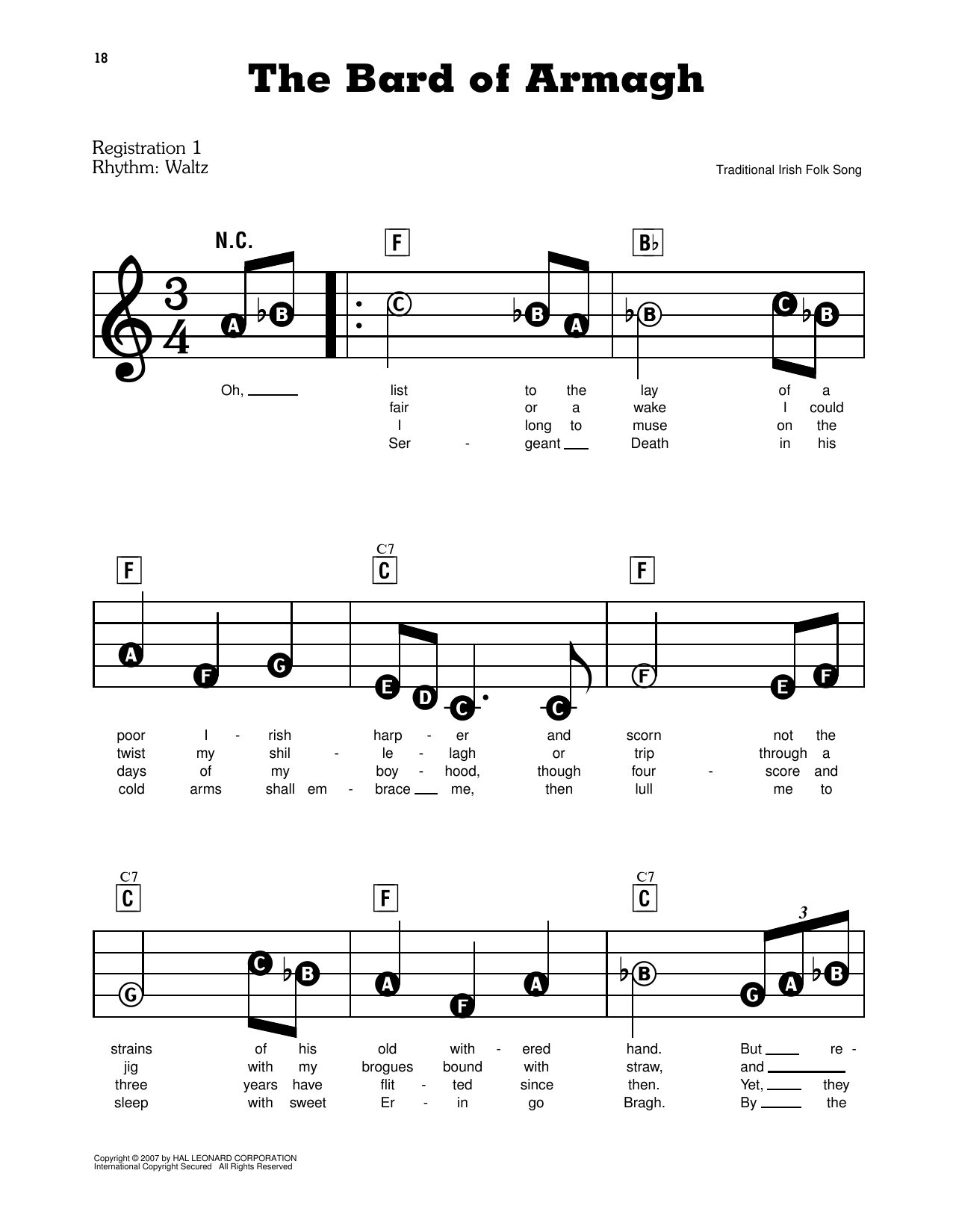
The Bard Of Armagh: E-Z Play Today

Item: 35-DS00520724

Digital Download
$4.99
Description

The Bard Of Armagh: E-Z Play Today isn't in MakeMusic Cloud just yet...but it could be. Let us know you'd like to see it, and you'll help shape what comes next. In the meantime, start a free trial and dive into thousands of interactive titles your students can play along with today.

Sample Audio
No sample audio found.
Sample Video
Additional Details
Publisher: Hal Leonard
Page Count: 2
SKU: 35-DS00520724

More about this title

About the Creator

"The Bard of Armagh" originates from Irish folk tradition, passed down through generations of musicians in Ulster. The melody carries the weight of narrative storytelling, reflecting the role of traveling bards in preserving history and culture through song. This particular arrangement adapts the tune for piano in the E-Z Play Today series, making the iconic melody accessible to students encountering Irish folk music.

Why we love this

The E-Z Play format strips away unnecessary complexity while preserving the character of this beloved Irish melody. Students who might otherwise avoid folk repertoire find genuine connection here because the arrangement respects the tune's natural shape and emotional arc. It's a two-page investment that bridges classical piano study with cultural music exploration.

What to expect

The Bard of Armagh carries a contemplative, nostalgic quality. You're hearing the voice of someone preserving memory through song, with warmth and quiet dignity in every phrase.

Who it's for

Piano students transitioning from beginner to early intermediate levels benefit from folk melody work that doesn't require complex left-hand voicings. Teachers seeking accessible arrangements of culturally significant music will find this format particularly practical for ensemble or solo contexts.

How to get the most out of it

  • Shape the melody with subtle dynamic swells rather than rigid forte and piano markings. The bard's voice naturally rises and falls with the narrative.
  • Let the accompaniment breathe. Resist the urge to fill every beat; space and simplicity serve the story better than busyness.
  • Explore rubato in the opening phrase to establish the reflective, storytelling mood before settling into a steady pulse.
  • Balance the melody so it sings clearly above the harmonic foundation without aggressive playing.

How to use it

Include this in a cultural studies concert alongside other European folk arrangements, or use it as a solo recital piece for students exploring national music traditions. The modest length makes it ideal for a young performer's first experience with concert programming.

Skills your students will build

  • interpreting folk melody with appropriate phrasing and rubato
  • balancing melody and accompaniment on piano
  • understanding the cultural and historical context of Irish music
  • navigating simple harmonic progressions in a musically expressive way

You May Also Like