
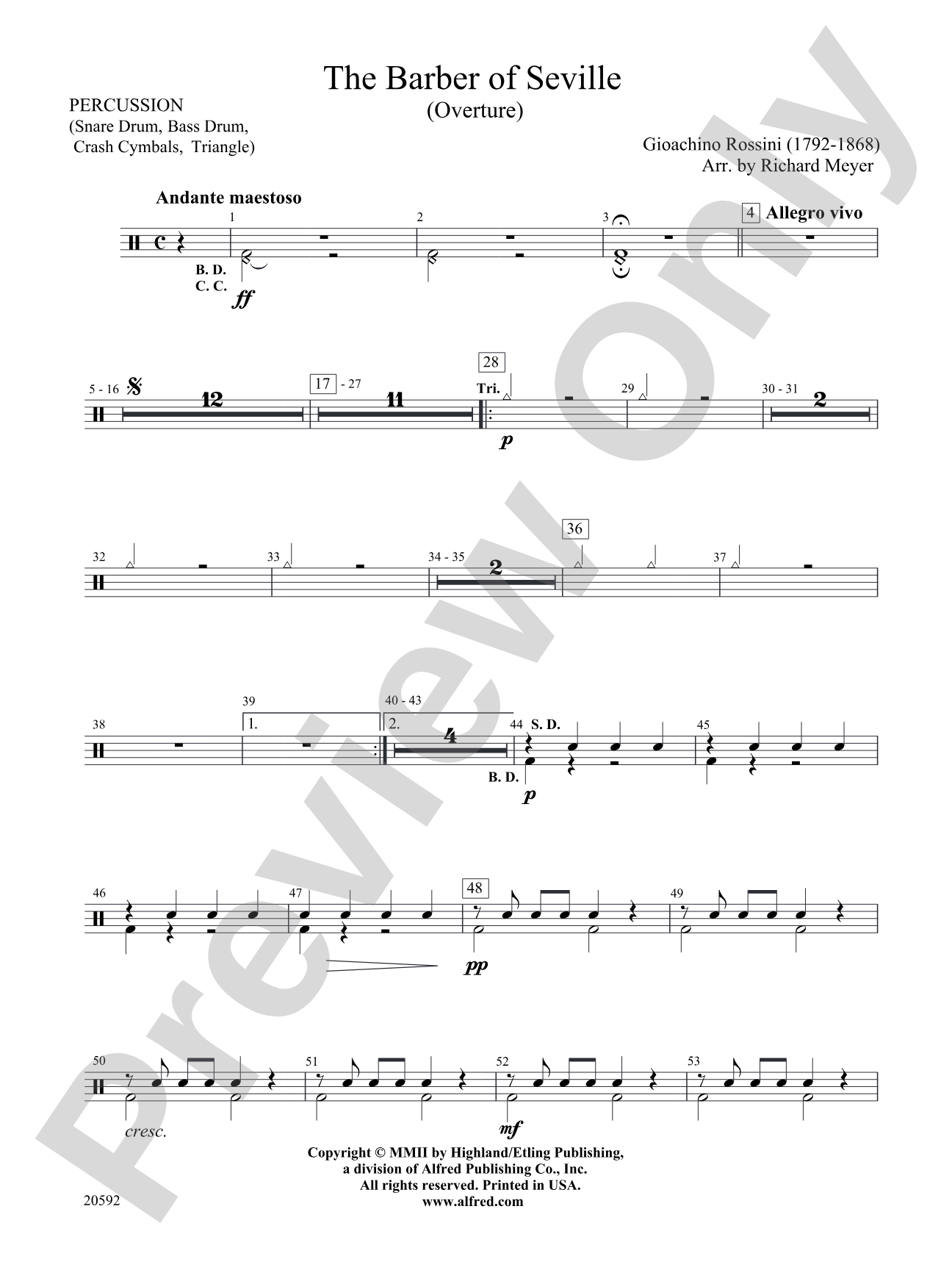

The Barber of Seville (Overture): 1st Percussion
(Overture)
By Gioacchino Rossini / arr. Richard Meyer
Grade: 2
Item: 00-PC-0000419_PC1
$3.00
Pickup currently not available
Description
First performed in Rome in 1816, this overture is among Rossini's most-loved orchestral works. Your students will undoubtedly recognize the infectious main theme from its frequent use in commercials and even Bugs Bunny cartoons! This arrangement highlights the individual colors of the woodwind, brass and string sections, yet remains so close to Rossini's original, your young orchestra will sound as if they're playing the real thing!


Don't just read it, hear it, play along with it, and watch your students grow with it. In MakeMusic Cloud, The Barber of Seville (Overture): 1st Percussion comes alive with professional accompaniment, adjustable tempo, and built-in practice tools that turn solo practice into real progress.
Open in the Player
Jump straight in and assign it today.
Start Your Free Trial
Open this title and explore the full library in minutes.
Sample Audio
No sample audio found.
Sample Video
No sample videos found.
Additional Details
Series:
Highland/Etling First Philharmonic
Publisher:
Alfred Music
Page Count:
198
SKU:
00-PC-0000419_PC1
More about this title
About the Composer: Gioacchino Rossini
Gioacchino Rossini (1792-1868) revolutionized Italian opera through his gift for melody and comic timing. Known for his prolific output and witty theatrical sensibility, Rossini composed 39 operas before retiring from composition at 37, leaving behind a catalog that shaped the Romantic opera tradition. His overtures remain concert staples because they distill his genius for orchestration and memorable themes into pure, accessible music.
For student orchestras, Rossini offers an entry point into genuine masterwork literature. His melodies sing naturally across all sections, his orchestration is transparent enough for young players to hear their own parts clearly, and his harmonic language, while sophisticated, never obscures the joy of playing together.
Why we love this
This arrangement strikes the rare balance of sounding completely authentic while remaining accessible to Grade 2 orchestras. Richard Meyer has preserved the orchestral color and dramatic shape Rossini intended without simplifying the musical substance, so your students experience a real masterwork rather than a watered-down version. The recognizable theme gives instant engagement, but it's the interplay between sections and the building momentum that keeps ensembles and audiences invested.
What to expect
Sparkling, propulsive energy. The opening gallops forward with infectious good humor, then reveals moments of lyrical warmth before returning to that unmistakable theme. There's a theatrical confidence here, even at a young orchestra level, because Rossini's melodies are so memorable and his orchestration so clear that students feel like they're playing something important.
Who it's for
Grade 2 orchestras ready to claim a genuine masterwork rather than a beginner-level transcription. This score works especially well for orchestras that have developed solid rhythmic ensemble and basic sectional balance but may still be working on independence within parts.
How to get the most out of it
- Establish the signature theme cleanly in the first violins and let it breathe; younger players often rush infectious melodies, but Rossini's wit depends on rhythmic clarity and space between phrases.
- Balance the woodwind solos throughout so each section's featured passage is heard distinctly, especially when color changes happen quickly between sections.
- Use the conductor's score to identify transitions and key sectional entries so parts don't drift during the build-ups; marking these in individual parts beforehand prevents gaps in ensemble continuity.
- Keep the tempo steady during the main theme rather than pulling back; this overture gains energy from its forward momentum, and young orchestras often lose shape when they slow down.
How to use it
This overture works as a first-half opener on a concert featuring other masterwork arrangements or lighter Romantic repertoire, or as a crowd-pleasing finale that leaves audiences smiling. Its recognizability and concert-appropriate length (roughly 5-6 minutes) make it ideal for festival competitions, family concerts, or alongside other short orchestral works in a themed program.
Skills your students will build
- Sectional independence within a transparent orchestral texture
- Articulation consistency across all instruments (maintaining the characteristic rhythmic drive)
- Responding to rapid dynamic and textural shifts between woodwind, brass, and string sections
- Listening for the main melodic theme across different instruments as it passes between sections
- Managing tempo stability during fast-moving passages with frequent entrances