The Barber of Seville: 2nd E-flat Alto Saxophone Sheet Music Preview

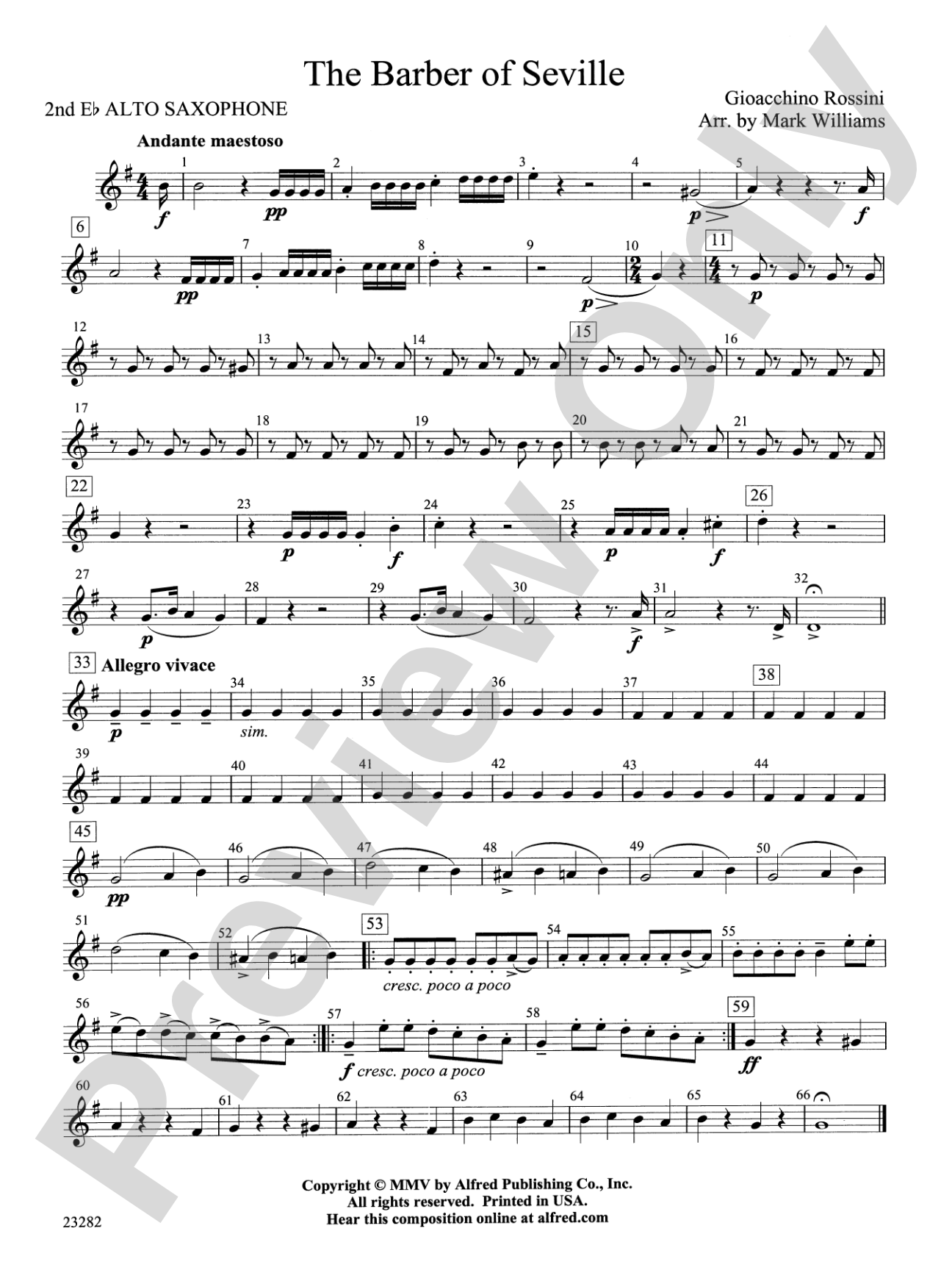
The Barber of Seville: 2nd E-flat Alto Saxophone

By Gioacchino Rossini / arr. Mark Williams

Grade: 2 (Medium Easy)

Item: 00-PC-0000632_AX2

Digital Download
$3.00
Description
This delightful arrangement of the Rossini classic will be a sure hit with players and audience alike. The most playable of the recognizable themes have been set for young players without sacrificing the spirit of the original. A welcome addition to any concert.

Don't just read it, hear it, play along with it, and watch your students grow with it. In MakeMusic Cloud, The Barber of Seville: 2nd E-flat Alto Saxophone comes alive with professional accompaniment, adjustable tempo, and built-in practice tools that turn solo practice into real progress.

Sample Audio
0:00
0:00
Sample Video
Additional Details
Series: Challenger Band Series
Publisher: Alfred Music
Page Count: 122
SKU: 00-PC-0000632_AX2

More about this title

About the Composer: Gioacchino Rossini

Gioacchino Rossini (1792–1868) revolutionized opera through his gift for memorable melody and rhythmic vitality. His works dominated European stages in the early 19th century, and his influence on orchestration and ensemble writing shaped the sound of the Romantic orchestra.

Rossini's genius lay in creating music that could be both sophisticated and immediately accessible. For music educators, his compositions remain essential repertoire because they teach phrasing, balance, and the sheer joy of clean ensemble playing.

Why we love this

Mark Williams has captured the infectious spirit of Rossini's most famous overture while making it genuinely playable for young ensemble musicians. The part writing avoids the thick doublings that bog down inexperienced sections, yet the orchestration never feels thin or compromised. Your band will sound polished and confident from the opening notes.

What to expect

Rossini's comedy and charm leap off the page in this bright, energetic arrangement. The famous themes crackle with personality, and the quick-moving sections create that unmistakable theatrical sparkle that audiences recognize instantly.

Who it's for

This arrangement works for concert bands at the intermediate level who are ready for a recognizable masterwork but need part writing that doesn't demand principal-level technique across all chairs. It's ideal for bands seeking a show-stopping opener or closer without the complexity of a full overture.

How to get the most out of it

  • Keep the fast passages light and bouncy rather than rushed; articulation clarity matters more than speed, especially for the woodwind lines in the famous themes.
  • Balance the brass solos in the second theme section so they sing without overpowering the inner voices that carry the harmonic movement.
  • Mark tempo changes and breathing points in the parts before rehearsal; the pacing shifts will feel more musical if players anticipate them.
  • Use the full 122 pages to your advantage by staging a walkthrough before the first full run-through, confirming key transitions and section entries.

How to use it

Program this as an opening number to set an upbeat tone for your concert, or save it for the finale when you want to send the audience out with infectious good humor. It pairs well alongside other Romantic-era lighter fare and provides excellent contrast to slower, more lyrical concert works.

Skills your students will build

  • Articulation control in fast scalar passages
  • Balancing accompanied solos with sustained harmonic backgrounds
  • Ensemble precision through frequent section changes and tempo shifts
  • Phrasing and dynamic shaping in recognizable melodic themes

You May Also Like