
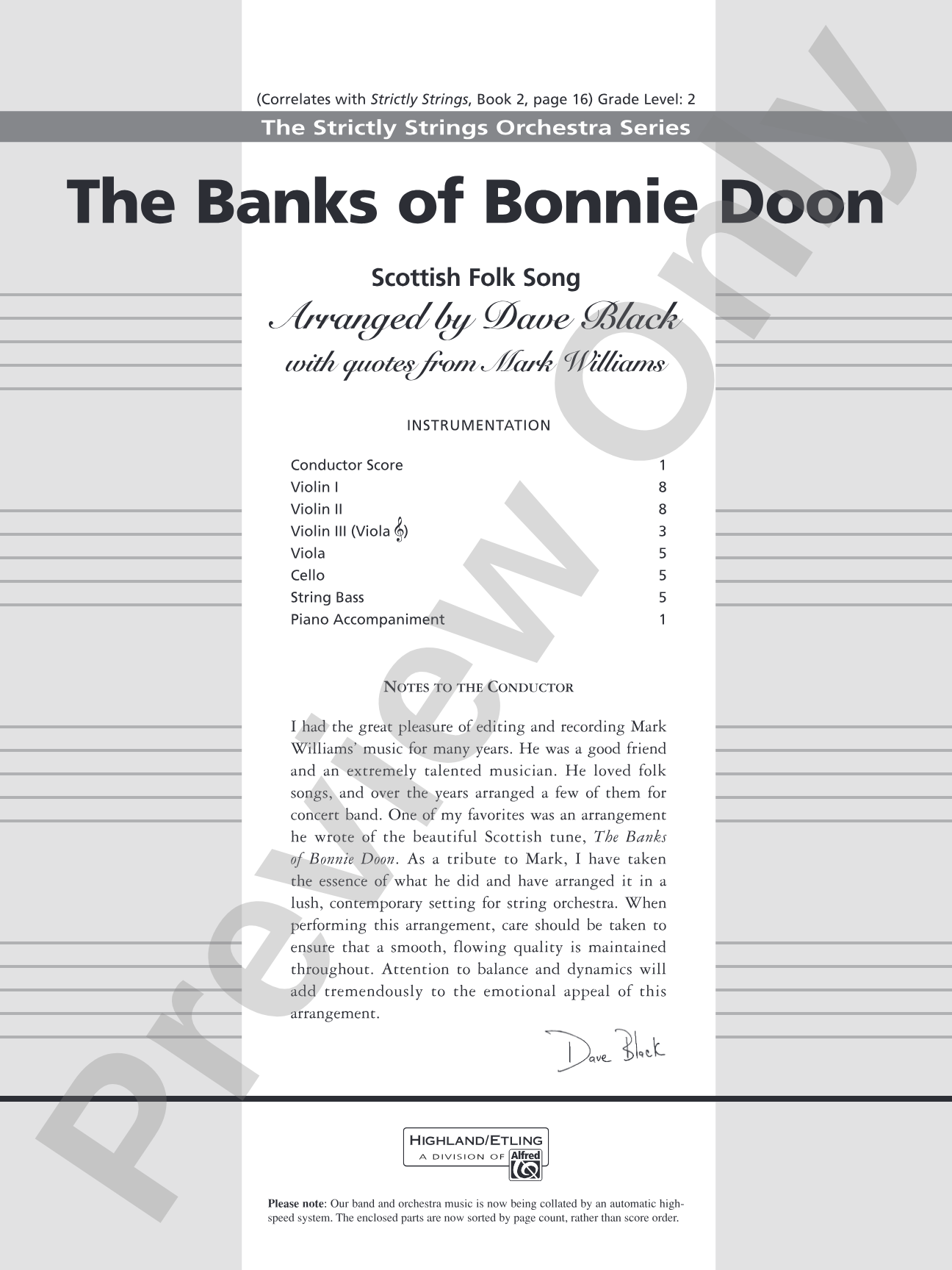
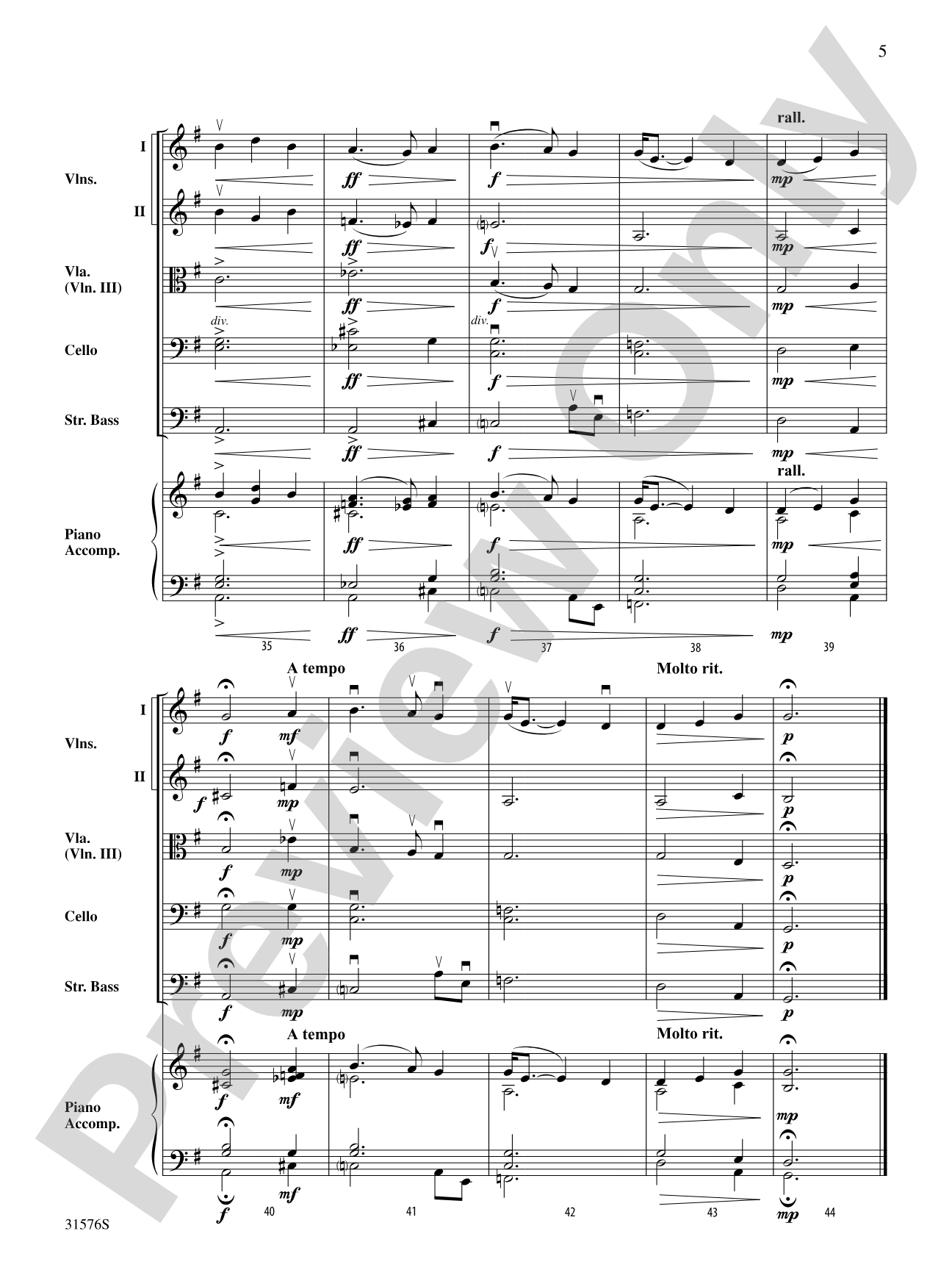




The Banks of Bonnie Doon: String Orchestra Conductor Score & Parts
Scottish Folk Song / arr. Dave Black
Grade: 2
Item: 00-PK-0001754

$42.00
Pickup currently not available
Buy Extra Parts (Digital PDF Download)
| Product | Price | Quantity |
|---|---|---|
| The Banks of Bonnie Doon: Score | $6.00 | |
| The Banks of Bonnie Doon: 1st Violin | $5.99 | |
| The Banks of Bonnie Doon: 2nd Violin | $5.99 | |
| The Banks of Bonnie Doon: Viola | $5.99 | |
| The Banks of Bonnie Doon: 3rd Violin (Viola [TC]) | $5.99 | |
| The Banks of Bonnie Doon: Cello | $5.99 | |
| The Banks of Bonnie Doon: String Bass | $5.99 | |
| The Banks of Bonnie Doon: Piano Accompaniment | $5.99 |
Parts Added to Cart!
Description
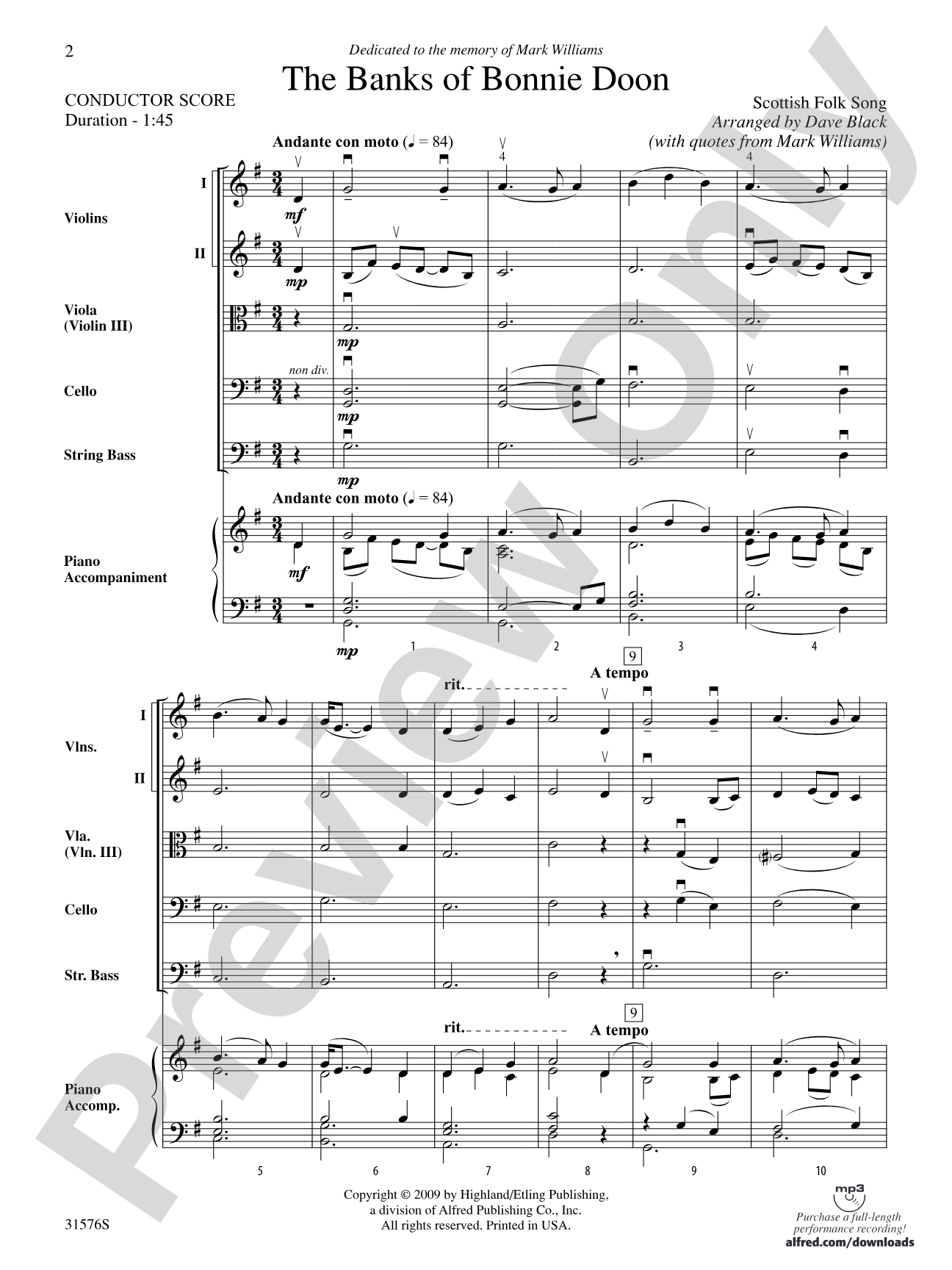
A lush, contemporary string setting reflecting the essence of Mark Williams' band arrangement of this lovely folk song. Done as a tribute to the well-known composer following his death, the smooth flowing quality, balance and dynamics will add tremendously to the emotional appeal of this arrangement. Correlates with Strictly Strings Book 2, Page 16. (2:15) This title is available in MakeMusic Cloud.


Don't just read it, hear it, play along with it, and watch your students grow with it. In MakeMusic Cloud, The Banks of Bonnie Doon: String Orchestra Conductor Score & Parts comes alive with professional accompaniment, adjustable tempo, and built-in practice tools that turn solo practice into real progress.
Open in the Player
Jump straight in and assign it today.
Start Your Free Trial
Open this title and explore the full library in minutes.
Sample Audio
1
Audio File
--:--
0:00
0:00
Sample Video
No sample videos found.
Additional Details
Series:
Highland/Etling Strictly Strings
Publisher:
Alfred Music
Page Count:
72
SKU:
00-PK-0001754
More about this title
About the Arranger: Dave Black

Dave Black is a percussionist and composer whose work spans performance, recording, and music education. Trained at California State University, Northridge, he has performed and recorded with major entertainers and productions worldwide, while building a catalog of over 60 published compositions and arrangements across the major publishing houses.
Black's contributions to music education are substantial and widely recognized. He has authored or coauthored more than 30 educational books, including the bestselling Alfred's Drum Method and Sound Innovations for Concert Band. His accolades include 26 consecutive ASCAP Popular Composer Awards, GRAMMY Award participation certificates, the Percussive Arts Society President's Industry Award, and a certified Gold Record for Alfred's Drum Method, Book 1. His compositions have been featured in television, film, and educational settings globally, with combined book and music sales exceeding two million units.
Why we love this
Black captures the gentle, flowing character of this Scottish folk tune while maintaining the technical clarity that Grade 2 ensembles need. The arrangement balances lyrical expression with accessible writing, making it equally rewarding for a festival setting or a concert program seeking emotional depth without excessive technical demands.
What to expect
This setting of the beloved Scottish melody unfolds with a quiet lyricism, warm and reflective without sentimentality. The contemporary string writing honors the folk tune's simplicity while adding harmonic color and textural variety that engage young players and listeners alike.
Who it's for
String orchestras working at Grade 2 level, particularly ensembles preparing for contests, festivals, or community concerts. This arrangement suits directors seeking accessible folk repertoire that still offers genuine musical substance and emotional resonance.
How to get the most out of it
- Shape the melodic phrases with careful attention to bow direction and weight distribution; the smooth, singing quality depends on legato without sacrificing rhythmic precision.
- Balance the internal string parts so the main melody emerges naturally; avoid allowing the supporting voices to overwhelm the folk tune's inherent beauty.
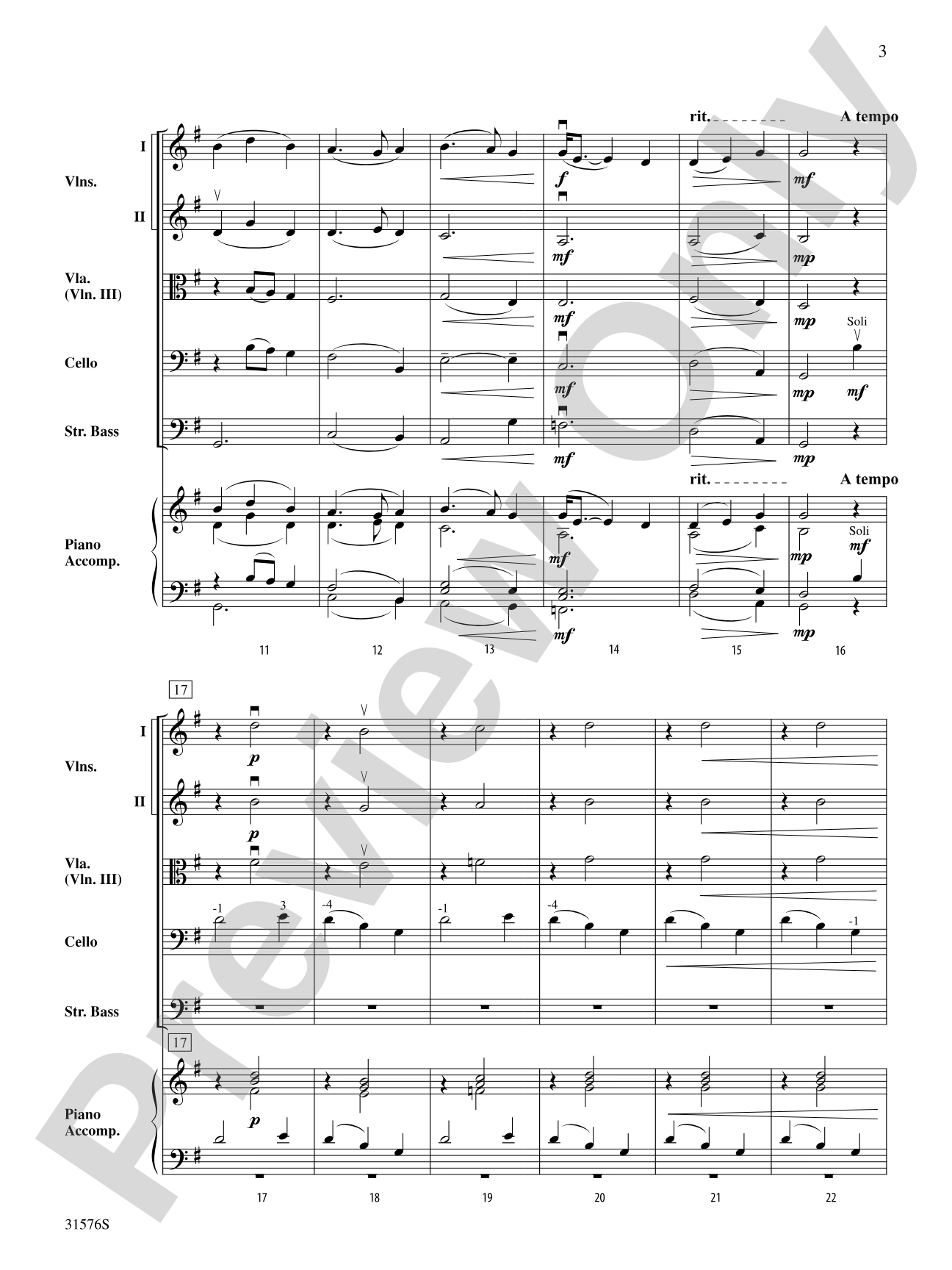
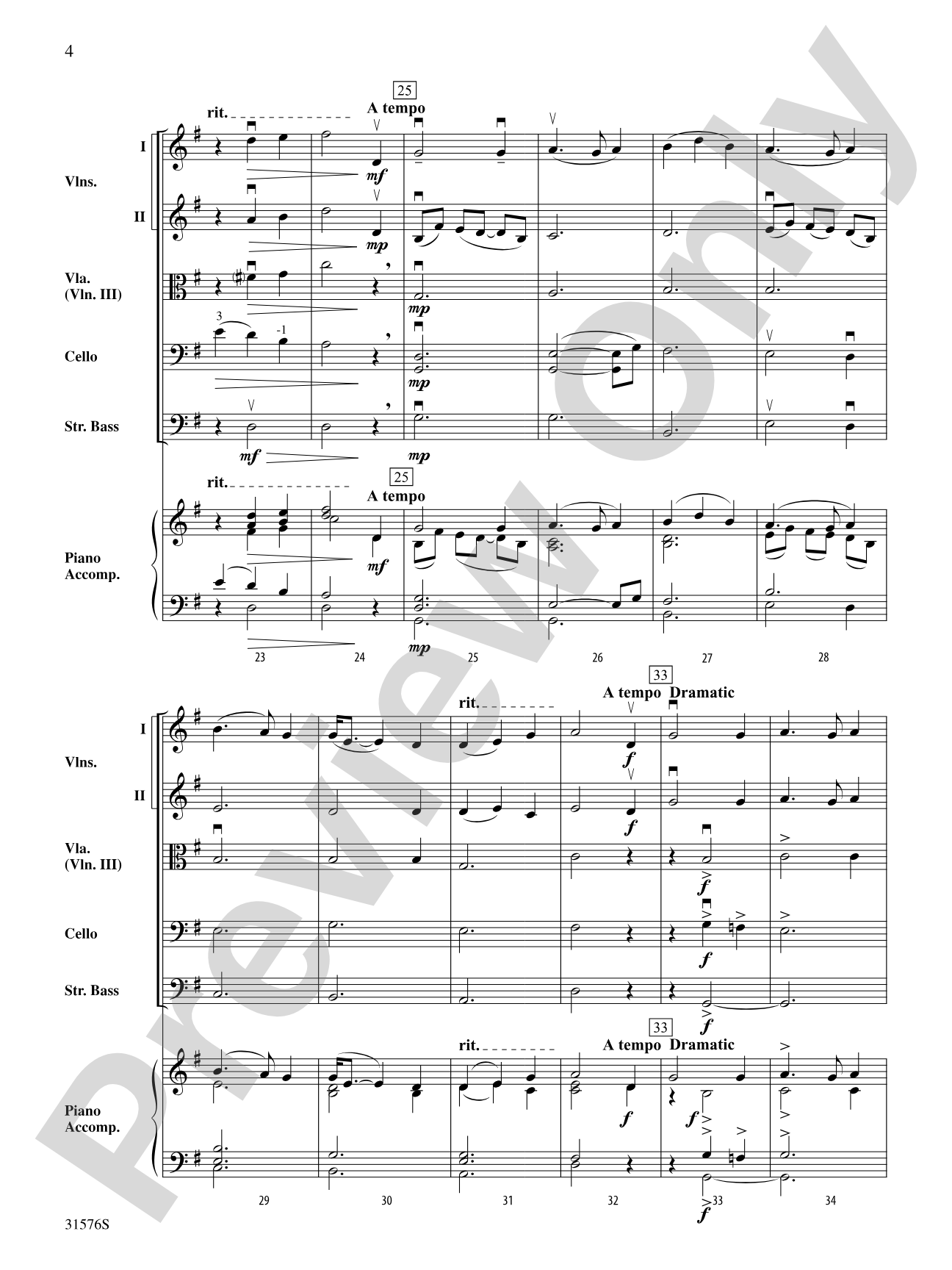
- Use the dynamic markings to create emotional arc across the arrangement; subtle shifts in volume enhance the contemplative mood without overshadowing younger players.
- Conduct with a relaxed tempo and fluid gesture to encourage players to think in long lines rather than measure-by-measure; this supports the cohesive phrasing the arrangement requires.
How to use it
Program this as an intermission piece or concert closer where its subdued beauty provides welcome contrast to more energetic repertoire. The 2:15 duration fits naturally into festivals and recitals, and its emotional resonance works particularly well in tribute or remembrance contexts.
Skills your students will build
- Sustaining legato phrasing across multiple measures
- Dynamic control at soft volumes (pp to mp)
- Listening to and balancing internal voice parts
- Reading and responding to expressive markings that shape musical intent
- Playing with ensemble cohesion in a lyrical, non-rhythmic context