
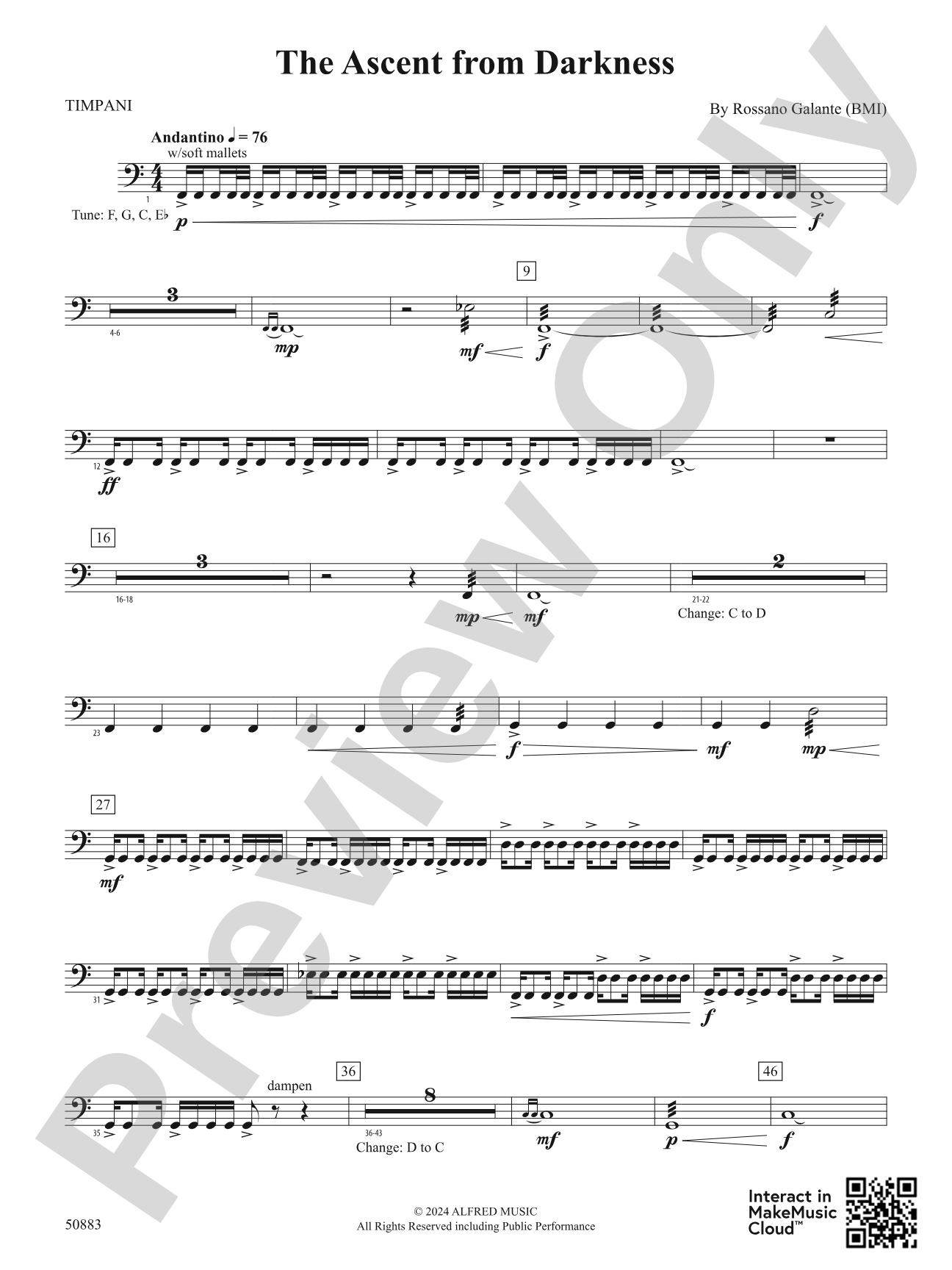

The Ascent from Darkness: Timpani
By Rossano Galante
Grade: 4
Item: 00-PC-0019304_TMP
$5.99
Pickup currently not available
Description
The Ascent from Darkness, by Rossano Galante, pays homage to the human race that endured the pandemic. He creates a musical landscape that depicts strength, tenacity, and compassion. The main theme, which is broad and lyrical, is stated by horns and winds. As the piece develops, the theme is played by full, chordal brass accompanied by rhythmic woodwind lines. The B section is lightly orchestrated with a solo oboe accompanied by the clarinet section, slowly growing to a tutti statement. The piece recapitulates with bold brass chords. The work ends as it begins, quietly incorporating the first motive. (4:00)


Don't just read it, hear it, play along with it, and watch your students grow with it. In MakeMusic Cloud, The Ascent from Darkness: Timpani comes alive with professional accompaniment, adjustable tempo, and built-in practice tools that turn solo practice into real progress.
Open in the Player
Jump straight in and assign it today.
Start Your Free Trial
Open this title and explore the full library in minutes.
Sample Audio
1
Audio File
--:--
0:00
0:00
Sample Video
Additional Details
Series:
Alfred Concert Band
Publisher:
Alfred Music
SKU:
00-PC-0019304_TMP
More about this title
About the Composer: Rossano Galante

Rossano Galante grew up in Buffalo, New York, and earned his Bachelor of Arts in Trumpet Performance from SUNY Buffalo in 1992. That same year, he was one of only nineteen composers accepted worldwide to the University of Southern California's Film Scoring Program, where he studied under the late Jerry Goldsmith, Academy Award winner for The Omen.
Since relocating to California in 1999, Galante has built a prolific career as a composer and orchestrator, collaborating with Oscar-nominated composers Marco Beltrami, Christophe Beck, Brian Tyler, and Christopher Lennertz. He has served as orchestrator on over eighty theatrical films and continues to receive commissions for concert band and orchestra works. His published catalog spans more than 68 compositions across major publishers including Alfred, Schirmer, Hafabra, C.L. Barnhouse, Musikverlag Frank, and Dehaske/Curnow.
Why we love this
Galante channels his film scoring expertise into a concert work that feels cinematic without being derivative. The emotional arc—from quiet vulnerability through powerful collective statements and back to intimacy—gives your band a clear dramatic journey to execute, making this rewarding repertoire for both rehearsal and performance. At Grade 4, it offers substantive musical ideas that senior high ensembles can sink their teeth into without requiring elite-level technique.
What to expect
The piece unfolds like a narrative arc of resilience and hope. It opens with quiet introspection, gradually builds through bold, full-voiced brass declarations, and ultimately returns to the serene, contemplative space where it began. Throughout, the orchestration is clear and purposeful, allowing each section's contribution to resonate.
Who it's for
Concert bands at the intermediate to early advanced level (high school and above) will find this a substantial addition to their repertoire. The work suits ensembles ready to engage with programmatic content and emotional storytelling, as well as directors seeking contest or festival material that showcases artistic growth.
How to get the most out of it
- Balance the opening statement carefully; the horns and winds should sing the main theme with warmth while remaining transparent enough for the lyrical quality to breathe.
- In the B section, shape the solo oboe line as though it's a soloist in conversation with the clarinet accompaniment. Resist the urge to let the clarinet section overwhelm the oboe.
- Build the crescendo from the B section's lightly orchestrated opening into the full tutti deliberately and with control. Mark clear dynamic targets so the ensemble understands the arc.
- Return to the opening material with the same care and quietness you used at the start. This reflective ending is not anticlimactic; it's a return to stillness after transformation.
How to use it
This work serves well as a concert centerpiece or closing selection, especially for programs exploring themes of perseverance or community. It pairs effectively with lighter opener material and gives audiences a powerful emotional experience without requiring virtuosic display. Contest and festival schedules particularly welcome pieces of this caliber and duration.
Skills your students will build
- Balancing solo and ensemble voices within the same section
- Shaping lyrical brass passages with sustained tone and phrase direction
- Building and controlling long dynamic arcs across multiple sections
- Executing rhythmic woodwind accompaniment figures that support rather than overpower
- Transitioning between contrasting textures and orchestrations with clarity