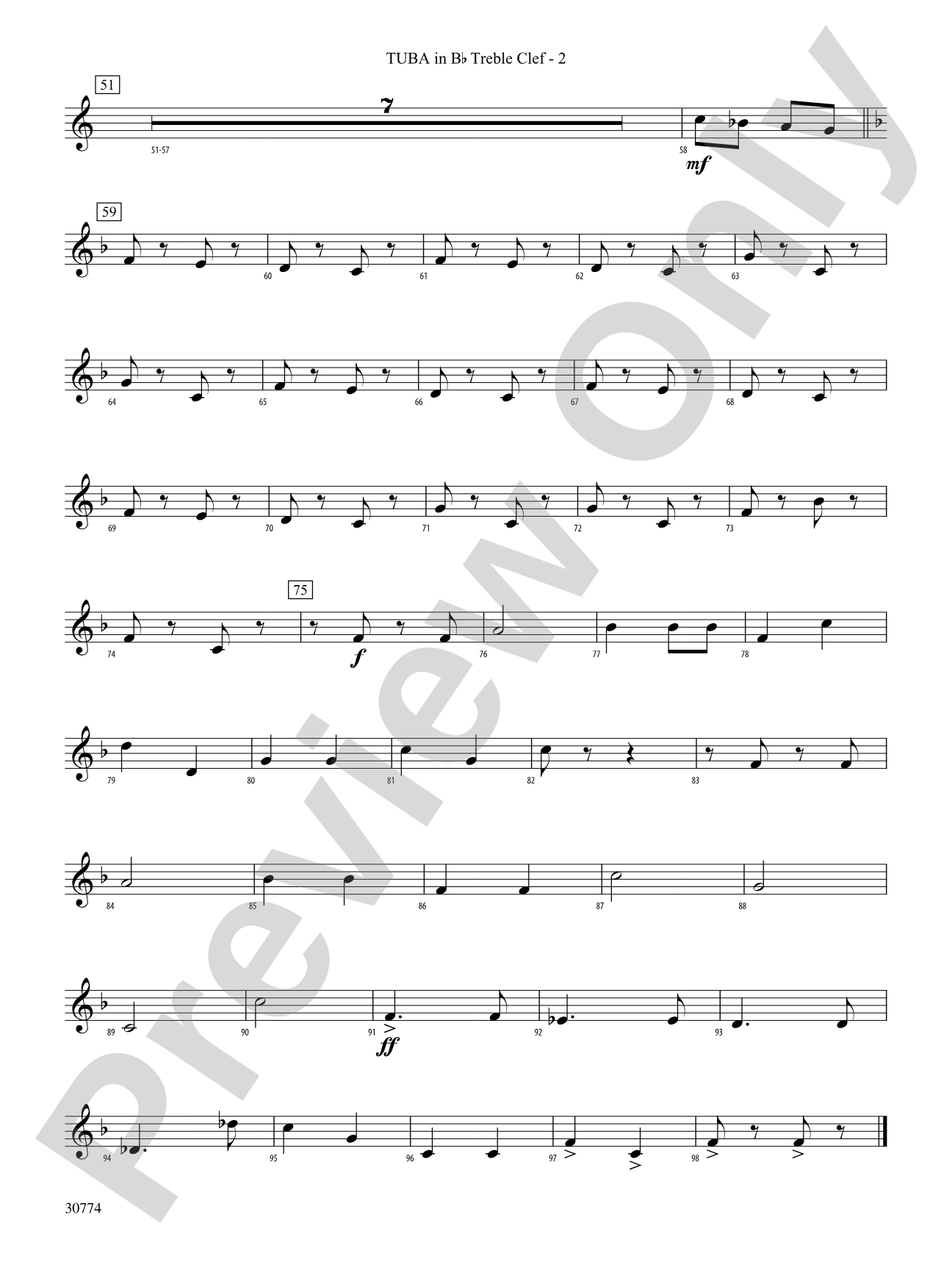
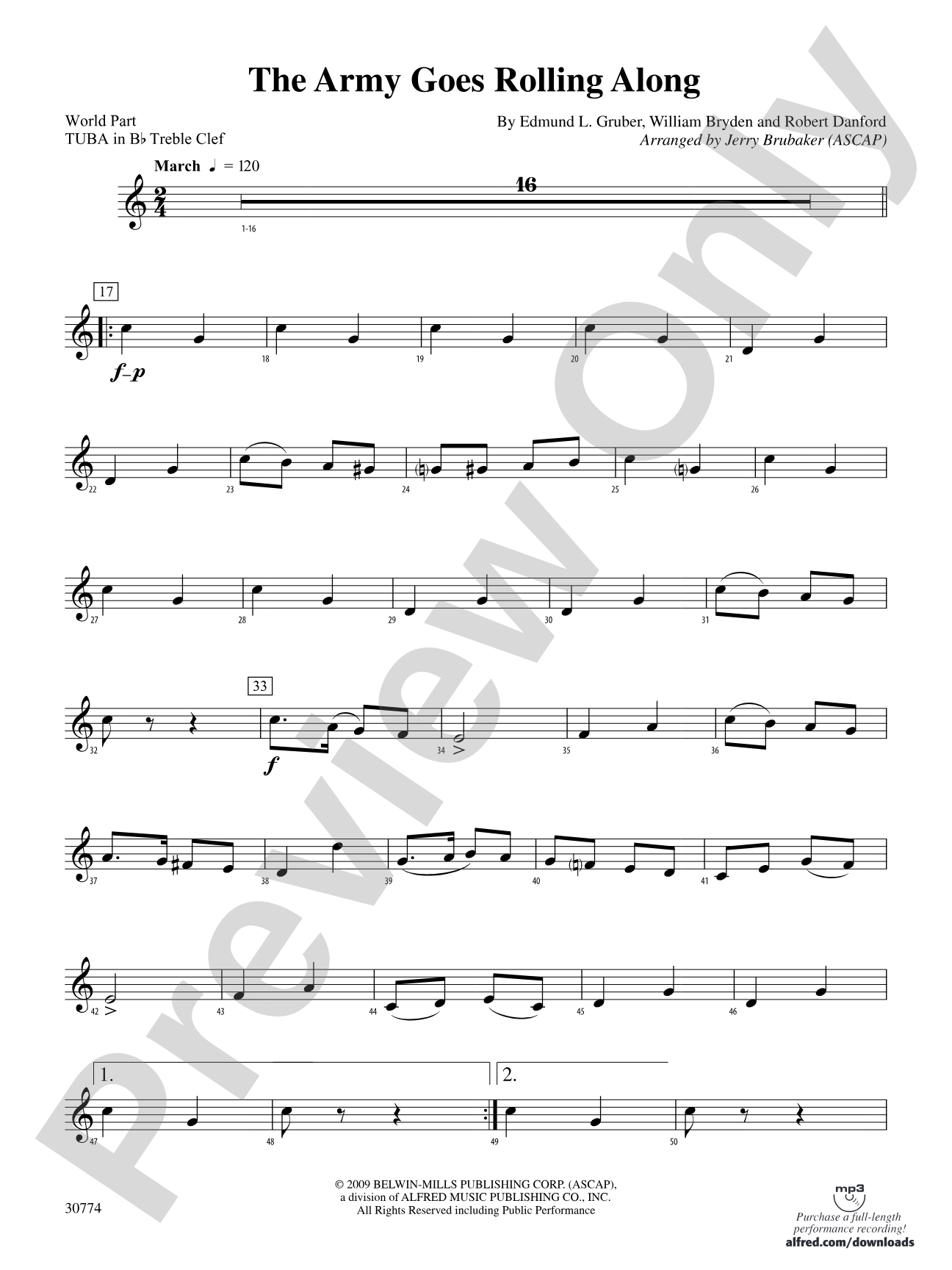
The Army Goes Rolling Along: (wp) B-flat Tuba T.C. Sheet Music Preview

The Army Goes Rolling Along: (wp) B-flat Tuba T.C.

By Edmund L. Gruber, William Bryden, and Robert Danford / arr. Jerry Brubaker

Grade: 2 (Easy)

Item: 00-PC-0014299_wpTBBTC

Digital Download
$3.00
Description
Announcing the second in a series of Armed Forces service songs for Young Band by Jerry Brubaker! "The Army Goes Rolling Along" is the official song of the United States Army and is typically called "The Army Song." The song is based on the "Caisson Song" written by field artillery First Lieutenant (later Brigadier General) Edmund L. Gruber, Lieutenant William Bryden, and Lieutenant (later Major General) Robert Danford while stationed at Fort Stotsenburg in the Philippines in March 1908. The tune quickly became popular in field artillery units. This exciting march is further embellished by the call of the bugle.

Don't just read it, hear it, play along with it, and watch your students grow with it. In MakeMusic Cloud, The Army Goes Rolling Along: (wp) B-flat Tuba T.C. comes alive with professional accompaniment, adjustable tempo, and built-in practice tools that turn solo practice into real progress.

Sample Audio
0:00
0:00
Sample Video
Additional Details
Series: Belwin Young Band
Publisher: Alfred Music
Page Count: 242
SKU: 00-PC-0014299_wpTBBTC

More about this title

About the Composer: Edmund L. Gruber

Edmund L. Gruber was a field artillery officer in the United States Army who, while stationed at Fort Stotsenburg in the Philippines in 1908, collaborated with fellow officers William Bryden and Robert Danford to compose what would become one of the most enduring military marches in American history. His "Caisson Song" captured the spirit and pride of the artillery corps and was officially adopted as the Army's march, where it remains a cornerstone of military tradition and ceremonial life.

Why we love this

Jerry Brubaker's Grade 2 arrangement respects the melody's ceremonial weight while keeping the technical demands entirely manageable for young players. The addition of bugle calls adds authentic military color without overcomplicating the parts, making this a piece that feels genuinely important to perform rather than simply easy.

What to expect

Stately and proud, with the unmistakable forward momentum of a military procession. The bugle calls pierce through moments of the march, evoking a parade ground under open sky and soldiers in formation. It's spirited without being frantic, ceremonial without feeling stiff.

Who it's for

Young bands at the early intermediate level looking for patriotic repertoire with genuine historical significance. This arrangement suits programs seeking a military march that doesn't require advanced technique but commands respect for its legacy and musical substance.

How to get the most out of it

  • Balance the melody clearly; this march lives or dies on the strength of its tune, so ensure your lead voices project with confidence and clarity.
  • Shape the bugle calls as distinct musical moments. These should feel like they're cutting through the band, not blending into the texture.
  • Keep the march tempo steady and purposeful. Young players often rush marches out of excitement; use a conductor's preparatory beat to establish a controlled, confident pace.
  • Let the harmonic progression breathe in slower sections. Grade 2 voicing can sound thin if players don't sustain notes with full value and steady tone.

How to use it

Perfect for a summer pops concert, Fourth of July celebration, or any patriotic program. It pairs naturally with other American marches and can anchor a set of military or historical music. Its short length and high recognition factor also make it an ideal opener or closer for young band concerts.

Skills your students will build

  • Maintaining steady tempo and pulse in a march form
  • Balancing melody against harmonic accompaniment
  • Responding to bugle call cues as ensemble punctuation marks
  • Sustaining tone quality across moderate dynamic range
  • Reading and performing in a Grade 2 concert band score

You May Also Like