The Arkansas Dancer Sheet Music Preview

The Arkansas Dancer: Piano

By Timothy Brown

Item: 98-DW9316

Digital Download
$3.50
Description
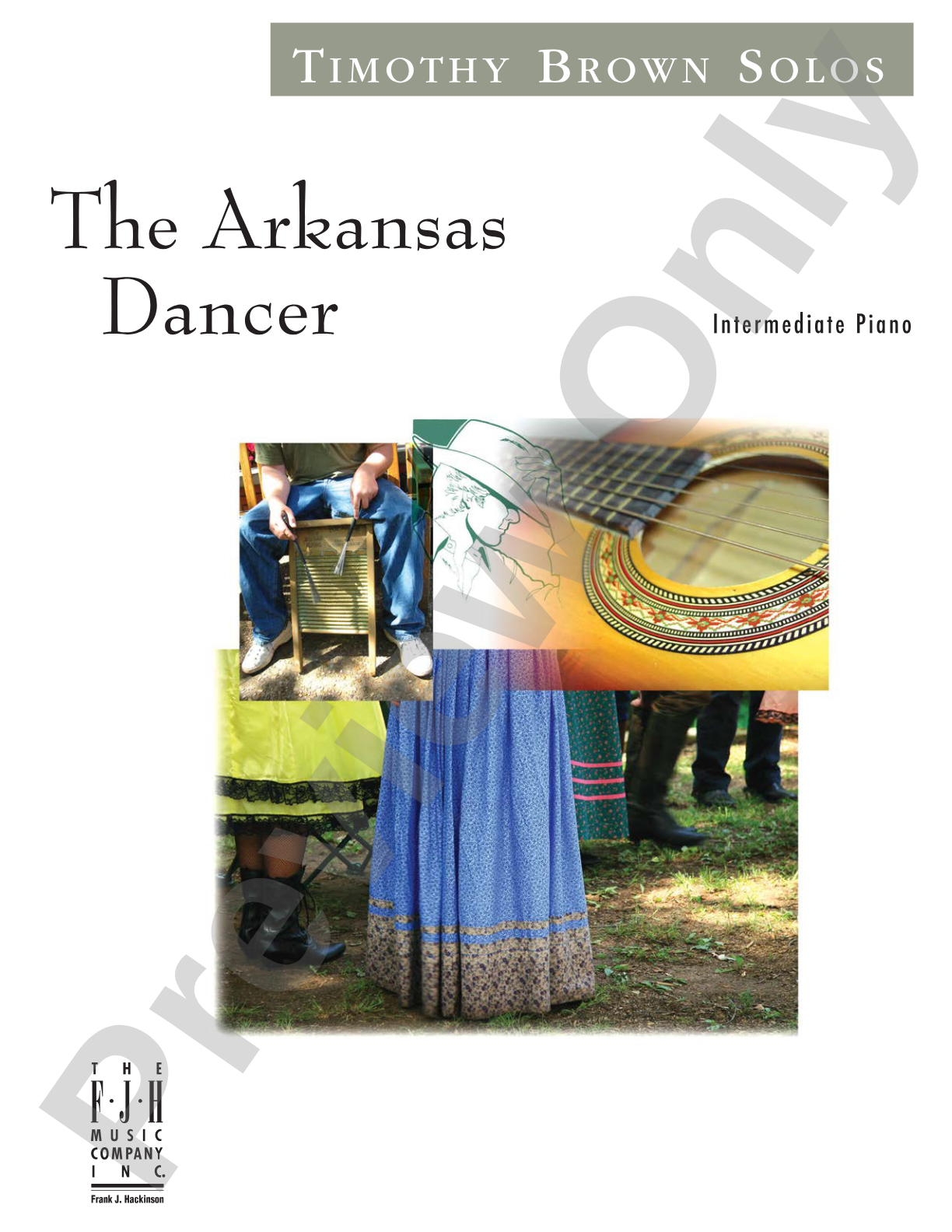
This lively two-step featuring a catchy bluegrass-style "fiddle tune" will make you want to get up and dance! Written for the intermediate level student, it features a fun syncopation and clever use of chromatics and accidentals.

The Arkansas Dancer: Piano isn't in MakeMusic Cloud just yet...but it could be. Let us know you'd like to see it, and you'll help shape what comes next. In the meantime, start a free trial and dive into thousands of interactive titles your students can play along with today.

Sample Audio
No sample audio found.
Sample Video
Additional Details
Series: Written For You
Publisher: The FJH Music Company, Inc.
SKU: 98-DW9316

More about this title

Why we love this

Brown captures the energy of bluegrass fiddle music in a piano idiom without oversimplifying the rhythmic complexity. The syncopation and chromatic touches give intermediate pianists something genuinely interesting to parse, not just a straightforward transcription of a folk tune.

What to expect

Infectious and grounded, like a fiddle tune translated through piano's voice while keeping its rural, percussive character. The chromatic ornaments sparkle against the steady two-step pulse, creating rhythmic tension that makes you feel the dance floor beneath your fingers.

Who it's for

Intermediate pianists ready to tackle syncopation and chromatic figures in a musical context rather than an exercise. Students who enjoy folk and bluegrass music will connect immediately with the idiom.

How to get the most out of it

  • Keep the tempo steady and slightly driving. The two-step rhythm needs forward momentum to feel authentic; rushing the syncopated passages will destroy the dance character.
  • Voice the chromatic passing tones clearly without over-pedaling. Let the accidentals speak distinctly so listeners hear the bluegrass flavor without muddiness.
  • Shape the fiddle tune melody with clear articulation in the right hand. Think of it as a bow stroke: even sixteenth-note passages should have lift and direction, not mechanical evenness.
  • Balance the hands so the syncopated left-hand pattern doesn't overshadow the tune. This is a dance number, not a study in rhythmic independence.

How to use it

Program this alongside other American roots-music arrangements to celebrate vernacular traditions, or use it as a standalone lighter piece in a mixed recital to shift the mood and energy. It works well as a concert encore or a cheerful study recital showstopper for an intermediate-level student.

Skills your students will build

  • Reading and executing syncopated rhythms in both hands
  • Playing chromatic passing tones and accidentals with clarity and precision
  • Maintaining steady pulse and tempo during rhythmically complex passages
  • Shaping folk-style melody with articulation and phrasing appropriate to the idiom

You May Also Like