
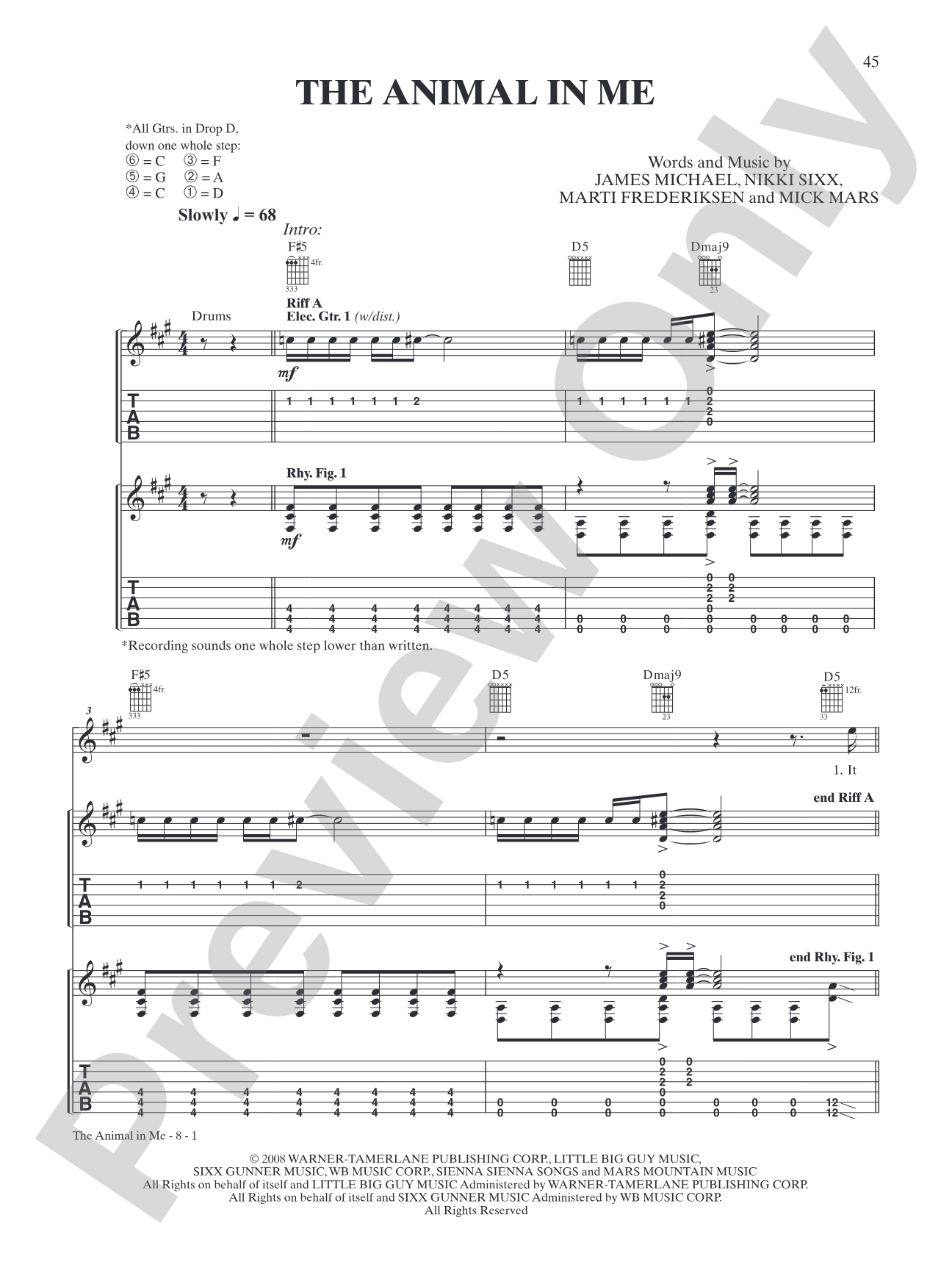
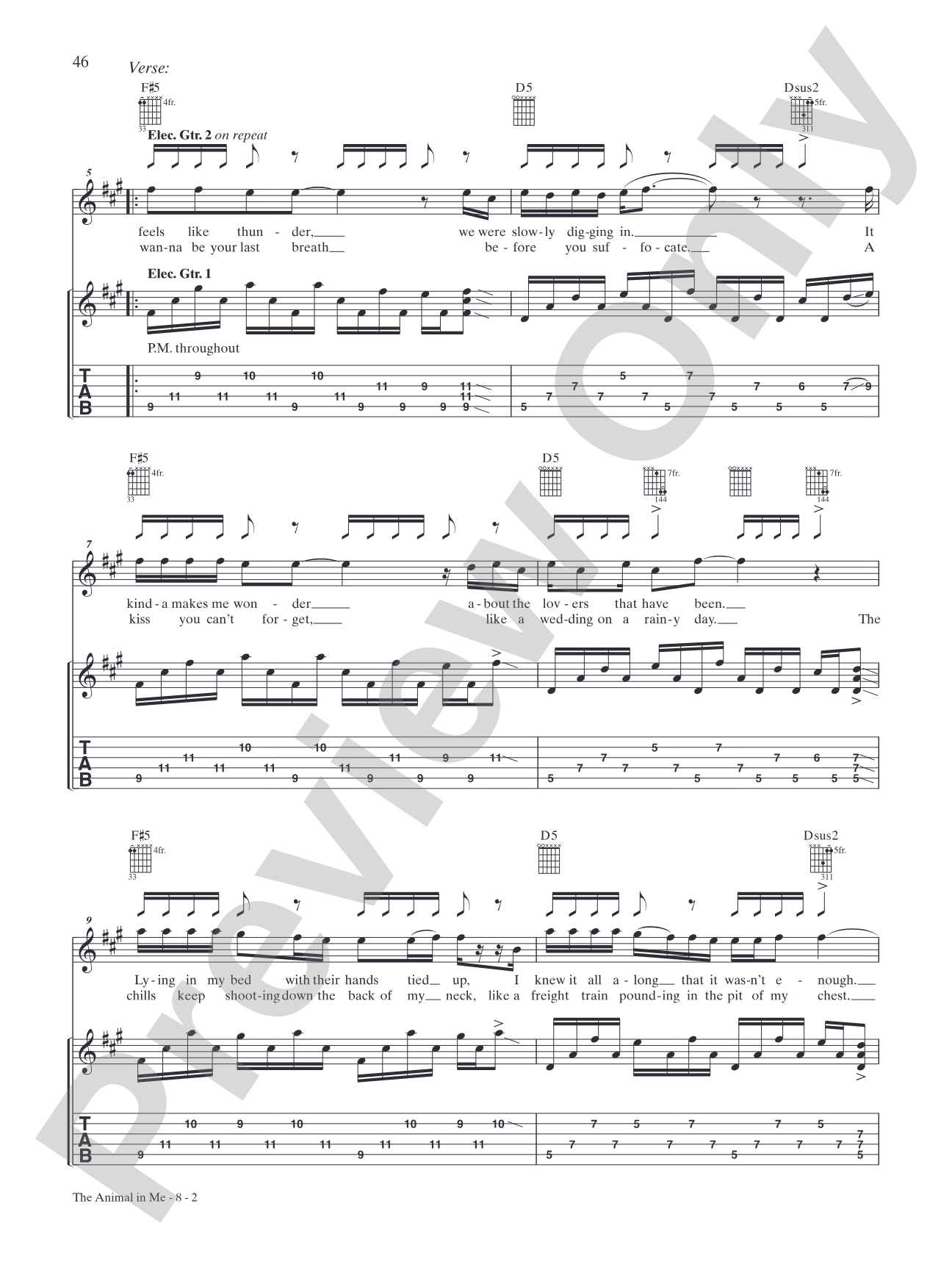

The Animal In Me: Authentic Guitar TAB
Mötley Crüe
Item: 00-PS-0000199
$5.99
Pickup currently not available
Related Items
Saints of Los Angeles (Gang Vocal): Authentic Guitar TAB |
$5.99
|
View | |
Mother F***er of the Year: Authentic Guitar TAB |
$9.99
|
View | |
Down at the Whisky: Authentic Guitar TAB |
$5.99
|
View | |
Chicks = Trouble: Authentic Guitar TAB |
$5.99
|
View | |
White Trash Circus: Authentic Guitar TAB |
$5.99
|
View | |
Just Another Psycho: Authentic Guitar TAB |
$5.99
|
View | |
This Ain't a Love Song: Authentic Guitar TAB |
$5.99
|
View | |
Face Down in the Dirt: Authentic Guitar TAB |
$5.99
|
View | |
What's It Gonna Take: Authentic Guitar TAB |
$5.99
|
View | |
Welcome to the Machine: Authentic Guitar TAB |
$5.99
|
View | |
Goin' Out Swingin': Authentic Guitar TAB |
$5.99
|
View |
Description
After an eight year recording break, Mötley Crüe releases their ninth studio album, Saints of Los Angeles. Debuting at #4 on the Billboard album charts, and selling about 99,000 copies in its first week of release, Saint of Los Angeles has proven to be another successful record by this dynamic group. All 13 songs are arranged in authentic guitar TAB. Titles: L.A.M.F. * Face Down in the Dirt * What's It Gonna Take * Down at the Whisky * Saints of Los Angeles (Gang Vocal) * MF of the Year * The Animal in Me * Welcome to the Machine * Just Another Psycho * Chicks = Trouble * This Ain't a Love Song * White Trash Circus * Goin' Out Swingin'.


The Animal In Me: Authentic Guitar TAB isn't in MakeMusic Cloud just yet...but it could be. Let us know you'd like to see it, and you'll help shape what comes next. In the meantime, start a free trial and dive into thousands of interactive titles your students can play along with today.
Request This Title
Tell us you want it.
Start Your Free Trial
Explore everything that's ready to play right now.
Sample Audio
No sample audio found.
Sample Video
No sample videos found.
Additional Details
Publisher:
Alfred Music
Page Count:
100
SKU:
00-PS-0000199
More about this title
About the Composer: James Michael
James Michael is a songwriter and producer who has worked across rock and metal genres, collaborating with major acts to craft radio-ready anthems and guitar-driven tracks. His work on Saints of Los Angeles demonstrates his ability to balance accessibility with the raw energy that defines modern hard rock.
Why we love this
This collection captures the full sonic identity of a landmark album through authentic guitar transcriptions, giving players direct access to the riffs and solos that made these songs commercially successful and musically distinctive. Students get to learn stadium rock on their own terms, working through material that connects to the music they actually want to play.
What to expect
Raw, unapologetic energy from the first note. These songs pulse with the swagger and aggression of arena rock while maintaining the melodic hooks that made them radio staples. The guitar work alternates between grinding rhythm riffs that anchor each track and solos that demand technical precision and attitude.
Who it's for
Intermediate to advanced guitarists who want to expand their repertoire with authentic transcriptions of successful modern rock material. Electric guitar players in rock bands, solo performers building setlists, and students studying contemporary songwriting structures will find actionable transcriptions that reflect real studio recordings.
How to get the most out of it
- Lock into the pocket by using a metronome during practice, particularly on rhythmically dense tracks like 'L.A.M.F.' where precision keeps the energy tight.
- Study the dynamics marked in each tab: the contrast between verse riffs and chorus power chords shapes the song's impact and prevents the performance from flattening.
- Record yourself playing individual sections and listen back to catch timing slips and tone inconsistencies before stitching full songs together.
- Work with a backing track or drummer to internalize how your parts interact with the rhythm section rather than practicing in isolation.
How to use it
Build a full album study where students learn multiple tracks across several weeks, allowing them to understand how a successful modern rock record balances different song structures and guitar approaches. These transcriptions also work well for rock band arrangements, where guitarists can contribute authentic parts to ensemble performances or showcase solos in recital settings.
Skills your students will build
- Reading and executing authentic guitar TAB notation
- Playing extended power chord progressions and rhythm riffs with dynamic control
- Navigating lead guitar solos with varied tempos and technical passages
- Understanding modern rock production choices reflected in guitar tone and layering
- Coordinating with a rhythm section and maintaining pocket in ensemble contexts