
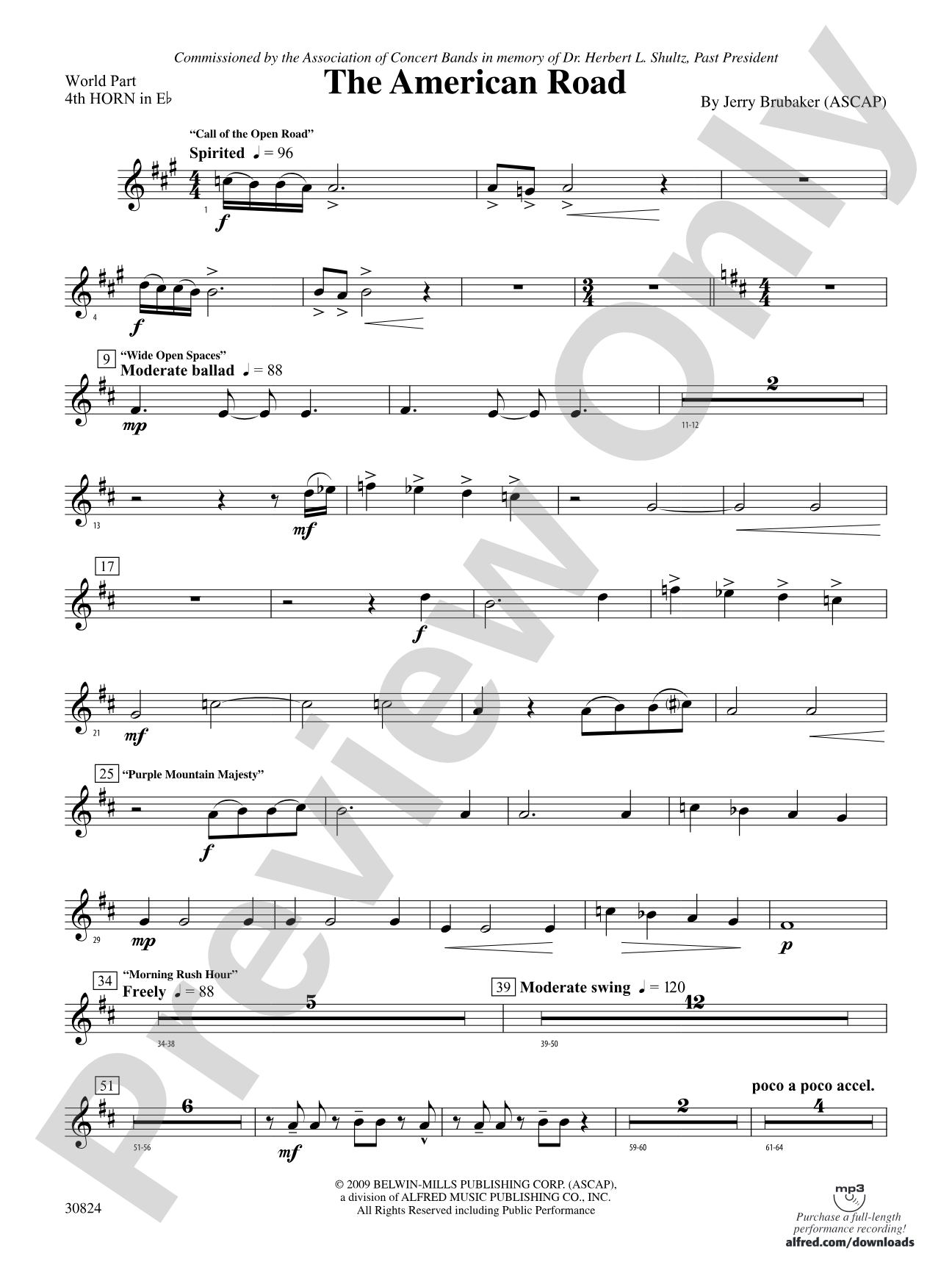
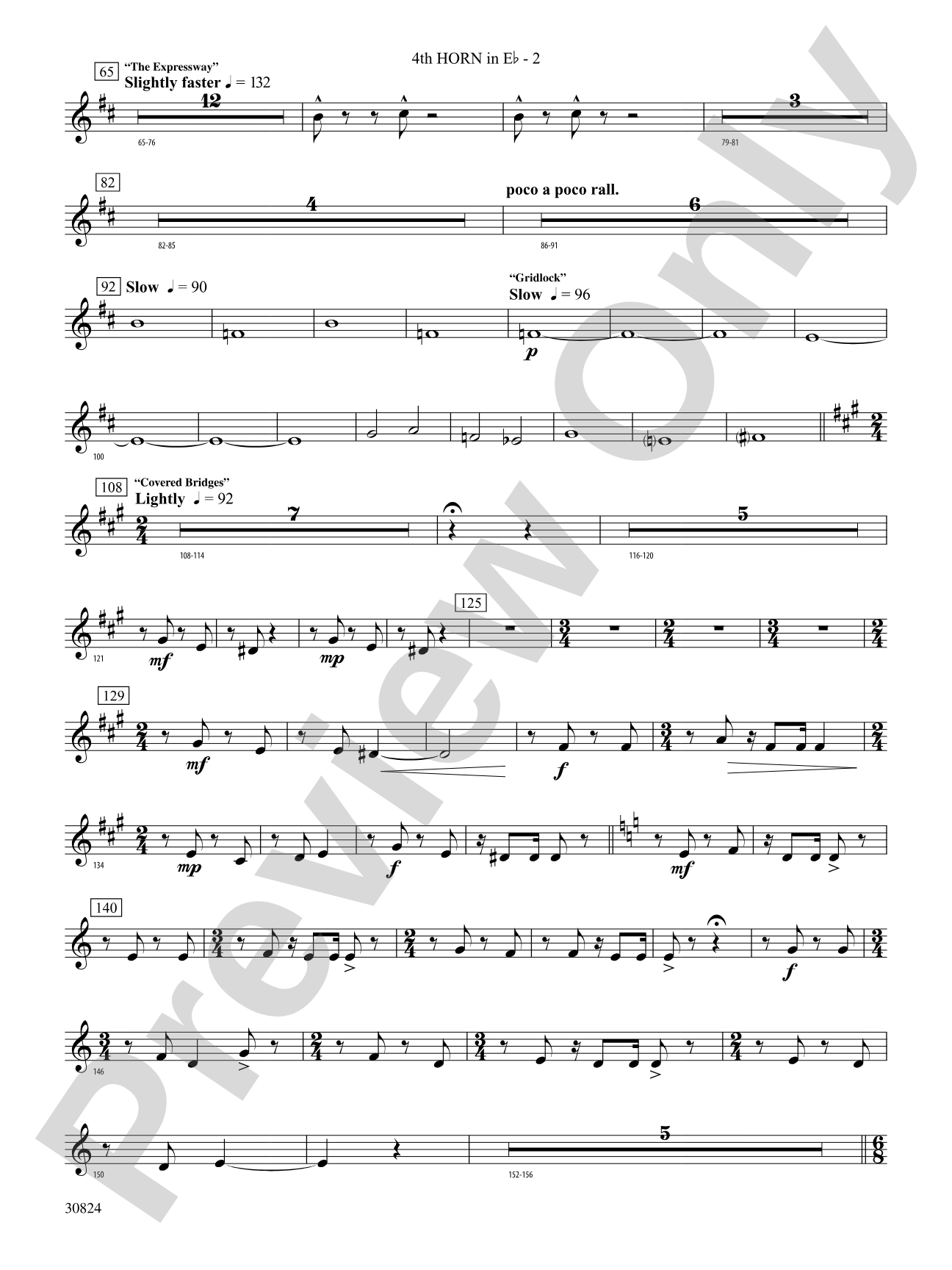
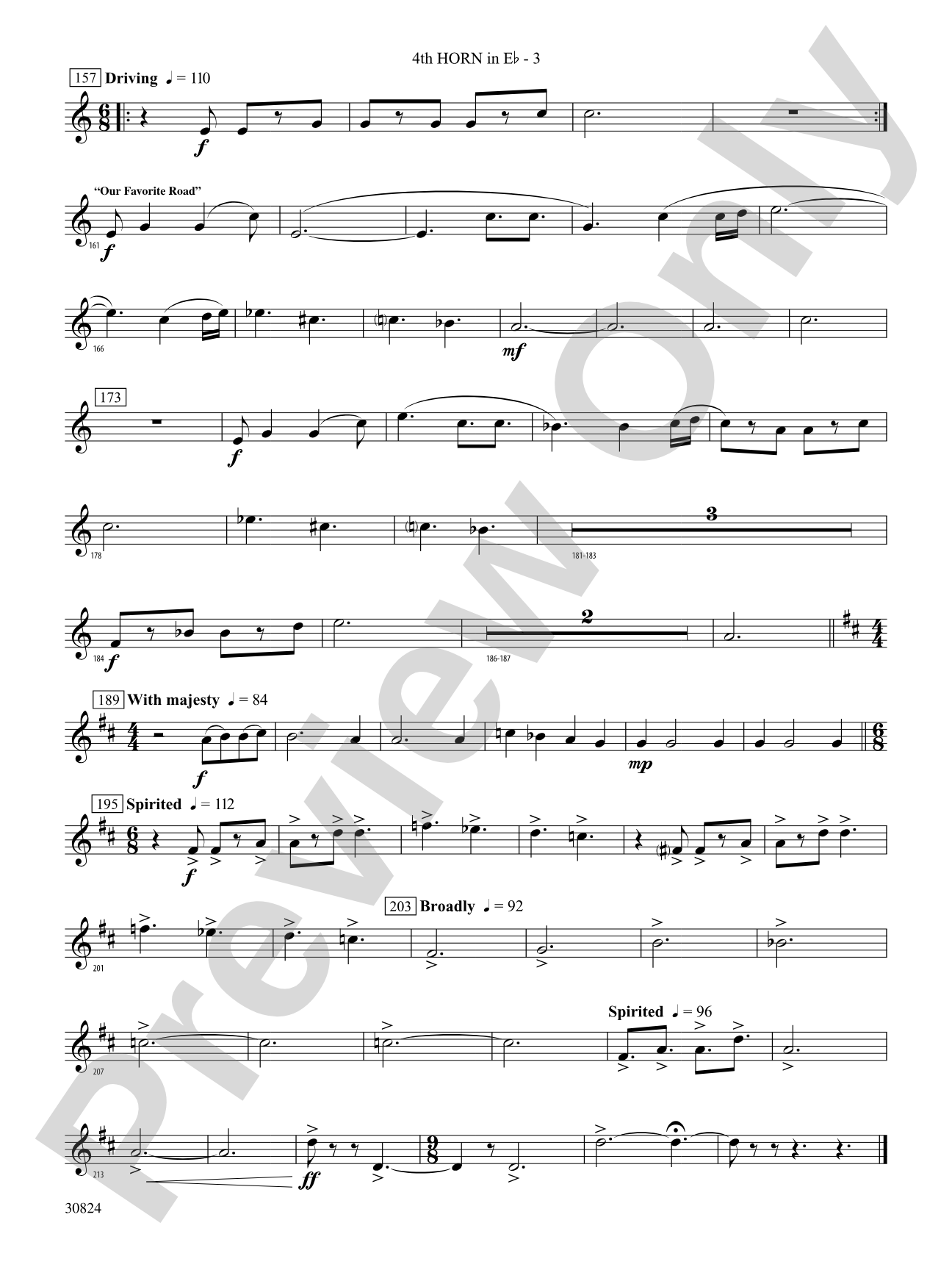

The American Road: (wp) 4th Horn in E-flat
By Jerry Brubaker
Grade: 4 (Medium)
Item: 00-PC-0014305_wpEH4
$3.00
Pickup currently not available
Description
This piece for symphonic band by Jerry Brubaker is a musical excursion into the American driving experience. From majestic mountain vistas and wide open spaces to the hustle and bustle of rush hour traffic. There is even a section about the beloved covered bridge. Find one and there's bound to be an interesting little two lane country road leading up to it. The piece is designed around just two themes which are tied together in the final section which the composer calls "Our Favorite Road". This can be the road to the beach, to the mountains or just simply cruisin' with the top down on a summer afternoon! Enjoy this delightful taste of Americana. (7:11) This title is available in MakeMusic Cloud.


Don't just read it, hear it, play along with it, and watch your students grow with it. In MakeMusic Cloud, The American Road: (wp) 4th Horn in E-flat comes alive with professional accompaniment, adjustable tempo, and built-in practice tools that turn solo practice into real progress.
Open in the Player
Jump straight in and assign it today.
Start Your Free Trial
Open this title and explore the full library in minutes.
Sample Audio
1
Audio File
--:--
0:00
0:00
Sample Video
No sample videos found.
Additional Details
Series:
Belwin Symphonic Band
Publisher:
Alfred Music
Page Count:
272
SKU:
00-PC-0014305_wpEH4
More about this title
About the Composer: Jerry Brubaker

Jerry Brubaker is a prolific composer and arranger whose works for band have become staples in concert programming across schools and universities. His compositional voice combines accessible melodic writing with sophisticated harmonic language, making his pieces engaging for performers while rewarding for audiences.
Why we love this
This piece captures the American landscape through two beautifully crafted themes that feel instantly recognizable without ever settling into predictability. The programmatic arc from mountain vistas through covered bridges to rush hour traffic gives your ensemble a narrative to sink their teeth into, and the finale's celebration of "Our Favorite Road" lands with genuine warmth. At Grade 4, it's sophisticated enough to challenge intermediate players while remaining within reach for most school bands.
What to expect
You're behind the wheel on an open highway, watching the landscape shift from breathtaking vistas to quaint small-town charm, then into the familiar chaos of city driving. The music breathes with the pace of travel itself, from sprawling pastoral contemplation to energetic forward motion, finally settling into a joyful cruise where the journey and destination feel equally worthwhile.
Who it's for
Concert bands at the intermediate to early advanced level will find this piece both musically satisfying and programmatically flexible. It works equally well as a standalone concert feature or as part of a thematic program celebrating American music and landscapes.
How to get the most out of it
- Shape the opening majestic section with long, sustained lines in the brass; resist the urge to rush the wide-open-spaces imagery
- Bring clarity to the covered bridge passage by thinning the texture and highlighting the gentle melodic turn in the woodwinds
- Lock the rhythm section tight during the rush hour traffic section to capture genuine momentum and energy without losing control
- Bring the two themes together in the finale with confident, singing attacks that honor both the compositional logic and the emotional payoff
How to use it
Program this as a compelling mid-set centerpiece that showcases your band's ability to shape contrasting moods within a cohesive structure. It pairs well with patriotic or Americana-themed concerts, summer pops performances, or Fourth of July celebrations where genuine musical substance matters as much as the seasonal context.
Skills your students will build
- Shaping long-phrase melodies across contrasting tempos and textures
- Maintaining rhythmic clarity during rapidly changing accompaniment patterns
- Balancing solo and sectional roles within programmatic contexts
- Responding to conductor cues that signal mood and landscape shifts
- Blending themes and creating coherence in multi-section concert works