The American Process (from Lincoln) Sheet Music Preview

The American Process (from Lincoln): E-Z Play Today

By John Williams

Item: 35-DS01885875

Digital Download
$4.99
Description

The American Process (from Lincoln): E-Z Play Today isn't in MakeMusic Cloud just yet...but it could be. Let us know you'd like to see it, and you'll help shape what comes next. In the meantime, start a free trial and dive into thousands of interactive titles your students can play along with today.

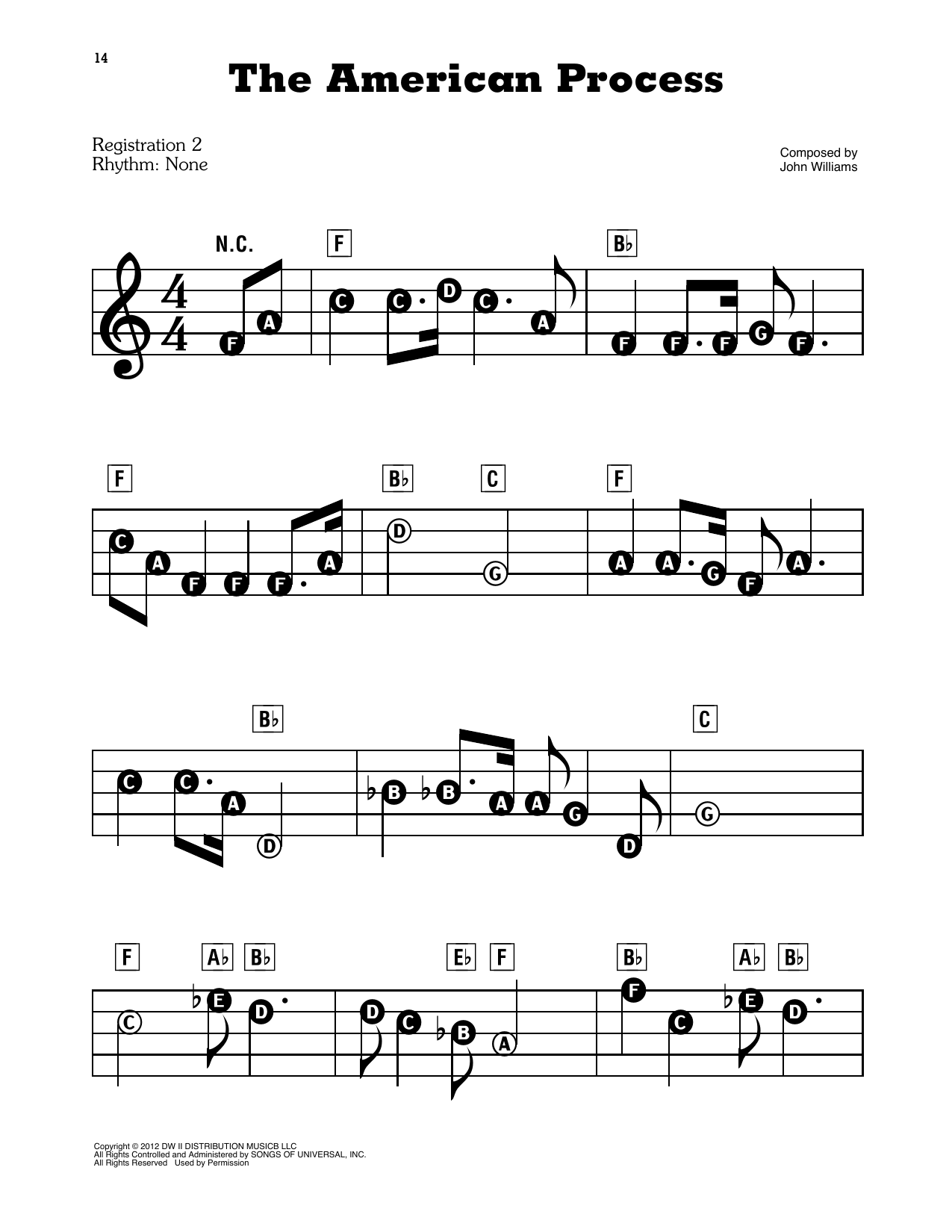
Sample Audio
No sample audio found.
Sample Video
Additional Details
Publisher: Hal Leonard
Page Count: 2
SKU: 35-DS01885875

More about this title

About the Composer: John Williams

John Williams stands as one of the most prolific and celebrated film composers of our time. His work across seven decades has shaped how audiences experience cinema, from intimate character moments to sweeping historical narratives, earning him five Academy Awards and a place among the most recorded composers in history.

Why we love this

Williams brings the same orchestral sophistication that defines his film work into this piano arrangement, creating a piece that sounds cinematic without requiring a full ensemble. The two-page format makes it accessible for intermediate pianists while preserving the emotional weight that makes his music resonate in any setting.

What to expect

This piece carries the weight of historical reflection. The writing suggests solemnity and contemplation, with moments that feel both intimate and grand, the way a single figure on a vast landscape commands attention through presence rather than volume.

Who it's for

Intermediate pianists looking to add film music to their repertoire will find this arrangement approachable without feeling simplified. It works well for students exploring how classical compositional techniques appear in contemporary scoring.

How to get the most out of it

  • Pay attention to Williams's harmonic language in the progression; the chords shift subtly to underscore emotional weight, so voice changes matter even in simple arrangements
  • Resist the urge to rush. This music breathes through its pacing, and patience with longer note values creates the reflective quality that defines the piece
  • Balance melodic clarity with accompaniment; the tune should sing forward without the left hand becoming an afterthought

How to use it

Consider pairing this with other film score arrangements for a concert exploring music in cinema, or place it as a solo moment in a recital that otherwise leans classical. It also works as a bridge piece between more challenging repertoire, giving students a chance to recover while maintaining musical substance.

Skills your students will build

  • Phrasing across longer musical lines without verbose notation
  • Balancing lyrical melody with accompaniment textures
  • Understanding harmonic function in a film music context
  • Interpreting emotional direction from compositional choices rather than tempo or dynamic markings alone

You May Also Like