The Abduction from the Seraglio Overture Sheet Music Preview

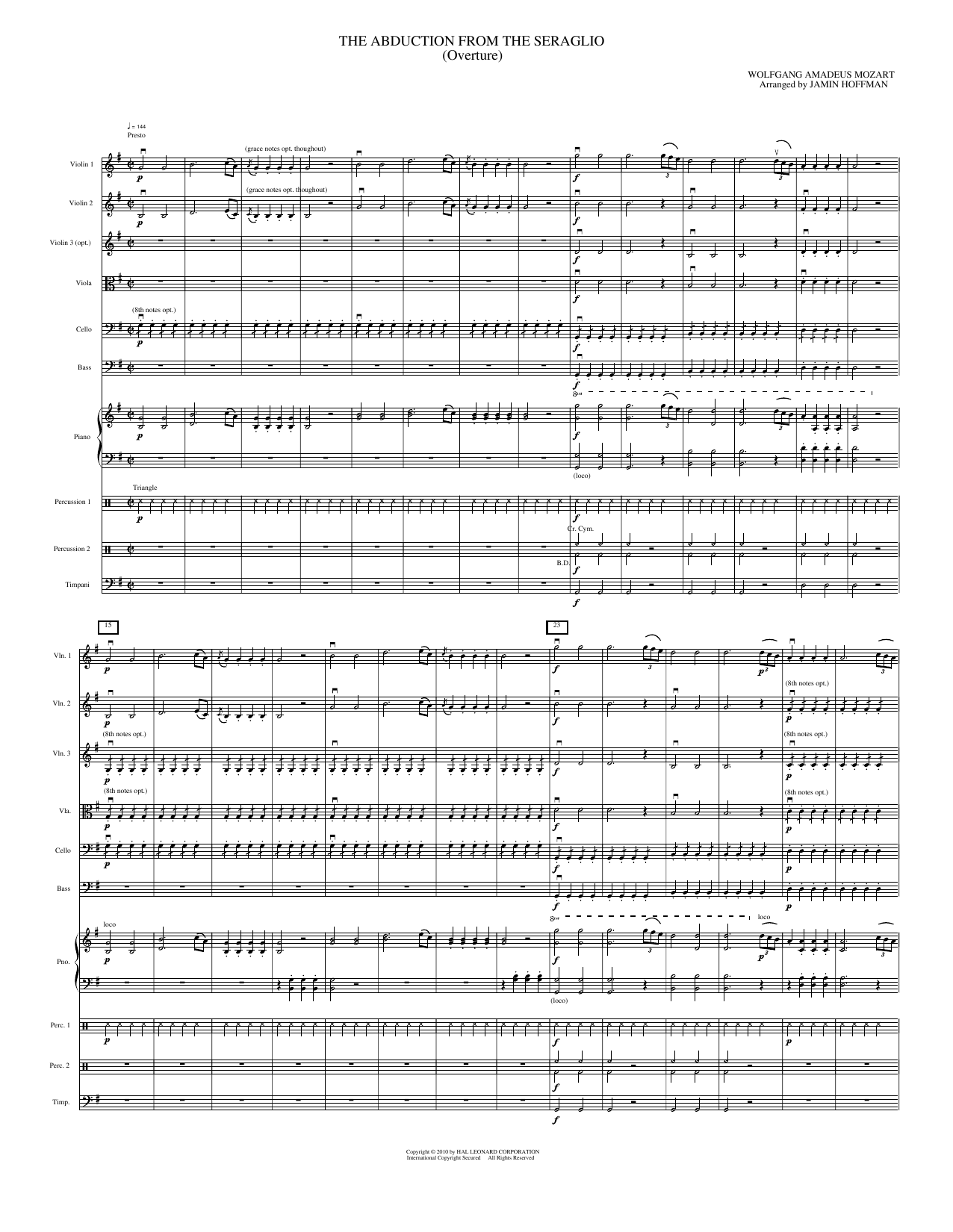
The Abduction from the Seraglio Overture: String Orchestra Conductor Score & Parts

By Wolfgang Amadeus Mozart / Arranged by Jamin Hoffman

Grade: 3-4

Item: 35-PK00426655

Digital Download
$45.00

Buy Extra Parts (Digital PDF Download)

Parts Added to Cart!

Description
The Abduction from the Seraglio Overture

The Abduction from the Seraglio Overture: String Orchestra Conductor Score & Parts isn't in MakeMusic Cloud just yet...but it could be. Let us know you'd like to see it, and you'll help shape what comes next. In the meantime, start a free trial and dive into thousands of interactive titles your students can play along with today.

Sample Audio
No sample audio found.
Sample Video
Additional Details
Publisher: Hal Leonard
SKU: 35-PK00426655

More about this title

About the Composer: Wolfgang Amadeus Mozart

Mozart composed The Abduction from the Seraglio in 1782 as a singspiel, a German opera genre that blended spoken dialogue with sung numbers. At just 26 years old, he created one of the era's most performed operas, showcasing his gift for melody, orchestration, and dramatic pacing. The overture alone remains a cornerstone of the classical repertoire, teaching generations of musicians how to construct tension, release, and infectious rhythmic momentum.

As an educator's resource, Mozart's work demonstrates how a master craftsman builds orchestral texture from simple materials. His string writing in this overture reveals economy of means paired with expressive richness, making it an invaluable model for understanding classical form and instrumentation.

Why we love this

This arrangement captures the overture's essential character while sitting comfortably within the technical reach of advancing orchestras. The orchestration stays faithful to Mozart's harmonic and melodic logic, so students hear the real piece rather than a simplified approximation. Directors appreciate how this work builds ensemble cohesion through clear part writing and offers immediate, rewarding results that keep young musicians engaged.

What to expect

Sunlit and energetic, with moments of genuine tenderness beneath the orchestral bustle. The overture dances along with playful confidence, then pulls back into passages of delicate lyricism, creating the emotional arc that made Mozart's music timeless. There's both sophistication and joy in every phrase.

Who it's for

String orchestras working at the 3-4 grade level who want substantial classical repertoire with real musical weight. This arrangement serves directors seeking a piece that develops musicianship while remaining accessible to students still building technique and ensemble awareness.

How to get the most out of it

  • Shape the opening theme with light articulation and forward momentum; Mozart's genius lives in the phrase architecture, not in heavy bowing
  • Balance inner voices carefully during the transition sections so that harmonic movement stays audible without drowning the melodic line
  • Let the ensemble breathe at phrase endings rather than cutting off abruptly; classical style demands gentle releases that acknowledge the music's architecture
  • Find the tempo that allows both the rapid figurations and the lyrical passages to speak clearly; rushing the fast sections often obscures the orchestration Hoffman preserved

How to use it

This overture works beautifully as a concert opener, setting a bright, classical tone that invites the audience in immediately. It pairs naturally with other classical works or as the anchoring piece in a program exploring opera and theatrical music. Consider programming it mid-season when your ensemble has developed enough cohesion to handle the part independence Mozart requires.

Skills your students will build

  • Phrasing across multiple measure units in classical style
  • Balance and blend of sustained harmonic accompaniment with melodic figuration
  • Articulation control and light, bouncy bowing technique
  • Reading divided string parts with independence and security
  • Tempo consistency and ensemble communication without excessive conducting

You May Also Like