The Abduction from the Seraglio: E-flat Alto Saxophone Sheet Music Preview

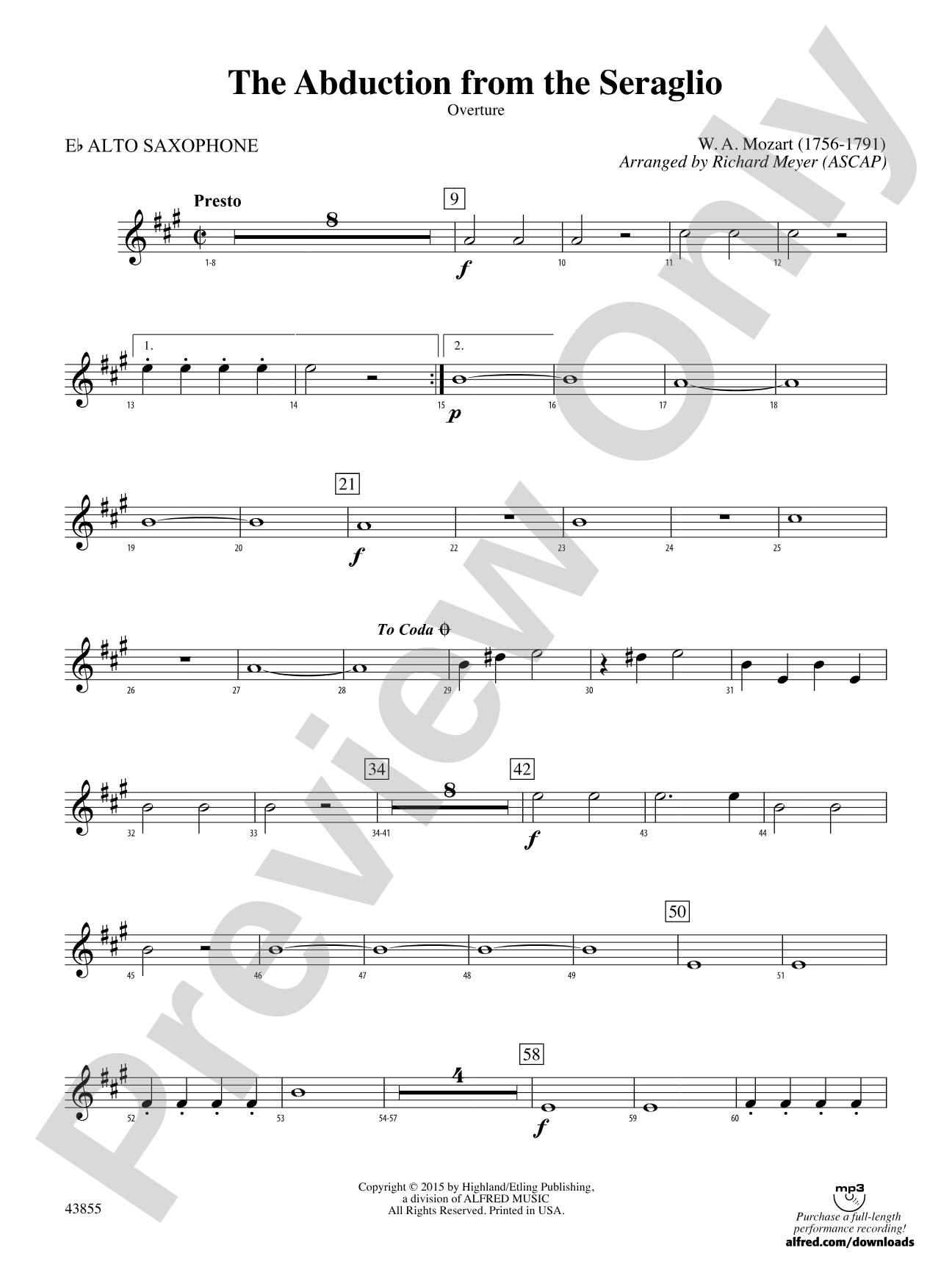
The Abduction from the Seraglio: E-flat Alto Saxophone

Overture

By Wolfgang Amadeus Mozart / arr. Richard Meyer

Grade: 2

Item: 00-PC-0016950_AX1

Digital Download
$3.00
Description
Enjoy this bright, cheery opera music and introduce the orchestra to Mozart. (2:45)

Don't just read it, hear it, play along with it, and watch your students grow with it. In MakeMusic Cloud, The Abduction from the Seraglio: E-flat Alto Saxophone comes alive with professional accompaniment, adjustable tempo, and built-in practice tools that turn solo practice into real progress.

Sample Audio
0:00
0:00
Sample Video
Additional Details
Series: Highland/Etling First Philharmonic
Publisher: Alfred Music
Page Count: 222
SKU: 00-PC-0016950_AX1

More about this title

About the Composer: Wolfgang Amadeus Mozart

Wolfgang Amadeus Mozart (1756-1791) composed over 600 works across every major genre during his brief life, establishing himself as one of the most influential composers in Western music. His operas rank among the most performed works in the repertoire, celebrated for their melodic brilliance, dramatic clarity, and orchestral sophistication. For young orchestras, Mozart's music offers an ideal entry point into the Classical era, combining accessibility with genuine artistic depth.

Why we love this

This arrangement captures the infectious energy and melodic charm of Mozart's operatic genius at a level your orchestra can actually execute. The Grade 2 scoring keeps technical demands manageable while preserving the harmonic sophistication and orchestral color that makes Mozart essential listening, making it ideal for young musicians encountering a masterwork for the first time.

What to expect

Bright and charming, with an almost theatrical playfulness that captures the comedic spirit of the opera's plot. The melodies bounce with elegance and good humor, making this an uplifting addition to any concert.

Who it's for

Young orchestras in Grades 2-4 who are ready to encounter genuine masterworks of the repertoire. This adaptation serves conductors looking to program Mozart at a level where students can contribute meaningfully without oversimplification.

How to get the most out of it

  • Maintain rhythmic precision in the rhythmic figures without sacrificing the natural bounce of the Classical style; think of it as dancing rather than marching.
  • Balance the melodic lines between sections so that Mozart's memorable themes shine through clearly, even as different instruments pass the material around.
  • Shape each phrase with gentle dynamic contours rather than playing at a static level; this brings the sparkle that defines the overture's character.
  • Keep the tempo steady and buoyant; this piece thrives on forward momentum without rushing.

How to use it

Program this as a concert opener or centerpiece to introduce your audience to Classical-era opera without requiring a full dramatic production. It pairs well on a concert celebrating composers across different styles, or use it as a festival entry that demonstrates your orchestra's ability to handle stylistically authentic repertoire.

Skills your students will build

  • Balancing melody and accompaniment in Classical textures
  • Reading and executing articulations (staccato, accents, tenuto) with stylistic accuracy
  • Maintaining steady tempo in bright, rhythmic contexts
  • Executing dynamic shaping and phrasing at the phrase level rather than the note level
  • Ensemble awareness across multiple instrumental sections

You May Also Like