
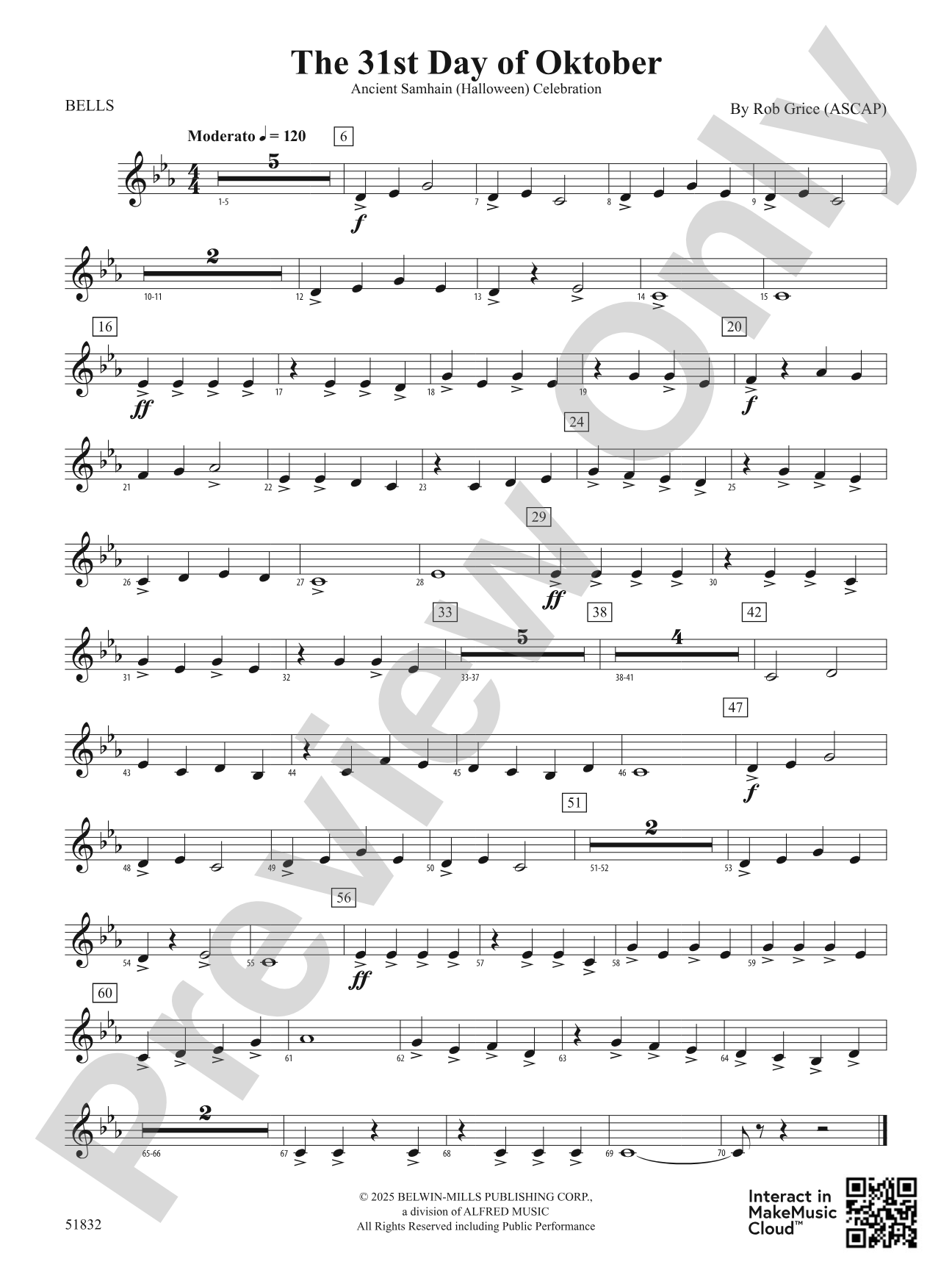

The 31st Day of Oktober: Mallets
Ancient Samhain (Halloween) Celebration
By Rob Grice
Grade: 1
Item: 00-PC-0019516_M1
$5.99
Pickup currently not available
Description
Capture the imagination of your young musicians with this scary musical escapade, The 31st Day of Oktober, by Rob Grice. Well within the abilities of beginning musicians, this dark comical work brings images of Halloween to life! Your students will ask to play this year-round. It's that much fun.
Halloween originated 2000 years ago with the ancient Celtic festival of Samhain (Sow-in), when people would light bonfires and wear costumes to ward off ghosts. This imaginative and scary selection is written to bring out the best in younger music students and will impress the audience with their mature sound. A sure thing for your fall concert. (2:20)


Halloween originated 2000 years ago with the ancient Celtic festival of Samhain (Sow-in), when people would light bonfires and wear costumes to ward off ghosts. This imaginative and scary selection is written to bring out the best in younger music students and will impress the audience with their mature sound. A sure thing for your fall concert. (2:20)
Don't just read it, hear it, play along with it, and watch your students grow with it. In MakeMusic Cloud, The 31st Day of Oktober: Mallets comes alive with professional accompaniment, adjustable tempo, and built-in practice tools that turn solo practice into real progress.
Open in the Player
Jump straight in and assign it today.
Start Your Free Trial
Open this title and explore the full library in minutes.
Sample Audio
1
Audio File
--:--
0:00
0:00
Sample Video
Additional Details
Series:
Belwin Beginning Band
Publisher:
Alfred Music
SKU:
00-PC-0019516_M1
More about this title
About the Composer: Rob Grice

Rob Grice brings decades of classroom experience to every score he writes. His career spans elementary through community college instruction, and that breadth of teaching has sharpened his instinct for what young musicians can accomplish when material is both engaging and musically sound. His compositions and arrangements have earned performances at major venues including Carnegie Hall and the Midwest Clinic, and they regularly appear on state and national contest lists across the country.
Beyond the concert hall, Grice has been recognized for his contributions to music education itself. He received the Secondary Teacher of the Year award from the Enterprise City School System in Alabama and the Golden Apple Award for educational achievement. He remains active as a guest conductor, clinician, and adjudicator, and his work has traveled internationally to Australia, Canada, Europe, and Japan.
Why we love this
This piece proves that Grade 1 writing doesn't mean thin orchestration or timid musical ideas. Grice builds genuine excitement and character within the technical reach of beginning players, delivering something your students will actually want to play repeatedly rather than endure. The Halloween concept gives context and narrative to the music, turning a concert piece into a story that middle schoolers find inherently cool.
What to expect
A darkly comic romp through Halloween imagery, with moments of genuine eeriness balanced by playful musical winks. The orchestration suggests eerie movement and mischief without relying on gimmicks, capturing the fun and slight creepiness of the holiday with straightforward, honest musicwriting.
Who it's for
Beginning concert bands and emerging intermediate ensembles looking for repertoire that feels mature without exceeding their technical abilities. This works equally well for a group's first or second year of ensemble playing, provided your section leaders have solid fundamentals and can guide intonation.
How to get the most out of it
- Let the darker moments breathe. Beginning musicians often rush when they're less secure, so conduct with deliberate control during the spookier passages to keep the sound cohesive and maintain the comedic timing.
- Isolate the rhythm section early. Lock in the pulse with percussionists and lower voices first so that when brass and reeds enter, they have a steady foundation to build the Halloween atmosphere.
- Shape dynamic contrasts sharply. The work relies on contrast between sections to stay entertaining; resist letting students coast at mezzo-forte throughout.
- Emphasize articulation clarity in staccato figures. Clean tonguing will enhance the playful, spooky character and keep the piece from sounding muddy at Grade 1 balance.
How to use it
Perfect anchor for a fall concert in October, or program it as the closer for a spring concert if your students need an energy boost at the end. The piece also holds up well in festival settings where its clarity and character cut through back-to-back performances.
Skills your students will build
- Conducting clarity and ensemble response to subtle tempo and dynamic gestures
- Rhythmic precision in syncopated figures across the ensemble
- Sectional balance and blend with multiple independent lines occurring simultaneously
- Sustained tone quality and control in longer phrase passages
- Staccato articulation and style consistency