
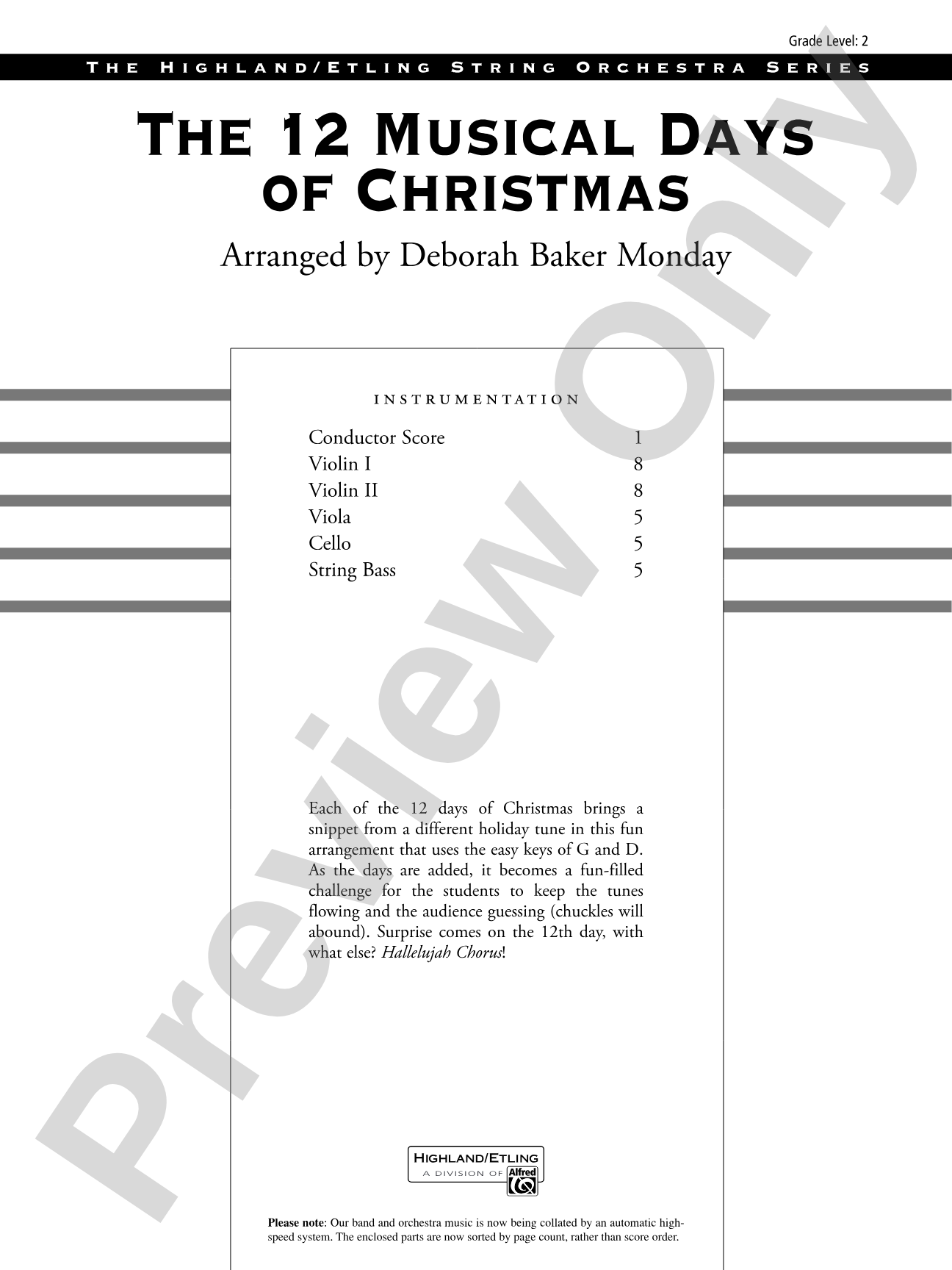
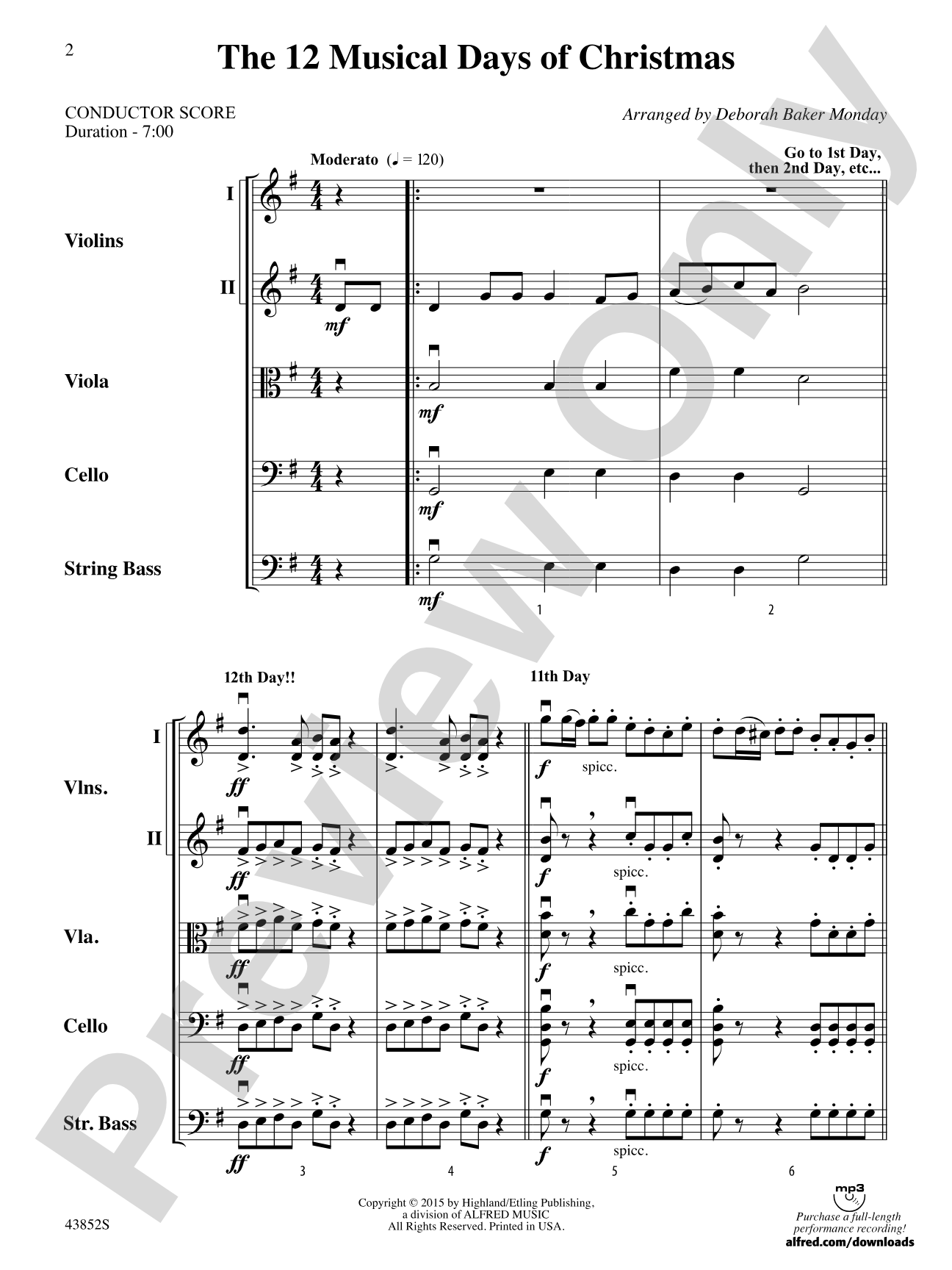
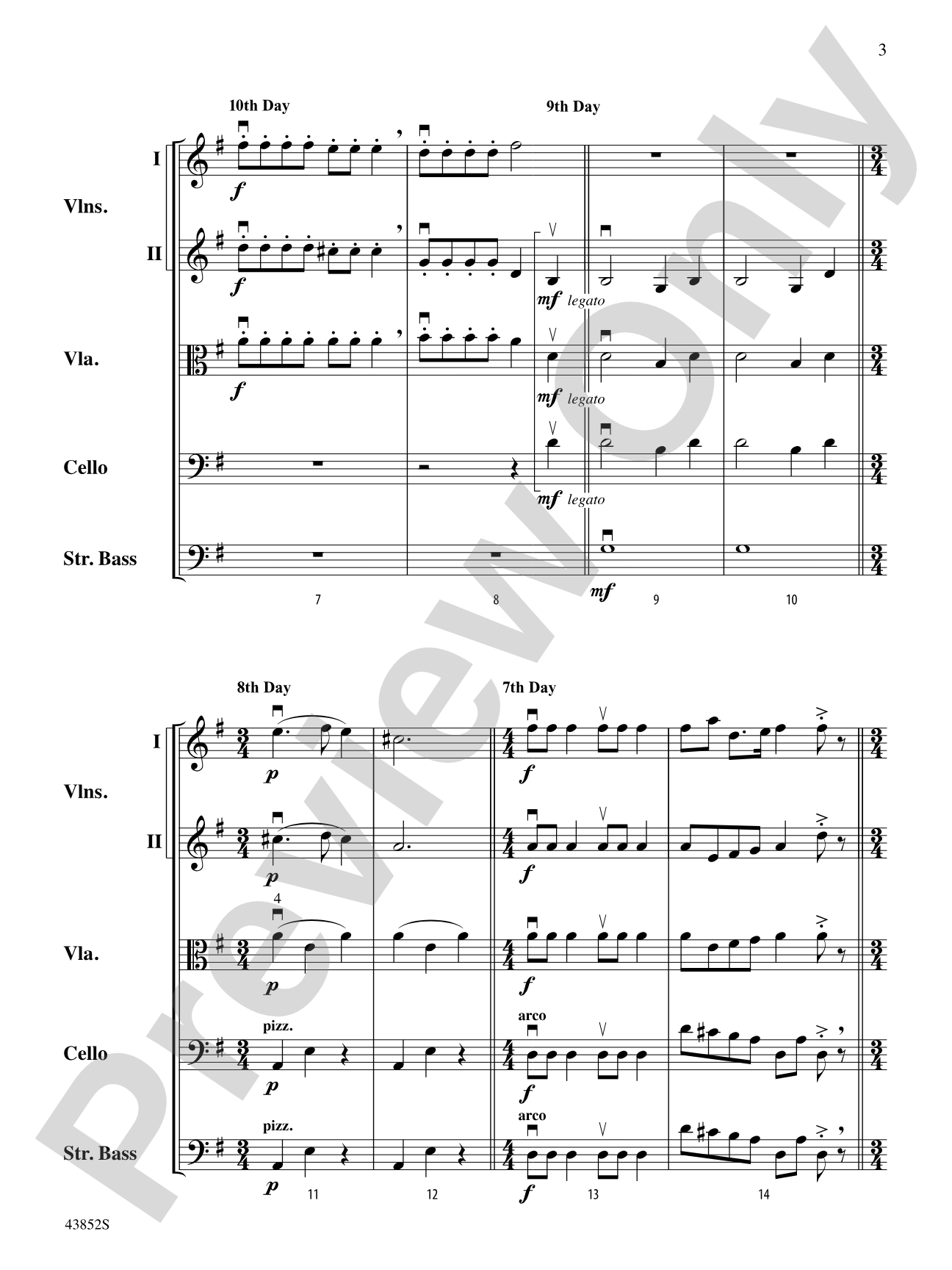
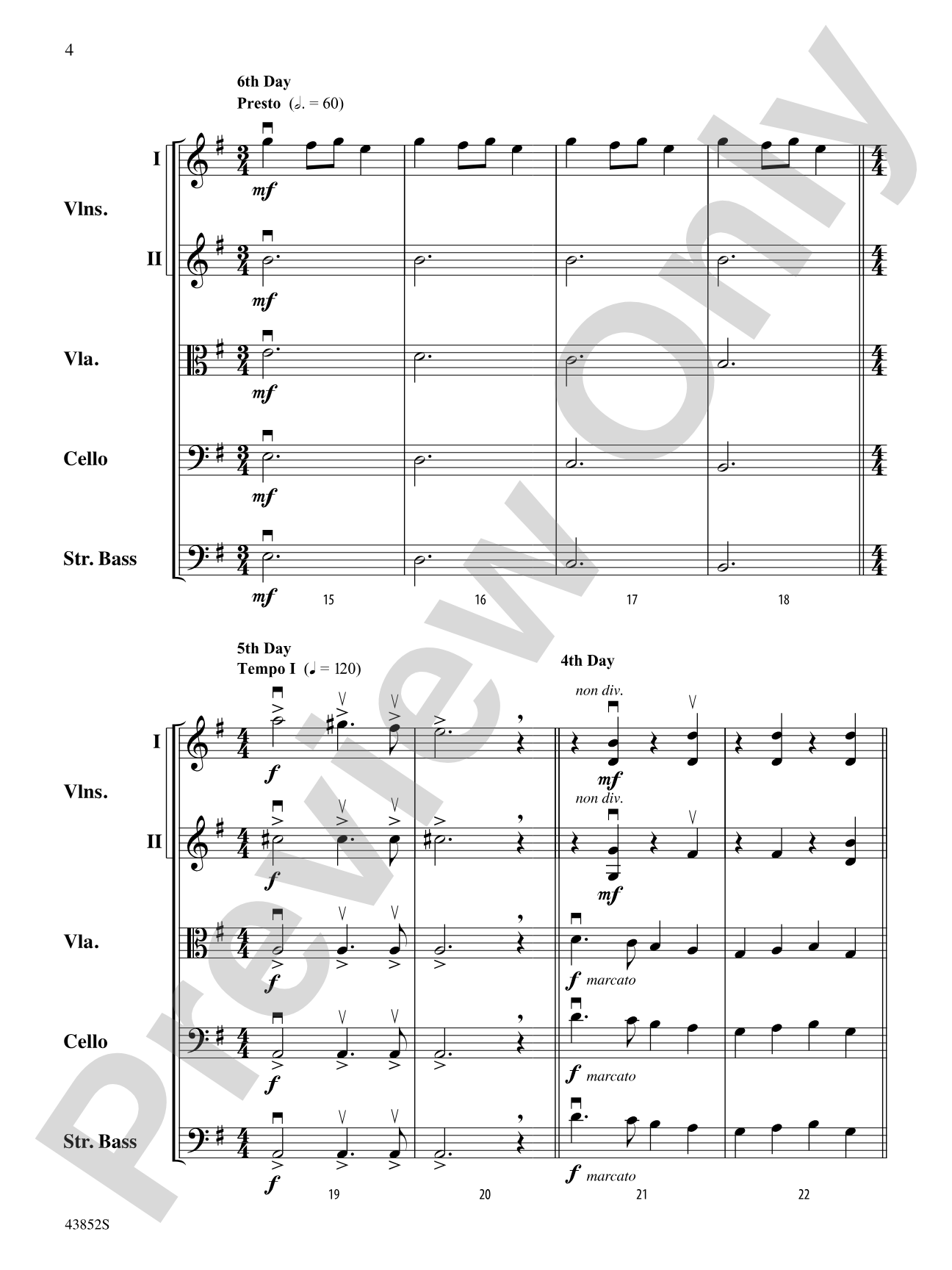

The 12 Musical Days of Christmas: String Orchestra Conductor Score & Parts
Traditional / arr. Deborah Baker Monday
Grade: 2
Item: 00-PK-0006701

$46.00
Pickup currently not available
Buy Extra Parts (Digital PDF Download)
| Product | Price | Quantity |
|---|---|---|
| The 12 Musical Days of Christmas: Score | $9.00 | |
| The 12 Musical Days of Christmas: 1st Violin | $7.99 | |
| The 12 Musical Days of Christmas: 2nd Violin | $7.99 | |
| The 12 Musical Days of Christmas: Viola | $7.99 | |
| The 12 Musical Days of Christmas: Cello | $7.99 | |
| The 12 Musical Days of Christmas: String Bass | $7.99 |
Parts Added to Cart!
Description
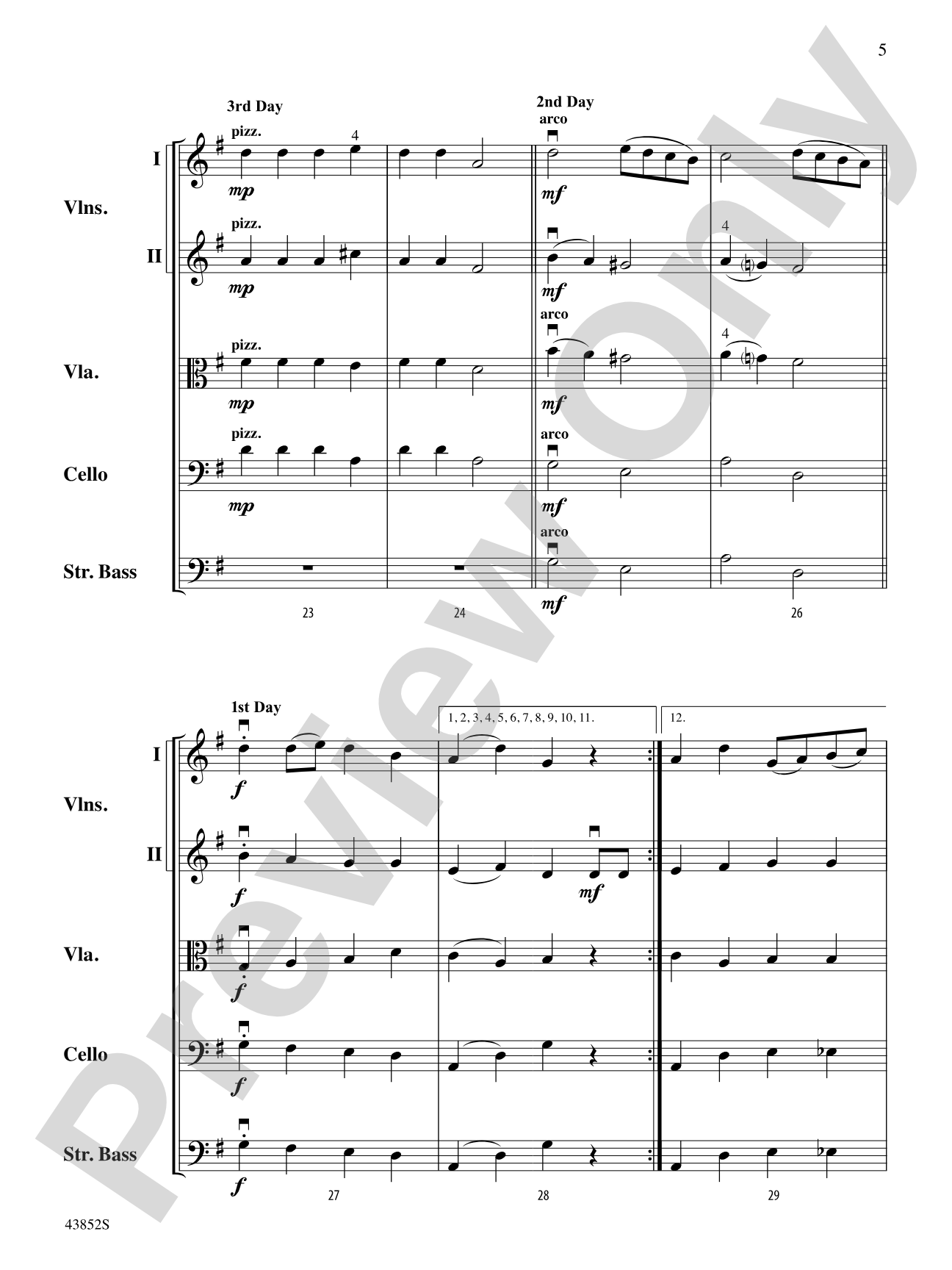
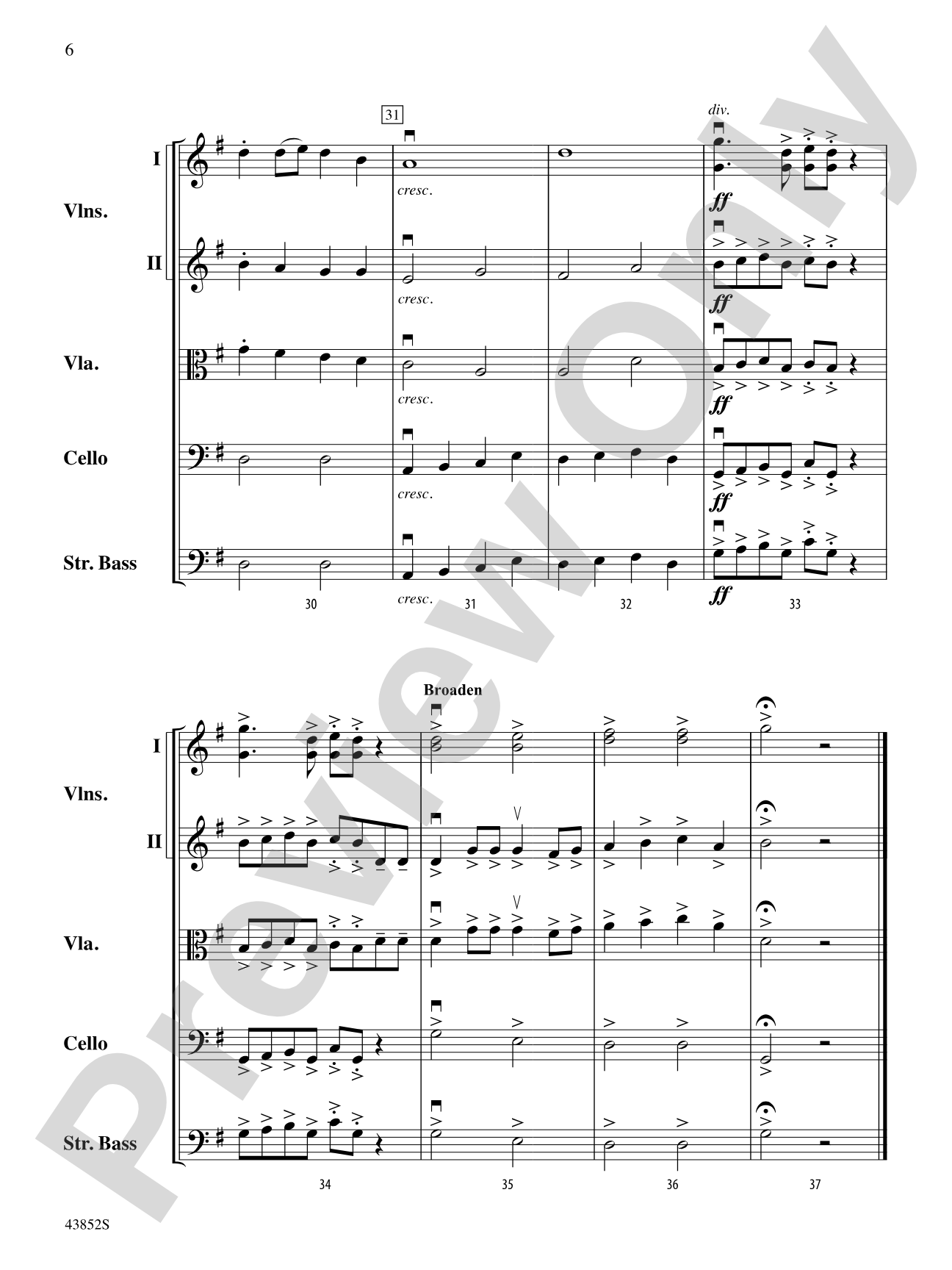
Each of the 12 days brings a snippet from a different holiday tune in this fun arrangement that uses the easy keys of G and D. As the days are added, it becomes a fun-filled challenge. Surprise comes on the12th day with "Hallelujah Chorus"! (7:00)


Don't just read it, hear it, play along with it, and watch your students grow with it. In MakeMusic Cloud, The 12 Musical Days of Christmas: String Orchestra Conductor Score & Parts comes alive with professional accompaniment, adjustable tempo, and built-in practice tools that turn solo practice into real progress.
Open in the Player
Jump straight in and assign it today.
Start Your Free Trial
Open this title and explore the full library in minutes.
Sample Audio
1
Audio File
--:--
0:00
0:00
Sample Video
Additional Details
Series:
Highland/Etling String Orchestra
Publisher:
Alfred Music
Page Count:
62
SKU:
00-PK-0006701
More about this title
About the Arranger: Deborah Baker Monday

Deborah Baker Monday spent 25 years building and directing the award-winning Logan City orchestra program before transitioning to guest conducting, clinician work, and teaching supervision. She holds a B.M.E. in string education from Florida State University and an M.M. in composition from the University of Alabama, where she also performed as a bassist with regional orchestras. Her doctoral studies at Louisiana State University under James Yestadt deepened her work in both performance and composition.
Monday has composed and arranged over 130 works for educational strings across seven publishing companies, earning Utah's ASTA Composition Competition awards in 2006 and 2011. She has presented at state conferences across the country, the Midwest Clinic, and the Ohio State String Teachers Workshop. Her approach combines deep knowledge of string pedagogy with practical arranging that serves the classroom and concert hall.
Why we love this
Monday builds momentum and musical intelligence into every phrase of this arrangement. What makes it shine is the cumulative structure: starting simple in G and D, the piece gains complexity and joy as each new holiday melody enters, keeping students engaged through the entire seven minutes rather than hearing the same accompaniment repeated. The final arrival at the Hallelujah Chorus rewards ensemble and audience alike with a moment of genuine triumph.
What to expect
Warmth and playfulness mixed with genuine musical substance. The arrangement respects the familiar melodies while weaving them together in ways that feel fresh, building energy piece by piece until the final Hallelujah moment breaks open with full harmonic richness and unexpected grandeur.
Who it's for
Grade 2 string orchestras that want a substantial, engaging holiday selection without the technical demands of advanced repertoire. This works equally well for groups seeking a full concert piece or one seeking a substantial closer for a December program.
How to get the most out of it
- Balance the melody clearly when each new tune enters on day one through day eleven; younger orchestras will benefit from a designated "lead" stand for each new line to maintain ensemble focus.
- Maintain consistent articulation across all 12 fragments so the piece feels unified despite drawing from different holiday sources.
- Prepare the Hallelujah Chorus finale with enough textural clarity and energy that the key change and sudden complexity feel celebratory, not overwhelming.
How to use it
Program this as a standalone concert piece to showcase your orchestra's ability to sustain attention and build narrative arc, or use it as an extended encore that leaves audiences smiling. The seven-minute runtime and clearly defined seasonal character make it ideal for holiday pops concerts, family matinee programs, or December orchestra celebrations.
Skills your students will build
- Maintaining rhythmic consistency across multiple melodic fragments and key areas
- Listening for multiple independent lines in G and D major without losing ensemble cohesion
- Building dynamic and textural contrast as complexity increases across the 12 sections
- Executing sudden key changes and style shifts with musical intention rather than mechanical adjustment