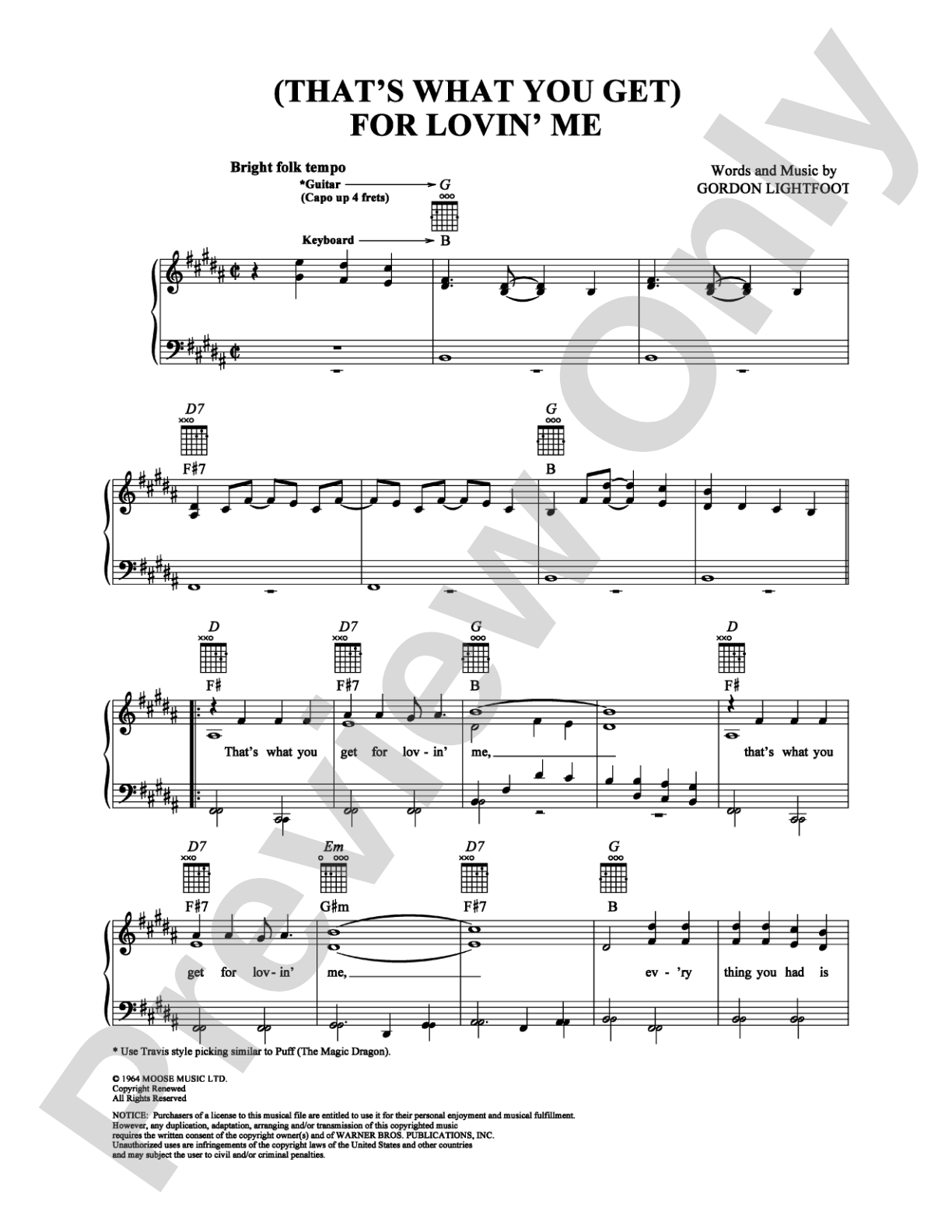
(That's What You Get) For Lovin' Me: Piano/Vocal/Chords Digital Sheet Music

(That's What You Get) For Lovin' Me: Piano/Vocal/Chords Digital Sheet Music

Gordon Lightfoot, Peter Paul & Mary

Item: 00-PS-0008885

Digital Download
$3.99
Description

(That's What You Get) For Lovin' Me: Piano/Vocal/Chords Digital Sheet Music isn't in MakeMusic Cloud just yet...but it could be. Let us know you'd like to see it, and you'll help shape what comes next. In the meantime, start a free trial and dive into thousands of interactive titles your students can play along with today.

Sample Audio
No sample audio found.
Sample Video
Additional Details
SKU: 00-PS-0008885

More about this title

About the Artist: Peter Paul & Mary

Peter, Paul and Mary emerged in the early 1960s as one of the most influential folk-pop groups in American music history. The trio's blend of close harmonies, acoustic instrumentation, and socially conscious songwriting made them pioneers in bringing folk traditions to mainstream audiences. Their repertoire spans protest songs, love ballads, and contemporary pop-folk arrangements that continue to resonate across generations of singers and musicians.

The group's enduring legacy rests on their ability to interpret material with emotional depth and vocal sophistication. Whether performing their own compositions or arrangements of traditional songs, Peter, Paul and Mary demonstrated how folk idioms could address both personal and universal themes. Their recorded albums remain essential listening for vocalists exploring the intersection of folk sensibility and popular music.

Why we love this

This tune captures the conversational warmth and harmonic sophistication that made Peter, Paul and Mary essential classroom and recital repertoire. The piano/vocal/chords format gives singers immediate access to sophisticated voicings and a strong melodic anchor, while pianists get to explore the gentle swing and folk-inflected chord progressions that define the era. It's a genuine crowd-pleaser that doesn't sacrifice musical substance for accessibility.

What to expect

Warm, wistful, and genuinely conversational. The melody sits comfortably in the voice and has an unhurried quality that invites reflection. Piano and voice move together in a partnership that feels intimate rather than showy, with harmonic color that evokes the folk-pop aesthetic of the 1960s without feeling dated.

Who it's for

Vocalists developing comfort with folk-pop repertoire and pianists seeking accessible yet musically rich accompaniment material will find this straightforward and rewarding. This works equally well for recital programming, informal performance settings, or singers exploring the American songwriting tradition. Advanced singers can use this as a stepping stone into interpreting jazz-influenced phrasing within a folk context.

How to get the most out of it

  • Balance the vocal line gently with the piano accompaniment; the melody should soar without strain, and the piano should support rather than compete
  • Pay attention to the natural speech rhythm within the phrases; this song rewards conversational phrasing over metronomic strictness
  • Explore the harmonic color in the chords before finalizing your interpretation; small voicing choices can shift the emotional tone considerably
  • Use dynamics to shape the narrative arc of the text; subtle changes in volume and intensity will highlight the song's emotional journey

How to use it

This pairs naturally with other folk-pop standards and singer-songwriter repertoire from the era, making it ideal for a concert themed around American songwriting or social awareness in music. It also works as a standalone recital piece that bridges classical and contemporary contexts. Consider it for a relaxed evening concert or as part of a vocal program that highlights different approaches to melody and text.

Skills your students will build

  • Interpreting folk-pop phrasing and conversational vocal delivery
  • Reading piano/vocal/chords notation and collaborating with accompanists
  • Balancing emotional sincerity with melodic control
  • Understanding harmonic progression in pop and folk idioms
  • Shaping longer phrases with dynamic and textual awareness

You May Also Like