
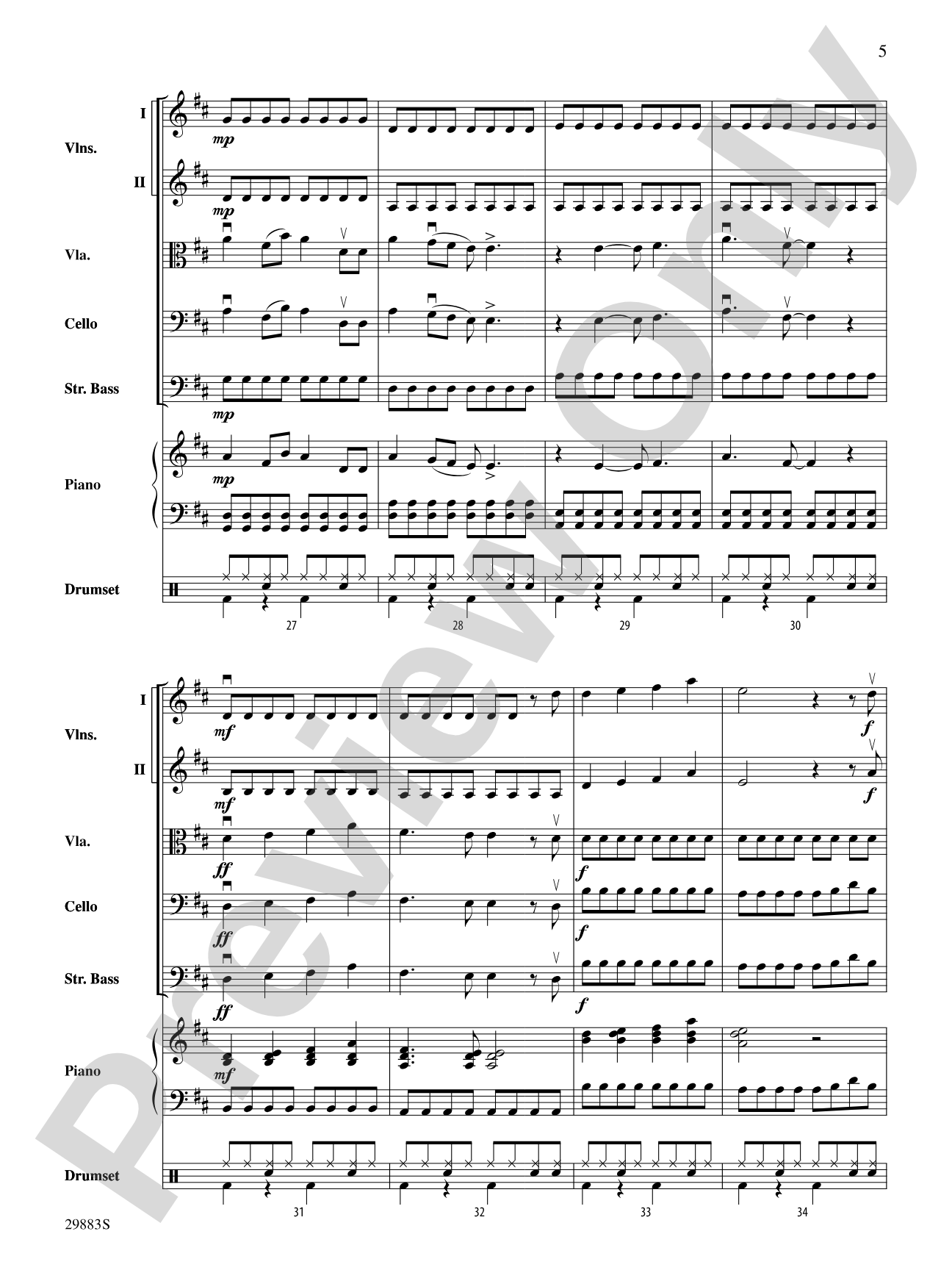
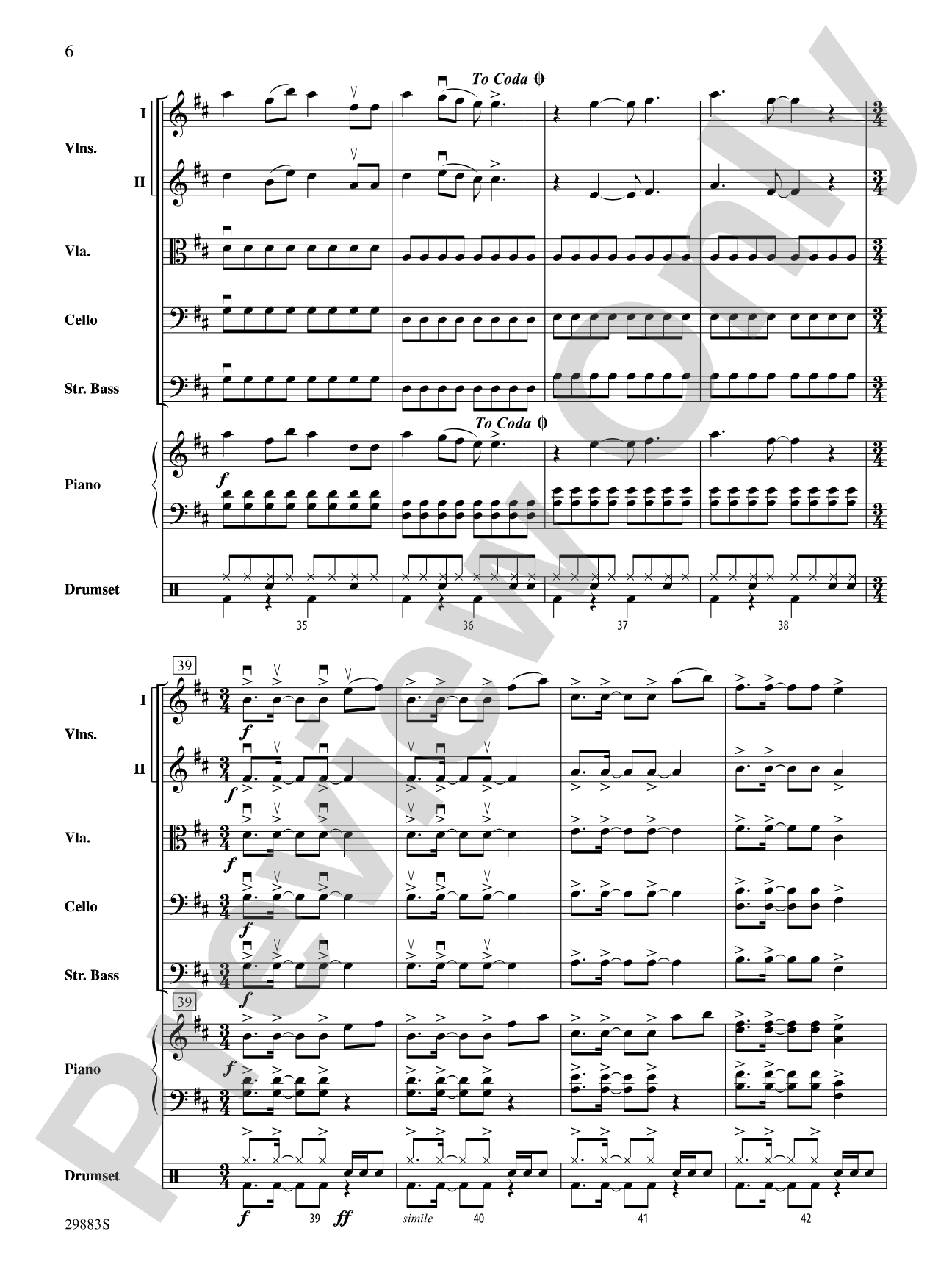
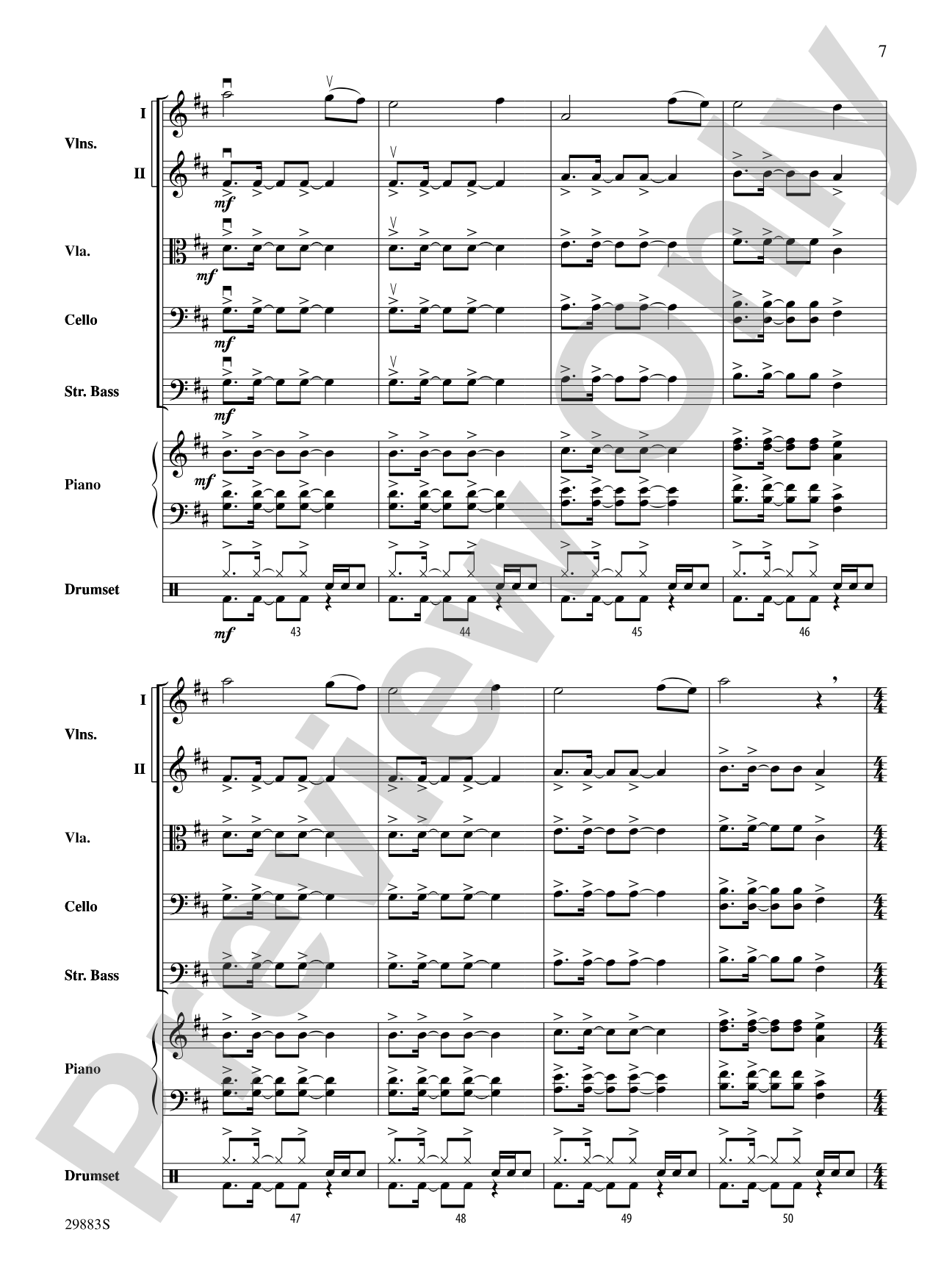
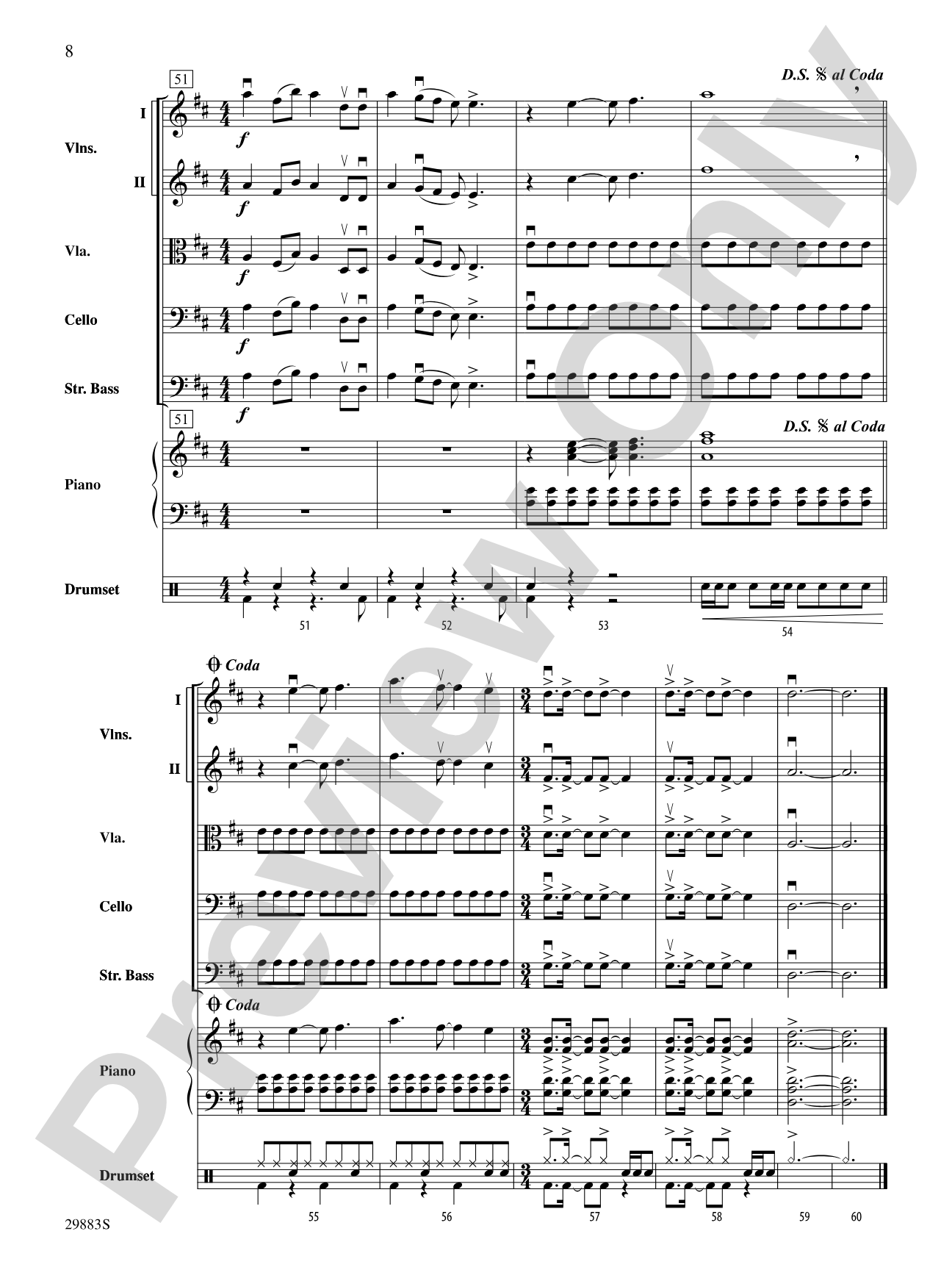

That's What You Get: String Orchestra Conductor Score & Parts
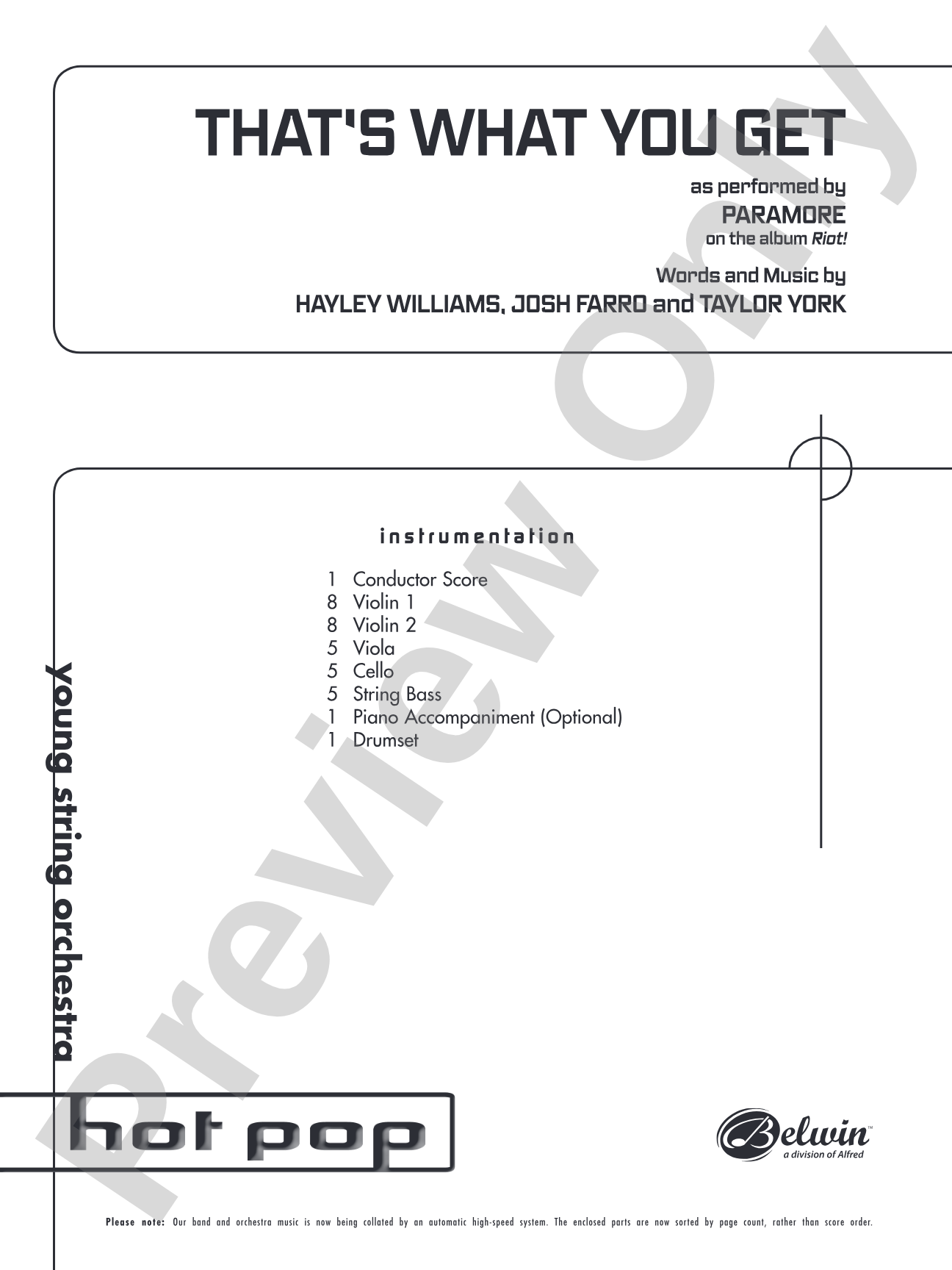
As performed by Paramore
Words and music by Hayley Williams, Josh Farro, and Taylor York
Grade: 2.5
Item: 00-PK-0001633

$50.00
One moment…
Related Items
That's What You Get: Concert Band Conductor Score |
$9.00
|
View |
Description
Right off the charts! The young pop/punk sensations out of Franklin, Tennessee, Paramore made this tune famous as it debuted in the US in March of 2008. This song about exploring the ups and downs of love is perfect for your strings with power and energy to spare!


Don't just read it, hear it, play along with it, and watch your students grow with it. In MakeMusic Cloud, That's What You Get: String Orchestra Conductor Score & Parts comes alive with professional accompaniment, adjustable tempo, and built-in practice tools that turn solo practice into real progress.
Open in the Player
Jump straight in and assign it today.
Start Your Free Trial
Open this title and explore the full library in minutes.
Sample Audio
1
Audio File
--:--
0:00
0:00
Sample Video
No sample videos found.
Additional Details
Series:
Hot Pop Strings
Publisher:
Alfred Music
Page Count:
70
SKU:
00-PK-0001633
More about this title
About the Artist: Paramore
Paramore emerged from Franklin, Tennessee, in the early 2000s and quickly became one of the defining voices of pop punk and alternative rock. Led by vocalist Hayley Williams, the band built a devoted following through emotionally raw songwriting and high-energy performances that resonated across a broad audience, from mainstream radio listeners to devoted alternative music fans.
Their 2008 album introduced "That's What You Get" to global audiences, a track that showcases the band's ability to balance introspective lyrics about relationships with driving, propulsive instrumentation. The song's commercial success and emotional directness have made it a staple in contemporary music education, where its accessibility and infectious energy engage young musicians.
Why we love this
Young musicians light up when they recognize a song they already love, and this arrangement captures everything that made the original such a radio staple: propulsive rhythms, clear melodic hooks, and genuine emotional weight. At Grade 2.5, it sits in the sweet spot where students can handle the energy and style without drowning in technical demands, leaving them free to focus on ensemble blend and dynamic shaping. Programming contemporary pop alongside traditional concert repertoire also signals to students that orchestral skill applies everywhere.
What to expect
Urgent and propulsive, with moments of genuine vulnerability woven through the faster sections. The arrangement trades on the original's conversational intimacy—it's a song about messy feelings delivered with confidence and drive, not distance.
Who it's for
String orchestras at the intermediate level who want to program contemporary music without compromising musical integrity. Directors seeking repertoire that speaks to student musicians' real listening habits while maintaining serious pedagogical value will find an immediate fit.
How to get the most out of it
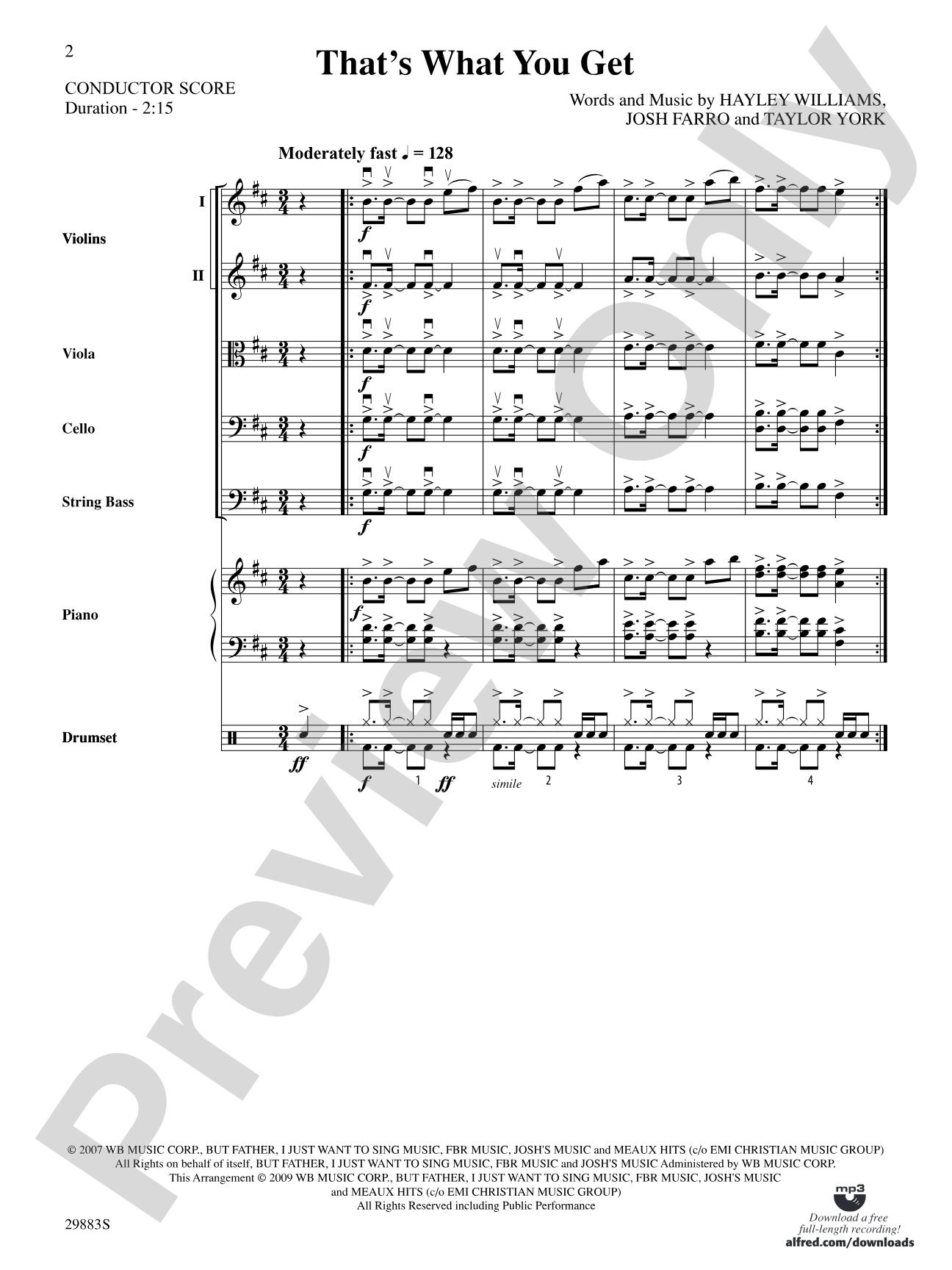
- Nail the rhythmic precision in the opening unison section. Paramore's power comes from lock-tight ensemble playing, so take time drilling the exact articulation and note timing before adding dynamics.
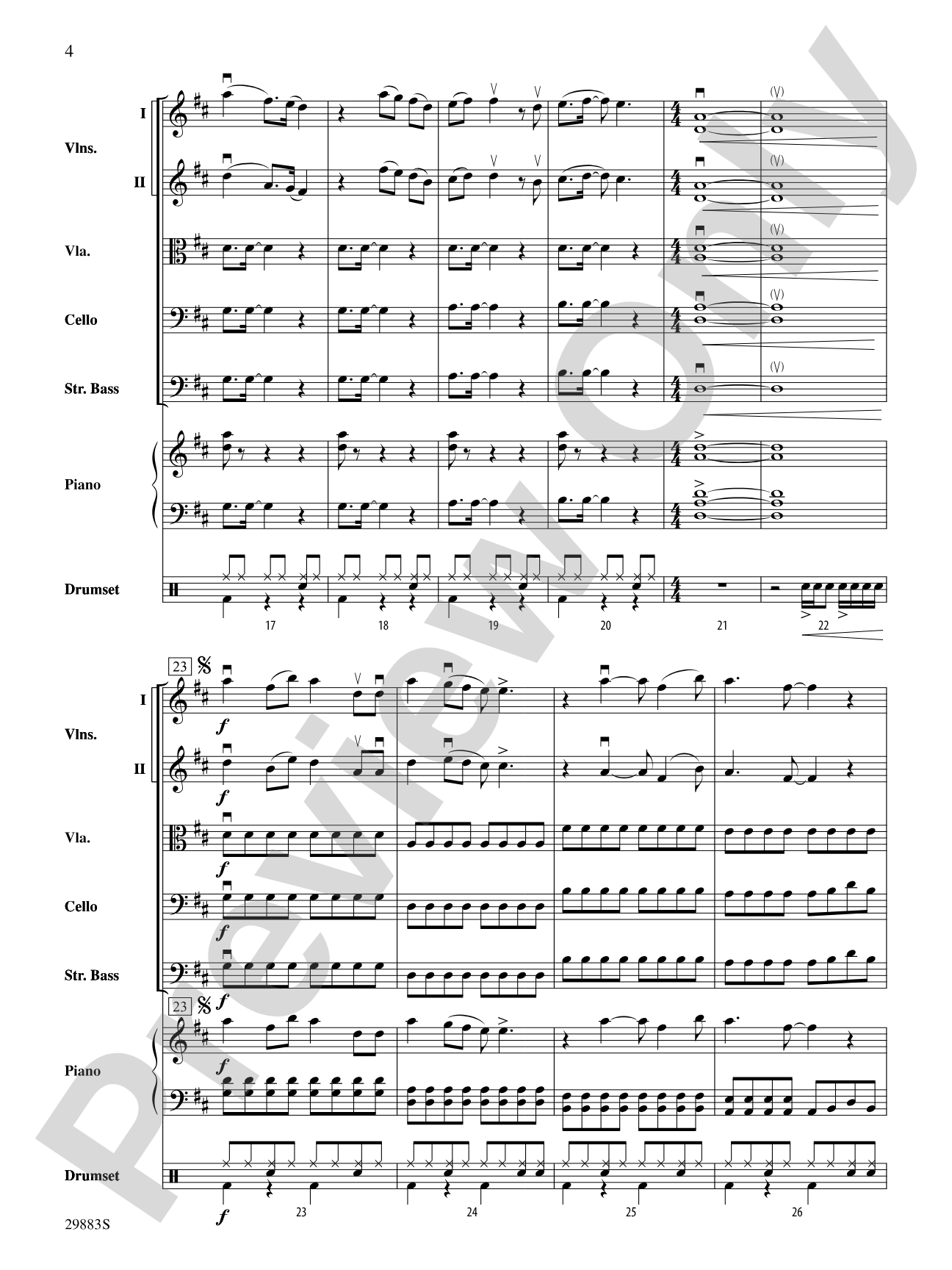
- Layer the dynamics strategically. This score has room for genuine crescendos and dramatic drops; treat them as story beats rather than automatic markings, and the song's emotional arc becomes clearer.
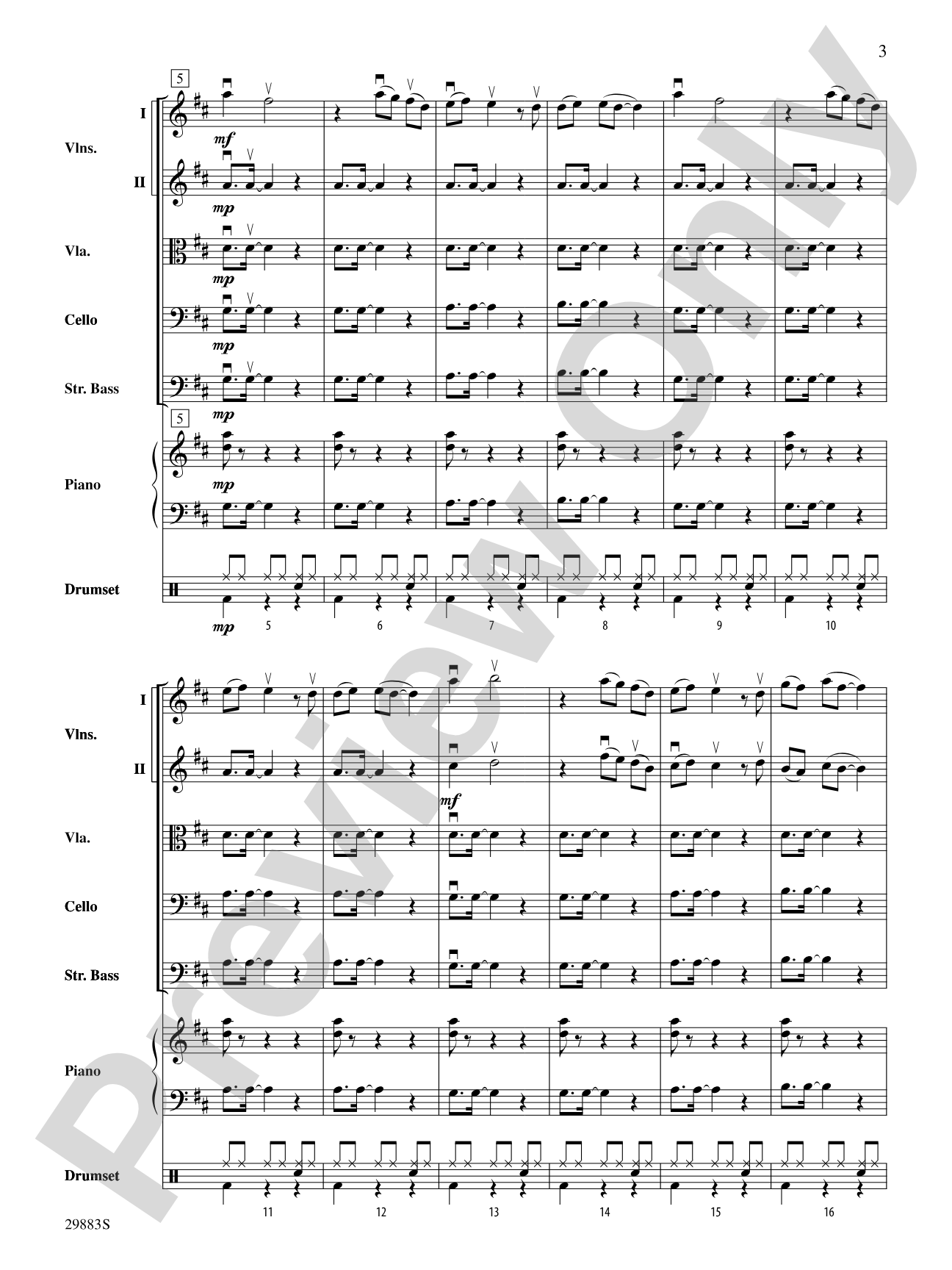
- Balance the melody across chairs. As the tune passes between violin sections and instruments, ensure the leading voice always projects without overwhelming the harmonic foundation underneath.
- Lean into the rock attitude without sacrificing intonation. The genre calls for confidence and drive, but that confidence only reads when tuning stays centered.
How to use it
This works beautifully as a concert centerpiece that bridges the gap between classical and contemporary audiences, especially when programmed alongside one traditional work and another modern piece. Consider it for pops concerts, young people's concerts, or community outreach events where accessibility serves your mission as much as artistic depth does.
Skills your students will build
- Ensemble rhythm lock and precision in contemporary idioms
- Dynamic contrast and emotional shaping within driving tempos
- Balancing melody and harmony across multiple orchestral voices
- Intonation control at faster tempos and during rhythmic unison passages
- Style and articulation appropriate to rock and pop genres