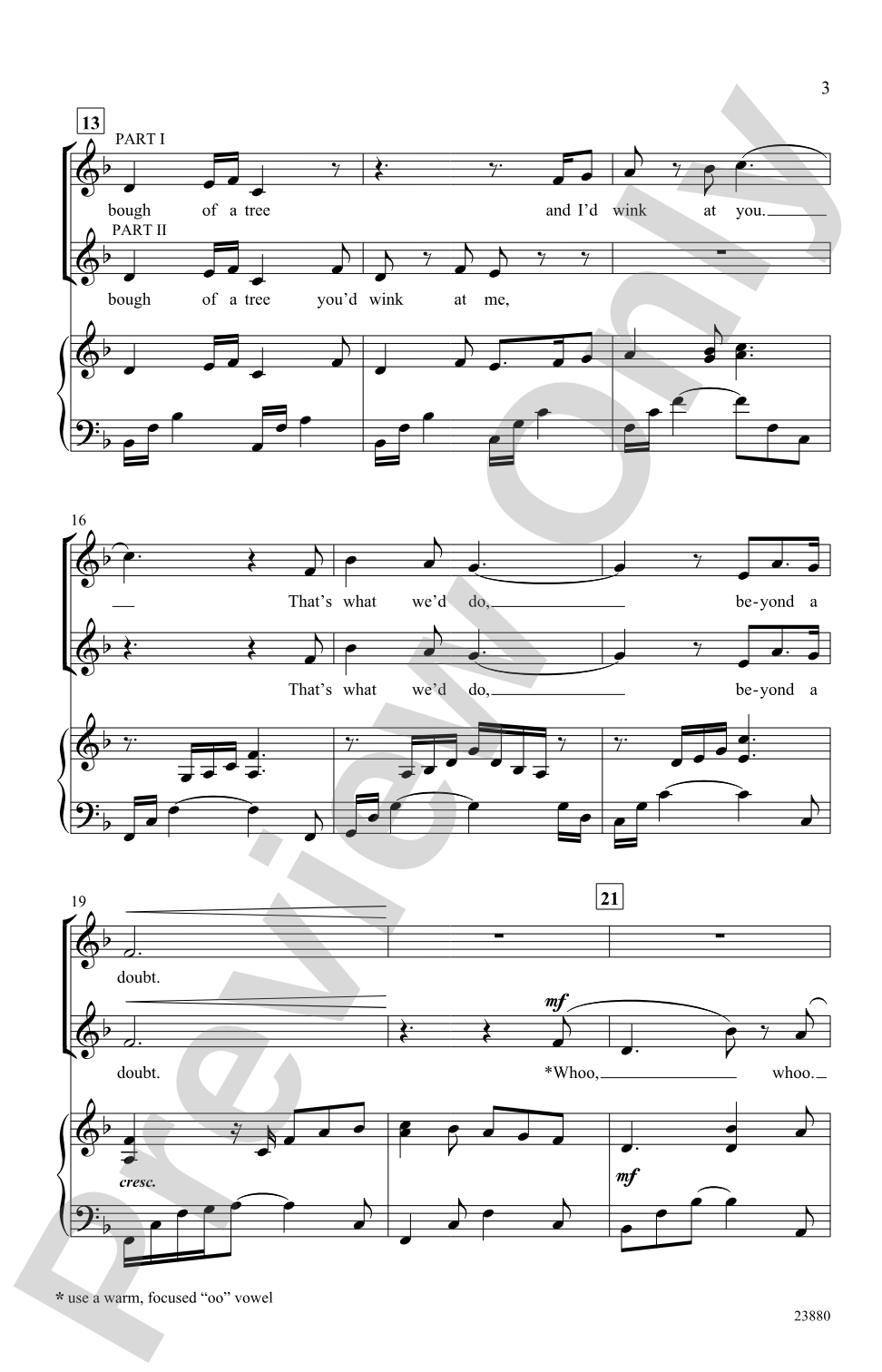
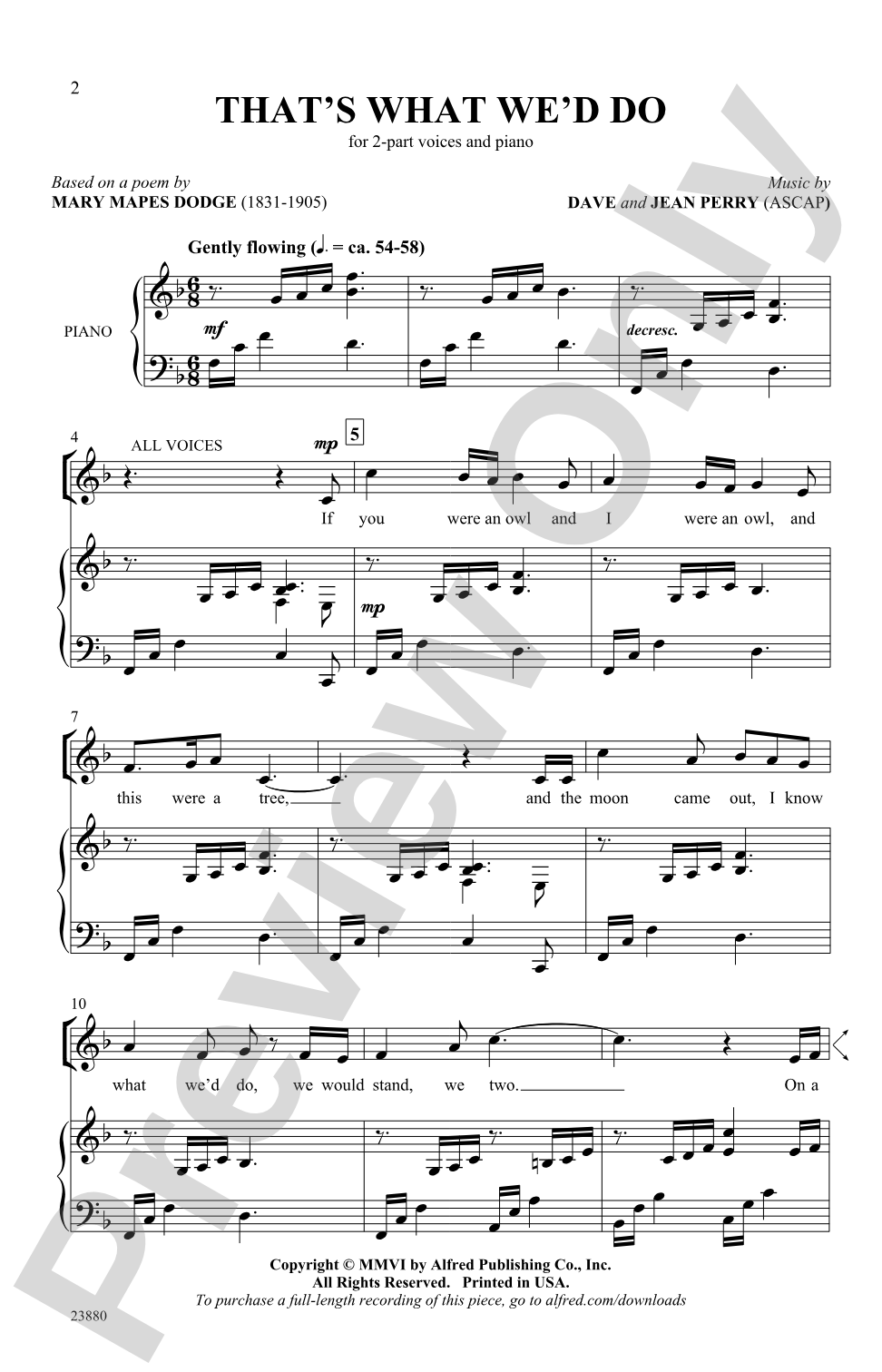
That's What We'd Do Sheet Music Preview

That's What We'd Do: 2-Part Choral Octavo

By Mary Mapes Dodge / arr. Dave and Jean Perry

Item: 00-PO-0000002

Digital Download
$1.65

Minimum order quantity: 20 copies

Description
Lilting "whoos" are exchanged between sections of your choir as singers imagine themselves to be owl companions perched in a tree at nightfall. This sophisticated choice is guaranteed to charm audiences and adjudicators alike. Artistic repertoire for 2-part choirs.

That's What We'd Do: 2-Part Choral Octavo isn't in MakeMusic Cloud just yet...but it could be. Let us know you'd like to see it, and you'll help shape what comes next. In the meantime, start a free trial and dive into thousands of interactive titles your students can play along with today.

Sample Audio
0:00
0:00
Sample Video
Additional Details
Series: Alfred Choral Designs
Publisher: Alfred Music
Page Count: 8
SKU: 00-PO-0000002

More about this title

About the Composer: Mary Mapes Dodge

Mary Mapes Dodge (1831-1905) was an American writer and editor best known for her children's literature, including the beloved novel "Hans Brinker, or the Silver Skates." Her work in publishing and storytelling reflected a deep commitment to creating engaging, imaginative content for young audiences. Though primarily recognized as a prose author, Dodge's creative sensibility extended to verse and conceptual pieces that captured the wonder of the natural world.

Why we love this

The owl-dialogue concept feels fresh without being gimmicky; the exchanged "whoos" between sections create genuine musical interaction rather than mere novelty. Arrangers Dave and Jean Perry have crafted something that works equally well in a formal concert setting or a relaxed community performance, which is rare in 2-part repertoire at this level.

What to expect

Imagine a cool autumn evening settling over a forest; the piece captures that intimate, slightly mysterious atmosphere through gentle melodic motion and the back-and-forth owl calls that create a sense of companionship and quiet contemplation. The "whoos" feel natural rather than theatrical, allowing singers and listeners alike to inhabit the nighttime world the music evokes.

Who it's for

This octavo works beautifully for middle school, high school, and community choirs comfortable with accessible yet artistic repertoire. It suits singers who respond to character and storytelling without needing complex harmonic or rhythmic demands, making it ideal for mixed-ability ensembles.

How to get the most out of it

  • Establish consistent vowel shapes on the "whoo" exchanges so they blend seamlessly when sections overlap; treat these as lyrical moments, not comedic interruptions.
  • Balance the two parts so neither dominates during the back-and-forth passages; younger singers sometimes unconsciously defer to what they hear across the room.
  • Experiment with slight rubato in the lilting sections to let the owl-companion imagery breathe naturally rather than forcing strict metronomic precision.
  • Mark breath points clearly before rehearsal so singers commit to consistent phrasing and don't gasped mid-phrase during the dialogue sections.

How to use it

Program this as a palette cleanser between heavier selections or as the centerpiece of a lighter, nature-themed concert set. Its charm and accessibility make it an excellent choice for family concerts, outdoor performances, or programs where you want to showcase your singers' ability to combine technical competence with genuine artistry.

Skills your students will build

  • Blended vowel production on sustained "whoo" sounds
  • Part independence and listening awareness during call-and-response passages
  • Expressive phrasing and character interpretation in secular storytelling
  • Breath management across lilting melodic lines

You May Also Like