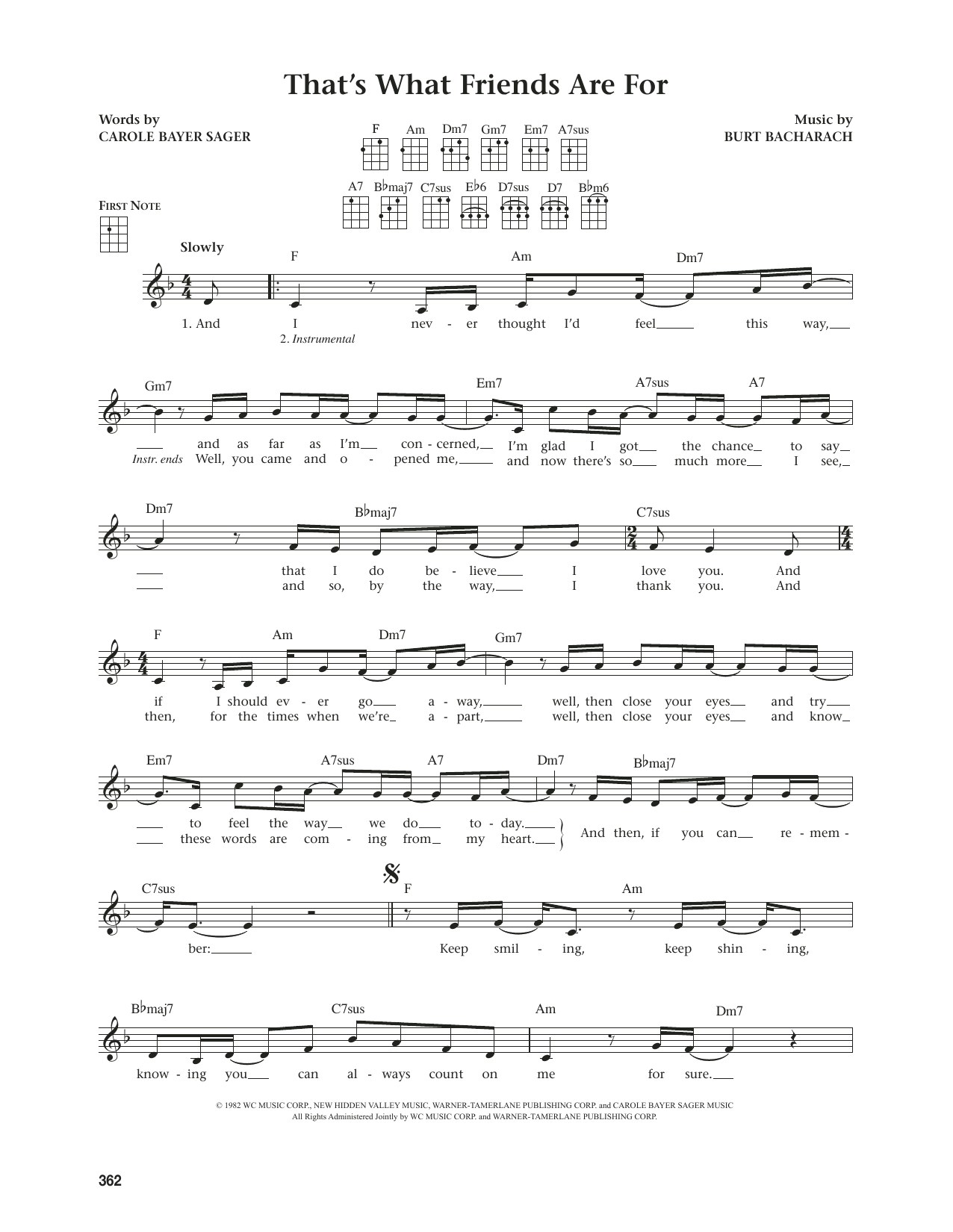
That's What Friends Are For (from The Daily Ukulele) (arr. Jim Beloff) Sheet Music Preview

That's What Friends Are For (from The Daily Ukulele) (arr. Jim Beloff): Ukulele

As performed by Dionne & Friends / Arranged by Jim Beloff

Item: 35-DS01531739

Digital Download
$3.99

One moment…

Description

That's What Friends Are For (from The Daily Ukulele) (arr. Jim Beloff): Ukulele isn't in MakeMusic Cloud just yet...but it could be. Let us know you'd like to see it, and you'll help shape what comes next. In the meantime, start a free trial and dive into thousands of interactive titles your students can play along with today.

Sample Audio
No sample audio found.
Sample Video
Additional Details
Publisher: Hal Leonard
Page Count: 2
SKU: 35-DS01531739

More about this title

About the Artist: Dionne & Friends

Dionne Warwick became a defining voice of American pop and soul music, bringing sophisticated vocal control and emotional authenticity to every song she touched. Her 1985 collaboration "That's What Friends Are For" with Friends (featuring Stevie Wonder, Gladys Knight, and Elton John) became an anthem of unity and compassion, introducing the song to millions while raising awareness and funds for HIV/AIDS research.

Why we love this

Jim Beloff's ukulele arrangement captures the warmth and accessibility that made this charity single so beloved, while keeping the arrangement singable and emotionally clear. The two-page format respects both the song's sentimental core and the ukulele's inherent brightness, making it ideal for ensemble performances or solo study. Players at various levels will find success here because the arrangement prioritizes melody and connection over technical complexity.

What to expect

Genuinely tender and affirming. The arrangement invites players into the thoughtful, unhurried space where this song operates best, with warm harmonies and a melody line that feels like a conversation between friends. Every note carries the weight of sincerity rather than showiness.

Who it's for

Ukulele players with basic to intermediate chord knowledge who want to expand beyond strumming patterns and explore melodic arrangements. Teachers seeking accessible material that combines emotional depth with manageable technical demands, or ensemble directors building repertoire around meaningful community songs.

How to get the most out of it

  • Shape the opening phrase with a gentle lift on beat 4; resist playing it absolutely straight, as the uke benefits from a conversational rubato in the verse.
  • Balance the melody line so it sits comfortably above the harmonic framework; don't let fingerstyle accompaniment patterns overwhelm the vocal or melody instrument.
  • Find the warmth in slower sections by thinking about legato and breath, even on an instrument without a bow. Let chords ring naturally rather than dampening them quickly.
  • If performing with vocals, practice the instrumental sections as accompaniment first so rhythmic accuracy becomes automatic and you can listen to the singer's phrasing rather than counting aloud.

How to use it

Pair this with other uplifting pop standards in a springtime or community-focused concert, or use it as a solo feature within a larger ukulele ensemble program. It works particularly well as a vehicle for discussing how instrumental arrangements can honor vocal originals while making them accessible to different instruments and skill levels.

Skills your students will build

  • Reading two-staff ukulele notation with chord symbols
  • Balancing melody and accompaniment texture in a single-instrument arrangement
  • Sustaining emotional expression across slower, harmonically rich chord changes
  • Phrasing decisions that reflect the song's lyrical content rather than strict metric counting

You May Also Like